Robbie Thain
Founder, CEO

Discover how Takis uses tactical party sampling and themed in-store displays for its 2026 Halloween Zombie flavor relaunch to drive measurable retail trial.
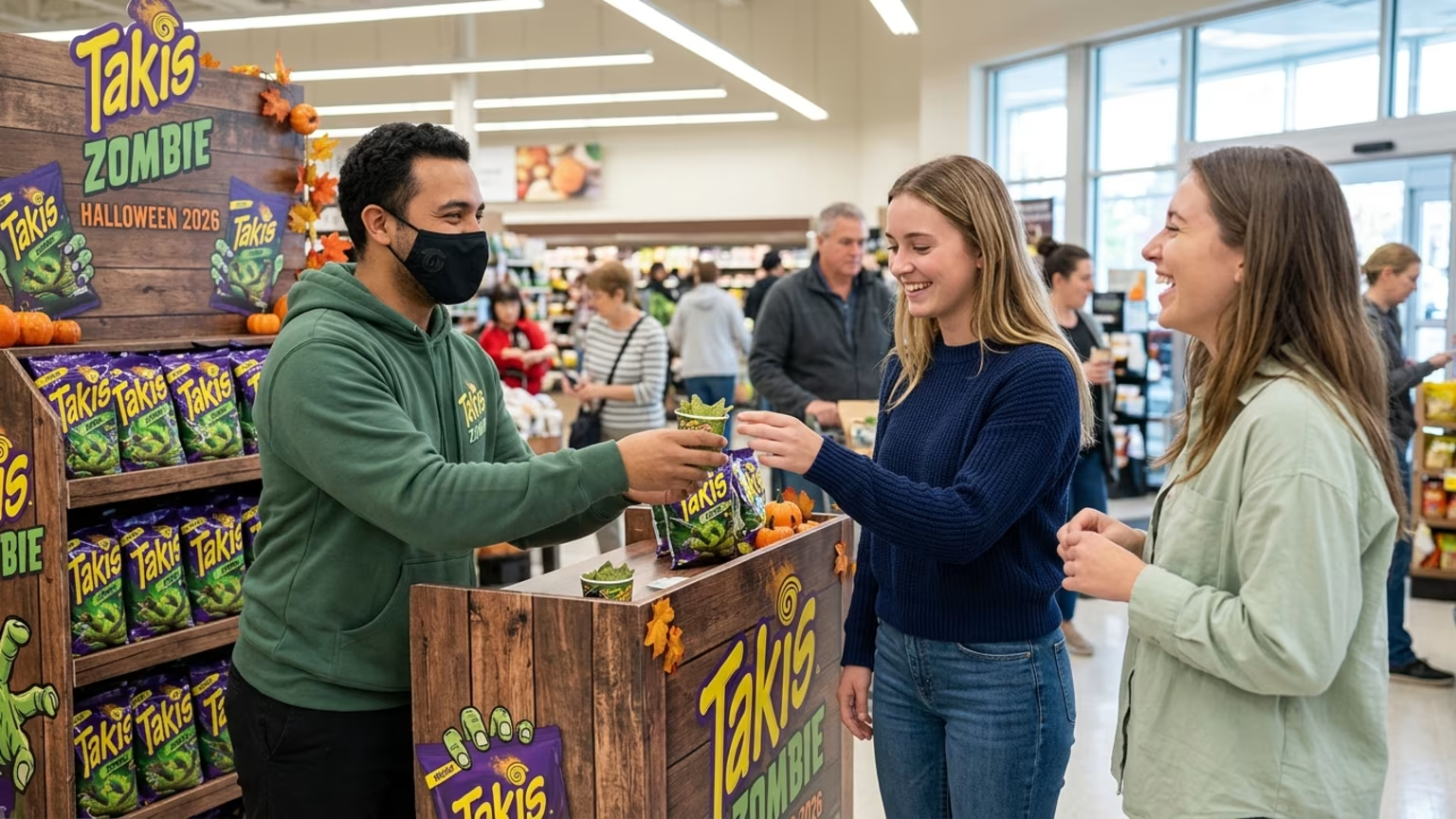
Relying solely on themed packaging to capture seasonal sales is a guaranteed path to retail failure. Takis (the snack brand) demonstrates a superior approach by treating physical retail fixtures as active trial channels. The brand is bringing back its limited-edition Zombie flavor for Halloween 2026 in the United Kingdom. This launch proves that physical execution must combine visual interruption with immediate product trial.
Asian Trader reports that Halloween spending in the relevant market is worth £779 million. Gen Z and millennial shoppers account for 80% of engagement during this seasonal period. These demographic concentrations dictate where and how marketing budgets should be allocated across the store. To capture this spending, operators must intercept these younger consumers directly at the point of purchase.
The same report cites consumer research indicating that 44% of shoppers are more likely to buy Halloween products when they see attractive displays. These numbers highlight the baseline requirement for visual impact on a crowded seasonal fixture. The article cites consumer research in which seven in ten respondents said they would purchase the product for television or movie moments. Additionally, two in three shoppers described the product as unlike anything else on the shelf.
For a VP of Marketing looking at fragmented trade budgets, these statistics reveal a critical operational gap. Attractive displays secure attention, but passive attention does not automatically generate a measurable Return on Investment. Operators must connect that initial shopper visibility directly to physical trial. A themed secondary location alone cannot resolve consumer hesitation around an unfamiliar or intensely spicy flavor profile.
This dynamic forces marketers to reevaluate their primary execution metrics entirely. Merchandising compliance and display volume only represent half of the commercial equation for any seasonal launch. The other half requires putting the physical product directly into the hands of a target consumer. Teams that master in store product sampling execution turn passive aisles into highly effective activation spaces.
Relying on foot traffic data to measure success is a critical error for premium CPG brands. Field marketing directors must prove that their physical interventions actively move inventory off the shelves. Linking a seasonal visual display with a dedicated tasting event provides that necessary commercial proof. This combination allows brands to track exact unit sales against the number of samples distributed.
Trade show coordinators and shopper marketing leads face intense pressure to prove that events build qualified pipeline rather than just momentary excitement. Every dollar spent on physical infrastructure must generate a measurable lift in local product movement. The reported £779 million Halloween market represents a massive opportunity for brands that execute flawlessly at the shelf. Companies that fail to connect their displays to an actual tasting experience will watch their competitors capture those seasonal dollars.
This macro trend forces a fundamental change in how operators execute retail demos and mobile tours today. Brand teams can no longer park a generic tasting table in a random aisle and expect maximum conversion. Modern sampling programs must integrate directly with the brand's secondary displays. The physical retail space must function as both a visual media channel and a hard conversion point.
Adapting to this reality means designing the activation around specific and realistic consumer occasions. Program managers must script the human interaction to match the actual consumption event. They can then turn sampling interactions into permissioned first party data to track consumer behavior over time. Execution requires strict measurement controls on the event floor to prove lasting commercial impact.
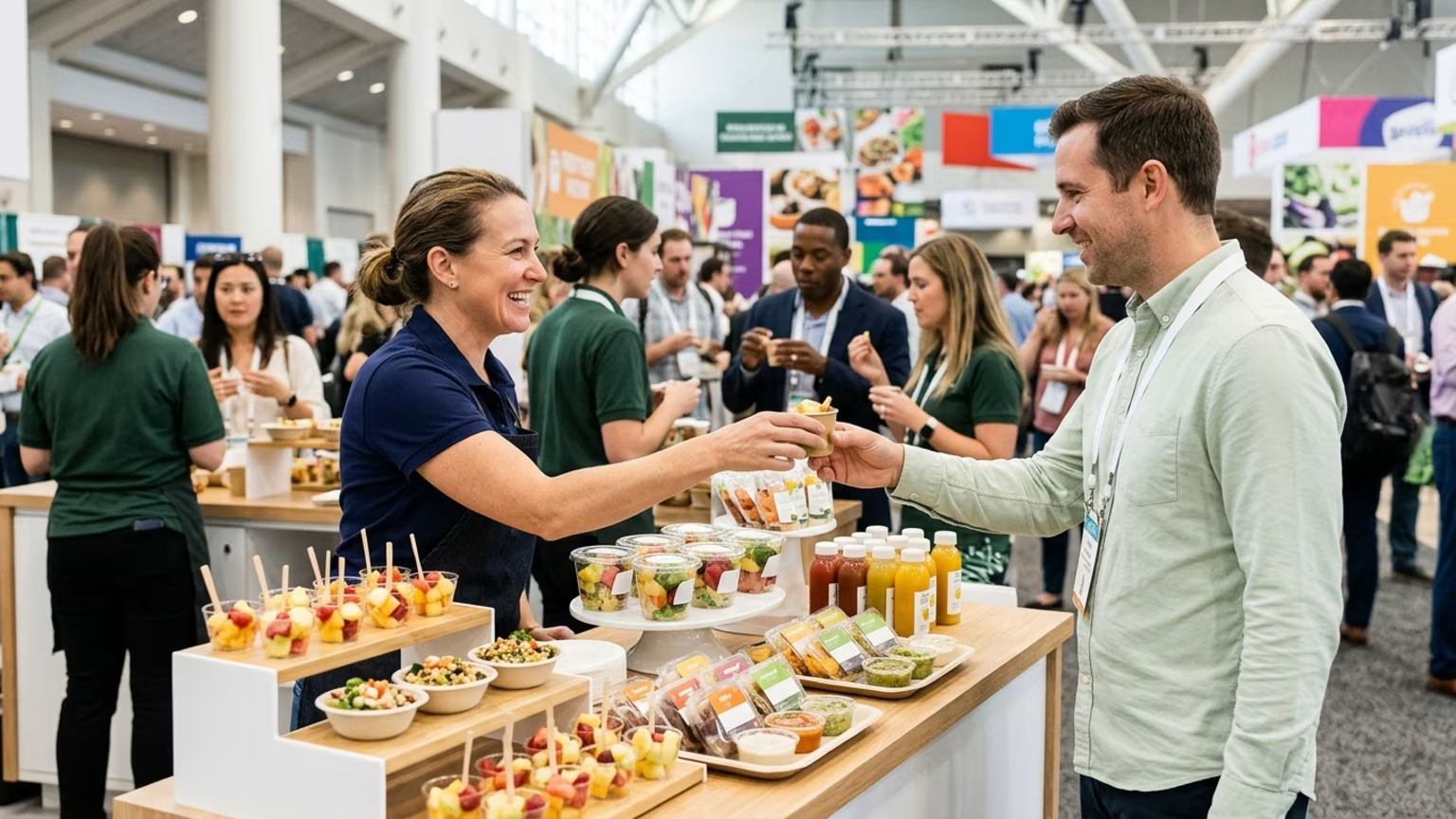
We specialize in creating retail demos, product sampling programs, and roadshows that bring brands face to face with their audiences. In our experience, pairing a highly visible seasonal bay with trained brand ambassadors dramatically accelerates retail velocity. Each program is designed to drive trial, build consumer relationships, and accelerate retail velocity across multiple locations. You must connect the physical display with the human interaction to maximize pipeline.
Field staff must be trained to communicate the exact occasion the product serves. If the research points to television or movie moments, the sampling script must reflect that specific use case. Passing out a product silently does not build the emotional connection required for repeat purchase. Ambassadors must guide the consumer through the sensory experience of the product itself.
Managing massive multi-regional campaigns requires rigorous operational control to turn raw store attendance into measurable commercial action. Normalizing performance data across different event formats is impossible without a standardized reporting framework. Field teams must use digital tracking tools to record every sample poured and every conversation started. This disciplined approach ensures that national sampling campaigns deliver reliable conversion data back to corporate headquarters.
The reported September 1 launch date for the limited-edition Zombie flavor provides a clear model for extended execution. This timeline gives retailers a long pre-October selling window to install seasonal bays, free-standing display units, clip strips, and header cards. The product itself combines habanero chili with cucumber and lime, positioning the flavor around heat followed by a cooling, citrus finish.
October activity is expected to include tactical party sampling, social challenges, and spooky secondary displays. The wider seasonal program is also described as including horror-movie-night partnerships and themed creator content. To support different conversion paths, the product is offered in four specific listed formats. The reported range spans a 55g price-marked pack at £1.25, a 55g non-price-marked pack at £1.25, a 100g pack at £2.49, and a 180g pack at £3.49.
The varying pack sizes serve distinct operational purposes on the retail floor. The 55g format lowers the barrier to entry for trial, while the larger 100g and 180g packs support group sharing at Halloween parties. U.S. marketers evaluating their 2026 budget benchmarks for street team and product sampling can easily adapt this multi-format logic.
While the pricing and retail calendar reflect the UK market, the occasion-based sampling model translates effectively to American retail strategies. A U.S. adaptation simply requires adjusting for local retailer calendars, municipal sampling rules, and specific labor planning requirements. The underlying principle of matching the display to the trial occasion remains exactly the same. The focus must stay on creating an immediate consumption occasion right in the store.
Marketing leaders must demand strict commercial accountability from every seasonal retail activation. Earning attention through creative clip strips and header cards is only the first step toward validating trade marketing spend. Operators should evaluate multi-format retail programs alongside hard distribution, availability, and sell-through data. A visually impressive seasonal bay means nothing if the resulting product trial does not generate register receipts.
This quarter, operators must adjust their key performance indicator dashboards to track physical trial and store conversion simultaneously. Measuring raw foot traffic or digital content engagement alone will not satisfy a diligent finance team. True commercial impact requires calculating the specific conversion rate between the physical sample distributed and the retail purchase. Flawless physical execution is the only reliable method to prove seasonal return on investment.
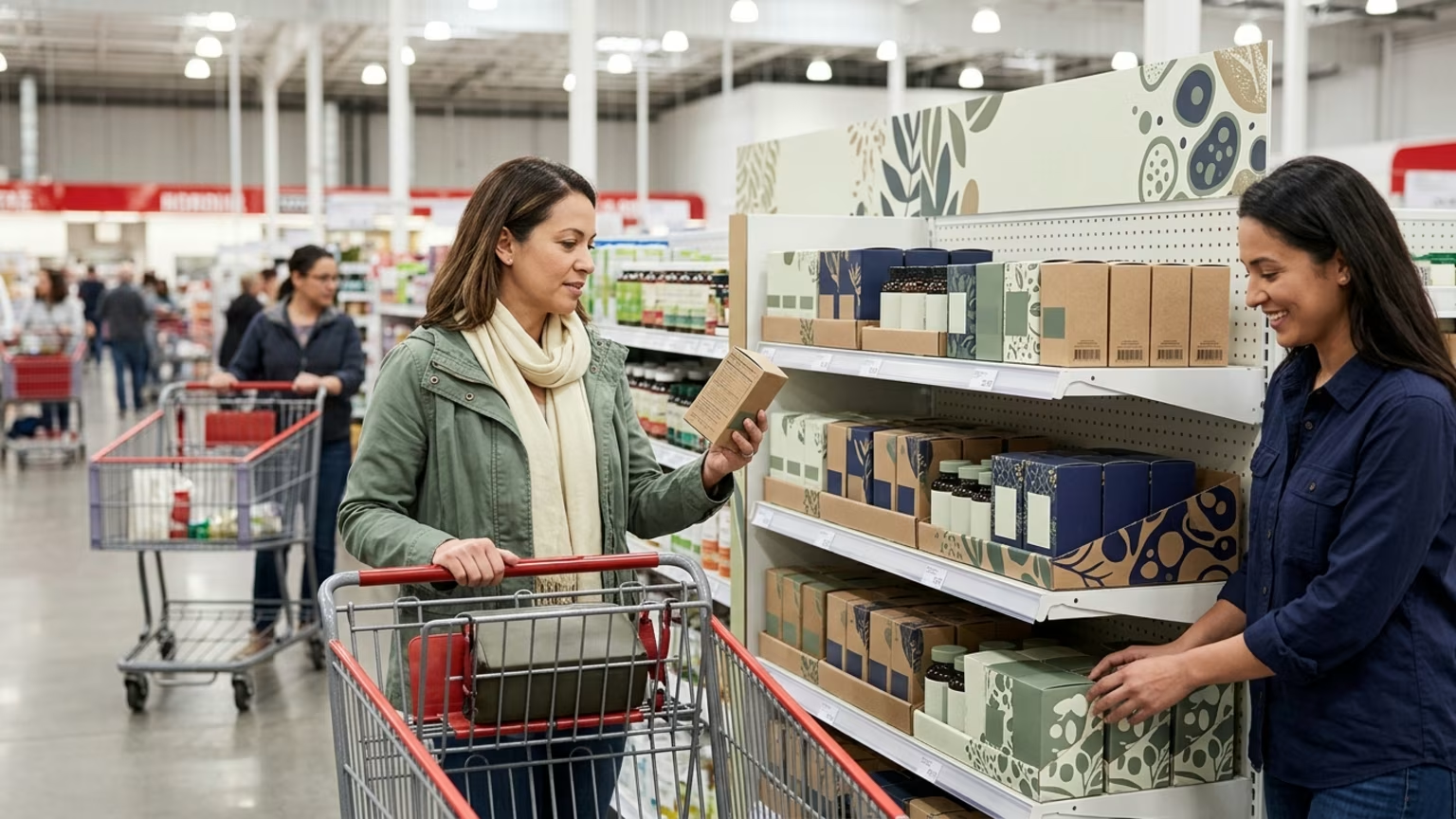
Relying entirely on themed retail displays without measuring physical trial often leads to a difficulty measuring real ROI from live events. Makai resolves this measurement gap for CPG marketers by deploying our Costco Roadshows capability. We manage end to end Costco roadshows that bring brands to shoppers through live demos, real conversations, and measurable sales impact. Request a proposal

30 Years Experiential & Retail Activation Partner for CPG & Beverage Brands | Multi-Market Demos, Roadshows & Costco/Club Programs That Actually Sell