Robbie Thain
Founder, CEO

Learn the unglamorous realities of executing measurable in-store product sampling and retail demo campaigns in 2026. Turn live events into trackable revenue.
Retail demo programs get judged on cups poured instead of incremental pipeline. That mismatch is exactly why rigorous logistical preparation matters long before a brand ambassador steps onto the floor. At makai, we know that success in physical retail requires absolute discipline during the planning phase. Brands cannot afford to treat field operations like an afterthought in 2026.
Before a single item is handed out, you must establish the technical infrastructure for your event. This means configuring CRM routing to capture leads directly from the floor. A major focus is shifting toward using QR codes on packaging, signage, and takeaway materials. You must test these digital bridges in advance to capture leads and offer instant digital incentives like discount codes.
Next comes the physical reality of vehicle staging and local permitting. You cannot build a measurable campaign if your field teams are scrambling for health department approvals on the morning of a launch. Every detail of product storage and routing must be mapped out to ensure smooth daily operations. When the trucks arrive at the retail location, the team should be focused entirely on execution rather than administrative delays.
Finally, setting strict targets is a mandatory pre-brief step for any modern campaign. Moving away from vague goals like "increasing awareness," modern strategies emphasize specific targets for sample distribution and email sign-ups within a set timeframe. There is a growing emphasis on linking sampling directly to sales through unique promo codes. You must establish tracking for metrics like incremental purchase lift and cost per sample before finalizing the budget.
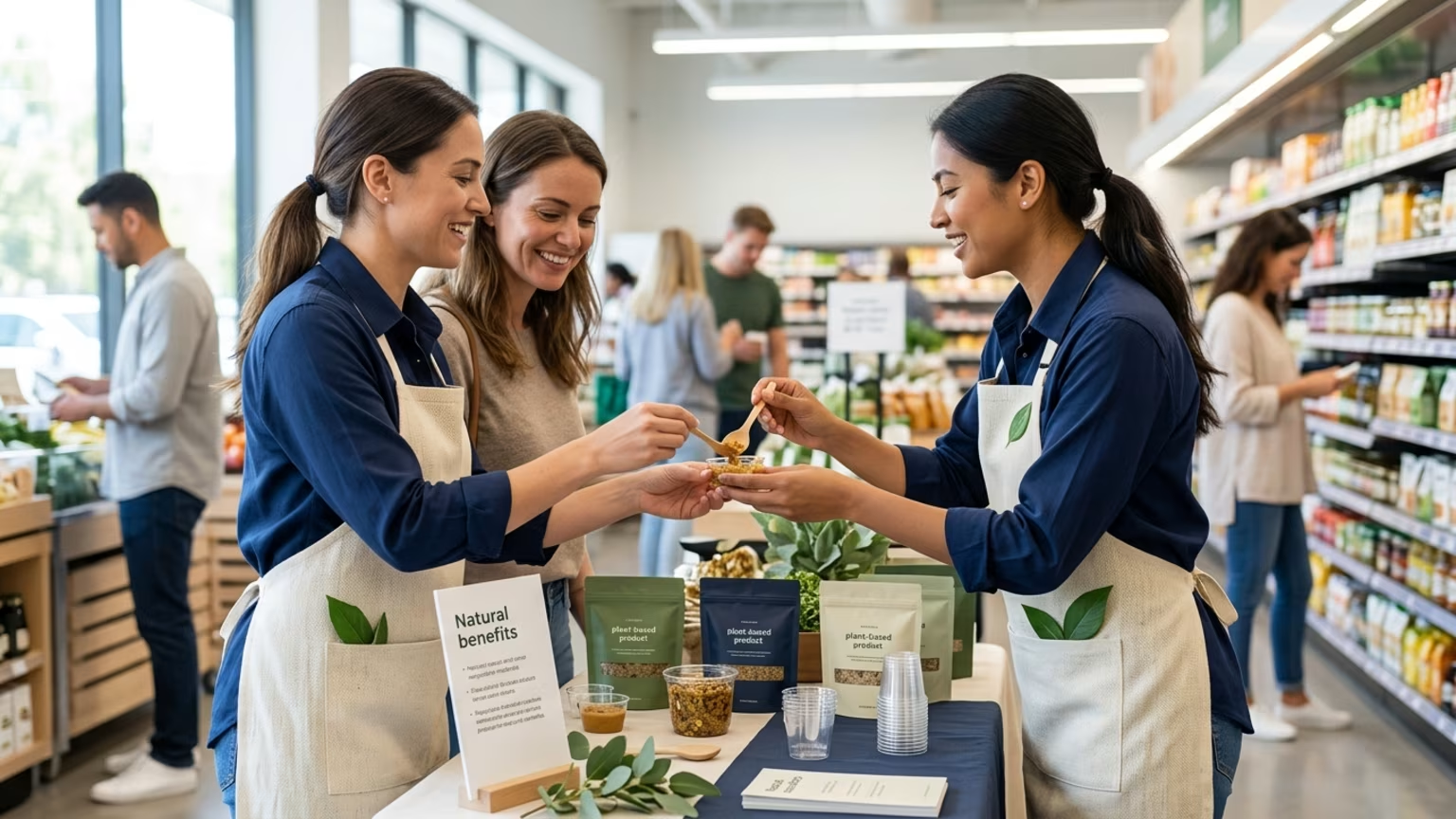
In-store product sampling is a marketing method where shoppers try a product inside a retail store. These items are usually handed out by a trained promoter at a high-traffic spot to drive purchase at the point of sale. Operating a successful retail demo requires a strict standard operating procedure to maximize impact. A campaign runs in four clear steps.
Choose high-traffic stores that match your target shopper exactly. Avoid the trap of selecting locations based on mere convenience or lower vendor fees. You must align your footprint with the precise demographic profile of a ready-to-buy customer. This level of targeting ensures that the people tasting your product are actually qualified to buy it.
Deploy trained promoters with point-of-sale branding. Your field staff must understand your product deeply to initiate a valuable sales conversation on the retail floor. Clear signage and professional branding provide the credibility needed to stop shoppers in their tracks. A well-trained ambassador turns a free sample into an educational brand experience.
Let shoppers try the product while capturing a quick opt-in. This is often accomplished through a simple QR scan on the demo table. This decisive moment turns a passing physical interaction into a known digital lead. It also allows you to fuel retargeting efforts long after the consumer leaves the store.
Track feedback and purchases against campaign cost. Once the event concludes, you must reconcile your captured consumer data with retail sell-through numbers. This allows you to calculate the exact Return on Investment for your physical marketing efforts. Without this final step, your campaign is just a costly donation of inventory.
Amateur operations consistently lose leads on the floor because they fail to mandate data capture. They rely on outdated clipboards or simply count the total number of cups distributed. Failing to connect the physical interaction with a digital footprint makes it impossible to build a viable pipeline. Modern execution requires a deep understanding of how to design a CPG in-store sampling strategy for trial and conversion to justify the initial spend.
The second major point of failure is misjudging venue alignment and crowd flow. Brands often select high-traffic street sampling for broad awareness when their actual goal requires reaching ready-to-buy shoppers in an aisle. Understanding how to choose between retail demos, roadshows, and tours dictates whether your activation will generate revenue or just noise. You must match the location format to the specific conversion goal to avoid burning through your budget on the wrong audience.
Without unique promo codes, there is no growing emphasis on linking sampling directly to sales. Teams are left guessing whether the event actually moved product off the shelf. This lack of accountability creates friction between field teams and executive leadership during quarterly reviews.
When properly executed, physical sampling and retail media placements deliver undeniable results. Well-run sampling programs in appropriate locations typically see trial-to-purchase conversion of 15-35% when purchase is convenient. This includes sampling near a retail location or providing a promo code for online purchase. Trying a product at the shelf removes hesitation and can lift sales during and after the campaign.
Beyond just physical trial, instrumented retail environments offer massive upside for consumer packaged goods. Grocery TV reports CPG brands on its network achieve an average 4.7x ROAS, 14% sales lift, and 49% incremental reach. These metrics prove that disciplined activations create measurable business value. Tracking these exact figures provides the financial defense needed to scale regional pilot programs into national rollouts.
We design mobile activations and roadshows that accelerate consumer trial, build trust, and boost retail velocity during 90-day product launch windows. Our structured approach transforms initial product trial into sustained consumer confidence and retail performance. Understanding the sales impact of in-store demos helps marketing leaders secure the budgets required for these aggressive schedules.
The real work begins after the final sample leaves the table. Field marketing managers must immediately review the incremental purchase lift generated in the weeks following the activation. Compare your actual cost per sample against the trial-to-purchase conversion data captured via QR codes.
This comparison reveals whether your field marketing spend is actually performing like an accountable performance channel. If the math does not align, your next phase requires adjusting either your venue targeting or your promotional offer. Treat every campaign as a rigorous test to refine your operational playbook. Set strict data expectations for your next activation today to protect your marketing capital tomorrow.

30 Years Experiential & Retail Activation Partner for CPG & Beverage Brands | Multi-Market Demos, Roadshows & Costco/Club Programs That Actually Sell