Robbie Thain
Founder, CEO

Twenty thousand product samples create zero long-term business value without structured digital capture systems to collect compliant customer profiles.
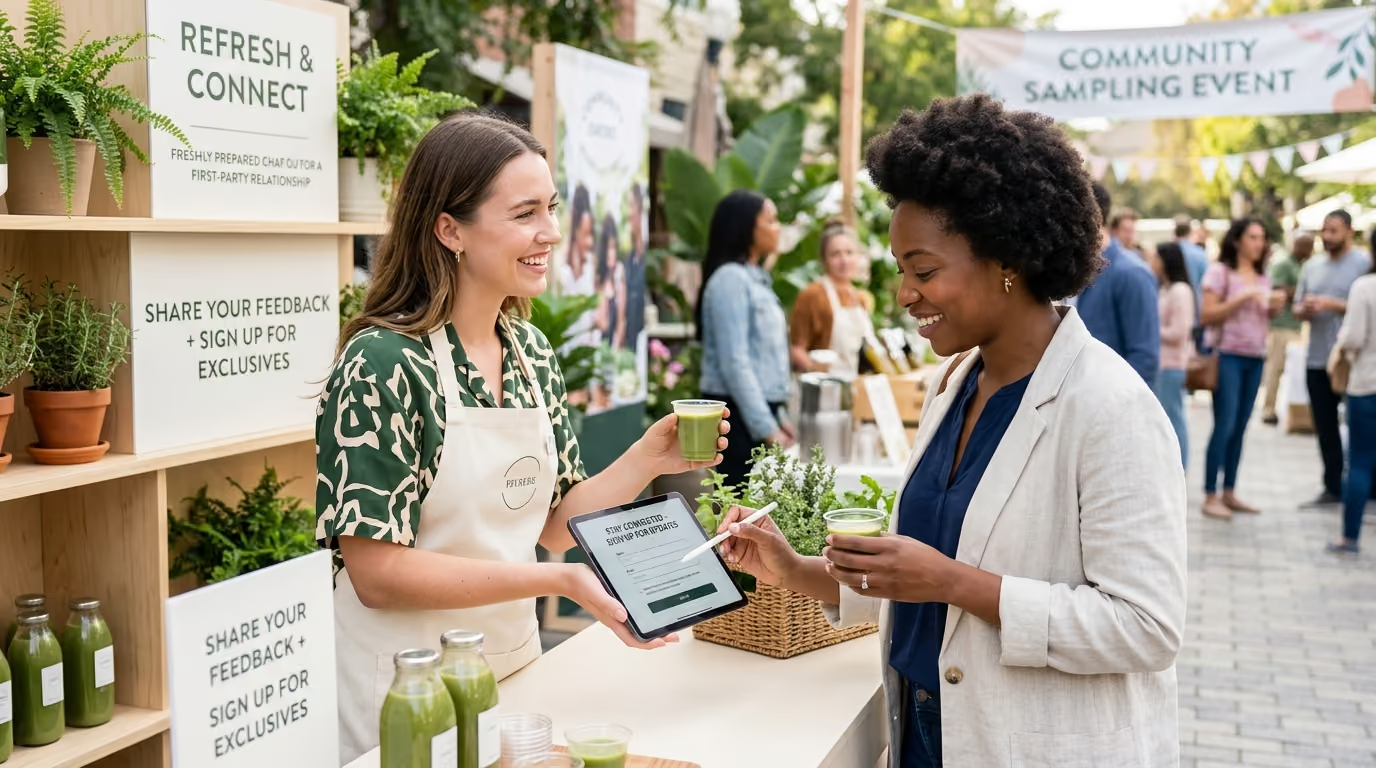
A strategic sampling activation converts physical product trial into permissioned first-party relationships that drive measurable retail pipeline. By exchanging immediate value for documented consent, brands can transform transient event crowds into verified customer profiles ready for long-term retention.
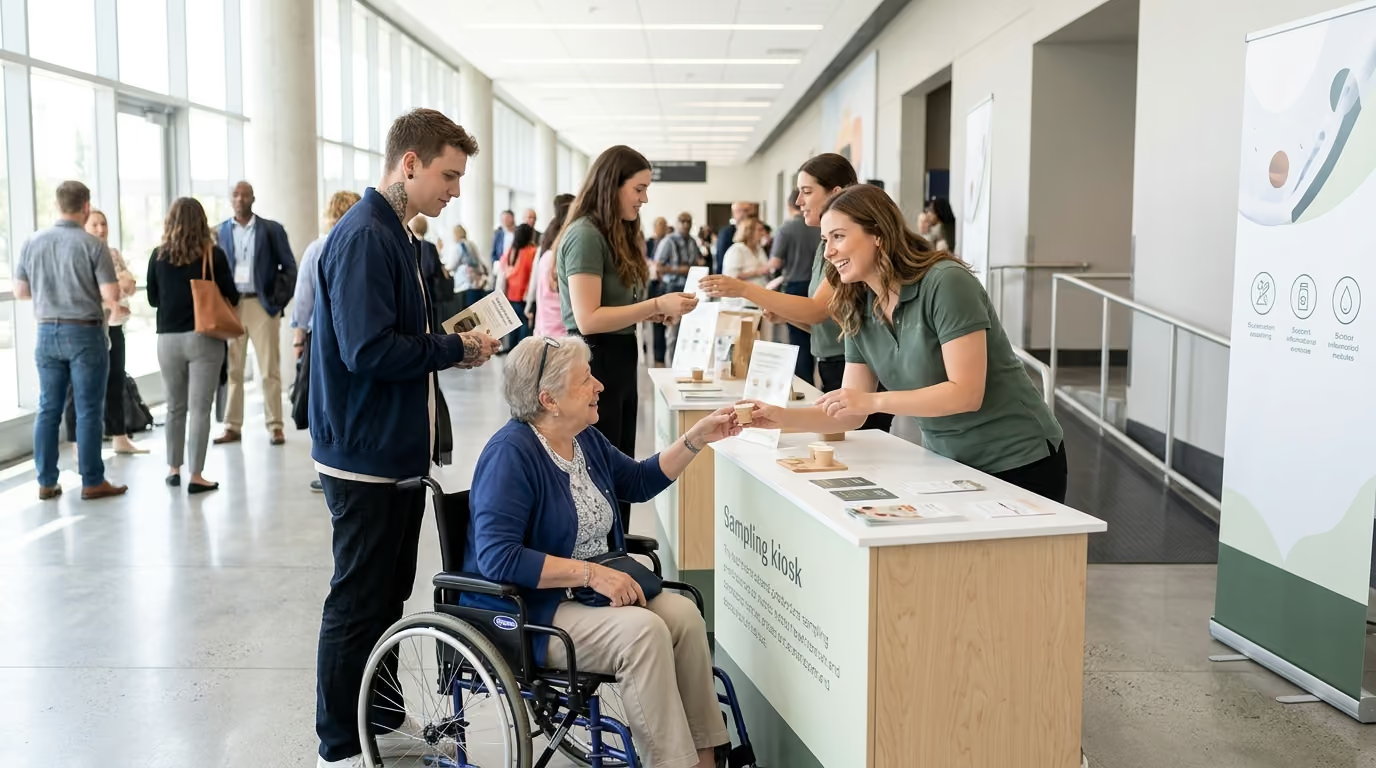
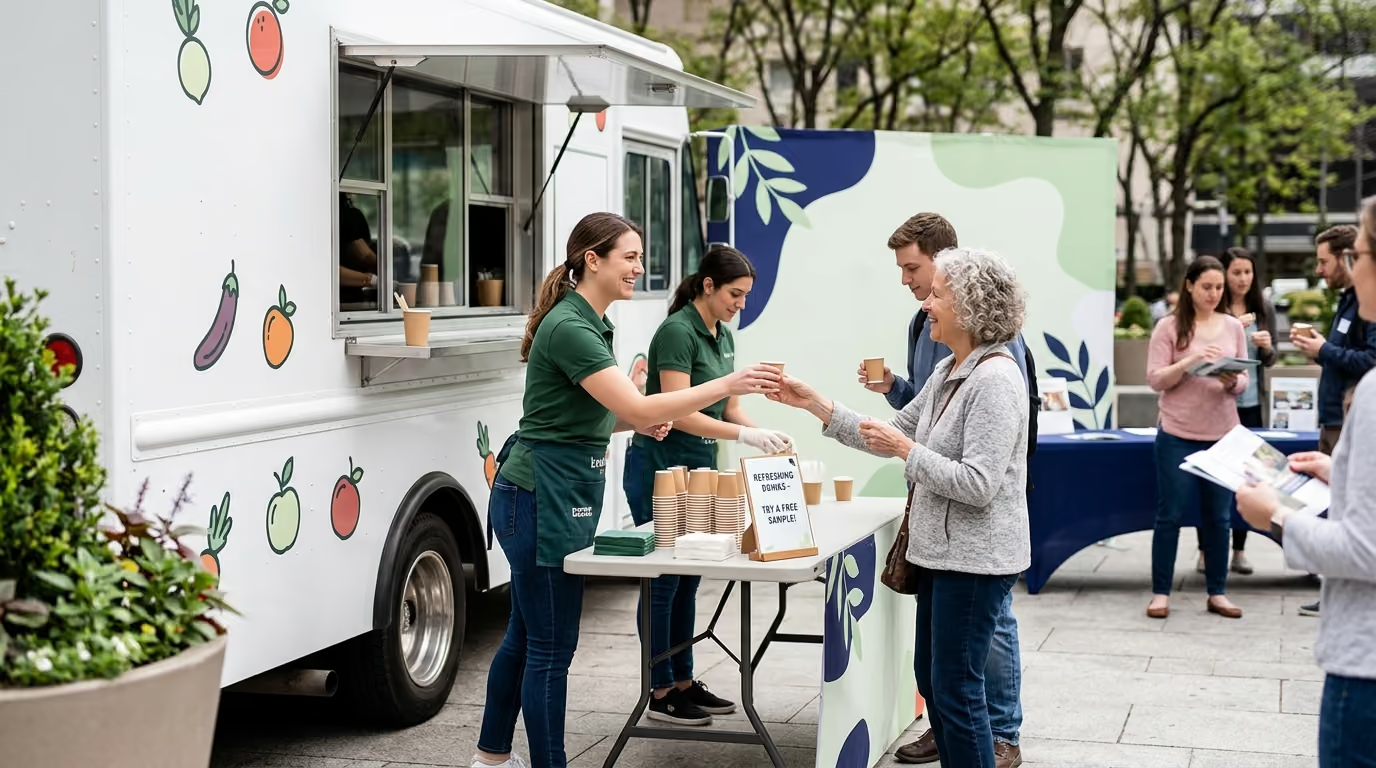
The morning rush at a major consumer expo or street festival is loud, crowded, and relentless. Brand ambassadors hand out thousands of chilled beverage cans or snack packs to an endless stream of attendees. Hands reach in, grab a sample, take a bite or sip, smile, and vanish into the crowd within ten seconds.
At the end of the weekend, the activation manager tallies the physical inventory sheets. The brand distributed twenty thousand units, which looks great on a basic recap slide. However, marketing directors face an immediate problem when leadership asks who received those units. The brand holds zero verified contact records, zero communication permissions, and no way to track whether those tasters ever walked into a grocery store to buy a full pack.
This scenario plays out across trade show floors, festival footprints, and mobile tours nationwide. Brands spend significant capital on footprint rentals, vehicle leases, refrigeration, and field staff. Yet they treat the consumer interaction as an anonymous product giveaway. Handing out product without a clear capture mechanism produces momentary buzz, but it builds no lasting business asset.
When brands attempt data capture without operational discipline, the process breaks down quickly. Field staff hold up clipboards or paper sign-in sheets that create bottlenecks and result in illegible handwriting. Alternatively, teams deploy a generic QR code taped to a table with the vague instruction to scan for more information. Consumers ignore the flyer because it offers no clear incentive, or they scan it, land on a generic corporate homepage, and immediately bounce.
Building an effective field capture engine requires moving past random giveaways and friction-heavy forms. Field teams need a structured system that respects consumer time while capturing clean, compliant contact records. By engineering a seamless value exchange on the ground, brands turn casual trial into actionable data assets that support retail sell-through.
To build an effective capture engine, marketing teams must understand the technical differences between raw event contacts and compliant customer records. A standard sampling interaction is a physical encounter where an individual tries or learns about a product. This happens at mobile sampling trucks, festival pop-ups, retail parking lots, campus activations, or trade show booths. In traditional campaigns, success is measured only by immediate volume metrics like units handed out, verbal conversations, and estimated foot traffic.
First-party data refers to information your brand collects directly from individuals through your own channels. In field marketing, this includes mobile phone numbers, email addresses, dietary preferences, survey feedback, zip codes, and coupon redemption records. However, collecting an email address during an event does not automatically give your brand the legal right to send marketing blasts.
Permissioned first-party data represents a higher operational standard. It requires three distinct components:
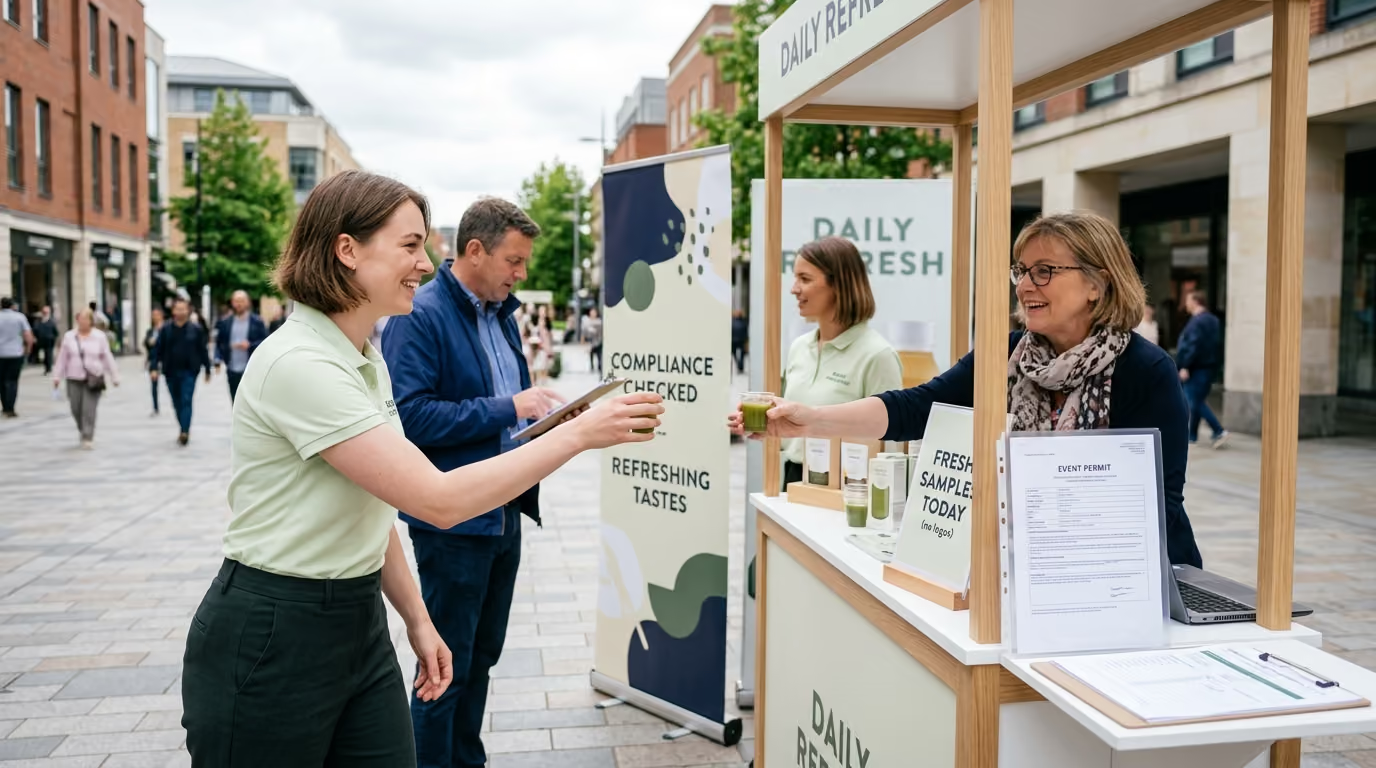
Valid consent requires an unambiguous, freely given affirmative action. Guidance from privacy regulators, including the UK Information Commissioner's Office, clarifies that pre-ticked checkboxes, silence, or passive browsing do not constitute valid consent. Similarly, the United States Federal Communications Commission requires prior express written consent for commercial text messages. A consumer who accepts a food sample has not consented to digital marketing simply by taking the item.
A qualified contact is a permissioned identity that also meets specific quality and commercial criteria. Raw form entries often contain fake phone numbers, typos, duplicate entries, or out-of-market addresses. A qualified contact has a verified syntax, an active subscription status, an attributed acquisition source, and a stated product preference.
Brands that understand these distinctions build structured pipelines on the ground. They move participants methodically from captured contacts to permissioned contacts, then filter for qualified contacts, and finally activate them through tailored follow-up campaigns.
Converting physical handoffs into digital assets requires a disciplined framework. Successful experiential programs rely on a six-stage methodology that aligns field operations with downstream CRM automation.
The physical trial must create genuine interest before introducing any technology. Brand ambassadors must deliver a clean, well-presented product experience that focuses on taste, texture, and immediate product benefits. If the initial taste experience is clumsy, the consumer will not invest time in a digital interaction.
Field staff should prioritize conversational engagement over aggressive data gathering. The goal is to identify consumers who genuinely enjoy the product and want to learn more. Core operational metrics at this stage include total approaches, conversations started, samples accepted, and verbal purchase intent.
Once a consumer expresses interest, the brand must present an immediate, tangible reason to continue the digital interaction. Generic invitations like scanning to join a newsletter generate negligible participation. Consumers readily exchange their contact details when the return value is obvious, valuable, and immediate.
High-converting value exchanges include:
When designing turning CPG sampling data into retail growth programs, keep initial friction low. The mobile destination must load in seconds and demand only the minimal information needed to deliver the promised incentive.
The data intake form must clearly separate the delivery of the immediate incentive from optional marketing consent. If a consumer provides an email to receive a digital coupon, the brand may deliver that specific asset. However, sending ongoing promotional campaigns requires a distinct, optional opt-in choice.
For multi-channel programs, email and SMS permissions must remain separate. A single blanket statement covering all electronic communications does not satisfy strict regulatory standards. Under Federal Communications Commission guidelines, commercial text messaging programs require clear, standalone written disclosures. Consumers must see exact details regarding message frequency, data rates, and opt-out commands like STOP before submitting their phone numbers.
Avoid overwhelming consumers with lengthy surveys while they stand in an event footprint. Field data collection should use progressive profiling, gathering only essential fields during the initial interaction and collecting secondary preferences later.
At the live event, collect only the minimum viable profile:
Secondary details can be gathered through automated follow-up messages. These subsequent touchpoints can ask about dietary goals, primary grocery stores, household size, and flavor preferences once the consumer is in a comfortable environment.
The initial automated message must arrive while the physical memory of the brand interaction remains fresh. If an ambassador promises a digital coupon or recipe guide, the delivery message should hit the consumer's inbox or mobile phone within minutes. Delayed messaging leads to high bounce rates, spam complaints, and rapid opt-outs.
Structure the post-event communication cadence to build value over time:
Ensure all messaging matches the context of the initial encounter. A consumer who sampled an iced tea at a fitness expo expects content related to hydration and local availability, not unrelated corporate announcements.
The final stage ties physical field activations directly to digital metrics and retail sales lift. Brands must track every stage of the conversion funnel, from the initial sample handoff to in-store purchase verification.
Connect field inventory logs to digital form completions, coupon redemptions, and subsequent email engagement. By tracking unique promotional codes and retailer scan data, marketing leaders can measure exact customer acquisition costs across different markets, venues, and field teams.
A QR code is merely a bridge between physical space and digital infrastructure, not a strategy on its own. For mobile sampling footprints, the technical design of the landing page determines overall conversion efficiency.
A consumer standing in a busy crowd will abandon a scan if the process takes more than a few seconds. The physical QR code creative must feature a prominent call to action explaining the exact benefit of scanning. Print clear instructions on sampling counters, vehicle wraps, standing banners, and ambassador badges.
Ensure every physical touchpoint utilizes a unique dynamic URL with distinct UTM parameters. A mobile tour should assign different tracking links to each city, venue type, and ambassador team. This granular tracking allows operators to compare scan rates between different footprints and optimize field staffing in real time.
Technical requirements for field landing pages include:
Long forms kill on-site conversion rates. If an activation form asks for full street addresses, birthdays, and income levels, consumers will simply close the browser. Keep on-site data entry limited to an email address or mobile phone number, alongside age gating if required by product category.
Apply a strict minimization test to your form design. If your marketing operations team cannot point to an active automated workflow powered by a specific data field, remove that field from the intake form. Save secondary profiling questions for subsequent email journeys or interactive post-event quizzes.
Field capture flows must present distinct choices for different marketing channels. Under guidance from privacy regulators like the UK Information Commissioner's Office, bundling email and SMS marketing into a single mandatory agreement is non-compliant. Each communication channel requires its own clear statement and separate consent mechanism.
For email marketing under United States Federal Trade Commission CAN-SPAM regulations, messages must include a valid physical postal address and a functional unsubscribe mechanism. For commercial text messaging, compliance requires explicit disclosures explaining recurring message frequencies, possible carrier fees, and simple opt-out commands.
An effective on-site consent layout includes:
Maintaining distinct permission records protects the brand legally and establishes consumer trust from the very first interaction.
Different consumer packaged goods categories require tailored engagement patterns to maximize trial and data capture. A functional energy drink requires a different capture journey than a premium dairy brand or a household cleaning product.
This pattern fits high-velocity grocery items like snacks, dips, and packaged foods. The brand ambassador provides a fresh sample and invites the consumer to scan a countertop display to grab an instant supermarket coupon.
The QR code routes to a fast landing page that asks for an email address. Upon submission, the page immediately displays a mobile wallet pass or printable barcode valid at regional retail chains. A separate checkbox invites the user to receive bi-weekly recipe ideas. This journey drives immediate retail sell-through and establishes a baseline CRM relationship for future product launches.
Beverage brands operating high-energy activations benefit from SMS-based capture flows. For fast-paced environments like campus mobile tour activations, speed is paramount.
The consumer scans a code or texts a keyword to a dedicated short code displayed on the sampling vehicle. An automated SMS responds within seconds with a redeemable voucher link and clear program disclosures. The user can reply with STOP at any time to cancel messages. This pattern yields high open rates and allows brands to send localized retail alerts when mobile tours arrive in new retail territories.
For premium products with strong repeat-purchase cycles, integrating loyalty enrollment into field activations yields high lifetime customer value. Our team focuses on turning these mobile interactions into sustained customer value. We provide clear reporting on reach, trials, leads, and sales to guide next steps in campaign optimization. Our measurement approach tracks awareness, engagement, and conversion, turning brand moments into actionable data that demonstrates business impact.
In this model, ambassadors use dedicated tablets or consumer-facing QR codes to introduce the brand rewards program. The consumer signs up on-site and instantly receives welcome points or a free merchandise voucher. The account profile records the exact event location and initial flavor preference. Subsequent communications guide the member through point redemption, community challenges, and subscription discounts.
Brands with complex product lines, such as functional supplements, skincare, or plant-based foods, can deploy interactive recommendation quizzes. A consumer accesses a four-question quiz on their smartphone to determine their ideal product formulation.
At the end of the quiz, the application reveals the custom recommendation. The consumer shows this screen to the brand ambassador to receive the matching physical sample. To receive the full wellness guide and a purchase discount, the consumer submits their email and grants marketing permission. This pattern yields rich first-party preference data that powers highly segmented email flows.
High-traffic footprints at music festivals or sporting events can leverage sweepstakes to capture attention. Brands offer a high-value prize, such as a year of free groceries, specialized gear, or event VIP tickets.
The intake form presents official contest rules, entry eligibility, and prize details. Crucially, entering the sweepstakes must remain completely separate from marketing permissions. The user enters the contest by providing their basic contact information, while optional checkboxes allow them to opt into ongoing promotional newsletters. This separation ensures full legal compliance while filtering truly interested consumers into your active CRM pipeline.
Operational success depends on how well field teams execute the strategy on the ground. A poorly trained staff will bypass data capture entirely when footprints get busy. The following step-by-step playbook outlines standard operating procedures for field managers and brand ambassadors.
Measuring the success of a modern sampling program requires tracking both leading indicators on the ground and lagging commercial outcomes. Calculating true Return on Investment (ROI) requires connecting field expenditures to downstream consumer purchases.
Traditional reporting often stops at vanity metrics like total foot traffic or estimated brand impressions. Advanced experiential operations track the complete conversion funnel from physical handoffs to lifetime value.
Measuring campaign efficiency requires standardized financial and conversion formulas.
Scan Rate measures initial digital interest relative to physical distribution:
$$\text{Scan Rate} = \frac{\text{Unique Scanners}}{\text{Samples Distributed}} \times 100$$
Form Completion Rate evaluates landing page friction:
$$\text{Form Completion Rate} = \frac{\text{Form Completions}}{\text{Unique Scanners}} \times 100$$
Permission Rate measures opt-in efficiency:
$$\text{Permission Rate} = \frac{\text{Permissioned Contacts}}{\text{Form Completions}} \times 100$$
Cost Per Qualified Contact isolates real lead acquisition cost across the program:
$$\text{Cost Per Qualified Contact} = \frac{\text{Total Activation Cost}}{\text{Qualified Permissioned Contacts}}$$
Total activation costs must encompass all operational expenditures, including footprint fees, field staff labor, vehicle logistics, product inventory, technology platforms, and creative production.
Incremental Sales Lift measures the commercial impact generated above baseline sales trends:
$$\text{Incremental Lift} = \frac{\text{Exposed Market Sales} - \text{Control Market Sales}}{\text{Control Market Sales}} \times 100$$
By analyzing these metrics, marketing leaders can evaluate which tour stops, event types, and creative offers deliver the highest long-term enterprise value.
Examining structured field campaigns reveals how thoughtful data capture mechanics generate measurable business growth across diverse consumer packaged goods categories.
Meal kit and food brand Goodfood implemented a contactless sampling system across major metropolitan transit hubs in Toronto. The activation utilized automated dispensing kiosks that required consumers to scan a prominent QR code to receive a free product sample.
The mobile landing page guided users through a brief registration flow, collecting verified email addresses and dietary preferences before dispensing the product. Over a single month, the program collected more than 4,400 consenting first-party contact records across just two footprint locations. The brand connected these digital records directly to introductory trial discounts, resulting in significant downstream subscriber acquisition.
Functional food brand Bio&Me executed a multi-city sampling campaign designed to introduce their gut-health breakfast lines to health-conscious consumers. The brand focused heavily on capturing verified marketing permissions alongside physical trial.
The activation paired fresh product sampling with a seamless mobile coupon and recipe portal. The campaign generated 7,617 new permissioned CRM contacts while maintaining an exceptional forty percent marketing opt-in rate across the footprint. Furthermore, eighteen percent of all consumers who received a digital coupon redeemed the voucher at local grocery partners, demonstrating direct retail conversion.
Promised Land Dairy deployed a multi-market mobile tour to drive awareness for their premium flavored milk products. To build lasting equity beyond the event footprint, the brand integrated dedicated iPad stations and mobile capture links into their sampling trailer.
Brand ambassadors invited consumers who enjoyed the product to join the brand's dedicated consumer community, known as the Moo Crew. The enrollment flow captured flavor preferences and local grocery store selections. By aligning physical trial with exclusive ongoing discounts and community perks, the tour steadily expanded the brand's direct-to-consumer email database, boosting regional grocery sell-through.
These programs demonstrate that integrating clear digital incentives into physical sampling footprints drives measurable pipeline velocity. Brands looking to expand their footprint can study how mobile tour sampling strategies build brand equity and retail sales simultaneously.
Even well-funded experiential campaigns can fail if operational and compliance details are overlooked. Marketing teams must avoid these common field execution pitfalls.
The most common operational mistake is treating physical sample acceptance as implied consent for digital marketing. Field staff sometimes inform attendees that providing a phone number is mandatory to try a free sample. This practice violates consumer trust and creates invalid consent records under privacy regulations. Always keep sample distribution free from mandatory marketing requirements.
Using a single catch-all checkbox that bundles terms of service, email marketing, and third-party data sharing is legally problematic in many jurisdictions. Privacy regulators explicitly require that marketing consent be specific and granular. Furthermore, using pre-checked input boxes does not demonstrate an active affirmative choice. Ensure all marketing opt-in boxes remain unchecked by default.
Demanding full names, postal addresses, phone numbers, and multiple lifestyle preferences while consumers stand in line creates severe drop-off. Lengthy forms frustrate consumers and slow down footprint throughput. Capture only the bare minimum contact details on-site and use automated email flows to collect secondary preference data later.
Many brands store collected email addresses in basic spreadsheets without recording how, when, or where consent was granted. Under Federal Communications Commission and European privacy rules, the burden of proof rests entirely on the sending organization. Your database must maintain an immutable record containing exact timestamps, acquisition URLs, specific disclosure text versions, and IP addresses.
If a consumer signs up for a coupon at a Saturday morning festival but receives the delivery email on Tuesday, the conversion window is lost. Consumers expect instant gratification on their mobile devices. Delays lead to high unsubscribe rates and spam flags. Automate your CRM workflows to deliver promised assets within ninety seconds of form submission.
Family-friendly festivals and community events inevitably attract children. Under the United States Federal Trade Commission Children's Online Privacy Protection Act, collecting personal information from children under thirteen requires verifiable parental consent. Field marketing forms must include clear age screening, and ambassadors must ensure that parents complete all digital registration steps.
Field marketing environments introduce unique logistical challenges that do not exist in purely digital channels. Planning for edge cases ensures consistent data governance across national campaigns.
At community festivals, multiple family members often share a single mobile device or email address. If an ambassador registers a parent and teenager from the same device, intake systems may overwrite records or flag duplicates. Configure your data collection forms to recognize unique individual names while handling shared contact endpoints gracefully.
When field ambassadors enter data on behalf of consumers using event tablets, compliance risks increase significantly. Staff may skip verbal disclosures or check permission boxes without asking to speed up interactions. Best practice dictates turning your brand ambassadors into data collection reps who guide consumers to complete forms on their own mobile devices whenever possible.
Outdoor venues, fairgrounds, and remote parks often suffer from congested or nonexistent cellular networks. If your capture system requires a live server connection, data collection will halt when the network drops. Deploy mobile web applications with robust offline caching capabilities, allowing forms to store encrypted submissions locally and sync automatically once connectivity returns.
When executing joint activations featuring multiple partner brands, consent language must remain completely transparent. A single generic statement allowing all event sponsors to contact the consumer violates regulatory guidelines. The intake form must explicitly list each corporate entity that will receive the data, allowing consumers to select which specific brands they wish to hear from.
A consumer who opts into SMS updates at a live event may decide to opt out twenty minutes later by texting STOP. Your backend systems must instantly process this suppression command across all relevant marketing channels. Failing to honor immediate opt-outs damages brand reputation and exposes the business to regulatory penalties.
Structuring your experiential campaigns with rigorous data architecture turns momentary brand trial into lasting, measurable customer relationships. To learn more about designing high-performing field programs, review our guide on product sampling programs that drive retail sales.
When to revisit this resource: Review this operational guide before launching new mobile tours, seasonal trade show activations, or retail demo programs to ensure your field capture architecture and compliance protocols align with current best practices.
Executing disciplined, permission-based data capture in the field ensures every sample handed out contributes directly to long-term retail growth and customer lifetime value.

30 Years Experiential & Retail Activation Partner for CPG & Beverage Brands | Multi-Market Demos, Roadshows & Costco/Club Programs That Actually Sell