Robbie Thain
Founder, CEO

Event analytics platforms help marketers move beyond badge scans to track buyer intent, prove ROI, and turn live experiences into measurable pipeline.
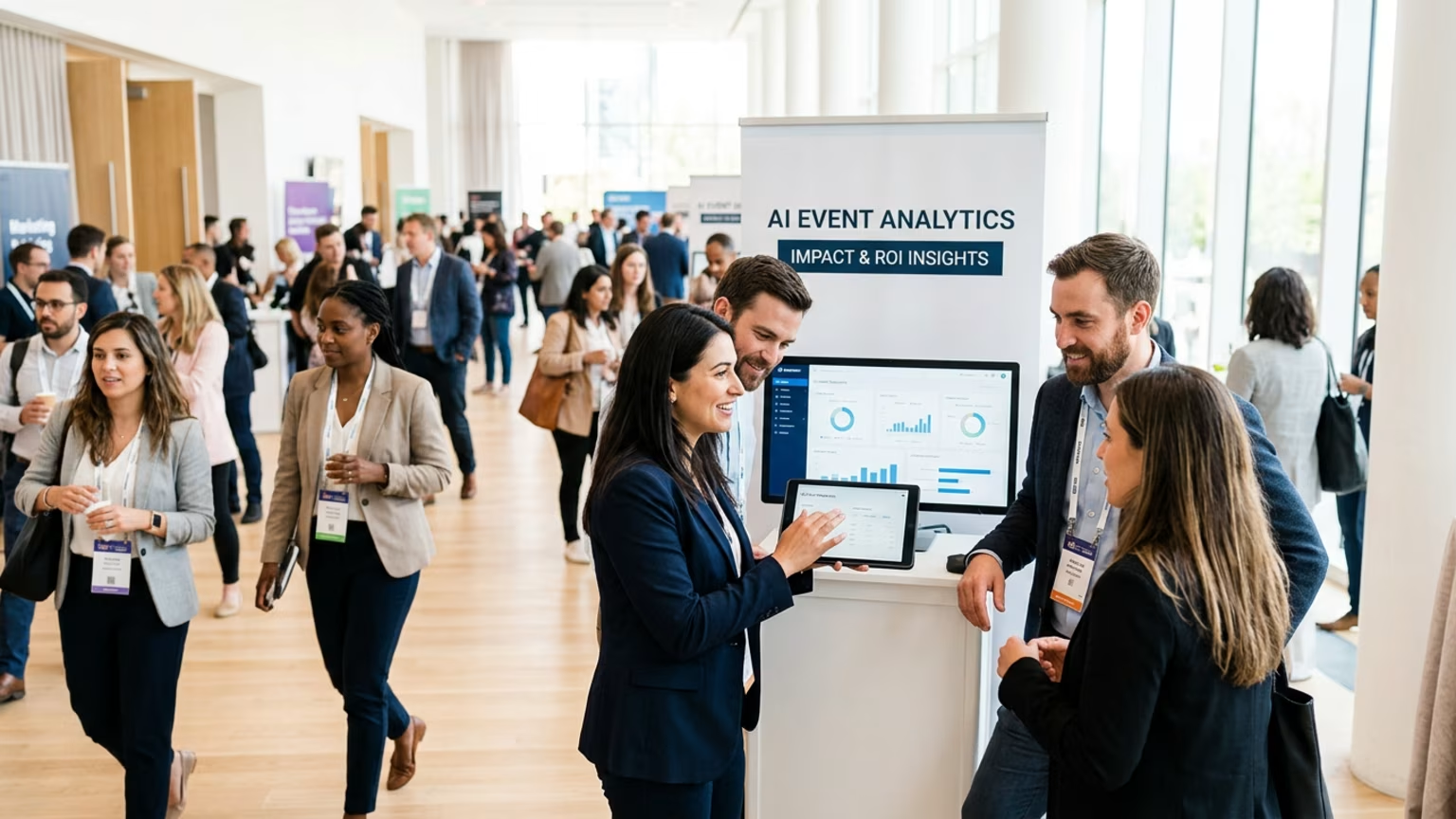
Marketing leaders need real proof that physical activations create pipeline and generate retail sales. New artificial intelligence tools measure actual buyer intent to turn fleeting conversations into predictable revenue.
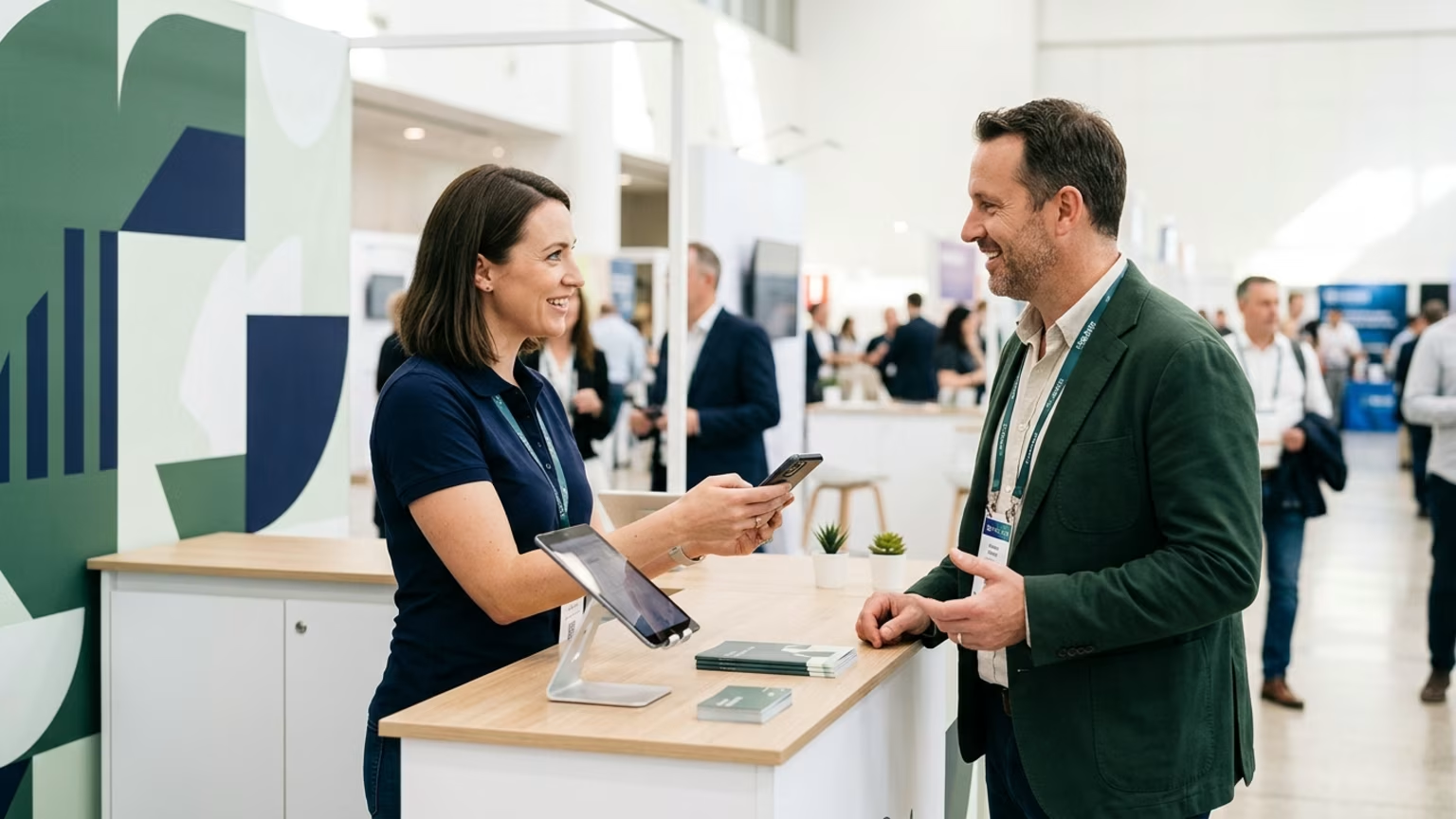
The carpeted aisles of the expo hall smell like stale coffee and ozone. A booth staffer scans a lanyard barcode before handing over a free tote bag. The attendee walks away without making eye contact or asking a question. Back at headquarters, a marketing coordinator exports a spreadsheet of 500 identical badge scans and calls it a successful campaign.
Executives face intense pressure to prove that live events generate Return on Investment. You cannot justify a massive booth build using basic attendance numbers anymore. Corporate leadership wants to see how field marketing activity connects directly to the sales pipeline. The old method of batch-loading cold contacts into a database creates friction and wastes valuable sales hours.
Trade show operations often suffer from a severe disconnect between field activity and backend reporting. Staff members collect business cards in fishbowls or write notes on scrap paper. These manual processes guarantee that high-value prospects slip through the cracks. Revenue teams lose faith in event marketing when they receive terrible data.
The situation worsens when brands participate in high-volume consumer events or roadshows. Sampling teams hand out thousands of products without capturing a single actionable data point. Field marketers fly blind when they try to attribute retail sales to physical activations. The chaotic environment of a live event demands a rigorous analytical solution.
Industry analysts report that over 70 percent of enterprise analytics initiatives now include machine learning components. This shift represents a massive upgrade from the basic tools of 2019. Event platforms now use algorithms to read attendee behavior and separate real buyer interest from casual booth tourism. Predictive analytics platforms analyze digital footprints to find true intent.
We build festival zones, premieres, and pop-ups that turn viewers into fans and fans into advocates. We design moments people want to share, using music tie-ins, screenings, and live stunts to bring stories to life. At the same time, our crews manage execution and track reach and response metrics. This approach requires tools that can capture real-time behavior without interrupting the consumer experience.
We rely on data integration to shorten the gap between a brand moment and a pipeline update. IBM notes that artificial intelligence helps businesses identify which signals indicate meaningful risk or opportunity. In experiential marketing, this means finding the people who actually want to buy your product. The technology sifts through noise to highlight the interactions that matter most.
According to market researchers, the demand for audience engagement analytics is growing rapidly. Systems that quantify attention could reach an $18.6 billion valuation within a decade. Marketers are done with vague dashboard metrics and static spreadsheets. They demand actionable reporting that prioritizes the best prospects automatically.
Marketing operators know that redefining event success metrics beyond attendance requires a clear framework. You need to capture dwell time, product interaction, and content downloads. These signals tell a much richer story than a simple badge scan. The technology translates physical behavior into digital intent.
Event reporting tools are increasingly built around automated analysis and team collaboration. Domo outlines that modern platforms streamline insights to help executives understand performance instantly. You no longer have to wait three weeks for a post-show wrap report. The data flows directly from the show floor to the boardroom.
Buyers demand cross-channel attribution to justify massive event budgets. Experiential marketers must connect event participation to downstream outcomes like retail sell-through. A single touchpoint rarely closes a massive enterprise deal or secures a national retail listing. You need a system that tracks the entire buyer lifecycle from the trade show floor to the final contract.
Artificial intelligence excels at connecting these scattered data points. It can match a booth visit to a subsequent website visit and a downloaded whitepaper. This comprehensive view helps you understand the true influence of your live activations. You stop viewing events in a vacuum and start seeing them as revenue accelerators.
For operations-focused marketers, the main value of modern tools is strict repeatability. Advanced analytics help identify which formats, audiences, and messages consistently produce the best outcomes. This intelligence makes future consumer activations much easier to scale nationally. You stop reinventing the wheel and start executing proven playbooks.
Frame your technology investment around reducing the dense fog in reporting. You need fewer vanity metrics and more concrete evidence of business impact. Executives respect marketing leaders who make fast decisions on where to double down or cut spend. Smarter reporting gives you the confidence to defend your experiential marketing budget.
To achieve this level of clarity, you need robust contingency planning for your data systems. Network failures and broken integrations can destroy your tracking efforts instantly. A backup plan guarantees that you never lose valuable intent signals during a chaotic live event. Preparation separates elite field marketers from the amateurs.
Moving from manual reporting to predictive analytics requires strict operational discipline. Your field team must capture data consistently for the algorithms to work properly. You need a structured approach to turn raw traffic into qualified leads. Use this playbook to deploy smarter tracking at your next activation.
Event leaders often rely on early KPI alignment to prevent reporting disasters. You must agree on what a qualified lead looks like before the event starts. The platform will prioritize follow-ups based on the strict rules you establish. This keeps your revenue teams focused entirely on the hottest opportunities.
We have seen firsthand what happens when brands skip this alignment phase. The field team captures hundreds of leads that the sales team completely ignores. A shiny new software platform cannot fix a broken internal process. You must build bridges between marketing and sales before deploying new tech.
Predictive platforms need clear numerical targets to measure campaign success. You have to track both immediate indicators and long-term financial results. The primary goal is to build a complete picture of event performance. Stop relying on estimated foot traffic and start measuring actual business value.
Lead metrics show you what is happening during the actual event. They provide real-time feedback on your booth design and staff performance. You can use these numbers to make adjustments on the fly.
Lag metrics tell you if the event actually made money. These numbers take weeks or months to finalize after the activation ends. They form the core of your executive reporting package.
Connecting these exact data points proves your direct business impact. Creating high Return on Investment leads requires relentless tracking and organizational discipline. When your executives ask for results, you will hand them a clear revenue narrative. You stop guessing and start proving your unquestionable value.
You must remember that correlation does not automatically equal causation. Event platforms might show that highly engaged attendees convert at higher rates. Proving that the event single-handedly caused the outcome remains a complex challenge. Stronger attribution requires controlled baselines and matched audience cohorts.
Consider a national beverage brand launching a new flavor at a major industry expo. Instead of counting physical samples distributed, they deploy advanced engagement tracking software. The system clusters attendees based on their interactions with specific product lines. The sales team receives a ranked list of distributors who spent time at the tasting bar.
The field marketing director uses this predictive data to adjust their retail strategy. They identify which target accounts showed the highest immediate purchase intent. The automated reporting tools consolidate the complex insights into a clean dashboard. This allows the brand to follow up aggressively with grocery buyers who actually tasted the product.
This methodology works perfectly for Costco roadshows and regional sampling tours. You can track which specific store locations generate the highest intent scores. The analytics platform helps you identify patterns in consumer behavior across different markets. You can then allocate your future experiential budget toward the highest-performing regions.
Let us look at another scenario involving a health and wellness snack company. They sponsor a massive outdoor fitness festival to drive local brand awareness. Their ambassadors use mobile tracking apps to scan QR codes during product interactions. The backend instantly scores these interactions based on survey responses and dwell time.
The system then triggers different follow-up sequences based on the calculated score. High-intent consumers receive a digital coupon for immediate use at a nearby retailer. Low-intent visitors get a standard email introducing the brand story. This automated segmentation drives higher coupon redemption rates and measurable retail sales lift.
Technology will never replace the profound impact of a great physical experience. It simply amplifies the hard work your field teams do every single day. If you want to stop guessing and start measuring your next campaign, book a strategy call. Real brands need real results to win on the physical floor.

30 Years Experiential & Retail Activation Partner for CPG & Beverage Brands | Multi-Market Demos, Roadshows & Costco/Club Programs That Actually Sell