Robbie Thain
Founder, CEO

Event Manager Blog details trade show lead capture best practices, comparing badge scanners and event apps to generate sales-ready data and maximize ROI.

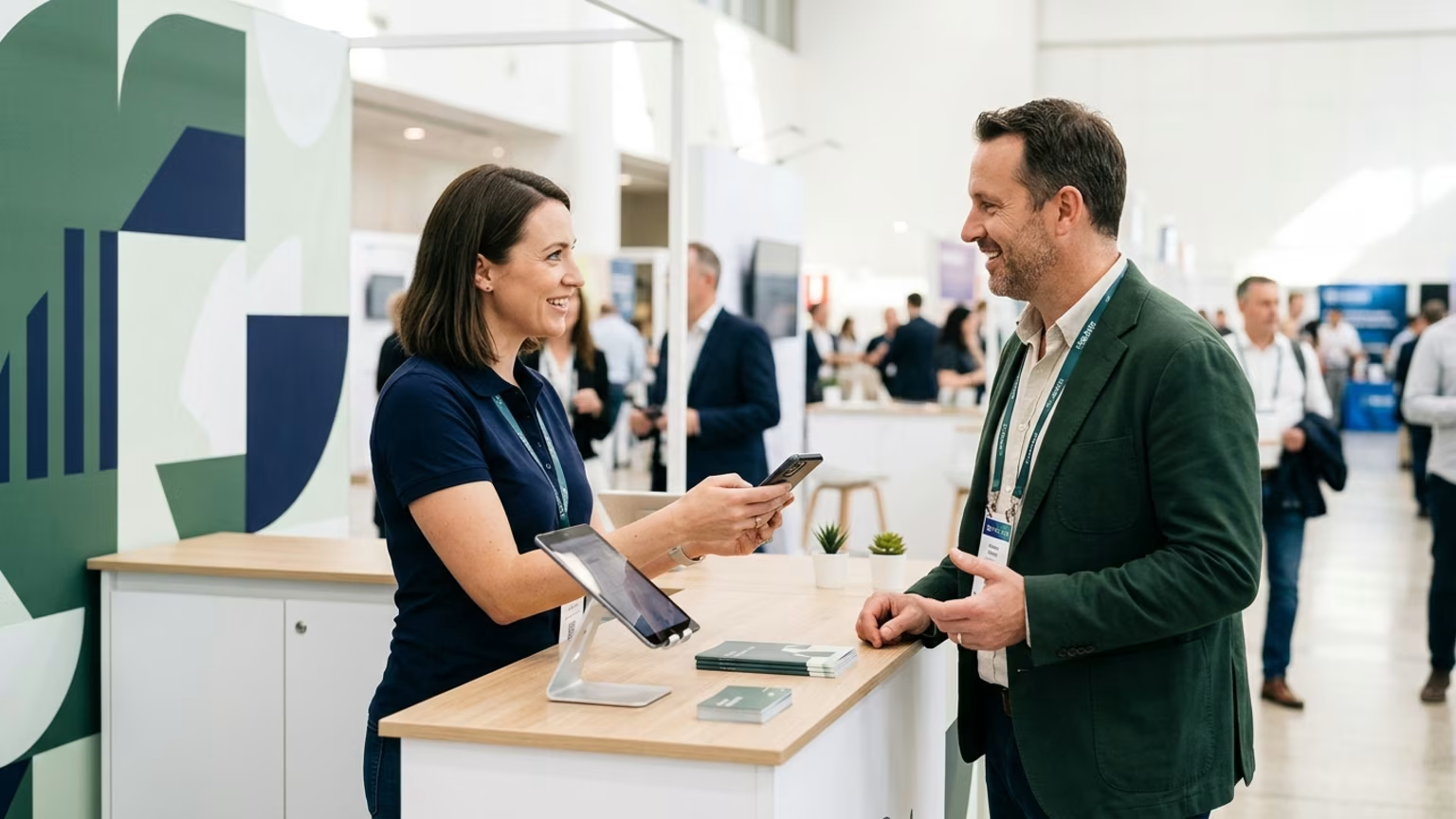
A line of eager attendees stretches past the booth while a single ambassador frantically points a rented plastic scanner at lanyards. The choice on the trade show floor is clear. Teams can either collect hundreds of meaningless scans or capture actual sales-ready data. Event Manager Blog recently analyzed these exact trade show lead capture best practices to solve this operational tension.
The legacy approach relies entirely on dedicated hardware provided by the venue or event organizer. Badge scanners are built for raw volume and frictionless interaction. Staff members point a device, click a button, and instantly pull basic registration details. The mechanical advantage of this system is undisputed speed during chaotic booth rushes.
This method brings severe logistical constraints for marketing teams. Without immediate custom qualification notes, these tools generate massive but undifferentiated lists. A scan simply indicates that a person walked past a booth and allowed a beep. It provides zero context regarding a buyer's timeline or their actual purchasing authority.
ExhibitionsVoice advises marketing leads to audit CRM entries by midday on the first day of an event. Empty notes often indicate a need for staff retraining or immediate replacement. When reps rely solely on the scanner, they forget to engage in meaningful dialogue. This creates a data vacuum that severely damages post-event sales operations.
In our experience, badge scanners often create a false sense of security for field teams. Staff see a high scan count and assume the activation was a massive success. We provide clear reporting on reach, trials, leads, and sales to guide next steps in campaign optimization. When relying solely on basic hardware, that exact sales reporting becomes nearly impossible to generate.
The alternative approach shifts the workflow from passive scanning to active CRM integration. Exhibitors are increasingly using event apps or custom smartphone flows to gather intelligence. Instead of renting proprietary hardware, booth staff use versatile digital applications on any smartphone. These platforms prompt representatives to complete specific qualifier fields before saving any new contact.
This completely changes the physical footprint and the execution model on the floor. According to Event Manager Blog, this transitions the process from a simple data dump into an actionable pipeline handoff. Teams can group contacts by asset interest or buying authority right at the point of capture. This allows brands to execute crm integrated lead capture that sales teams actually trust.
Modern event apps also feature specific technical safeguards like offline tolerance. This prevents devastating data loss during inevitable venue Wi-Fi failures. The software holds the captured information locally and syncs it the moment connectivity returns. Multi-rep deduplication features manage redundant scans if a visitor returns to speak with a different product specialist.
Custom QR flows offer another layer of engagement for passive booth traffic. Visitors can scan these codes on signs or displays to access dedicated landing pages rather than a general homepage. This routes traffic efficiently and allows for passive data collection that never interrupts the natural flow of conversation. The digital ecosystem works smoothly alongside the active ambassador team.
Sophisticated brands track unified data to see if a visitor also attended a sponsored session. This level of insight allows marketers to score leads based on their total event engagement. Our team regularly deploys these advanced systems for premium consumer packaged goods brands. Using internal staff or agency reps with strict qualification cards ensures the data justifies the software investment.
Renting physical badge scanners remains the optimal choice for specific high-volume environments. When a food brand activates a massive interactive display, sheer speed becomes the only metric that matters. These massive crowd aggregation moments make detailed data entry completely impossible. Badge scanners win decisively when pulling instant registration data is the primary operational goal.
Convey highlights that this method shines during rapid-fire peak hours. If a booth features a rapid sample giveaway for a new premium snack, staff cannot stop to ask lengthy qualification questions. The physical scanner allows the line to keep moving without causing bottlenecks in the aisle. In these exact scenarios, capturing a high volume of basic contacts is perfectly acceptable.
While detailed qualification forms produce better data, clunky tools can slow down busy conversations. The best lead capture must integrate cleanly with the physical layout to avoid feeling like an interrogation. Badge scanners avoid this trap entirely by keeping the interaction incredibly brief and entirely physical. A temporary brand ambassador can reliably scan a barcode without needing deep product knowledge.
Modern event apps absolutely dominate when the goal is immediate revenue generation and personalized follow-up. B2B Insiders suggests that waiting 48 hours to follow up can be too late for modern events. Hot leads require immediate outreach via automated CRM triggers before they even leave the show floor. Event apps make this real-time sync and automated messaging completely possible.
This approach is mandatory for strategic pre-show and on-site targeting. Lensmor research suggests that targeting 30 to 50 ideal customer profile companies can yield major operational results. This pre-show targeting helps booth teams secure between 8 and 15 pre-booked meetings for a typical 3-day event. Teams turn trade show booths into high-conversion mobile experiences by using a dedicated meeting host to check in these VIP targets.
ExhibitionsVoice recommends a strict qualification framework for general booth traffic. According to their research, booth staff should aim to qualify leads in under two minutes. They must ask four targeted questions regarding role, timeline, authority, and current vendor. Event apps enforce this exact discipline by making these fields mandatory before the contact record saves.
RMD Photobooths recommends placing interactive engagement elements past the initial qualification point. This strict layout ensures staff prioritize their time with high-value visitors. Event apps allow reps to quickly verify a visitor's status before granting access to premium demonstrations. This gateway approach protects staff energy and ensures that hot prospects receive the most attention.
Our measurement approach tracks awareness, engagement, and conversion to prove this business impact. Marketing leaders must define clear qualification criteria like budget and authority before the event begins. Marketers should define clear anchor touches in the CRM so that follow-up is prioritized by pipeline value.
Transitioning away from rented hardware creates a noticeable shift in budget allocation. Using event apps avoids the steep cost of renting dedicated scanners from the event organizer. This saved capital must be reinvested directly into rigorous staff training. The software is only effective if the people holding the devices know how to use them properly.
The return on investment heavily favors the app-based approach for complex sales cycles. Because leads are instantly categorized, sales teams spend zero time sorting through empty contact records. They can execute real-time event lead capture workflows that trigger tailored nurture sequences within two hours. Teams must always maintain one fully charged backup device per booth zone to protect this critical data flow.
Poor lead management directly drains the marketing budget through wasted follow-up efforts. Empty notes in a system mean sales representatives waste hours researching prospects who were never qualified. Investing in intelligent capture platforms completely eliminates this administrative drain. The upfront software cost is quickly offset by the massive increase in qualified pipeline generation.
The verdict is straightforward for marketing operators focused on measurable business outcomes. If your primary objective is distributing thousands of samples, the classic badge scanner holds the line. It handles raw volume and keeps the aisle traffic moving without causing major logistical bottlenecks. Brands can successfully run simple awareness campaigns using this legacy hardware.
If your mandate is driving real pipeline, the shift to event apps is mandatory. The era of spraying generalized emails to an undifferentiated list of basic scans is completely over. To truly capitalize on field marketing efforts, brands must align their capture strategy with their revenue goals. Start your next campaign by defining clear qualification criteria in your CRM today.

30 Years Experiential & Retail Activation Partner for CPG & Beverage Brands | Multi-Market Demos, Roadshows & Costco/Club Programs That Actually Sell