Robbie Thain
Founder, CEO

Marketing leadership shifts at GM, Behr, and Johnson Outdoors show why brands must prioritize flawless physical activations to fix real-world conversion.
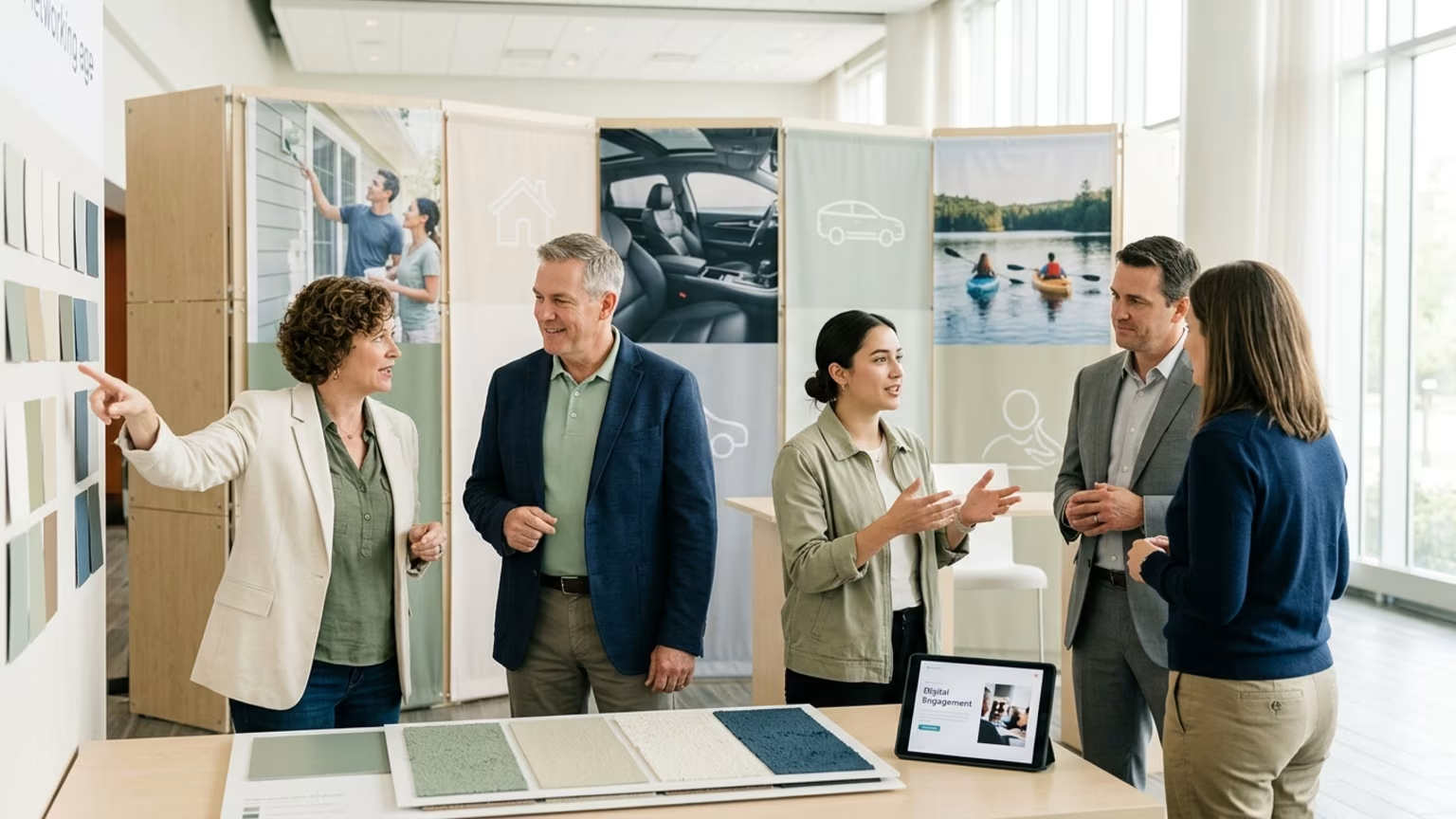
Your massive digital marketing budget is likely masking a severe physical conversion problem at retail. General Motors, Behr Paint Company, and Johnson Outdoors are currently signaling a major shift in how brands value live interactions. Recent marketing leadership changes at these exact companies prove that algorithmic discovery means nothing if the in-person product experience fails to close the deal. We see brand leaders firing agencies that build pretty event booths but forget how to sell products.
Too many marketing directors treat experiential budgets like a vanity fund for brand theater. They approve six-figure invoices for massive interactive footprints that generate zero qualified pipeline. The industry has become obsessed with digital twins and virtual engagements while ignoring the baseline reality of human behavior. Consumers still need to touch, taste, and try products in the real world before they commit to a purchase.
The era of tracking arbitrary impressions to justify an experiential footprint is officially over. Executives are tired of receiving post-event wrap reports filled with vague sentiments and generic foot traffic numbers. When new chief marketing officers take the helm, they immediately audit these physical marketing programs to demand actual accountability. They want to see how a live event directly influences a retail meeting or a dealership visit.
These leadership shifts indicate that top brands are recalibrating their integrated campaigns to prioritize high-touch physical events. Marketers who refuse to adapt will continue bleeding their budgets dry on activations that look great on social media but fail to move inventory. It is time to stop hiding behind digital metrics and start demanding real performance from field teams. The pressure to prove sales lift and retail sell-through has never been heavier for modern marketing operators.
The mainstream approach to event marketing often devolves into a beautiful disaster. Marketing leaders spend exorbitant amounts of money on custom fabrication and lighting but completely neglect the lead capture process. A CMO usually feels intense anxiety over spending massive budgets to get zero actionable data in return. This anxiety is completely justified when you look at how poorly most consumer events operate.
Traditional marketing metrics stopped keeping pace with modern car shoppers long ago. Former Nissan CMO Allyson Witherspoon knew the brand needed a massive pivot to better understand consumers and connect with them exactly where they are searching. According to recent insights from her tenure, shifting to algorithm-optimized discovery helped Nissan shorten the purchase cycle and boost conversion metrics. This strategic shift helped drive retail sales growth and positioned Nissan as the fastest-growing mainstream auto brand in the United States.
But capturing that initial digital interest is only half the battle for modern brands. When consumers show up to physical events, they often encounter disengaged staff and fragmented brand messaging. The disconnect between a slick digital ad and a messy live activation creates immense friction for the buyer. Instead of building trust, these disjointed programs actively erode consumer confidence right at the point of decision.
You can see this tension building across the entire experiential sector today. Brands pour resources into sophisticated backend technology but fail to execute basic lead capture mechanics at the activation site. The result is a total loss of momentum and a failure to measure Return on Investment accurately. Field marketing managers are left guessing what actually works on the show floor.
There is a much better way to manage live events and integrated marketing programs. At makai, we combine operator-grade discipline with an aloha-style approach to human connection. We know that real-world consumer engagement requires trained ambassadors having authentic and warm conversations with buyers. This balance of rigorous field execution and genuine hospitality turns passing crowds into loyal customers.
Consider the recent digital transformation happening at Behr Paint Company. Adweek reports that Behr has promoted Andy Lopez to the role of Chief Marketing Officer. In this expanded role, Lopez is responsible for product strategy, marketing, and innovation. The paint brand launched AI tools aimed at reducing the "color paralysis" that plagues DIY consumers.
Taking a digital tool like this and making it work in a physical retail setting requires exceptional field execution. If a consumer interacts with an AI color tool online, they still need to feel confident when buying the physical paint. This is where trained brand ambassadors make a massive difference during in-store retail demonstrations. Our comprehensive brand activation services ensure that the human element matches the sophistication of the digital product.
We train teams to bridge the gap between high-tech software and high-touch retail interactions. This level of care is especially important during massive product launches and market entries. A brand might have the best digital targeting in the world, but a poorly staffed activation will completely ruin the conversion path. We treat every single retail demonstration as an opportunity to build trust through genuine conversation.
A successful activation requires detailed logistical planning long before the first consumer arrives. We store your event gear, handle the shipping, and coordinate nationwide delivery so every roadshow stays perfectly on schedule. This operator mentality eliminates the chaos that usually plagues mobile sampling tours and large consumer events. We replace the standard agency panic with calm, methodical, and trackable execution across every market we cover.
The objective of an activation must shift from counting passive impressions to tracking tangible business outcomes. Witherspoon recently left her role as chief marketing officer of Nissan to serve as chief marketing officer of General Motors' Buick and GMC brands. She spent approximately 12 and a half years at Nissan and Infiniti before making this transition. Her move to General Motors suggests a heavy focus on field marketing and automotive ride-and-drive tours.
When auto brands invest in these mobile roadshows, they cannot simply count the number of test drives and call it a success. They need to track how many of those test drives convert into qualified dealer appointments. Every experiential program must operate as a measurable channel that feeds directly into the sales pipeline. As recent coverage of the industry shows, vanity brand activations are no longer acceptable to senior leadership.
We see similar signals coming from other major product categories right now. The marketing leadership shift at Johnson Outdoors points toward a renewed demand for outdoor activation roadshows. Outdoor gear brands rely heavily on product demos to build consumer trust and drive retail sell-through. These companies need field teams that can clearly demonstrate product utility in rugged, real-world environments.
Instead of asking how many people walked past a booth, marketers need to ask how many samples reached target buyers. They must demand clear reporting on how many retail meetings were booked as a direct result of the activation. By shifting the goalposts toward these hard metrics, brands can finally align their physical events with their broader revenue targets. You must prove that your activation directly caused a specific purchasing behavior.
This level of accountability completely changes how field teams approach their daily operations. Brand ambassadors stop acting like passive greeters and start acting like knowledgeable product educators. They actively pull consumers into the demonstration area, qualify their interest, and present a compelling case for the product. This aggressive but hospitable approach is exactly what new marketing leaders expect when they approve field marketing budgets.
Marketing operations require a rigid focus on outcomes rather than just beautiful aesthetics. The leadership moves we see across automotive, home goods, and outdoor sectors prove that executives are demanding better data from their campaigns. Brands must pair their high-tech digital systems with flawless physical activations to win trust in the real world. Success ultimately belongs to the marketing teams that demand operational excellence and measurable trial at every single consumer touchpoint.

30 Years Experiential & Retail Activation Partner for CPG & Beverage Brands | Multi-Market Demos, Roadshows & Costco/Club Programs That Actually Sell


