Robbie Thain
Founder, CEO

MARS Cosmetics launched a mobile roadshow in Mumbai and Delhi. Learn how lean, single-vehicle activations drive street-level impressions and measurable pipeline.
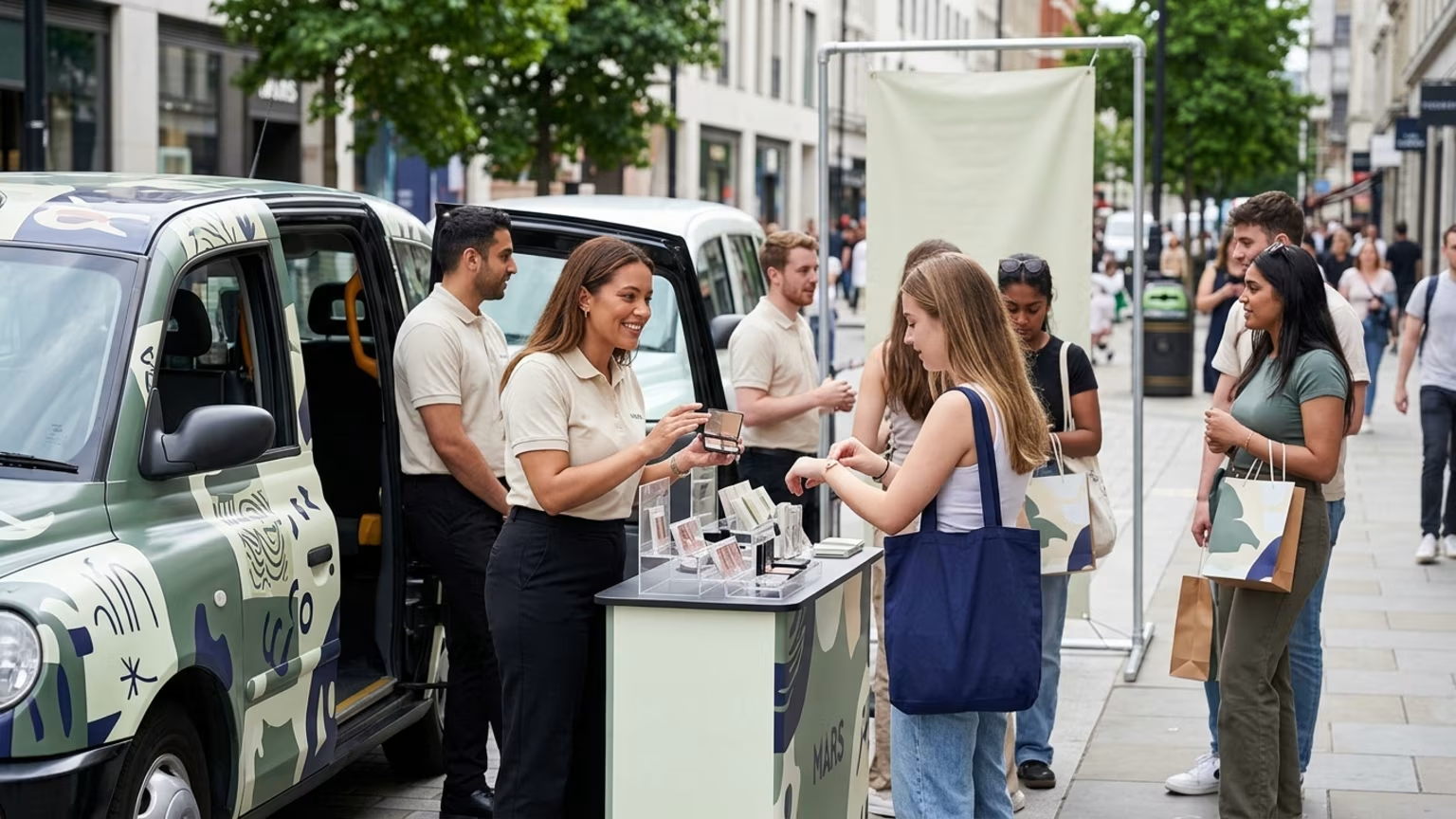
On August 31, 2026, MARS Cosmetics extended its "Living the MARS Life" campaign beyond digital channels and into public spaces in Mumbai and Delhi. The brand deployed mobile branded vehicles to create direct consumer encounters instead of asking audiences to attend a fixed event venue. This activation model demonstrates how companies can execute lean roadshows to secure repeated street-level impressions without the burden of massive infrastructure. The cosmetics brand built this field strategy around familiar urban environments to bridge the gap between screen time and physical reality.
The primary goal was to place the brand directly into the daily paths of potential buyers. This shift from massive event builds to focused vehicle deployments highlights a growing demand for agility in physical marketing. It provides a blueprint for brands trying to generate local market excitement quickly. A well-planned mobile approach allows field teams to intercept consumers actively rather than waiting passively in a rented booth.
The physical activation relied on two related but distinctly localized vehicle formats across the major cities. In Mumbai, the brand utilized its official mascot MARSIE, who traveled for three days in a specially branded cab. The execution was built around constant mobility and high visibility in a dense metropolitan area. The branded cab moved through prominent locations including Marine Drive and the Sea Link.
By keeping the vehicle in motion through iconic transit corridors, the brand naturally integrated into the existing flow of city traffic. This requires careful route planning to maximize exposure without getting bogged down by gridlock. Marine Drive and the Sea Link gave the Mumbai execution recognizable city context. MARSIE and the branded cab gave the Mumbai activation an instantly identifiable focal point.
In Delhi, the company adapted the model by partnering with ice cream brand Giani’s. The Delhi execution utilized a branded canter to travel through parts of the city. A canter serves as a larger mobile promotional vehicle that allows for deeper physical engagement. Operating a larger vehicle in Delhi introduces different logistical variables regarding parking clearances and traffic regulations.
This strategic partnership placed the cosmetics brand alongside an everyday ice cream moment. These parallel executions show how a campaign can adapt to specific local contexts while retaining one central platform idea. The Mumbai footprint relied on a single recognizable character and a standard car frame. Both methods bypassed the traditional headaches of securing square footage at a crowded convention center.
At Makai, we view every physical interaction as an opportunity to generate measurable sales pipeline. The single-vehicle mobile roadshow offers a clear model for cost-conscious consumer brands wanting direct street-level sampling. A lean format reduces complex freight costs and minimizes the time spent setting up stationary booths. It allows marketing operators to put their budgets into direct consumer engagement rather than expensive venue fees.
However, the difference between a successful marketing campaign and a moving billboard comes down to operational discipline. A branded cab driving past the Sea Link generates visibility, but field marketers must separate raw visibility from verified performance. Memorability is an excellent creative goal, but it is not equivalent to product trial or retail conversion. Brand decision-makers must demand more than just social media photos from their field teams.
Brands must plan their commercial objective long before the vehicle hits the street. For a sampling or trial-led campaign, recommended indicators include participation rate and qualified lead capture. Operators should also track engagement time, content sharing, cost per engaged guest and post-event conversion. If the priority is trial, operators need to track every sample distributed and measure sample-to-purchase behavior.
Current guidance recommends evaluating participation and engagement as early metrics. Teams must also track amplification, brand impact and business impact as distinct measurement layers. Relying solely on estimated impressions is a mistake that leaves teams unable to prove business value. Brands that launch these initiatives must implement strict data-driven measurement protocols to justify their field marketing investments.
Transitioning to highly mobile assets radically changes the daily rhythms of field execution. Staffing requirements shift from managing static crowds to intercepting people quickly in transient environments. Route planning becomes the most critical operational variable for the entire program. Field managers must consider exactly where the target audience already commutes, shops, eats, or socializes.
The Delhi execution proves the absolute value of contextual route planning. Partnering with Giani's meant the cosmetics brand did not have to manufacture an engagement occasion from scratch. They simply attached their physical activation to an existing ice cream routine. This strategy requires precise coordination between route drivers, brand ambassadors, and partner representatives to keep the experience cohesive.
From a measurement perspective, keeping the physical footprint lean cannot mean settling for thin evidence. Mobile operations require technology integrations that work flawlessly on the street. Staff must use trackable QR codes, unique promotional links, and consented opt-ins to connect brief encounters to downstream actions. Practitioner guidance recommends using holdouts, trackable consumer actions and CRM or transaction data to connect an activation with downstream outcomes.
A holdout market approach is highly practical for a city roadshow. Field teams can compare activated neighborhoods or specific routes against comparable non-activated areas. This comparison design helps evaluate outcomes such as sales volume, search volume, or app installs accurately. We specialize in creating retail demos, product sampling programs, and roadshows that bring brands face to face with their audiences.
Scaling these tactical setups into multi-city roadshow expansions demands rigorous supply chain tracking and localized performance monitoring. Operators must standardize their data capture protocols across every participating market. When field teams lack a unified reporting system, critical pipeline data gets lost on the pavement. The focus must always remain on turning fleeting attention into a documented commercial relationship.
The internal narrative driving this campaign focused entirely on breaking the digital barrier. Suramya Patsaria said the Mumbai execution was intended to translate the “Living the MARS Life” idea into street-level experiences and allow consumers to encounter the campaign beyond the screen. This physical translation gives digital followers a tangible reason to interact with the brand in public. It proves that outdoor activations still hold significant weight for modern consumer brands.
Tanya Rashi explained that the Delhi activation was a collaboration between MARS and Giani’s that brought together beauty and an everyday ice cream occasion. This approach highlights a smart psychological tactic for field marketing. Instead of interrupting a consumer's day with an aggressive sales pitch, the brand inserted itself into a moment of leisure. These strategic choices reflect a clear intent to make the product a physical part of the consumer's existing lifestyle.
Will your next mobile vehicle deployment capture the verified data needed to prove retail lift, or will it remain an untrackable asset rolling through traffic?
Relying on a single mobile vehicle reduces logistical overhead but forces marketers to capture consumer data during extremely brief street encounters. When Makai directs your field operations, we eliminate the difficulty measuring real ROI from live events. Through our Experiential Marketing capability, we create hands on brand moments that connect emotionally and turn customers into ambassadors. Request a proposal

30 Years Experiential & Retail Activation Partner for CPG & Beverage Brands | Multi-Market Demos, Roadshows & Costco/Club Programs That Actually Sell


