Robbie Thain
Founder, CEO

As conversational AI reshapes CPG product visibility, physical retail execution remains critical. Find out how field operations validate digital claims.
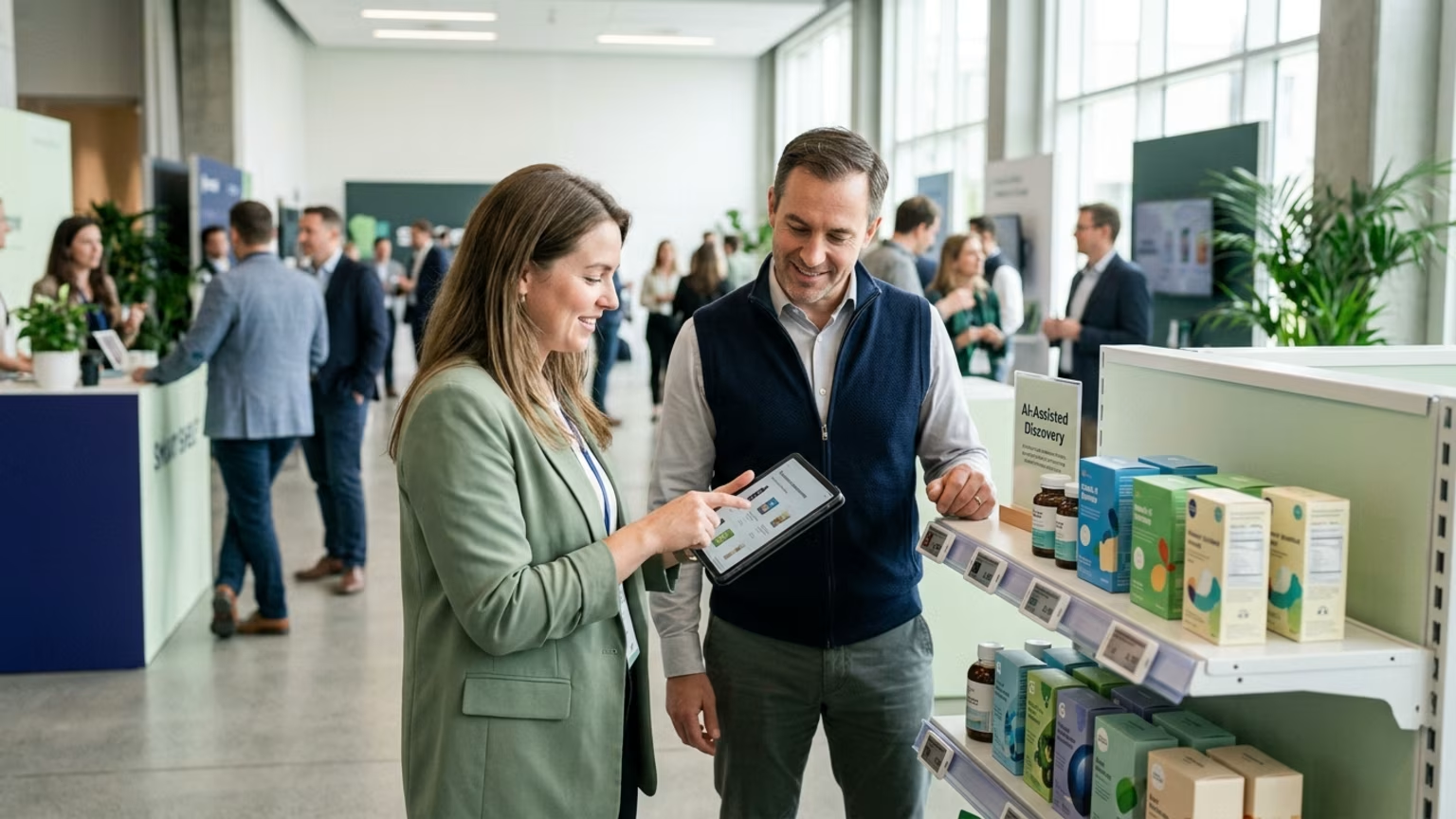
In September 2026, Modern Retail reported on the emergence of the "AI shelf" as a new product-discovery environment alongside physical shelves and digital storefronts. As consumers increasingly ask ChatGPT, Claude, and Gemini for recommendations, CPG brands face a critical shift in how products gain initial visibility. This development changes the traditional path to purchase for food, beverage, and wellness categories. Marketing leaders must now evaluate how their products surface in machine-generated answers while maintaining strict control over their physical retail execution.
The mechanics of brand visibility are rapidly expanding into conversational interfaces. According to Modern Retail, consumers are leaning on AI systems to filter options before they ever walk into a grocery store. To demonstrate this shift, tech writer Deana Burke created a fictional natural-deodorant brand to test whether AI bots would recommend it to users. Modern Retail reports that the experiment worked, successfully prompting the bots to suggest the non-existent product.
Google recently formalized how retailers track this new visibility across its ecosystems. Google says Merchant Center AI performance insights are available in the United States and four other markets. Google describes its Merchant Center feature as a way for retailers to understand brand and product discovery across conversational shopping surfaces. The reporting tool provides comparisons of share of voice across AI Mode and AI Overviews.
Industry leaders are already adapting their strategies to accommodate these new data streams. Modern Retail noted that Jessica Wright, senior vice president of product at SPINS Foundry, discussed this exact evolution in a recent podcast. The conversation covered personalized AI recommendations and the urgent need for making products machine-readable for AI agents. Wright also detailed the broader implications for organic and paid marketing efforts in the CPG sector.
While digital teams race to decode these new algorithmic preferences, our stance remains grounded in physical reality. An AI recommendation might put your snack or beverage on a consumer's radar, but a machine interface cannot replicate a sensory experience. CPG brands cannot rely solely on chat interfaces to drive retail velocity. The actual transaction happens when a shopper decides to taste, trust, and purchase a physical item.
We deliver carefully executed, face-to-face marketing experiences designed to capture attention and generate measurable sales pipeline. If an AI agent recommends a new sparkling water, the next operational step must be a flawless retail demonstration. Shoppers need to hold the can, taste the product, and speak with a knowledgeable representative. We specialize in creating retail demos, product sampling programs, and roadshows that bring brands face to face with their audiences.
Each program is designed to drive trial, build consumer relationships, and accelerate retail velocity across multiple locations. Many marketing executives assume that winning the digital recommendation is the finish line. We view the AI shelf as merely an entry point that demands rigorous physical validation. To fully bridge the gap between physical product trials and digital retargeting, your field marketing must be just as precise as your data architecture.
A Director of Brand Strategy in the CPG snack division shared: "The Makai team turned our product launch into a sensory event that shoppers still talk about. From creative storytelling to flawless in-store execution, they made snack time unforgettable. We couldn't have asked for a stronger partner." Our team created an in-store experience that left a lasting impression on consumers and became a memorable brand moment.
Building consumer trust requires more than passive shelf visibility. We turn audiences into participants with live and digital experiences that invite people to try, share, and act. When a shopper reads an AI summary about a new functional beverage, they only possess theoretical knowledge about its benefits. Engaging them in a physical setting closes the loop between digital awareness and actual consumption. This strategy ensures that marketing investments produce concrete Return on Investment rather than just digital impressions.
The rise of machine-assisted discovery creates a direct domino effect on field marketing and retail operations. When consumers arrive at a physical store based on an AI recommendation, their expectations for product education are heightened. This behavioral shift requires CPG field teams to align their physical talking points directly with the machine-readable data living online. If a chatbot highlights a specific health benefit, the brand ambassadors in the aisles must be trained to reinforce that exact claim.
This digital evolution also alters trade show footprint flow and buyer engagement strategies. Retail buyers are doing preliminary research through AI summaries before they ever walk an expo floor. We plan and manage trade show spaces that attract attention, start conversations, and convert visitors into customers. To stand out, these physical spaces must move past basic information distribution and offer immediate sensory validation.
A strong booth design ensures that your live interactions validate the claims the AI shelf has already made. By designing strategic trade show booths for product trials and buyer meetings, brands can turn initial curiosity into documented sales pipeline. Furthermore, the logistical burden of supporting these connected campaigns requires disciplined inventory management. Marketing leaders cannot afford stockouts when an AI recommendation drives an unexpected surge in store traffic.
We store your sampling product and event gear, then ship, track, and coordinate delivery nationwide so every activation stays on schedule. Maintaining this operational rigor solves the problem of inefficient post event follow up and CRM routing. For teams managing multi-regional efforts, a specialized field logistics playbook for moving product and equipment is an absolute necessity.
The same principles apply to wholesale environments and high-volume retail locations. Shoppers entering warehouse clubs are increasingly informed by digital recommendations before they grab a cart. We manage end to end Costco roadshows that bring brands to shoppers through live demos, real conversations, and measurable sales impact. This direct approach ensures that machine-generated awareness translates directly into pallet depletion.
Brands seeking aggressive growth must structure their experiential playbook for product launches and Costco market entry with the same precision they apply to their digital product data. We design mobile activations and roadshows that accelerate consumer trial, build trust, and boost retail velocity during 90-day product launch windows. Our structured approach transforms initial product trial into sustained consumer confidence and retail performance. Brands that win in this new environment will synchronize their digital visibility signals with flawless real-world execution.
As AI agents rewrite the rules of product discovery, are your physical field activations equipped to validate those digital promises at the retail shelf?
After consumer packaged goods marketers secure visibility on machine-driven discovery platforms, translating those digital recommendations into physical product trial becomes the immediate challenge. Makai builds live interactions that validate online claims at the point of purchase. Using our Consumer Events capability, we design memorable live experiences that bring brands and people together through interaction, emotion, and engagement. This disciplined approach eliminates low quality leads from crowded trade shows and store aisles.

30 Years Experiential & Retail Activation Partner for CPG & Beverage Brands | Multi-Market Demos, Roadshows & Costco/Club Programs That Actually Sell