Robbie Thain
Founder, CEO

Learn how to manage advance warehousing, control field logistics, and route event data directly to your CRM. Turn physical activations into measurable pipeline.
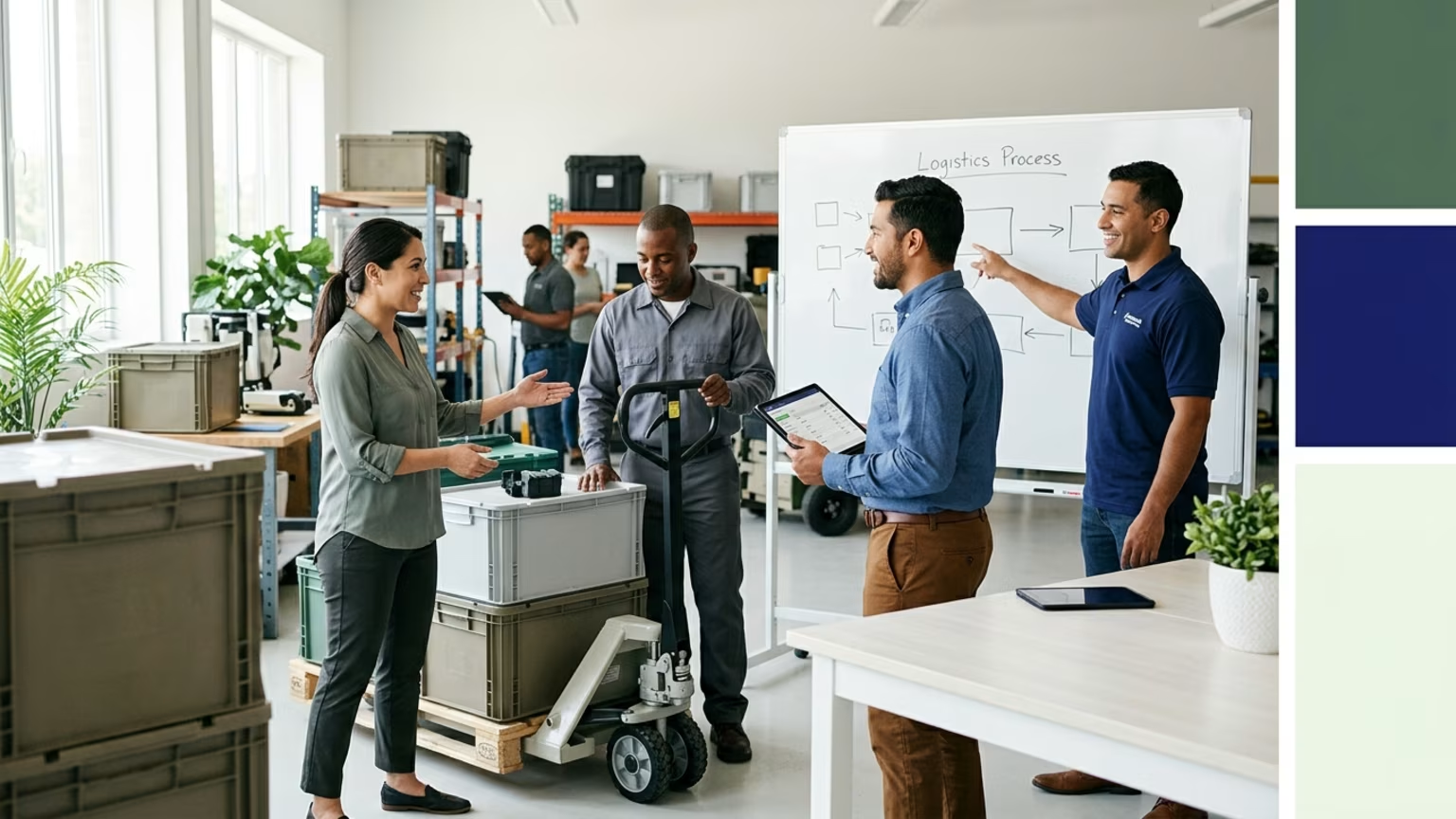
Advance warehouses for trade shows commonly open 21 to 30 days before exhibitor move-in. That narrow window dictates the entire rhythm of field logistics for multi-market activations. Missing that receiving period introduces unexpected storage fees, creates chaos on the floor, and puts your entire activation at risk. The modern trade show relies on absolute precision to function properly.
How do you move product, equipment, and branded environments across multiple markets while preserving control? The answer lies in treating your event program as a highly disciplined mobile supply chain. You must replace informal packing habits with a master asset register and rigorous modular kitting. Every structural component, tablet, and case of sample product needs a defined chain of custody.
Many marketers underestimate the complexity of moving physical brand assets across the country. They rely on fragmented spreadsheets and assumption-based forecasting to stock their booths. This lack of control leads to damaged structures, empty sample trays, and exhausted field staff. Treating your multi-city product launch as a strict logistics operation eliminates these blind spots completely.
A successful field program forecasts opening inventory and return shipments based on actual venue rules. Teams cannot afford to treat physical equipment movement as an afterthought. The result is a controlled operational process that secures your Return on Investment from the loading dock to the final handshake. You gain total visibility over your physical brand presence.
An event calendar directly dictates your freight timeline. Every activation date establishes a firm delivery date, and that deadline determines when kits must be picked and packed. Operating without a backward-planned schedule guarantees late arrivals and missing elements. You must build your logistics plan around the official exhibitor manual for each specific venue.
Relying on generic transit times is a fast track to operational failure. Venue timelines are highly specific and rarely flexible for individual brands. The 2026 IMEX America schedule cited by Circle Exhibit listed advance-warehouse receiving from September 9 through October 2. Targeted move-in ran from October 10 to October 12, while direct-to-show receiving occurred only on October 12 from 8 a.m. to 5 p.m.
Current GES service instructions reinforce how precise these facility rules can be. They define strict receiving periods, mandatory warehouse hours, and rigorous same-day unloading cutoffs. Freight arriving too early or after the deadline often incurs significant financial penalties. Teams must compare total landed costs instead of focusing entirely on standard shipping rates.
You must account for potential early-arrival fees when planning your advance warehouse strategy. It introduces an additional custody point and can create storage charges if freight arrives before the receiving window. Smart field operators review the venue documentation thoroughly before signing a carrier contract. This strict adherence to the rules protects the marketing budget from unnecessary fines.
Flawless freight delivery is only the first phase of a successful activation. The logistics supply chain exists solely to put the right tools into the hands of trained talent. Without experienced brand ambassadors, a perfectly staged booth is just an expensive display. makai deploys a human-centric aloha methodology to transform physical spaces into genuine connections.
Our field teams operate with absolute discipline while bringing warmth and energy to the floor. We train staff to manage local logistics, handle modular kits, and engage consumers naturally. This approach ensures every trial and conversation reflects the core identity of the brand. We know that real-world engagement requires both operational precision and authentic human connection.
When the freight doors open, local talent becomes the ultimate steward of your expensive assets. They follow the chain of custody protocols to unpack, stage, and operate the environment flawlessly. This ensures that the investment in moving physical goods translates directly into measurable consumer participation.
We have seen this dual approach drive remarkable outcomes in the field. A VP of Marketing in the CPG beverage category told us: "Robbie, your leadership and vision turned our campaign into something truly special. The Makai team brought our new drink to life with energy, creativity, and flawless execution. Thanks to you, our brand isn't just tasted, it's remembered." Our team's approach transformed their product launch into a memorable brand experience.
Field marketing must produce qualified pipeline rather than just scanning badges in crowded aisles. Your field ambassadors are the primary link between a live conversation and your sales database. Gathering clean data on the floor requires the same discipline as managing your physical freight. Teams must capture lead information securely and route it accurately into the central system.
Technology alone does not solve the data routing challenge. Barcode scanning and digital tracking are effective only when paired with documented handoffs. Every lead captured during a trial must sync with a verified interaction record. This structural alignment allows marketing leaders to track consumer movement from first touch to final purchase.
Executing a massive tour requires a scalable logistics playbook that standardizes data collection everywhere. You cannot have one region using digital tablets while another region collects business cards in a bowl. Standardizing the hardware and software across all markets ensures data integrity for the national sales team. Every interaction must flow seamlessly into the CRM without manual data entry delays.
Clear CRM routing proves the real business impact of your physical event. Without centralized reporting, you cannot measure the actual conversion rate of your regional activations. A strong digital integration ensures that local field operations deliver measurable value to the national sales team. Closing the execution gap requires viewing every product sample as a data collection opportunity.
Post-event reconciliation connects physical inventory usage to the digital lead data. A complete audit requires counting remaining collateral, verifying condition reports, and logging total units consumed. These numbers help teams calculate the exact cost per sample and cost per market. Integrating this data with your CRM records justifies your next activation budget and proves true event performance.
Even the most structured multi-market campaigns face unexpected supply chain disruptions. Direct-to-show freight might miss a narrow unloading cutoff due to bad weather or carrier errors. A staging warehouse could reject a shipment if the seals or cases show visible damage upon arrival. Field generals must maintain a concrete contingency plan for every major venue.
The first defensive measure is splitting your high-risk inventory. Never pack critical operating equipment and generic collateral in the same consolidated crate. If a secondary shipment faces delays, your local staff can still launch the activation on time. Implementing bulletproof contingency frameworks ensures a single lost carton does not ruin the consumer experience.
Advance warehouses provide a crucial buffer against last-minute freight disasters. Staging materials locally allows teams to consolidate shipments from multiple vendors into one controlled venue delivery. However, this extra custody point requires careful coordination to avoid unexpected storage charges. You must verify warehouse receiving confirmations and demand condition checks before move-in day.
Managing a complex activation requires tech-enabled visibility over your freight. Real-time tracking combined with strict chain of custody protocols keeps your headquarters informed during a crisis. If a shipment is flagged as missing, the central team can deploy reserve stock immediately. This proactive stance keeps the field team focused on consumer interaction rather than hunting for boxes.
Your local talent must know exactly who to call when a pallet goes missing. Establishing a clear escalation path prevents minor delays from escalating into total activation failures. The field manager must possess the authority to authorize emergency replenishment orders instantly. Prepared teams handle floor disruptions silently while maintaining a flawless presentation for the consumer.
Experiential programs scale effectively only when marketing teams control the physical supply chain. The smartest immediate step is creating a master asset register with unique identifiers for every item. Document the dimensions, weight, and accountable owner for all equipment. Stop treating post-event logistics as an afterthought and start planning your return shipments in advance.
Centralized inventory visibility allows leaders to forecast demand accurately across multiple markets. Teams can move beyond anxious replenishment and base their orders on actual consumption rates. Start treating your mobile activations as integrated logistics networks. A systematic approach reduces wasted spend and extends the lifespan of your physical brand assets.
You must build a culture of accountability for every item that leaves the warehouse. Remembering that advance warehouses open 21 to 30 days early ensures your next setup starts with confidence. Better logistics planning translates directly into better consumer interactions on the floor. Take command of your physical supply chain today to guarantee measurable results tomorrow.
makai creates high impact experiential marketing campaigns and trade show activations that turn fleeting consumer interactions into qualified leads for CPG marketers and beverage brand managers. We navigate complex event logistics, permits, and staffing to ensure your physical activations generate reliable qualified pipeline rather than just vanity metrics.

30 Years Experiential & Retail Activation Partner for CPG & Beverage Brands | Multi-Market Demos, Roadshows & Costco/Club Programs That Actually Sell