Robbie Thain
Founder, CEO

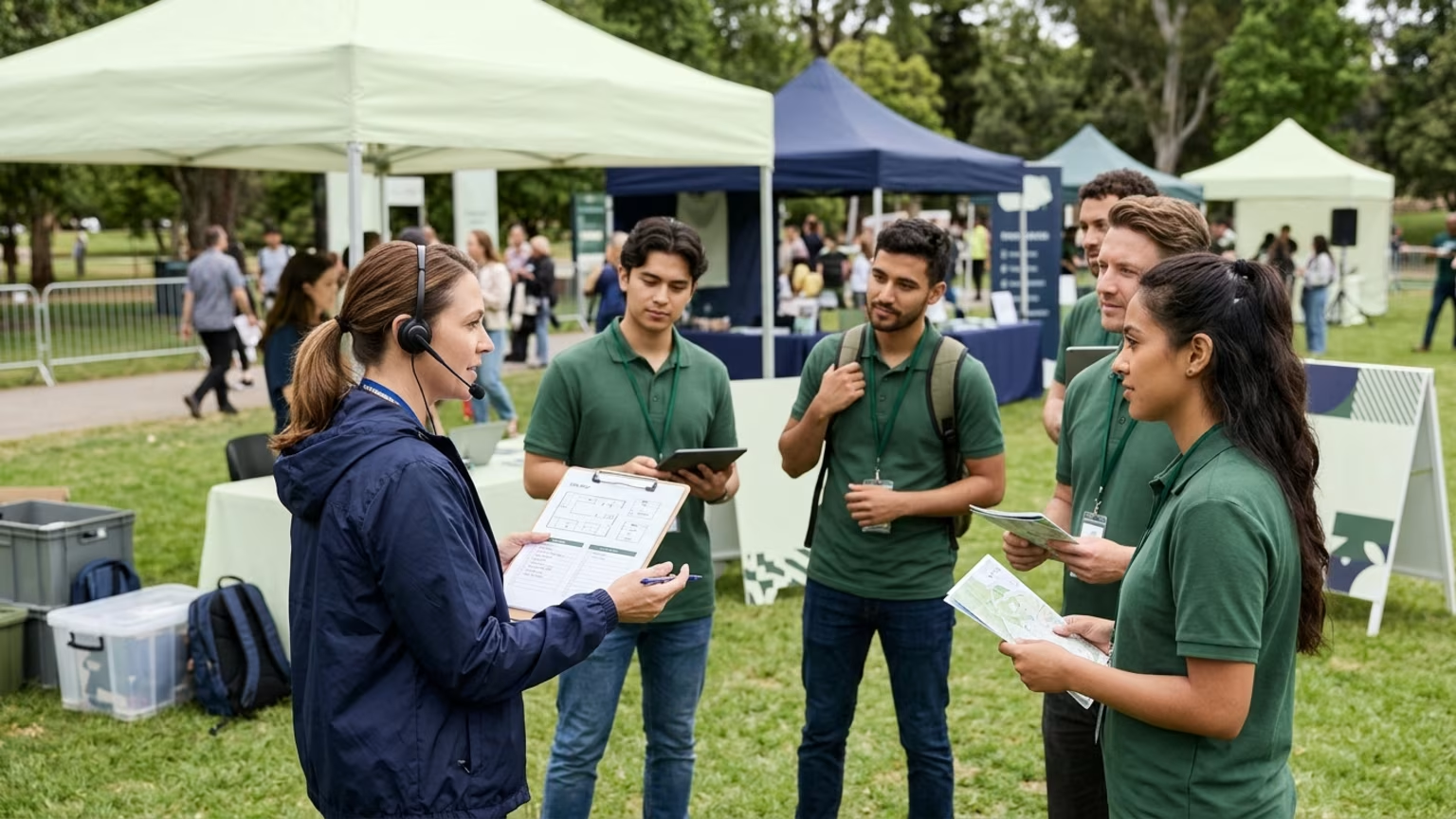
Prepare brand ambassadors for real conversations with role-play, knowledge checks, accessibility planning, lead capture, and clear escalation routes.

A study of 2,000 live-event attendees reported that hands-on participation “nearly doubled” purchase intent, according to the ANA’s public summary of the 2026 Experiential Marketing Impact Report. That makes the quality of the live interaction a serious planning question. Product knowledge matters, but preparation also needs to address what happens when a conversation leaves the script.
Train brand ambassadors by combining approved product information with live practice, a knowledge check and a clear escalation route. Rehearsal should connect the conversation to the activation’s purpose, whether that is product trial or lead generation. Preparation should also cover data capture and conduct rather than treating them as separate administrative tasks.
A commercial ambassador-program guide recommends that combination alongside training on safety and conversation flow. These are practitioner recommendations rather than validated readiness benchmarks. The ANA’s public summary does not disclose the underlying methodology or exact comparison behind its finding, so it does not establish that a particular training method produces that result.
Makai’s work brings this question into physical settings where people experience products firsthand. Our retail demonstrations use trained brand ambassadors for product trials and real conversations. We believe preparation should protect both sides of that exchange: the person’s experience and the brand’s commercial purpose.
Prepare the operating brief before asking an ambassador to perform the interaction. The commercial guide recommends shared materials that include key messages and a conversation flow. It also calls for approved answers to common questions, prohibited claims and an escalation contact.
That gives rehearsal a concrete reference point. A team can practice against approved information rather than rewarding whoever sounds most confident. The question is whether the ambassador can explain the product accurately and recognize when an answer requires help.
The guide also recommends a pilot event and common reporting templates. For programs spanning markets, it proposes shared materials with local market notes. That distinction gives leaders a way to separate the common product story from location-specific operating information.
A preparation review can follow those supported elements:
Physical preparation belongs alongside the training brief. Makai stores sampling product and event gear, then ships and tracks those materials with nationwide delivery coordination. Our integrated service scope also spans permitting through CRM reporting.
For planning across locations, connect the people brief with the broader work of coordinating a multi-city activation. A well-practiced conversation is one part of readiness, not a substitute for the operating plan around it.
Use live practice to connect information with behavior. The commercial guide recommends live sessions and role-play rather than relying on a long PDF. Its suggested knowledge check provides another way to review understanding before deployment.
For us, aloha should mean making room for the person in front of the brand. That includes someone who is curious and someone who is skeptical. It also includes someone who declines to participate.
As an application of the guide’s conversation-and-conduct brief, rehearsal can address a refusal without turning it into an argument. The useful question is whether the ambassador can remain respectful when the interaction does not produce a sample or lead. Our view is that a declined invitation should not become a contest.
A practical readiness review can examine the behaviors the guide supports:
Keep the knowledge check and role-play connected. Knowing a product fact is different from explaining it during a skeptical exchange. Our discussion of preparing ambassadors for consistent conversations offers a related planning lens.
Accessibility also belongs in preparation. AbilityPath recommends briefing event teams on accessible restrooms and quiet spaces. Its guidance includes speaking directly to an attendee rather than a companion and offering help without taking hold of a wheelchair or guide dog.
Apply that guidance by including accessibility questions and the relevant escalation contact in rehearsal. Staff should know which accommodations the activation can support and whom to ask when they do not know. This is preparation guidance, not a complete account of applicable U.S. accessibility requirements.
Start with the activation objective. The commercial guide recommends choosing a goal and corresponding measures, such as trial or leads. It also includes data capture in ambassador training and recommends shared reporting templates.
The supported sequence begins with the conversation, moves into the planned capture activity and continues into reporting. Makai’s integrated services extend through CRM reporting. The commercial guide does not specify CRM field mapping or a particular technical integration, so those mechanics need to be resolved within the activation’s own design.
A useful rehearsal follows that sequence rather than stopping after the product explanation:
This is also where measurement discipline matters. Return on Investment (ROI) is a different question from how much activity occurred. Choosing a trial measure or lead measure does not by itself establish financial return.
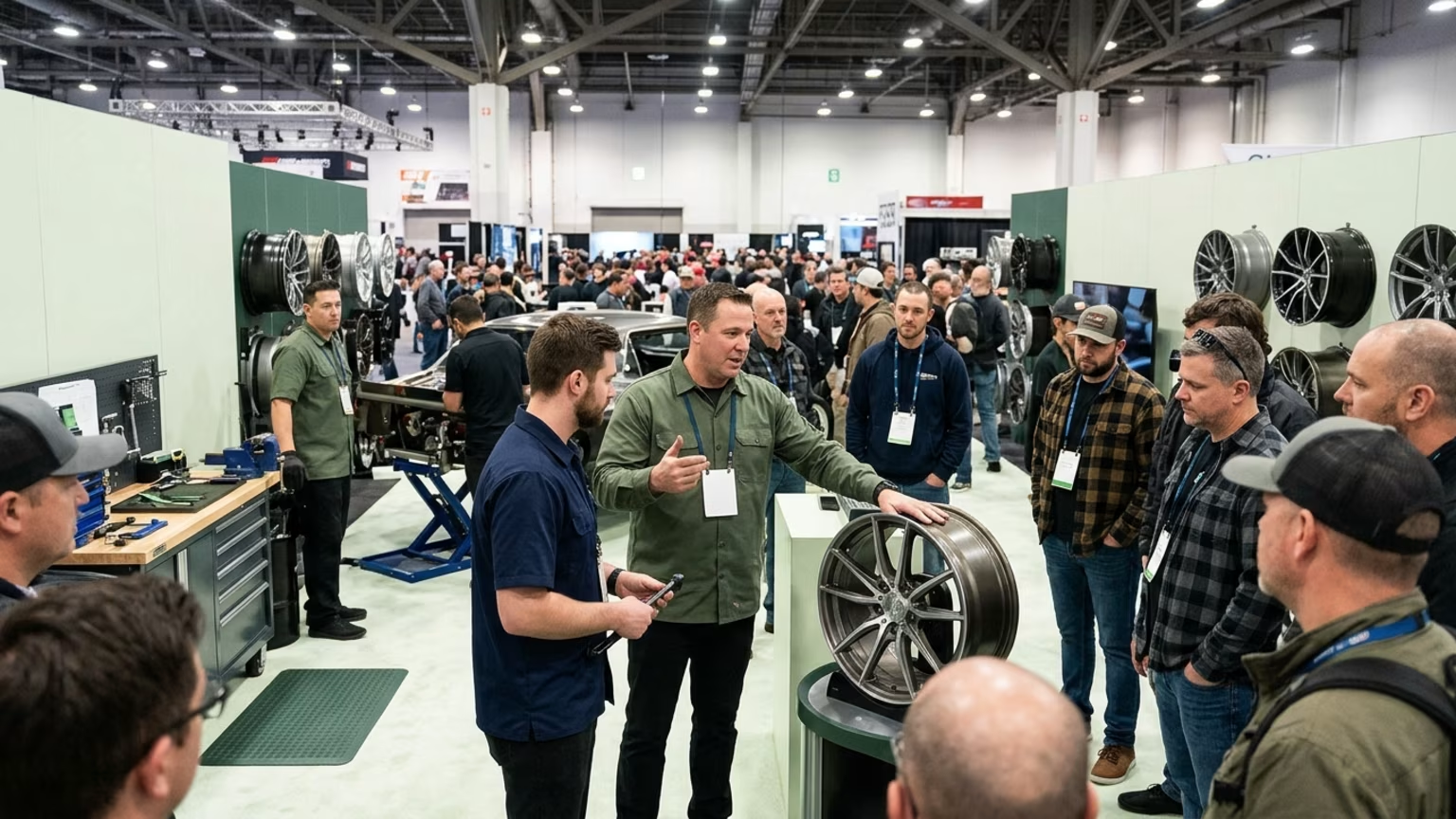
At Natural Products Expo West 2025, we designed and managed a 40 by 20 foot trade show environment for Glanbia. It brought think!, Isopure, Optimum Nutrition, and Amazing Grass into one coordinated space. Our team handled concept, operations, staffing and breakdown. More than 14,000 recorded product samples were distributed across the activation stations.
That figure describes sampling activity. It is not a claim that the activation produced the same number of qualified leads. For us, keeping those categories separate is part of making reporting useful rather than merely impressive.
Before launch, review the connection between live interactions and clean lead data. The training question is whether staff understand the capture task and its purpose, not just whether they can operate a device.
Give the floor lead a contingency plan grounded in named people and approved information. The commercial guide recommends a team lead at each site, trained backups and a pre-shift huddle. It also recommends debriefing soon after the event to collect results and incidents alongside guest questions and team feedback.
For a staffing no-show, the supported preparation is trained backup coverage coordinated through the site lead. Put that arrangement into the operating discussion before the shift rather than treating replacement staffing as a problem to solve from scratch on the floor.
For broken technology, apply the guide’s escalation principle: route the issue to the named contact and keep the guest conversation within approved information. The guidance does not establish a technical recovery procedure or an offline capture method. Those details belong in the activation-specific contingency plan.
The same logic applies to an unexpected product question. An escalation contact gives the ambassador somewhere to take uncertainty. We believe a clear limit on an answer is better than confident improvisation about a product claim.
After the shift, carry the problem into the debrief. The guide recommends feeding questions and lessons into an updated brief. It also lists message accuracy and attendance among possible team-quality measures alongside incidents.
For longer programs, the guide proposes a call among market leads after the first day to exchange guest questions. That creates a practical route for learning between locations without rewriting the common product story every time an unfamiliar question appears.
Review the next activation as a connected operating plan. Put the product brief beside the rehearsal scenarios and reporting template. Check whether the escalation route reaches a named person and whether the CRM handoff has been resolved.
Then identify what the pilot or next debrief should clarify. Focus on unanswered product questions and capture problems alongside accessibility requests. The next planning task is to turn those observations into a better brief, not simply a longer one.
Day-to-day responsibility for field interactions sits with brand managers and trade show coordinators; Makai brings hands-on experience design to that work with a focus on emotional connection. Makai creates experiential marketing campaigns and trade show activations designed to turn consumer interactions into qualified leads for premium CPG brands.

30 Years Experiential & Retail Activation Partner for CPG & Beverage Brands | Multi-Market Demos, Roadshows & Costco/Club Programs That Actually Sell