Robbie Thain
Founder, CEO

RAYS’ announced SEMA ride-alongs put access, staffing and guest flow in focus. Makai examines the planning implications for CPG marketers.
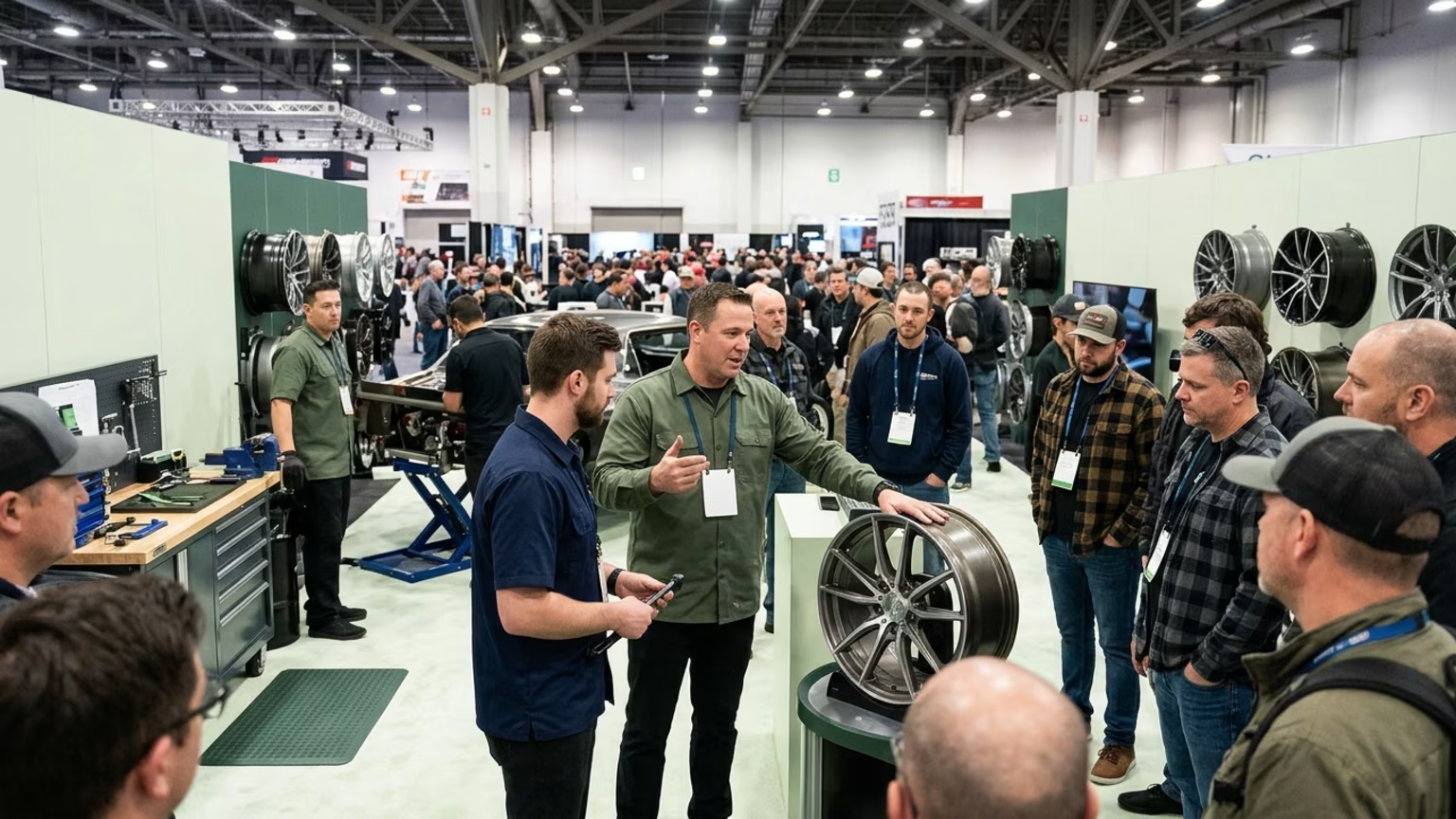
On November 2, 2026, Traction News reported that RAYS Wheels planned its first official brand display at the 2026 SEMA Show, taking over the Silver Lot at the Las Vegas Convention Center.
The announced November 3 to 6 program combines a wheel showcase with an experiential track. SEMA lists professional-driver ride-alongs in vehicles fitted with RAYS performance wheels at Silver Lot 3. The announcement puts a moving product experience alongside a conventional display.
According to Traction News, the planned display includes the VOLK RACING wheel lineup, current and new wheels, and collector merchandise. The experiential track adds a participation component to that product presentation.
SEMA describes the ride-alongs as an opportunity to experience vehicle handling and responsiveness with professional drivers. Its broader outdoor motorsports program also includes drifting and off-road demonstrations alongside vehicle competitions and stunt performances.
Access deserves a separate reading. Traction News identifies invited guests, media, industry partners and enthusiasts as intended participants in the RAYS Driving Experience. SEMA separately said members of the public could purchase Friday admission for November 6 to attend the Show and SEMA Fest.
The coverage does not establish that every public ticket holder can take a RAYS ride-along. It also does not detail RAYS-specific staffing, guest flow or guest-safety procedures. Vehicle-movement plans, capacity limits, accessibility arrangements and weather contingencies are not documented. No participation totals, qualified-lead figures, sales results or measured Return on Investment are reported.
Makai’s reaction is straightforward: participation is worth planning carefully. For us, aloha means making people feel welcome without leaving the operating plan to chance. A compelling invitation and a workable field assignment belong in the same brief.
That matters to CPG and beverage marketers even though their products may never go near a track. Our retail demonstrations use trained brand ambassadors to connect product trials with real conversations and in-store sales. Our trade show activations are designed to turn face-to-face interactions into qualified leads.
The transferable idea is not the ride-along itself. It is the decision to give the audience something to experience rather than only something to inspect. We believe that decision should bring operational ownership into the creative discussion, not leave it for the final production meeting.
We converted a vintage Ultra Van into a mobile VIP beauty lounge for Refinery29 and Smashbox at Coachella. The activation hosted more than 1,200 VIP guests. That was a lounge rather than a driving experience, but it offers a useful contrast: a vehicle can become the setting for participation instead of remaining an object on display.
For us, the lesson is to judge the format by the interaction it makes possible. A tasting should support a product conversation. A trade show demonstration should have a clear relationship to the customer or buyer discussion the brand wants to earn.
The same thinking applies when planning a repeatable mobile program. The format can change from a booth to a vehicle or a sampling station. The business objective should remain clear enough for the field team to explain.
The practical planning implication is broader than adding demonstration staff. From Makai’s perspective, a participation-led format deserves separate attention to access and hosting. Venue coordination and measurement also need clear ownership. These are planning considerations for brands evaluating similar formats, not a reconstruction of RAYS’ execution.
The distinction between show admission and demonstration eligibility belongs in the operating brief. A public event invitation and a place in a specific experience are different decisions. Brand communications and field explanations should reflect whichever access policy the activation owner confirms.
For a CPG team, the comparable planning issue is deciding who the experience is intended to serve. A consumer product trial and a trade buyer conversation can share a footprint without sharing the same objective. We would evaluate how that distinction is communicated before judging the attractiveness of the format.
Clear access ownership also gives marketing leadership a concrete issue to review. Rather than approving an invitation in isolation, the team can assess whether the promised experience matches the audience the activation is prepared to host.
SEMA confirms professional drivers as part of the RAYS experience. Our operational reading is that performing a demonstration and hosting its audience should be treated as distinct functions in the brief. A generic staffing label does not explain the responsibilities attached to either function.
For CPG programs, Makai’s trained retail ambassadors focus on real conversations and product trials. Our national experiential programs also use local crews with logistics and permit expertise. Those capabilities address different parts of execution and should not be treated as interchangeable simply because they support the same campaign.
The useful planning question concerns ownership rather than an invented headcount. A brand evaluating a live demonstration should establish who owns the guest experience and who owns coordination with the people delivering the demonstration. Staffing quantities should follow the verified operating requirements.
RAYS’ announced combination of merchandise and wheel displays with a track creates several components within one activation. From an operator’s perspective, that calls for reviewing the relationship between product presentation and participation. Each component should have a reason to occupy the space.
For food and beverage brands, the comparable design discussion concerns the relationship between trial and conversation. A sampling point is one part of the experience. The place where someone asks a product question or begins a buyer discussion also deserves attention in the brief.
That is why we view designing a booth around visitor movement as an operating decision as well as a creative one. Our position is that a footprint should support the intended interaction, not ask the field team to compensate for a layout that serves a different purpose.
The research supports defining measurement and operational ownership before an event. For Makai, that fits the purpose of experiential work: carefully executed interactions designed to generate measurable sales pipeline. Participation is part of that work rather than a substitute for its business objective.
For a CPG launch, the brief should distinguish product trial from qualified interest. Leadership needs an agreed definition of the response it wants to evaluate. That is a measurement choice to settle before the demonstration begins, not a result to infer from how active the footprint looks.
Makai’s integrated services extend from permitting to CRM reporting. We see those as connected parts of execution: the physical experience has to happen, and the resulting customer information has to serve a defined purpose. Our discussion of connecting live participation with useful customer data follows that same business-first view.
SEMA Vice President of Events Tom Gattuso said live motorsports activations let attendees experience aftermarket innovation, performance and culture “in motion.” That phrase captures the creative appeal of the announced format.
Makai’s view is that the operating brief should be just as clear as the invitation. For a beverage tasting or a trade show demonstration, the point is to make participation meaningful to the brand’s objective. The experience should have both a welcoming face and an accountable operational owner.
As your next launch moves from a display to a live demonstration, can you as CMO or VP identify who owns access, field execution and lead measurement before your own version of the Silver Lot opens?
Trade show coordinators carry the day-to-day burden of crowded booths; Makai manages exhibit spaces to attract visitors and begin customer conversations. For CPG teams facing low-quality leads, its activations focus on qualified prospects while its retail demonstrations bring trained brand ambassadors into stores for product trials and sales conversations.

30 Years Experiential & Retail Activation Partner for CPG & Beverage Brands | Multi-Market Demos, Roadshows & Costco/Club Programs That Actually Sell