Robbie Thain
Founder, CEO

Event Marketer details how GPJ and IBM measure business impact by planning data capture upfront. This shift fundamentally changes CRM and field marketing.
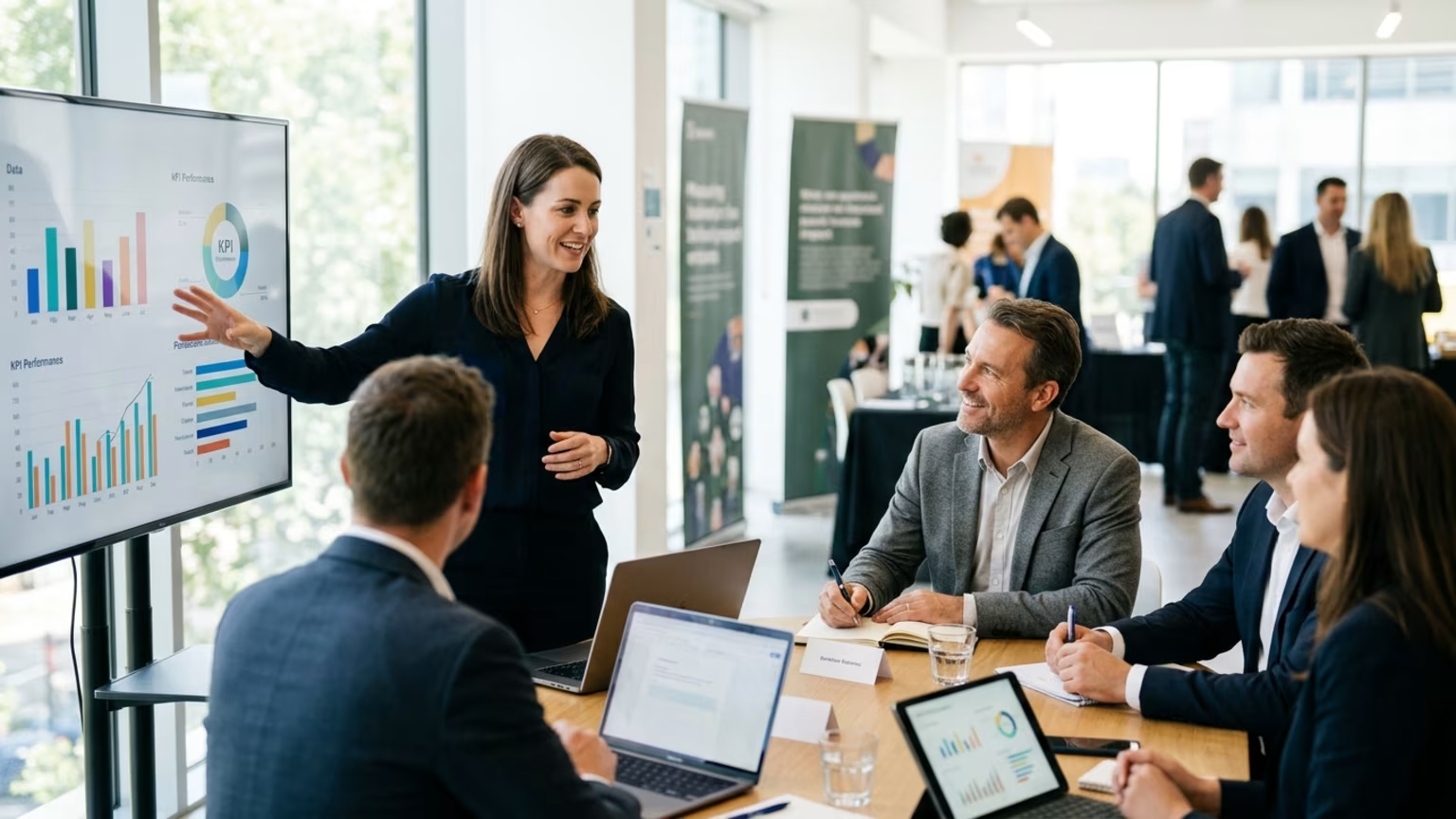
On October 2, 2026, Event Marketer published "Experience Intelligence: 3 Insights on Measuring Business Impact". The publication detailed a specific measurement approach from GPJ. The coverage also featured IBM's AI Sports Club as a prime example of applying consistent questions across experiences. The article focused on how brands can assess audience participation, brand sentiment, and actual business impact.
This coverage highlights a critical shift in how marketing leaders view physical activations. Brands are moving away from evaluating success only after a campaign wraps up. They are now building measurement frameworks entirely around upfront planning and structural alignment. This operational pivot forces field marketing teams to rethink their entire approach to data capture.
The core shift reported by Event Marketer involves a completely front-loaded timeline for data strategy. The article reports GPJ's view that 75% of measurement can and should happen before the event. This early work includes stakeholder discovery and objective alignment. It also requires key performance indicator selection and data-capture planning. Instead of treating impressions and simple badge scans as sufficient metrics, the methodology demands structural decisions beforehand.
This framework changes how marketing teams look at their attendees entirely. For business-to-business experiences, GPJ's Mike Paglia describes a concept called "cohort buying". This occurs when several stakeholders from one customer organization attend the same event together. The focus moves away from counting individual bodies walking past a booth.
The article suggests following whether those cohorts return to the brand footprint. It also recommends tracking what specific actions they take afterward. Teams can then use that activity to help sales departments assess conversion progress over time. This targeted tracking requires an entirely different operational setup on the trade show floor.
Our team knows exactly why this operational shift matters for consumer packaged goods and beverage brands. When marketing leaders place specialty products in crowded retail environments, hoping for organic success is a terrible strategy. Real field execution requires immense discipline and rigorous tracking. We provide clear reporting on reach, trials, leads, and sales to guide next steps in campaign optimization.
This upfront measurement alignment perfectly mirrors our own process for turning live brand moments into actionable data. Experiential marketing programs must connect emotion with action to avoid becoming expensive theater. We see many brands struggle because they launch into an activation without a documented plan. When 75% of the measurement work happens before the trucks leave the warehouse, field teams know exactly what constitutes a qualified interaction.
Our measurement approach tracks awareness, engagement, and conversion to demonstrate true business impact. For a beverage brand running a national sampling tour, the main objective is never just pouring samples into cups. The objective is tracking how that trial interaction translates into a documented retail scan or a completed digital sign-up. Teams that prioritize participatory in-store experiences understand that data collection must be frictionless.
We create experiential marketing programs built to connect emotion with action. Our process blends creativity, strategy, and data so every brand interaction drives measurable results. We craft experiences that engage all five senses. We help people not just see brands, but feel them. This disciplined approach turns fleeting moments into meaningful business outcomes.
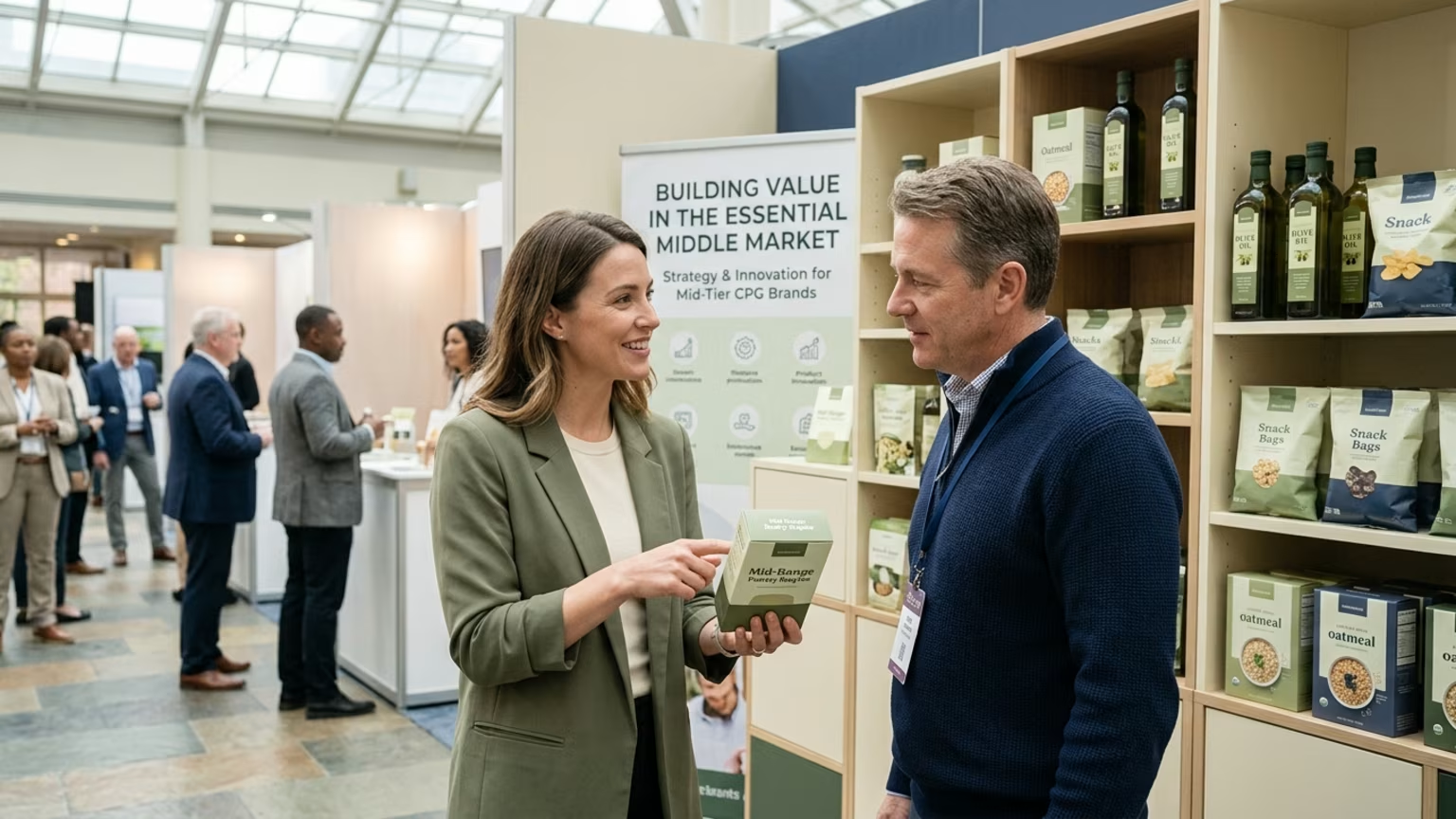
This front-loaded measurement requirement creates immediate ripple effects across field operations. If the data-capture plan is finalized before the event, the physical footprint must be designed differently to support it. Trade show booths can no longer be open spaces optimized merely for visual appeal. They must have intentional choke points, guided product trial zones, and clear check-ins that match the predetermined metrics.
Booth flow becomes a literal mechanism for data collection. This reality directly impacts how we plan and manage trade show spaces that attract attention and start conversations. Staffing models must also adjust immediately to support this new strategic priority. Brand ambassadors are no longer just smiling faces handing out product samples.
Field staff become the primary operators of the data capture strategy on the floor. Training must cover the exact questions to ask and the precise digital routing required for follow-up. Retail demonstration programs get judged on cups poured rather than incremental pipeline when teams fail to connect the live interaction to the follow-up system. If teams expect to track "cohort buying", the field technology must route clean data directly into the customer relationship management software.
Without proper integration, follow-up relies entirely on manual data entry. That delay destroys the ability to build a unified event reporting dashboard for cross-team Return on Investment visibility. Operations teams must secure the right permits for digital tracking equipment at every venue. They must also ensure reliable internet connectivity at every stop of a mobile tour to keep data syncing in real time.
IBM's approach to the AI Sports Club provides a clear blueprint for this upfront planning. Event Marketer presents IBM's AI Sports Club as an example of applying the same measurement questions across experiences. These questions focus on how people participated, how they felt about the brand, and what the experience did for the business. This structure forces marketing teams to evaluate actual business value rather than superficial popularity.
IBM's Sarah Meron frames the critical planning questions directly around the attendee journey. She asks, "What do we want them to experience? What do we want them to understand? And what action or conversation do we want that experience to create?" This perspective transforms the planning phase from a logistical checklist into a strategic revenue exercise. The physical environment is engineered specifically to answer those three questions.
A Brand Manager in the CPG space shared: "Makai transformed our test-drive activation into an emotional brand journey. They connected technology, lifestyle, and experience seamlessly, and turned casual visitors into loyal fans." We successfully integrated multiple experience layers to convert casual participants into committed brand advocates. When the physical footprint is built around the attendee journey, capturing clean data becomes a natural byproduct of the engagement.
By applying consistent questions across experiences, teams can evaluate which specific moments attract people and spark conversations. This consistency is vital for brands managing large national portfolios. They need standardized evidence to justify their budgets. Relying on end to end integrated services from permitting to CRM reporting helps brands maintain that strict consistency across multiple regions.
Measuring business impact requires brands to confront the problem of low quality leads from crowded trade shows. Counting badge scans often creates a false sense of security for marketing directors. When the focus shifts to cohort buying and tracking returning stakeholders, the bar for engagement rises significantly. Brands must capture attention in a way that warrants a real follow-up conversation.
We build festival zones, premieres, and pop-ups that turn viewers into fans and fans into advocates. We design moments people want to share using music tie-ins and live stunts. Our crews manage execution and track reach and response metrics simultaneously. This dual focus ensures that high-energy creative concepts never overshadow the underlying business objectives.
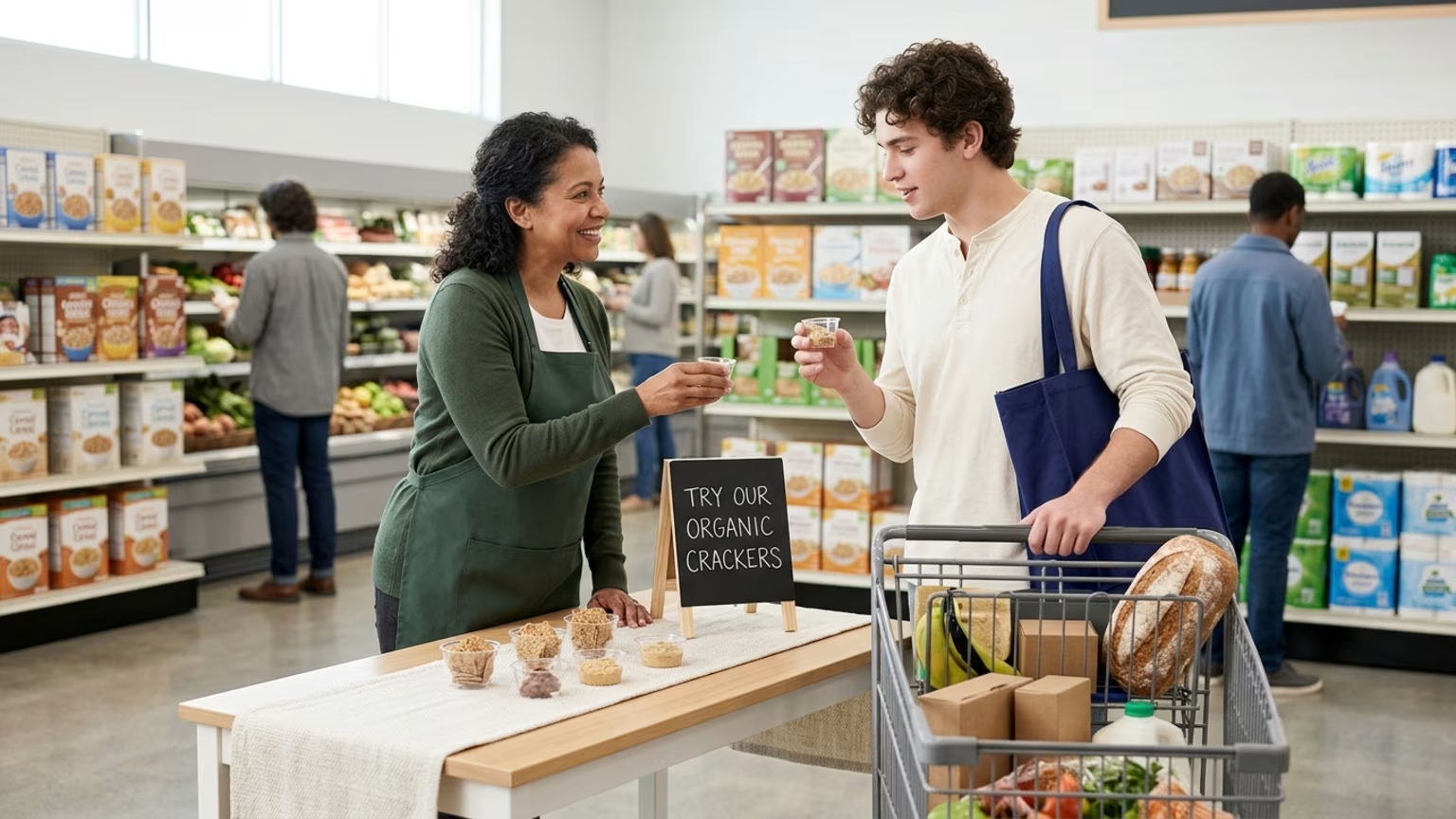
Every live interaction must serve a specific role in the larger sales funnel. If a food brand launches a complex retail demonstration, the ambassadors must drive in-store sales through real conversations. They cannot just act as passive sampling attendants. By answering Sarah Meron's question about what action the experience should create, teams can design smarter trial moments.
When multiple stakeholders from a single company attend an event, scattered attention and poor booth flow become major liabilities. If a booth lacks a coherent journey, cohort groups will split up and miss the core message. Designing the physical layout to facilitate group demonstrations is absolutely critical for capturing these vital buying groups. The environment must naturally guide participants toward the intended action.
We manage end to end Costco roadshows that bring brands to shoppers through live demos and real conversations. These high volume environments demand strict operational control to maximize pipeline. If the booth flow is chaotic, shoppers will simply take a sample and leave without engaging. A structured footprint allows brand ambassadors to control the narrative and secure the necessary data.
Brands that invest in demo-centric trade show booth experiences see better results when they align their reporting expectations with realistic physical constraints. Controlling the flow of traffic allows teams to isolate qualified buyers from casual browsers. This separation is necessary to accurately track which cohorts return and what specific actions they take next.
Sometimes the best way to capture actionable data is to leave the crowded expo hall entirely. Through our Mobile Sampling Tours, we deliver your brand directly to audiences through on the go experiences that drive trial and awareness. Taking the brand to the consumer removes the distraction of competing exhibitors. It allows marketing leaders to completely own the interaction environment.
When the brand controls the entire footprint, capturing data becomes significantly easier. Teams can set up dedicated digital check-in stations and interactive product displays without worrying about venue restrictions. This autonomy allows for the exact kind of upfront KPI selection and data-capture planning that GPJ recommends. The entire mobile setup serves as a dedicated engine for generating qualified pipeline.
Over thirty years of specialized national execution experience has taught us that logistics dictate data quality. If the internet fails at a remote pop-up, the data capture plan completely collapses. Storing sampling product and event gear securely ensures that every activation stays on schedule. Precise logistics provide the necessary foundation for advanced measurement strategies.
On October 2, 2026, Event Marketer showed the industry that hoping for returns is no longer a viable strategy. Measuring business impact requires deciding exactly what success looks like long before the activation begins. The days of counting simple badge scans and calling it a victory are officially over. Operational discipline must match creative ambition perfectly.
When you review the data capture plan for your next scheduled trade show, ask yourself one question. Will your physical footprint actually force the specific interactions your customer relationship management software needs, or are you just setting up an expensive tent?
When marketers misalign their live event objectives with their backend technology, inefficient post event follow up and CRM routing becomes inevitable. Makai solves this disconnect by ensuring every consumer interaction flows directly into your sales pipeline. Through Engagement Marketing, we turn audiences into participants with live and digital experiences that invite people to try, share, and act. Request a proposal

30 Years Experiential & Retail Activation Partner for CPG & Beverage Brands | Multi-Market Demos, Roadshows & Costco/Club Programs That Actually Sell