Robbie Thain
Founder, CEO

Albertsons and Sprouts executives outline strict 30- and 90-day buyer reviews and regional test models for CPG brands to maintain shelf placement and velocity.
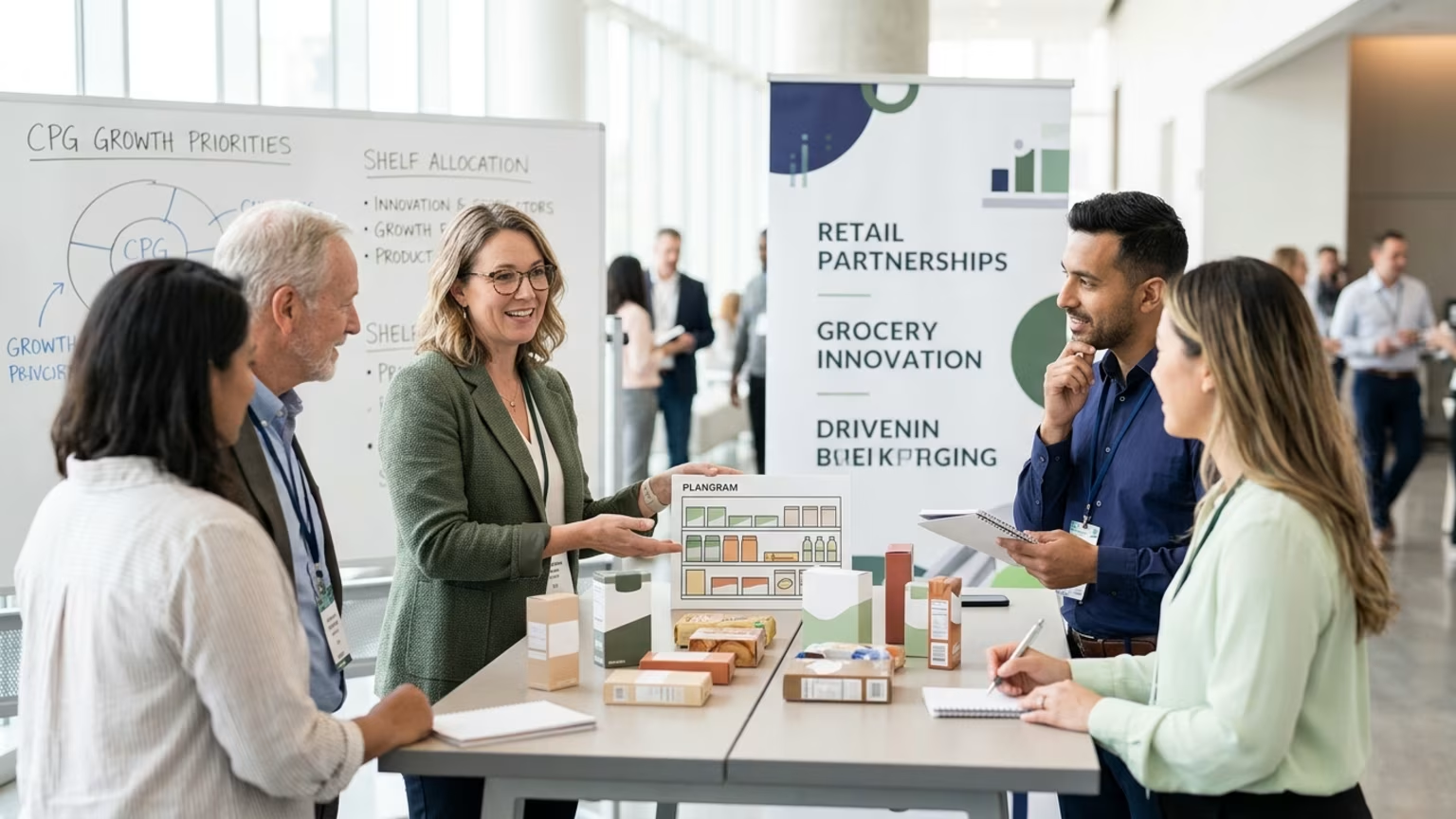
On October 2, 2026, ECRM published a detailed account of a Dallas Food & Beverage Sessions panel where executives from Sprouts Farmers Market and Albertsons Companies outlined exact expectations for CPG shelf retention. Moderated by Road 2 Retail podcast co-hosts Bruce Montgomery and Tracey Priest, the discussion featured ECRM Executive Vice President Sarah Sweitzer alongside two grocery veterans. Andrea Hatziyannis, Private Brands Strategy Manager for Sprouts Farmers Market, and Tim Ryan, an Albertsons Companies veteran who managed national frozen-food categories, delivered the briefing. The central message established a clear timeline for emerging products. Securing shelf space is merely a starting point, and brands must sustain sales velocity, maintain inventory flow, and adapt to consumer expectations to survive.
The executives detailed strict operational realities for evaluating new grocery products. According to the ECRM report, retail buyers may review new-item performance at 30 and 90 days after launch. If a product shows weak velocity during these initial checks, retailers and suppliers might use a six-to-twelve-month period to diagnose and address the problem.
To navigate these early hurdles, Ryan called for a 52-week commercial plan that explains how the brand will sustain demand throughout the year. This comprehensive planning must include sustained promotions, marketing, and precise execution. The panel also defined practical limits on packaging and product presentation. Hatziyannis recommended choosing two or three certifications that matter to the target customer, explicitly warning against crowding the package with logos.
Ryan added that all claims and certifications must be accurate and highly relevant to the category. Functional packaging was heavily stressed during the session. The panelists stated that packaging should be easy to open, properly sized for store shelves, and understandable for shoppers’ storage and preparation needs.
Instead of immediate national rollouts, Hatziyannis recommended controlled regional tests. She offered 20, 40, or 50 stores as possible test sizes. Markets like Southern California, Chicago, and Philadelphia were cited as example regions for these targeted launches. This controlled approach allows brands and retailers to check execution, review sales velocity, refine messaging, and identify supply-chain issues before scaling.
We view this retail guidance as a powerful validation of disciplined, localized execution. CPG marketers often treat initial placement as the final victory, but maintaining that placement requires measurable consumer engagement. The 30- and 90-day buyer reviews align perfectly with how we structure our field support operations. We design mobile activations and roadshows that accelerate consumer trial, build trust, and boost retail velocity during 90-day product launch windows.
When buyers demand a 52-week commercial plan, they are looking for absolute proof of operational stamina. Relying on a passive shelf presence is rarely enough to protect category positioning. Brands must defend their space actively through targeted physical interactions. Our structured approach transforms initial product trial into sustained consumer confidence and retail performance.
Hatziyannis’s recommendation for targeted in-store demonstrations matches our core field methodology. We specialize in creating retail demos, product sampling programs, and roadshows that bring brands face to face with their audiences. Each program is designed to drive trial, build consumer relationships, and accelerate retail velocity across multiple locations. You must deploy sampling resources specifically where velocity is weak and where the retailer needs to see immediate movement.
This localized strategy provides the necessary data to survive critical buyer reviews. Bringing the product directly to the shopper removes the friction of discovery. A Director of Brand Strategy in the CPG snack division shared: "The Makai team turned our product launch into a sensory event that shoppers still talk about. From creative storytelling to flawless in-store execution, they made snack time unforgettable. We couldn't have asked for a stronger partner." Our team created an in-store experience that left a lasting impression on consumers and became a memorable brand moment.
The requirement for a 52-week commercial plan completely changes how field marketing teams manage their supply chains. Knowing that buyers check turn rates at 30 and 90 days means sampling inventory must be staged and ready well before the product hits the shelf. You cannot wait until the second month of a launch to start recruiting brand ambassadors or sourcing display materials.
This timeline turns regional testing into a severe logistical mandate. Managing a 50-store test requires exact coordination between the retail buyer, the regional distributor, and the experiential field team. If a brand targets Chicago for its initial rollout, the activation footprint must match those specific store locations perfectly. Any delay in purchase-order fulfillment or inventory flow can derail the entire test, severely damaging buyer confidence.
We see brands relying on experiential roadshows to support this strict operational rhythm. Securing retail retention means your field execution must be as reliable as your manufacturing supply chain. We managed a four-week, multi-market Costco sampling program for Pulmuone's PlantSpired line. The program delivered more than 65,000 samples and recorded an 18 percent sold-to-sale rate, giving us a concrete example of how structured retail sampling can connect trial with purchase.
Executing at this scale requires a dedicated operational infrastructure. Brands must link their physical marketing efforts to live store-level inventory, ensuring that the rhythm of retail sampling aligns with product availability. If a hands-on demonstration drives demand, the shelf must be stocked to capture the resulting sales velocity. Brands are increasingly using street to shelf pop-ups and roadshows to ensure that off-site awareness translates directly into recorded retail movement.
The ECRM panel openly highlighted the operational risks of ignoring these controlled expansion limits. Ryan offered a strict warning about how emerging consumer brands often fail during critical growth phases. He cautioned that “scaling too quickly is one of the most dangerous mistakes a young company can make,” and advised testing before broader expansion. This reality makes regional deployment not just a preference, but a requirement for survival.
Grocery retail buyers have clearly defined the timeline required to maintain category placement. The standard is no longer just securing the shelf, but actively defending it through measurable engagement. When that critical 90-day performance review arrives, will your field marketing strategy have generated the proven sales velocity needed to keep your item in the store?
Once retail buyers establish strict 30- and 90-day velocity thresholds for new product launches, deploying targeted physical marketing to defend those specific regional shelves becomes the immediate requirement. Makai solves scattered attention and poor booth flow by directing shopper focus toward measurable product trial. Through our Mobile Sampling Tours, we deliver your brand directly to audiences through on the go experiences that drive trial and awareness. Request a proposal

30 Years Experiential & Retail Activation Partner for CPG & Beverage Brands | Multi-Market Demos, Roadshows & Costco/Club Programs That Actually Sell