Robbie Thain
Founder, CEO

A consistent cadence of in-store product trials protects your retail shelf space and drives compounding sales growth for premium consumer packaged goods.
Most consumer brands believe a single massive launch event will secure their retail footprint. A disciplined cadence of in-store trials is the actual mechanism that turns fleeting interest into sustained retail velocity.
You secure distribution in a major national grocery chain. The pallets arrive on time, the endcaps look pristine, and your field team executes a massive weekend activation. Brand ambassadors hand out thousands of units to eager shoppers in a crowded aisle. Then everyone packs up, heads home, and waits for the register receipts to reflect the effort.
Within a month, velocity flatlines and the retail buyer starts asking uncomfortable questions. Your initial sampling event created a temporary spike instead of a permanent behavioral shift. Shoppers tried the product once, forgot the name by Tuesday, and reverted to their usual pantry staples. The reality of experiential marketing is that isolated brand theater produces fog instead of evidence.
Brand leaders often panic when the post-launch numbers dip. They throw more money at digital ads or social media influencers in a desperate bid to drive foot traffic. These digital tactics fail to convert hesitant buyers standing in front of a shelf packed with established competitors. E-commerce fatigue is real, and online ads rarely replicate the physical experience of tasting a new premium product.
Private label brands from major retailers present a constant threat to your shelf space. Premium consumer packaged goods must justify their higher price points through direct consumer experience. You need a systematic approach to keep your product moving off the shelves month after month.
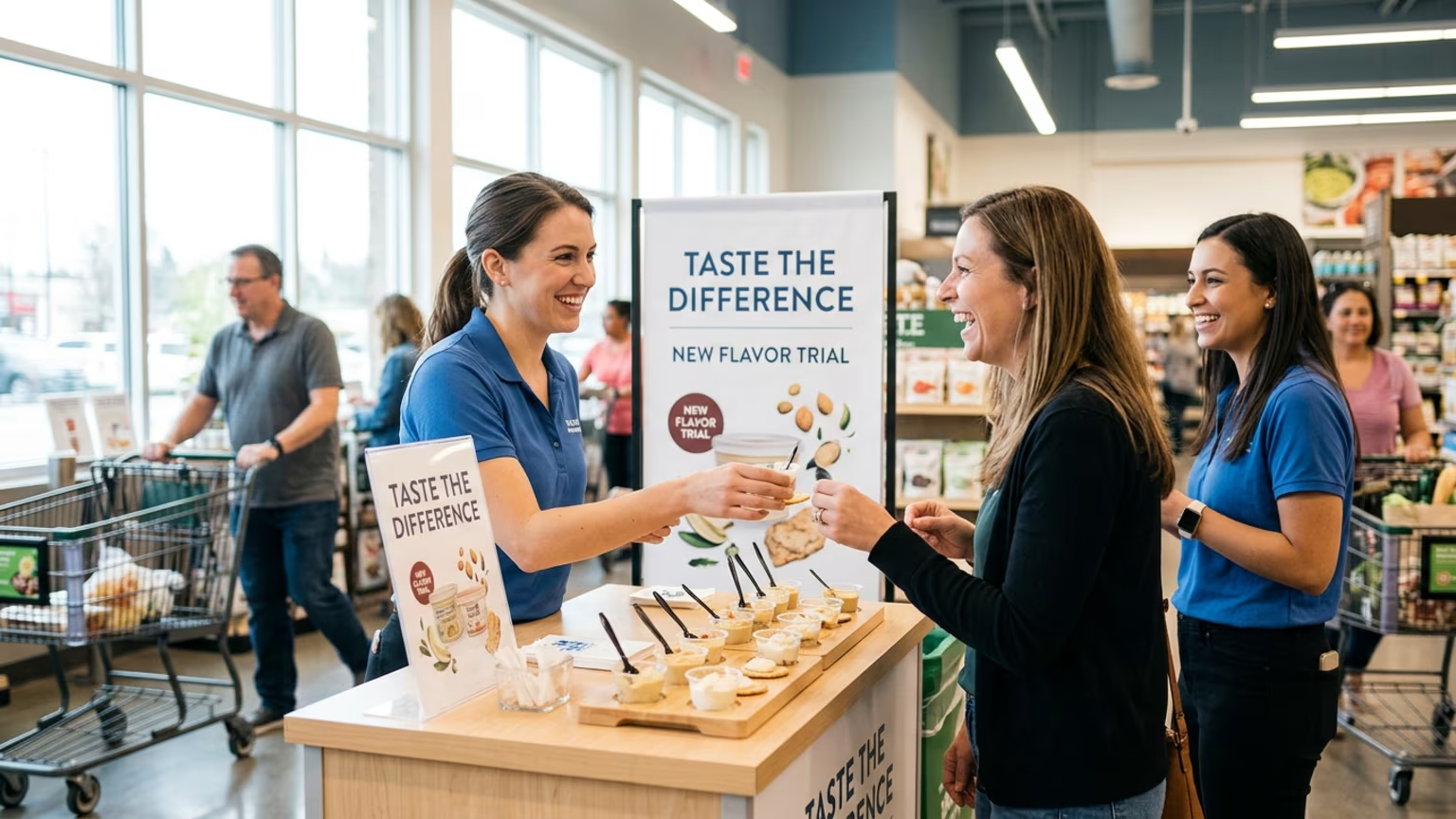
Instead of blowing your entire budget on a single weekend blast, operators must shift to a sustained rhythm. We specialize in creating retail demos, product sampling programs, and roadshows that bring brands face to face with their audiences. Each program is designed to drive trial, build consumer relationships, and accelerate retail velocity across multiple locations. You must reprogram shopper habits through repeated exposure over time.
The framework relies on a rigid sampling commitment during the initial six months of a new retail launch. Rather than chasing raw headcount, you plan monthly or bi-monthly activations at the exact same store locations. This repetitive presence catches different shopper segments, reinforces the brand message, and gives hesitant buyers multiple chances to taste the product. It builds retailer confidence when they see your ongoing commitment to moving inventory off their shelves.
Brands that maintain sustained product sampling programs outlast competitors who rely on sporadic hype. Industry research from Nielsen indicates that physical sampling yields far higher conversion rates than digital ads alone. This physical touchpoint builds immediate trust in high-competition categories like snacks and beverages. Shoppers need real-world proof before they switch their loyalties.
This compounding effect turns a niche product launch into a profitable, sustained retail presence. The math supports this approach when executed correctly. If one hundred people sample your product and forty buy it immediately, a predictable percentage will return next week. That steady trickle of returning customers protects your category standing.
Translating this theory into an operational reality requires exact planning and strict field execution. This playbook keeps your campaign from becoming an administrative disaster. Every step must be planned to maximize efficiency and protect your budget.
A predictable strategy demands hard data to prove Return on Investment. You need concrete numbers to defend your budget to the chief financial officer. Tracking the right metrics separates professional operators from amateur event planners. Building a dashboard to track exact in-store trial metrics gives you the leverage you need in buyer meetings.
Begin by measuring the lead metrics of the activation itself. Track the immediate in-store conversion rate by calculating the percentage of shoppers who taste the product and immediately buy it. A strong execution should yield a 20 to 40 percent immediate purchase rate. Monitor the cost per trial to keep your operational expenses grounded and profitable.
Next, evaluate the lag metrics that indicate true behavioral change. Look at the repeat purchase rate within 30 days of the sampling event to gauge product loyalty. Track the sustained category sales lift over a four-week period to prove the momentum lasts beyond the demo day. These numbers tell the true story of your retail health.
Professional operators build clear reporting dashboards to capture this data accurately. Sharing anonymized conversion proof with retail buyers secures future endcap placements and promotional slots. Teams that master converting live brand interactions into permanent retail momentum never have to guess about their pipeline velocity. The numbers become your strongest asset in negotiations.
Awake Chocolate provides a masterclass in this disciplined approach. Upon launching in a new retailer, the brand commits to in-store sampling once a month or every other month for the first six months. Adam Deremo, co-founder and chief executive officer of Awake Chocolate, relies on this cadence to build trust. Shoppers need multiple touchpoints to adopt a caffeinated chocolate product into their daily routine.
The data from their execution is striking and highly measurable. According to the brand, they convert between 30 and 40 percent of people who try the product in-store into paying customers. Of those new buyers, another 30 to 40 percent become repeat customers within a short window. This creates a compounding flywheel effect that scales their retail presence aggressively.
As Awake expanded to more stores, this consistent trial strategy amplified their broader marketing efforts. The company moved beyond pure sampling to integrate public relations and influencer campaigns as their retail footprint grew. This proves that physical retail activations that directly influence sales metrics require a steady, methodical commitment over time.
The brand succeeds by recognizing that product trial is a long-term play, not a quick fix. Their willingness to absorb the upfront costs of repeated demonstrations pays off through dominant shelf velocity. Other premium food brands can replicate this success by adopting the same operational rigor. It is not about putting on a flashy show; it is about building a reliable habit.
The era of the single weekend launch activation is over. Hoping a one-off event will secure your shelf space is a gamble that brands can no longer afford. Sustained retail velocity requires showing up, proving value, and repeating the process until the shopper trusts you.
Your launch events should never be random acts of marketing. A disciplined cadence of in-store trials is the actual mechanism that turns fleeting interest into sustained retail velocity. Ready to build a sampling framework that protects your shelf space and drives real numbers? Book a strategy call with our team to map out your next retail rollout.

30 Years Experiential & Retail Activation Partner for CPG & Beverage Brands | Multi-Market Demos, Roadshows & Costco/Club Programs That Actually Sell