Robbie Thain
Founder, CEO

Learn how leading CPG brands use retail data and physical activations to test, refine, and scale national product launches for maximum return on investment.
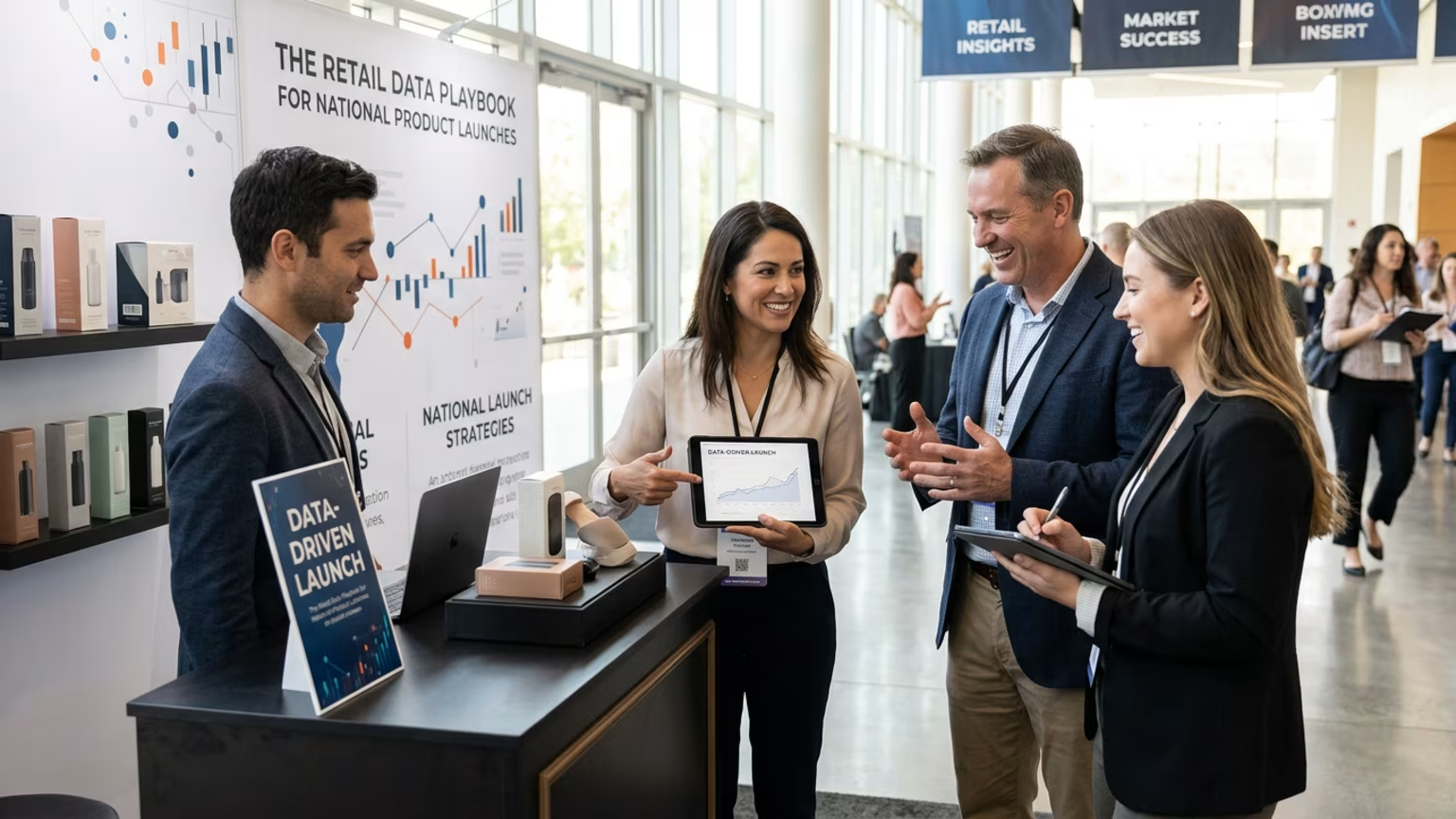
Most national product launches fail long before the first item hits a store shelf. By treating targeted retail media deployments as live testing laboratories, smart brands capture direct consumer data to guarantee their full rollout actually drives revenue.
You know the standard procedure for a major consumer goods rollout. Marketing builds a massive national campaign based on consumer surveys and historical sales data. Field teams receive their marching orders, and regional managers pray the creative assets translate to actual floor traffic. The pallets then arrive at distribution centers across the country.
The chaos begins the moment the product touches the physical retail floor. Store managers reject generic endcap displays that do not fit their precise floor layouts. Regional sales directors report that the national messaging falls completely flat with local shoppers. You spend millions on initial media buys, but your actual store conversion rate remains a complete mystery for weeks.
This creates a terrifying scenario for marketing operators. You burn through your promotional budget waiting for delayed post-campaign sales reports. If the initial positioning is wrong, you cannot adjust your strategy fast enough to save the launch. The pressure to prove a positive Return on Investment becomes an overwhelming burden for the entire executive team.
Many brands compound this problem by treating physical activations as completely separate from their digital marketing efforts. They run expensive sampling tours that generate immediate smiles but yield absolutely zero scalable shopper data. Field teams hand out free product, but they fail to capture the household profiles needed to retarget those consumers. The brand wins a brief moment of attention but loses the war for sustained shelf velocity.
You might assume that aggressive trade show appearances will offset a weak retail rollout. Brands spend massive amounts of capital designing beautiful booths to impress retail buyers and distributors. The floor reality at these expos often devolves into a blur of scattered attention and highly unqualified leads. Without a unified system connecting that trade show presence to actual shopper data, the effort produces fog instead of clear evidence.
The most successful brands have completely abandoned the traditional waterfall launch model. They no longer dump products nationally and wait for trailing sales data to tell them what happened. Instead, they run an integrated strategy that treats a high visibility retail partner as a live intelligence system.
This methodology shifts the initial launch phase from a pure media play into an active intelligence operation. Brands launch early with one specific retail media network to gather household level purchase signals. They use this contained environment to test messaging hierarchy, visual merchandising, and precise pricing architecture. Only after they validate these inputs do they expand their national footprint.
Mark Kirkham, the Chief Marketing Officer at PepsiCo Beverages North America, stated that flexibility is the only way to find success in physical retail today. He noted that getting your mindset to think multi channel and dynamic from the start is a massive operational shift. This adaptable approach allows marketers to reshape their national rollout based on actual shopper behavior.
Gathering data on latent brand buyers and competitor purchasers builds an airtight foundation for growth. This intelligence bridges the gap between digital media impressions and physical retail execution. Brands that coordinate integrated field strategies across physical retail channels see vastly improved trial rates across the board. You replace guesswork with verified consumer signals.
The traditional mindset views retail media networks merely as another place to buy digital advertisements. Savvy operators recognize these platforms as the perfect bridge between online intent and physical retail engagement. You test a concept digitally with a known audience, measure the exact purchase response, and then build your physical displays to match those winning traits. This creates a powerful feedback loop that continually refines your presentation before you ever order a massive print run for your retail signage.
Running a data informed pilot requires extreme operational discipline. You must structure your first phase entirely around gathering actionable intelligence. Here is the exact methodology to implement this highly effective strategy.
Documenting everything systematically prevents the fragmented execution that plagues so many consumer goods companies. Handoff instructions to regional teams must clearly explain why certain tactics won during the pilot phase. When your regional sales teams understand the data behind the strategy, they execute with far greater precision. This shared knowledge base perfectly aligns everyone from the corporate office to the store floor.
Many brands fail at this stage by allowing their digital and physical teams to operate in total isolation. Your media buyers might find that a specific health benefit drives massive online conversion during the pilot. If they fail to communicate that finding to the shopper marketing team, your in store displays will feature the wrong value proposition. You must build a mandatory review process where all department leads analyze the pilot data together.
You must treat your field activations as an extension of this intelligence gathering operation. Train your brand ambassadors to ask specific questions about competitor preferences and trial barriers. Funnel this qualitative feedback directly back to your brand directors to refine the broader media strategy. If you want to fix your next major rollout, you should book a strategy call with our operations team today.
Generic foot traffic and vanity engagement metrics will never justify your marketing spend to a sharp executive board. You must define exact leading and lagging indicators to prove your physical activation works. These numbers will validate your entire go to market strategy. These live brand interactions capture the precise consumer data that connects digital planning to physical outcomes.
Leading indicators show you if your initial targeting and messaging are working in real time. Track household penetration among latent customers during your pilot phase. Monitor the specific trial conversion rate when targeting known competitor purchasers. These early signals give you the absolute confidence to scale your media spend aggressively.
Lagging indicators prove the final financial outcome of your adjusted campaign. Measure sustained shelf velocity thirty days after the national transition. Track the repeat purchase rate to confirm your product resonates deeply beyond the initial trial. Comparing these metrics against your pilot benchmarks builds an undeniable business case for future investments.
You must track these numbers ruthlessly across every single retail touchpoint. Relying on aggregate sales volume masks underlying issues with specific messaging variations or store formats. By analyzing the data at the individual household level, you gain a massive operational advantage. Teams that track these exact performance metrics during physical activations consistently secure larger budgets for their next quarter.
Your post event follow up relies heavily on the quality of data captured during these initial tests. When you know exactly which demographic responded to a specific price point, your CRM routing becomes incredibly precise. Sales representatives can approach regional retail buyers with hard proof that the product moves under specific conditions. This data eliminates the usual friction that occurs when pitching a new item to skeptical store managers.
PepsiCo recently demonstrated the power of this exact model with a new prebiotic cola. Instead of a blanket national release, they executed a Black Friday digital drop entirely through Walmart Connect. This first phase acted as a controlled laboratory to analyze shopper profiles and competitor purchase habits in real time.
The beverage giant captured deep insights regarding their visual merchandising and core pricing architecture. They used this precise consumer intelligence to overhaul their messaging strategy before expanding to other retailers. Taking the time to understand the Walmart shopper allowed them to apply optimized learnings across all national retail channels.
According to industry reports, this represents a massive shift in how premium brands go to market. Early retail media testing provides a definitive competitive advantage over companies running outdated launch playbooks. By capturing household purchase data early, brands identify exactly which audience segments will drive future volume.
Our own teams have seen similar success when integrating rigorous strategy with physical brand moments. A Director of Brand Strategy in the CPG snack division shared: 'The Makai team turned our product launch into a sensory event that shoppers still talk about. From creative storytelling to flawless in-store execution, they made snack time unforgettable. We couldn't have asked for a stronger partner.' Our team created an in-store experience that left a lasting impression on consumers and became a memorable brand moment.
Most national product launches fail when they rely on pure assumptions instead of hard evidence. By treating your initial market entry as a highly controlled testing ground, you replace blind hope with verified shopper intelligence. Your brand gains the flexibility to adapt before a massive budget is wasted on ineffective messaging. That operator grade discipline turns chaotic live experiences into measurable, high converting pipeline.

30 Years Experiential & Retail Activation Partner for CPG & Beverage Brands | Multi-Market Demos, Roadshows & Costco/Club Programs That Actually Sell