Robbie Thain
Founder, CEO

Retail media keeps growing, but live retail is still where brands learn what really moves shoppers. Here is how demos and roadshows make retail media work harder.
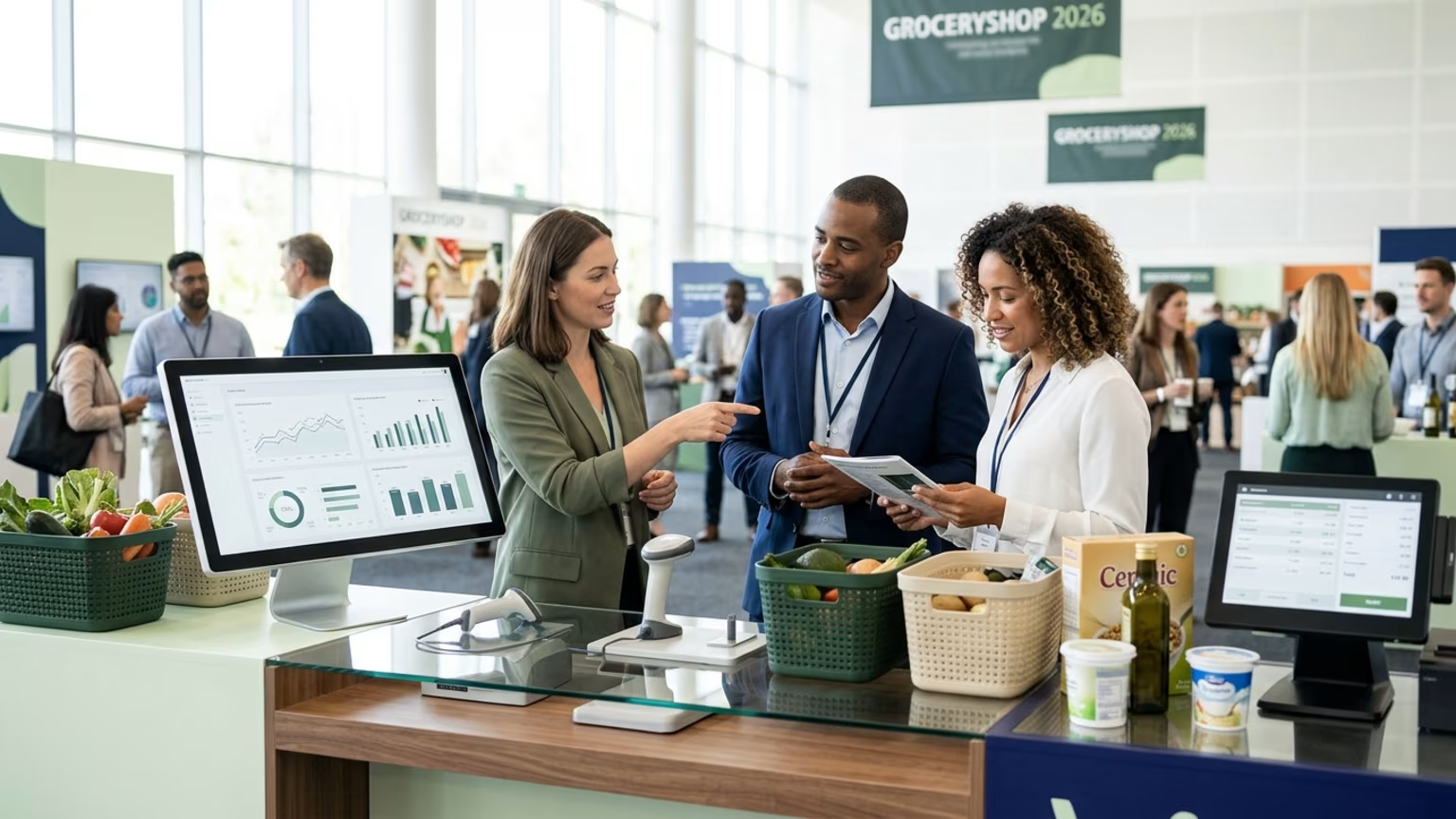
Retail media is now a big part of how brands reach shoppers. It shows up on retailer sites, in apps, on off-site media, on in-store screens, and across more of the shopping journey than most teams expected a few years ago.
That sounds like a digital story. It is not only a digital story.
The strongest retail media strategy still needs real shopper truth. It needs to know what makes someone stop, what question they ask first, what line makes the product easy to understand, and what offer gets them to move from interest to purchase. Those answers often show up first in live retail.
This is why live retail is the missing link in retail media strategy. A good demo, roadshow, or activation does more than move product for a day. It gives the brand honest language, creative direction, shopper objections, offer signals, and content that can improve retail media long after the event ends.
That is where Makai fits well. The same disciplines that make retail demonstrations, Costco roadshows, and experiential marketing work are the same disciplines that can make retail media smarter.
Retail media now reaches far beyond sponsored product listings. It includes on-site ads, off-site media powered by retailer data, in-store digital placements, audio, smart cart surfaces, and other formats tied closely to shopping behavior.
Because digital testing often shows what people click, not always what they feel, ask, compare, or hesitate over in a real shopping moment. Live retail reveals those missing signals faster.
It gives brands real shopper language, real reactions, better message testing, better offer testing, and reusable content that comes from true product interaction.
Because they are high-intent, fast-moving retail environments where brands can quickly see what stops shoppers, what value story works, and what objections block conversion.
They should track more than traffic. Look at demo volume, shopper questions, opt-ins, content captured, offer response, sales rhythm, and what should change in the next media wave.
Use live retail as a testing engine. Learn what works in the aisle, then use those learnings to improve retail media creative, offers, and follow-up across channels.
Retail media used to feel simple. A brand bought search placements on a retailer site, maybe added display, and looked at attributed sales later. That model still matters, but it is no longer the whole picture.
Now retail media is more connected to the full shopping journey. A shopper can see a product on a retailer site, get a reminder off-site, encounter a screen in store, see a cart-based prompt, and then make the purchase near the shelf. That means the message has more places to show up, but it also means weak creative and weak offers are easier to expose.
In-store retail media is a big part of that shift. It is not just an extra screen in the aisle. It is a chance to reinforce a product story at the exact moment a shopper is deciding what goes in the basket.
The problem is that many brands still build retail media from the top down. They start with the ad unit, the placement, or the dashboard. They do not always start with the real shopper moment. That is why the work can look polished and still feel flat.
Digital testing is useful. It can tell you which headline got more clicks, which image drove more views, and which audience segment performed better. But it does not always tell you why someone stopped caring, what they wanted clarified, or which product angle felt strong in person.
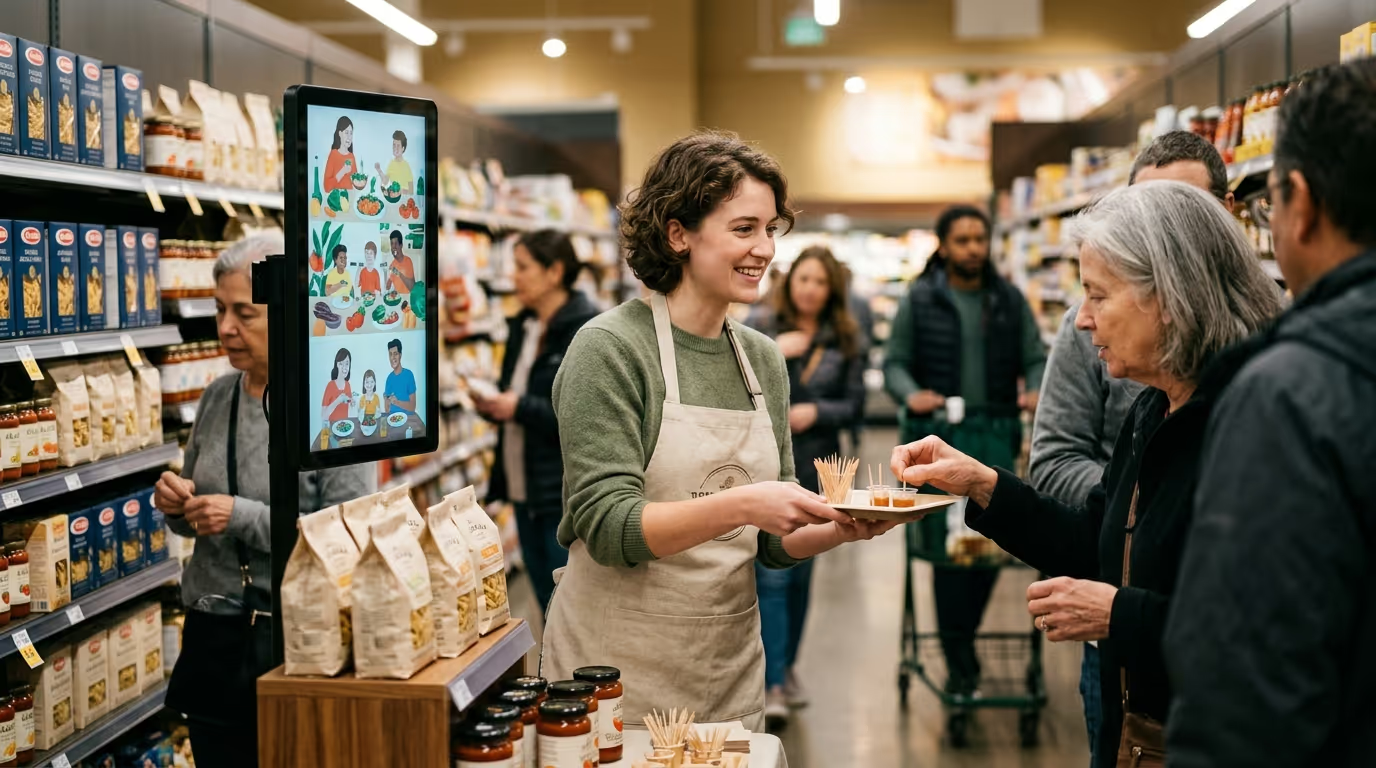
Live retail fills that gap. When someone tries a drink, tastes a snack, sees a product work, or hears a short value story from a real person, the brand gets a different level of signal. It hears the questions. It sees the hesitation. It learns what made the shopper smile, what made them lean in, and what made them walk away.
That matters for retail media because the best ad copy is often hidden inside those live moments. The strongest offer may come from what people asked for on site. The clearest product line may come from how the field team learned to explain the value in five seconds instead of twenty.
This is especially true in categories like CPG and FMCG, food, beverage, and snacks, where trial and clarity often beat abstract awareness.
A strong live retail program creates useful raw material for the whole marketing system.
First, it reveals honest consumer language. People do not talk like brand decks. They describe a product in simple, direct ways. They say what it reminds them of, how they would use it, and why they might buy it. That language is often better than what the creative team started with.
Second, it shows which objections appear early. If ten shoppers ask the same question in one shift, that is not noise. That is a message problem. It means the packaging, the signage, or the offer needs to do more work.
Third, it shows what value story lands fastest. Maybe the product is winning because of convenience, not because of innovation. Maybe the price story is more important than the ingredient story. Maybe the bundle makes more sense than the single unit. Those are real inputs for better retail media.
Fourth, it creates content that feels true. Reaction clips, quick demos, tasting moments, field conversations, and simple product education videos often work better because they come from real context instead of a studio guess.
This is the bridge between live retail and retail media. The event is not just a sales moment. It is a creative lab.
Costco is a useful example because it is one of the clearest retail environments for live learning. Shoppers are already in a buying mindset. They are moving with purpose. They care about value, usefulness, and trust. That makes the roadshow a very honest testing ground.
A Costco roadshow can reveal things a digital ad never will.
That is why roadshows should not be treated as simple event line items. They are short, high-intent, live retail tests. They show whether the product can move fast, whether the message is clear enough, and whether the brand has a better offer than the shelf alone can communicate.
Then those learnings can travel. A winning value line from a roadshow can become paid creative. A common objection can shape the landing page. A strong product demo can become a retail media video loop. A better bundle story can move into off-site media and retailer display units.
In that sense, Costco roadshows are not just events. They are content and insight engines.
The teams that get the most value from live retail do not wait until the end to figure out what to keep. They plan the learning path from the start.
A simple approach looks like this.
This is how live retail stops being a separate workstream. It becomes a feeder system for better retail media.
If the event report only says how many samples went out, the team is missing too much. The point is not just activity. The point is what that activity taught the brand.
That handoff is the missing step in many programs. The live team learns something useful, but the retail media team never gets it in a clean format. When that happens, the brand loses one of the biggest reasons to run live retail in the first place.
If your team wants a stronger reporting structure, pair this with experiential marketing reporting.
You do not need to rebuild your whole media plan to use this idea. Start with one product, one retailer context, and one live learning goal.
Choose a product that needs trial or clearer messaging. This could be a retail demo, a roadshow, or a focused in-store activation.
Do not try to learn everything at once. Focus on one or two questions. Which value story lands best. Which flavor pulls stronger. Which bundle feels easiest to understand.
Tell the field team what to capture. Not just smiling people. Capture proof moments, quick reaction clips, product explanation moments, and anything that can improve future ads or pages.
Hold a short review while the live event is still fresh. Pull out the top shopper lines, top objections, top visuals, and strongest offer signals. Then turn them into the next retail media test.
Use the new creative and new offer in the next retail media flight, then compare that result to what the live program taught you. Over time, the system gets sharper.
If you are a CMO, brand lead, retail media lead, or field lead, ask these questions before the next launch.
If those answers are clear, live retail becomes much more valuable. It stops being a nice extra and starts acting like a core part of growth planning.
If your team wants a retail media strategy that learns from real shopping moments, Makai can help design the live program, capture the right signals, and turn those insights into stronger growth. Start with Request a proposal, explore services, and review retail demonstrations and Costco roadshows for the next layer.

30 Years Experiential & Retail Activation Partner for CPG & Beverage Brands | Multi-Market Demos, Roadshows & Costco/Club Programs That Actually Sell