Robbie Thain
Founder, CEO

Learn how to design high-converting retail demos and sampling experiences that move shoppers from curious to cart using proven experience design principles.
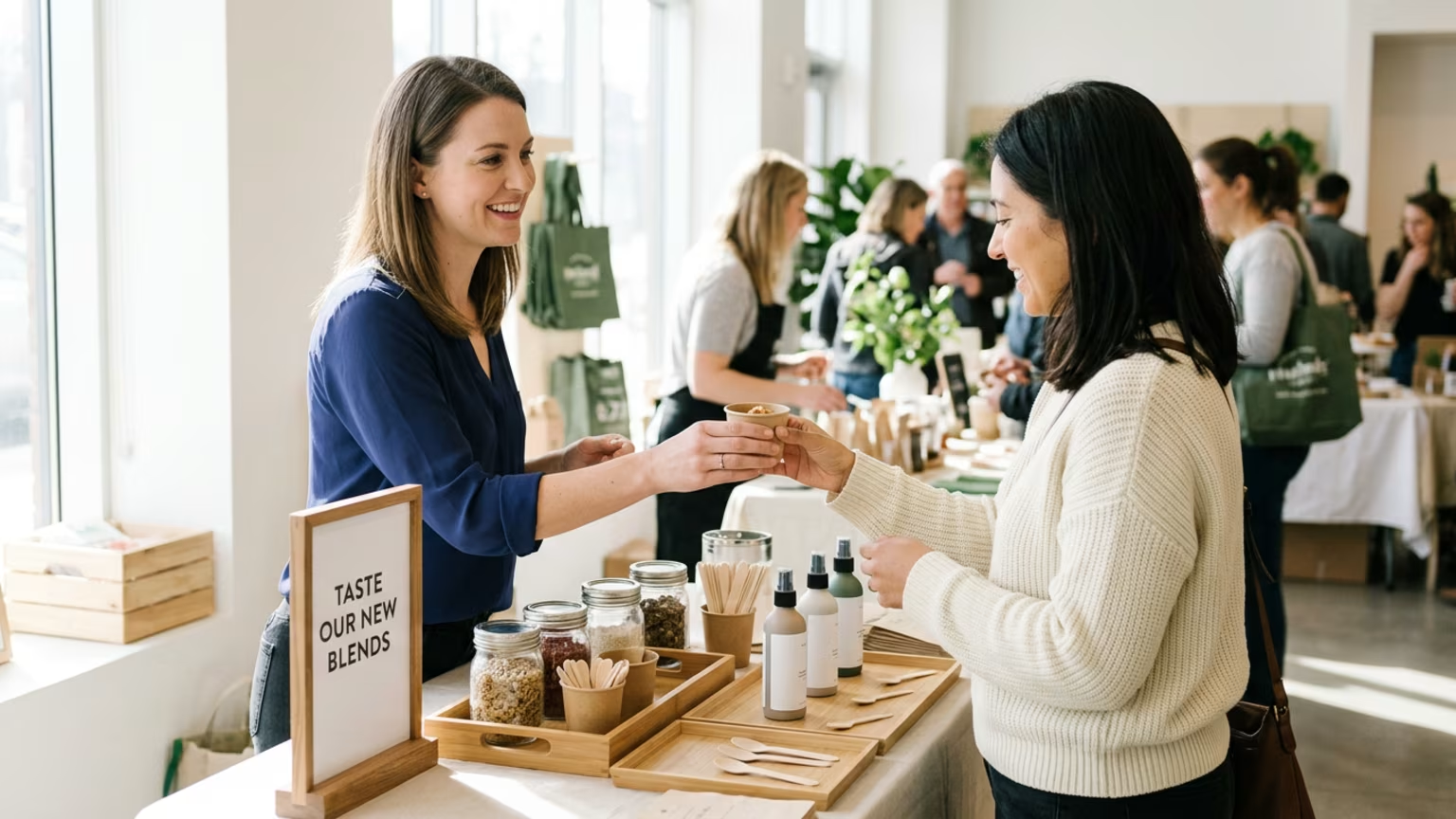
This article outlines how to engineer retail demos and event sampling programs that drive measurable pipeline instead of just distributing free product. By applying strict experience design principles to traffic flow, booth layout, and offer mechanics, marketing operators can transform passive trial into verified customer acquisition.
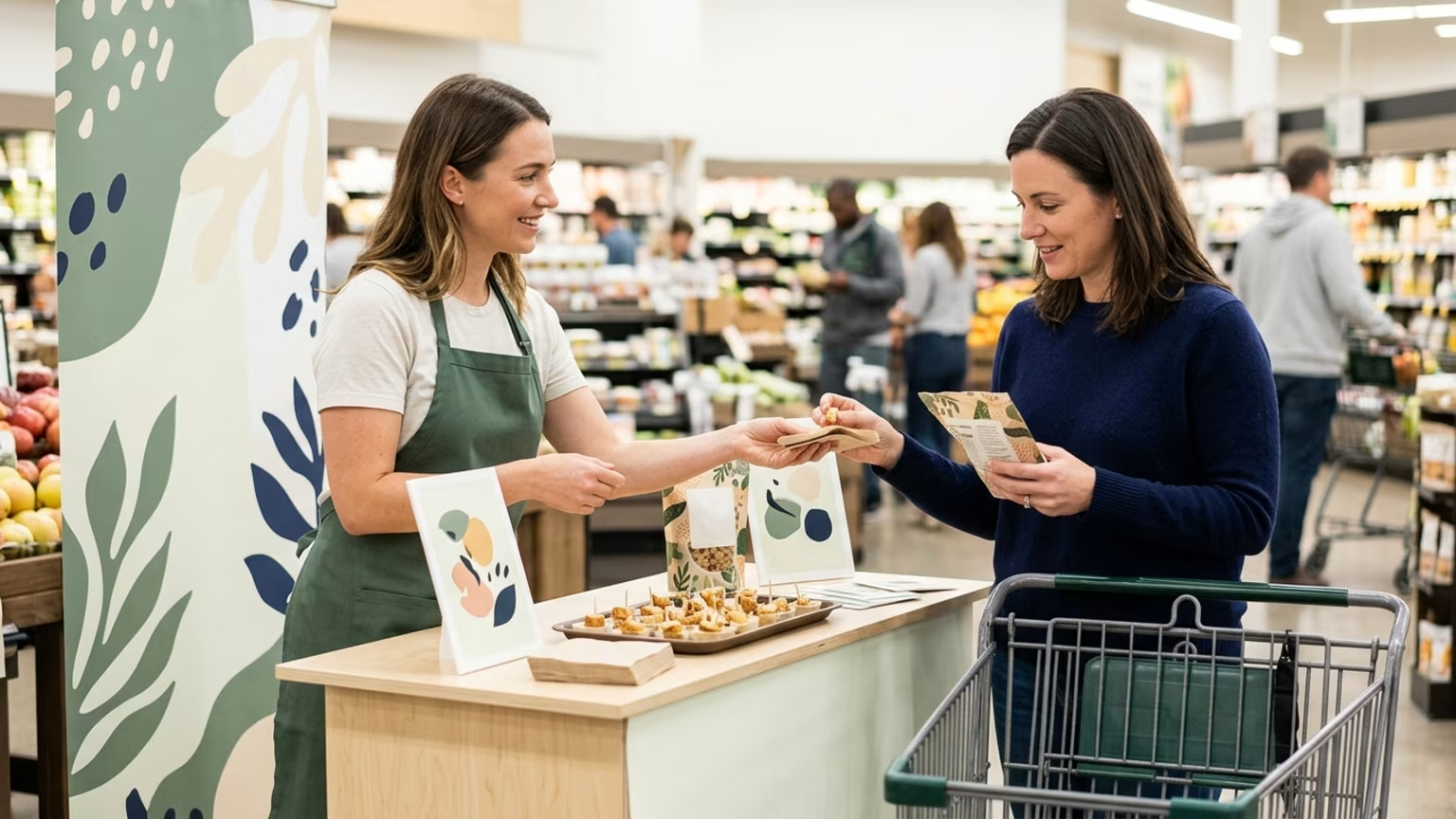
A field marketing director watches a grocery sampling table during peak weekend traffic. The brand ambassador pours fifty cups, smiles warmly, and hands them out to happy shoppers. The shift ends with an empty cooler, exhausted staff, and zero incremental sales. The tension is clear: passing out free product is easy, but engineering an experience that sells requires rigorous operational design.
Retail demo programs often get judged on cups poured rather than actual pipeline. This mismatch creates chaotic activations where brands spend thousands on logistics only to capture zero consumer data. Shoppers grab a sample and walk away without ever engaging with the brand story. Without a planned customer path, the retail floor becomes a place for free snacks instead of a measurable sales channel.
Turning foot traffic into revenue requires treating the sample as an entry point rather than the final interaction. The goal is to move people from awareness to trial and finally to a commitment within seconds. This requires a systematic approach to placement, sensory cues, and the underlying offer design. According to EventTrack data cited by CupShup, 91 percent of consumers report more positive feelings toward brands after events. The same data shows that 85 percent say they are likely to purchase after an experiential interaction.
To capture that purchase intent, brands must define the exact emotional response they want their product to evoke. Agency H5 argues that festival sampling booths must earn attention through visual design, an interactive element, and a compelling story to make visitors stop. A well-designed activation removes friction and makes the path to purchase completely obvious. The product itself must become the centerpiece of a larger physical experience.
Purposeful Profits identifies experiential activations at events, gyms, and offices as a core sampling model that can help direct to consumer brands reduce customer acquisition costs by 15 percent through trial. To achieve this, makai builds programs around deliberate customer flows. We specialize in creating retail demos, product sampling programs, and roadshows that bring brands face to face with their audiences. Each program is designed to drive trial, build consumer relationships, and accelerate retail velocity across multiple locations.
When deployed correctly, these physical touchpoints outperform static displays and purely digital advertisements. They force the consumer to stop, interact, and make a conscious decision about the product in their hands.
Deploying a successful activation requires strict adherence to a proven playbook. Unicom Marketing recommends designing sampling campaigns around a simple flow: notice, greet, sample, information, and a clear next step. When teams follow a structured guide, they eliminate guesswork and maximize conversions.
Measuring success means looking past the total volume of samples handed out. Marketing leaders need exact data to prove that their experiential budgets are producing tangible retail lift. CupShup reports that experiential campaigns it has observed typically achieve 60 to 80 percent foot traffic to trial conversion. These campaigns can deliver three to five times Return on Investment when both direct and indirect impacts are measured.
To capture this Return on Investment accurately, you must separate vanity metrics from lag indicators. Lead metrics measure the efficiency of the booth itself, such as the number of verified intercepts, opt-in rates, and immediate paper coupon distributions. These numbers show whether your activation flow is actually capturing attention. Monitoring these daily allows field teams to adjust their approach if engagement drops.
Lag metrics track the financial impact of those interactions after the event ends. You need to monitor coupon redemption rates, same-day sales velocity, and post-campaign conversion lift in the target stores. By tracking 5 key metrics to prove retail sampling roi, brands can confidently scale their programs. A Startup CPG webinar suggests that, once a shopper engages at the demo table, conversion rates appear similar across different price points in that practitioner's experience.
The same principles of experience design apply directly to large industry expos. Designing trade show experiences that drive trial onsite requires controlling the exact path an attendee takes through your footprint. You cannot afford to let attendees wander aimlessly through your space while staff members check their phones. Every square foot of the activation must serve a defined purpose in the conversion funnel.
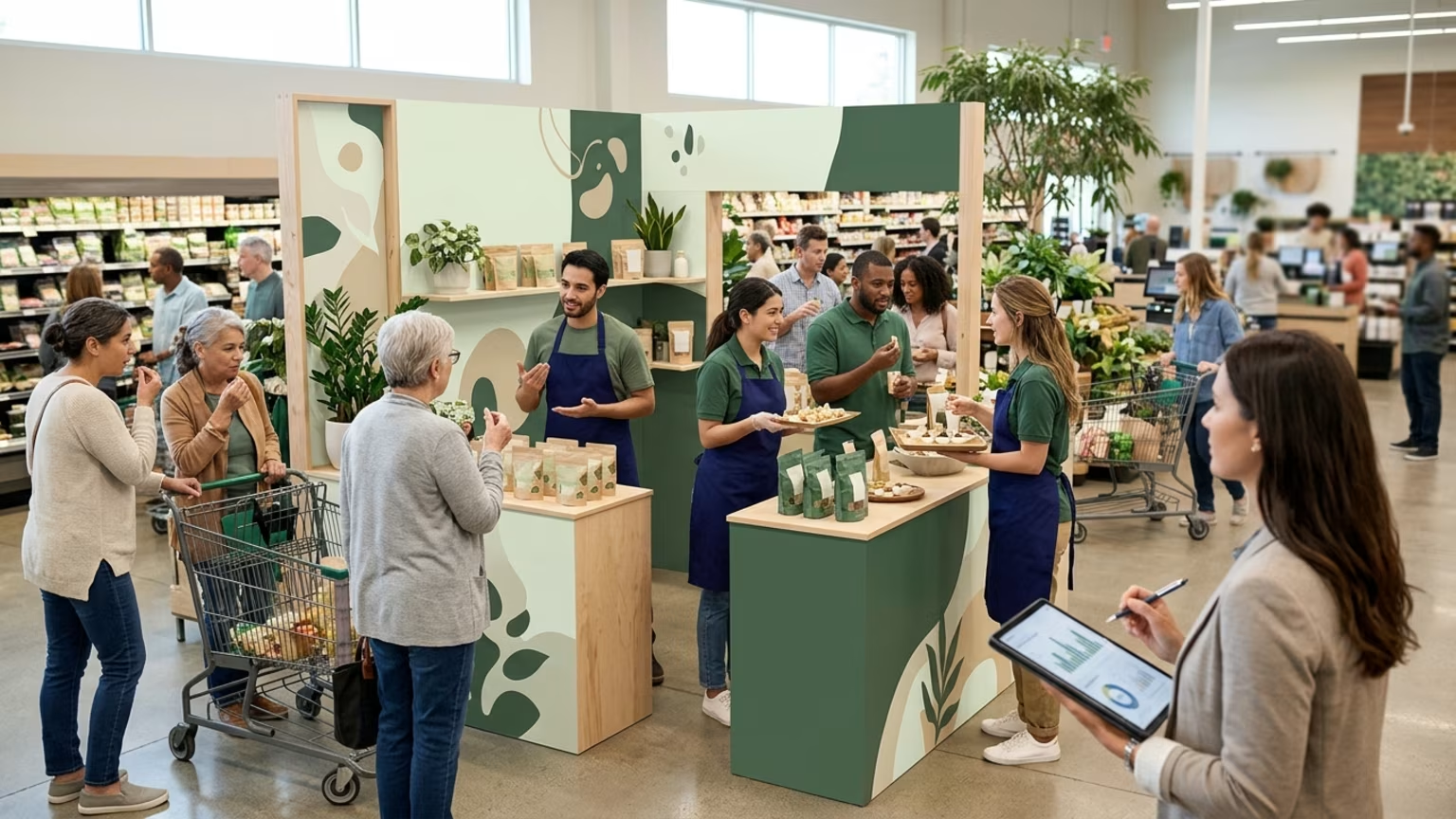
When managing high-volume environments, traffic flow becomes the single most critical factor for success. If a tasting bar is placed too close to the main aisle, it creates a bottleneck that blocks other potential buyers from entering. By deliberately spacing out the greeting area and the product trial zone, you guarantee a smooth progression. This structured pacing allows ambassadors to qualify leads efficiently before passing them to the sales team for formal meetings.
Brands must also consider how the physical environment impacts the perception of the product being sampled. At a crowded expo, the noise and visual clutter can overwhelm the senses and distract from your core message. Creating a dedicated, enclosed space for product trial helps to isolate the attendee and focus their attention entirely on the experience. The fewer distractions present, the easier it is to deliver a memorable pitch and secure a firm commitment.
Applying these principles in the field requires matching your staffing schedule to consumer behavior. For example, a successful street-level campaign does not just set up a table and hope for the best. The American Guerrilla Marketing guide shows that weekend mornings from 9:00 am to 12:00 pm are the strongest window for intercepting receptive crowds at places like farmers markets. Timing the execution perfectly guarantees that you capture an audience ready to buy.
During these peak hours, a brand might deploy a streamlined setup where ambassadors greet shoppers before offering the product. The ambassador hands over the sample while providing a quick brand story and a paper coupon. This connects the physical trial directly to a clear purchasing incentive. There is no wasted effort, and every action drives toward the ultimate goal of generating a sale.
Brands that invest in a thoughtful cpg sampling strategy realize that every interaction must be intentional. If the process is confusing, the shopper will simply walk away. If the process is clear, the shopper takes the product, understands the value, and immediately heads to the checkout lane. True operational excellence turns temporary footprints into permanent sales channels.
Stop measuring your retail activations by the number of empty sample cups left on the table. To build a program that actually drives pipeline, start treating your booth like a physical landing page with a single, clear call to action. Book a strategy call with our team to align your next sampling initiative with measurable sales outcomes.

30 Years Experiential & Retail Activation Partner for CPG & Beverage Brands | Multi-Market Demos, Roadshows & Costco/Club Programs That Actually Sell