Robbie Thain
Founder, CEO

CPG brands are shifting Gen Z student ambassador programs from brand theater to retail conversion engines. Learn how strict logistics drive proven sales lift.
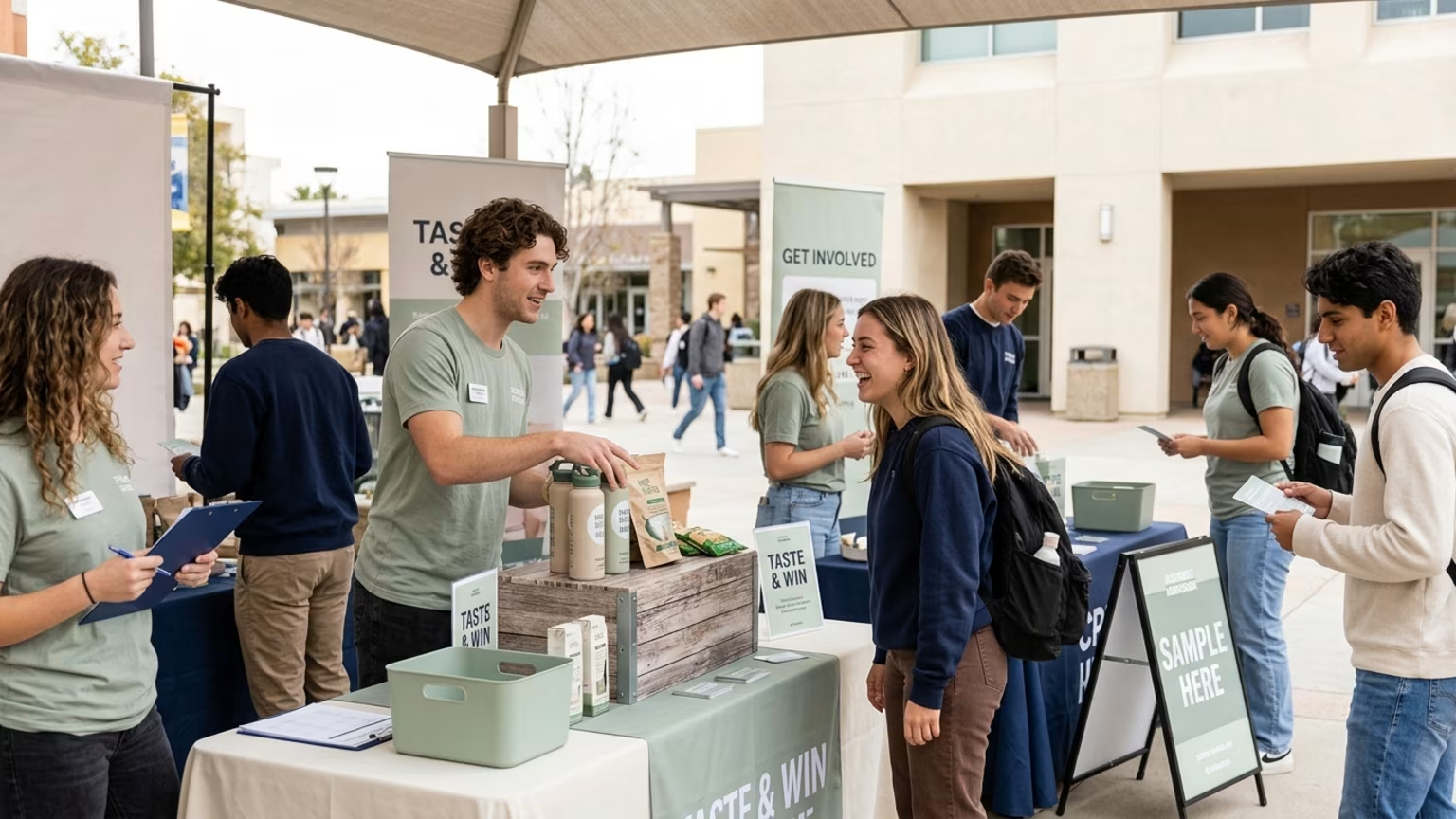
A pop-up tent and a cooler of free samples on a college quad used to be standard operating procedure. Students grabbed a free drink and walked to class. The brand hoped they would remember the logo on their next grocery run. That version of campus marketing is completely dead.
Today, student ambassador programs only survive if they function as precision-driven retail conversion engines. CPG brands are stripping away the fluffy metrics and forcing every on-campus activation to prove real-world sales lift. The patience for vanity metrics has officially run out. Marketers can no longer justify expensive event marketing based on smiles and vague brand awareness.
Digital advertising costs are climbing rapidly. C-suite executives are demanding measurable return on investment for every dollar spent in the field. This pressure is forcing a radical shift in how consumer packaged goods brands approach college audiences. The goal is no longer just getting the product into hands.
Instead, the mission is creating a measurable path from a dorm room trial to a cash register transaction. Gen Z consumers are highly skeptical of traditional advertising formats. They respond to physical experiences and genuine peer recommendations. Brands must meet them in the real world with highly structured ambassador programs.
If you treat a campus tour as mere brand theater, you will waste your budget. The programs that succeed are built on strict operational discipline and relentless retail integration. Fragmented execution often ruins perfectly good marketing strategies. When local teams lack a unified process, the brand experience suffers terribly.
One campus gets a highly engaging product demo while another gets a bored college student staring at a phone. This inconsistency destroys brand equity and prevents any meaningful data collection. Operators must demand rigorous standardization across every single location. Understanding the exact financial mechanics of these programs is critical for marketing leaders.
Small Biz Trends reports that nearly 50% of Gen Z make purchases based on influencer recommendations. This demographic heavily values authentic content over traditional, polished advertising campaigns. To capture this massive audience, brands are testing the waters with targeted, high-impact physical investments. Knowing the true cost of these activations helps operators plan effectively and secure budget approval.
The initial cost of entry can be significant for isolated, single-location events. Campus Commandos reports that pilot programs for Gen Z market validation can cost approximately $24,000 per campus for high-visibility activations. This figure typically includes prime placement during massive events like move-in day. At this price point, brands must ensure every detail is executed flawlessly.
A single botched event at this tier destroys your return on investment and ruins executive trust. However, the unit economics improve drastically with volume and long-term commitment. Scaling a student ambassador program to over 500 campuses can reduce the cost to approximately $4,800 per campus annually. This drop in cost per campus changes the entire financial model for field marketing teams.
It allows brands to maintain a steady physical presence without draining their overall shopper marketing budgets. Consistent presence builds daily habit, and habit drives steady retail volume. These financial metrics prove that scale requires a strategic, phased approach. You cannot simply jump to a massive deployment without testing your assumptions first.
The cost difference between a custom pilot and a scaled national program is enormous. Smart operators build their financial models around this curve. They prove the concept at a high price point before unlocking the efficiencies of scale. For a marketing leader, these numbers mandate a fundamental shift in strategy.
A Vice President of Marketing cannot treat campus sampling as a siloed awareness campaign anymore. Fragmented budgets often lead to isolated events that fail to register at the local cash register. The focus must shift entirely to tracking the exact retail conversion path. You have to prove that the student who tried your product actually bought it later.
This means integrating physical sampling closely with digital tracking tools. Marketers are linking on-campus trial directly to local retail partners using unique QR codes. They are also deploying geo-fenced promo codes and app-integrated tracking. This is how brands move from guessing about impact to proving actual sales pipeline.
By connecting student ambassadors with retail demos, operators can finally show clear return on investment. The data provides a straight line from the quad to the aisle. Retailers also demand this level of rigorous proof from their brand partners. A buyer at Target or Costco does not care about your total social media impressions.
They care strictly about sell-through velocity and local foot traffic. Brands use campus programs to bolster retailer confidence by presenting real-time trial data. When you prove that your local activation drives students into their specific store, you win better shelf space. This operational alignment turns a marketing expense into a powerful trade marketing weapon.
This alignment is the secret to building sustainable momentum. When field teams and retail teams share the same metrics, everybody wins. Our experience shows that student ambassador programs drive retail velocity only when both teams communicate daily. You cannot operate in silos and expect consumers to bridge the gap for you.
The brand must design the exact route the shopper will take. This macro trend forces a hard reset on how field teams execute local events. The old model of understaffing a booth to save money guarantees complete failure. Overwhelmed brand ambassadors cannot start meaningful conversations or capture accurate data.
AnyRoad advises that staffing ratios for UGC activations should target one brand ambassador per 25 attendees to maintain dwell time and content quality. This specific ratio ensures your team has the breathing room to actually engage with the audience. Proper staffing allows your field team to execute complex data capture flawlessly. Teams must assign dedicated roles for every single event activation.
You need one lead, one data capture operator, and one post-event follow up owner. This strict division of labor ensures accountability from initial registration to the final retail purchase. You cannot ask a single person to pour samples, scan QR codes, and monitor inventory simultaneously. Operational excellence requires incredibly clear roles.
Operators should test these logistical changes carefully before rolling them out nationally. Campus Commandos outlines a framework where a pilot program deploys ambassadors to three college campuses over 90 days. This controlled test gives you real data you can present to your board before asking for a larger budget. It confirms that the mechanics work for your specific product in a live environment.
Our team at makai knows that dialing in these logistics generates the clean data for measuring return on investment. Without this structured testing phase, brands risk scaling operational errors. If your QR codes fail to scan on day one, you lose the entire dataset. If your ambassadors forget to point out the retail partner, the sales lift will vanish.
The 90-day window provides enough time to correct these field-level mistakes. Precision on the event floor is the only way to generate trustworthy executive reports. Major brands are already shifting their recruitment models to match this operational reality. They understand that massive follower counts mean nothing if the engagement is entirely fake.
Samsung recently adjusted its strategy to prioritize authentic passion over sheer social reach. They wanted to connect with students on a much more genuine, peer-based level. Germana Mitrani, Affiliate Marketing Manager at Samsung, explained the company's new approach. "Last year we launched a program where we give anyone with 1.5 K followers or more the chance to be a brand ambassador for Samsung," she said.
She noted that participants do not need to be famous influencers. This democratic model ensures the people representing the product actually care about it. It removes the corporate gloss and replaces it with genuine peer-to-peer influence. The result is content that feels native to the actual student experience.
This focus on micro-creators is a direct response to current consumer behavior. This demographic is highly sensitive to inauthentic marketing tactics. They expect total transparency and will actively reject brands that feel artificial. By empowering normal students to share their genuine experiences, Samsung builds lasting credibility.
This credibility is the exact fuel needed to drive a student from a campus event to a retail checkout lane. CPG products often face high rates of frictionless switching. A student might love your beverage today but grab a competitor's drink tomorrow. If your brand activation fails to provide a seamless path to purchase, loyalty is easily lost.
Real passion from a trusted peer helps mitigate this risk. It creates an emotional anchor that survives the trip to the grocery store. Operators need to adjust their reporting dashboards immediately to reflect this new reality. Stop measuring success by how many free samples left the folding table.
Start tracking how many of those samples turned into confirmed purchases at a nearby retailer. Every field activation must have a clear path to purchase and a reliable way to track the outcome. If your campus program cannot prove retail sell-through, you are just throwing a very expensive party. Focus on operational discipline, strict staffing ratios, and hard conversion data to win the semester.
Brands that bridge the gap between physical sampling and digital tracking will dominate the retail shelf. You must demand more from your field teams and your local activations. For brands ready to turn fleeting interactions into qualified retail pipeline, makai delivers the rigorous execution required to succeed. The time for brand theater is over.

30 Years Experiential & Retail Activation Partner for CPG & Beverage Brands | Multi-Market Demos, Roadshows & Costco/Club Programs That Actually Sell


