Robbie Thain
Founder, CEO

Learn how to measure the real impact of student ambassador programs on retail velocity. Turn campus excitement into trackable sales with a proven ROI framework.
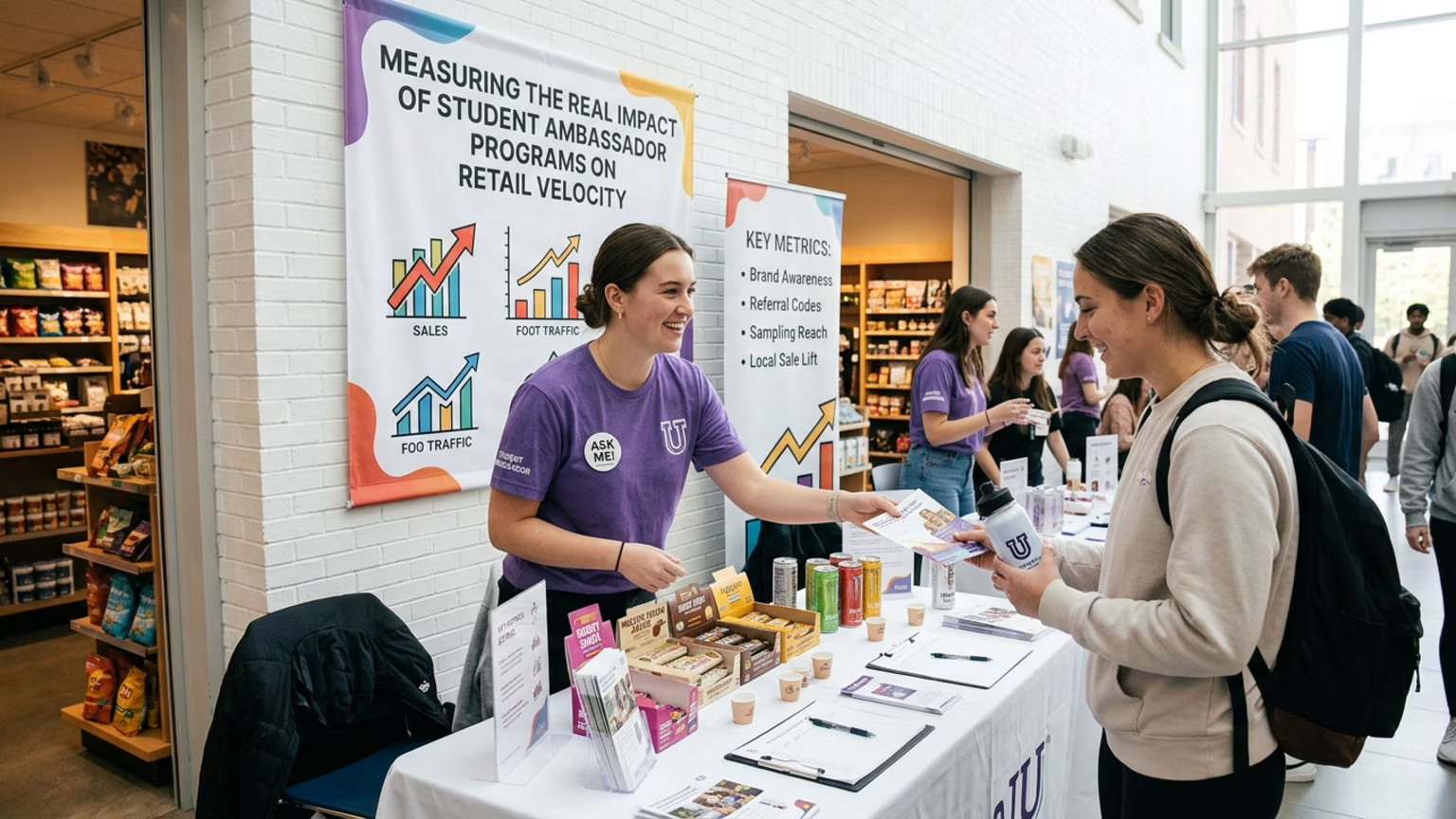
A folding table sits near the main university library on a Tuesday afternoon. Two undergraduates in branded shirts pass out energy drinks to students rushing to class. By noon, four hundred cans are gone. The brand manager back at headquarters sees a photo of the empty table and assumes the event was a massive success.
Campus sampling efforts often create immediate excitement but fail to provide trackable data for brand managers. Building a structured measurement plan turns isolated university giveaways into proven drivers of retail sales.
Most campus marketing programs operate in a complete operational blind spot. Brands ship pallets of product to eager students and hope for the best outcome. The ambassadors hand out free items, snap a few photos, and report massive crowds. When the marketing team looks for a spike in local store sales a week later, the data shows flatlines.
This disconnect happens when the activation lacks a clear path to retail purchase. Brands burn through their budgets hoping that free snacks will organically create loyal buyers. Hope is never a reliable marketing strategy for serious consumer packaged goods companies. Real operators know that giving away free product without a tracking mechanism is just expensive charity.
We have been connecting brands with people through live experiences, retail programs, and national activations since 1995. Over three decades, we have built a track record of creating meaningful brand moments across the country. In our experience, the most successful brands treat college campuses as direct extensions of the retail aisle. They demand clear metrics from their field teams.
According to Engage Star, looking beyond basic lead generation metrics is critical for measuring real event success. Total headcount and sample distribution numbers look great on a wrap report. They do not impress retail buyers or justify next year's marketing budget. Field teams need better tools to capture real purchase intent.
Without proper tracking, you cannot tell the difference between a new customer and a student looking for a free lunch. The absence of data makes it impossible to optimize future campus visits. Marketing leaders find themselves trapped in a cycle of spending money on activations that cannot be defended in board meetings.
When field marketers lack concrete numbers, their budgets are always the first to be cut during corporate reviews. Financial officers look at the bottom line. They do not care how many smiling faces passed by the campus tent. Without a rigid measurement protocol in place, experiential teams have no defense against budget reductions.
To fix this gap, brands must engineer an end-to-end measurement plan. The strategy requires connecting every physical interaction to a digital tracking point. We call this the closed-loop campus model. Instead of just handing out a product, ambassadors guide students into a trackable digital ecosystem.
This approach uses unique QR codes, localized digital coupons, and geofenced retail promotions. By linking a specific campus event to a nearby grocery store, marketers can track the exact conversion rate. You shift the goal from simply distributing samples to actively driving retail velocity. Every interaction becomes a measurable step toward a documented sale.
The framework requires treating student ambassadors as field data collectors. You must train them to value digital engagement over the sheer volume of product distributed. When you build a structured retail demonstration program, the results multiply. Brands gain a clear line of sight from the campus quad directly to the cash register.
As noted by All In Pro Solutions, effective brand activations require a seamless blend of physical presence and measurable outcomes. You cannot just show up with a loud tent and expect an automatic sales lift. You must architect the experience to pull the consumer toward a specific retail location. This intentional design separates professional experiential marketing from amateur hour.
The strategy starts with a fundamental mindset shift at the corporate level. You have to stop viewing the campus activation as the final destination. The campus event is merely the starting line for a structured customer acquisition process. The true finish line is the checkout counter at the local grocery store.
Changing this perspective allows you to design campaigns that prioritize sales data over superficial interactions. The strategic approach demands alignment between the field marketing team and the shopper marketing team. Bringing these siloed departments together creates a unified front that maximizes the impact of every dollar spent on campus.
Implementing this system requires precision and discipline in the field. You must build your program entirely around data collection. Using a detailed event execution checklist prevents logistical errors on launch day. Here is the step by step process to execute this strategy.
Executing these steps requires constant communication between the field team and headquarters. Your brand ambassadors need real-time feedback on their daily performance. If one campus location generates high engagement but low retail conversion, the offer might be too weak. If conversion is high but engagement is low, the location itself might be wrong.
Adjusting tactics on the fly is a core competency for modern experiential marketers. You cannot wait until the semester ends to evaluate the collected data. Weekly review meetings help the marketing team identify winning strategies and eliminate underperforming tactics quickly. Speed of implementation is a massive competitive advantage in the retail environment.
You must equip your ambassadors with the right talking points. They should know how to clearly explain the digital offer to passing students. A simple script keeps the interaction brief, friendly, and focused on driving the retail visit.
Measuring Return on Investment (ROI) means looking past vanity numbers like total samples distributed. You need a precise mix of lead metrics and lag metrics to truly understand campaign performance. Monitoring the right retail demonstration metrics provides clear visibility into your true field impact.
Lead metrics tell you if the campus event is generating real immediate interest. You should track total QR code scans, digital coupon downloads, and new text list sign-ups generated during the activation. These numbers indicate immediate intent to buy your product. High engagement at the booth usually predicts strong retail performance later in the week.
Lag metrics show the actual financial outcome of the physical campus activation. You must monitor the total coupon redemption rate at local retailers over the following month. Compare the store-level retail velocity during the campaign window against your historical baseline. This data proves whether your field efforts actually generated tangible revenue.
When you build a system that captures both immediate interest and eventual sales, your reporting becomes bulletproof. You can walk into a meeting with a retail buyer and show them exactly how your brand drives local foot traffic. Buyers care intensely about velocity, margin, and category growth. Your data should speak their language directly.
Your dashboard should provide a daily snapshot of these key performance indicators. Waiting for a post-campaign wrap report is a massive operational mistake. By tracking the numbers in real time, you can deploy additional resources to locations that show promising early results. Data gives you the power to pivot quickly and turn a static marketing campaign into a dynamic sales operation.
Research from CupShup highlights that successful experiential marketing requires aligning the live activation with broader business goals. Experiential campaigns fail when they are judged solely on subjective brand awareness. By defining your success metrics upfront, you guarantee that the entire team is pulling in the same direction.
Consider a recent campaign for a national sparkling water brand targeting college students. The brand wanted to drive sales at a regional grocery chain located near three major university campuses. Instead of a traditional free-for-all sampling event, they deployed a highly structured retail demonstration approach. Ambassadors set up interactive stations where students could sample the new beverage flavors.
To get a full-size can, students scanned a code that delivered a buy-one-get-one offer for the nearby grocery store. Over three weeks, the campaign generated five thousand verified digital opt-ins across the three university locations. The target grocery chain reported a massive spike in category sales during the exact same period.
The brand successfully linked campus excitement directly to measurable retail velocity. The regional grocery chain noticed the massive increase in foot traffic and immediately expanded the brand's shelf space. The marketing team used this localized success story to pitch national retailers on a broader national distribution deal.
The success of this sparkling water campaign was not an accident. It was the direct result of applying a disciplined measurement framework to a traditionally chaotic environment. The brand trained their student ambassadors to act as true sales representatives. They built a seamless digital bridge between the campus quad and the retail aisle.
This level of tracking completely changes the way executives view experiential marketing budgets. Field activations are no longer seen as a soft brand-building expense. They operate as a predictable revenue engine that supports key retail partnerships and long-term brand growth.
Stop settling for vanity metrics on college campuses. It is time to turn student excitement into documented retail velocity. Book a strategy call with our team today to build a measurement plan that actually proves your field marketing value.

30 Years Experiential & Retail Activation Partner for CPG & Beverage Brands | Multi-Market Demos, Roadshows & Costco/Club Programs That Actually Sell