Robbie Thain
Founder, CEO

Discover how marketing operators turn in-person brand experiences into measurable pipeline using AI tools, human-centric training, and strict CRM data models.
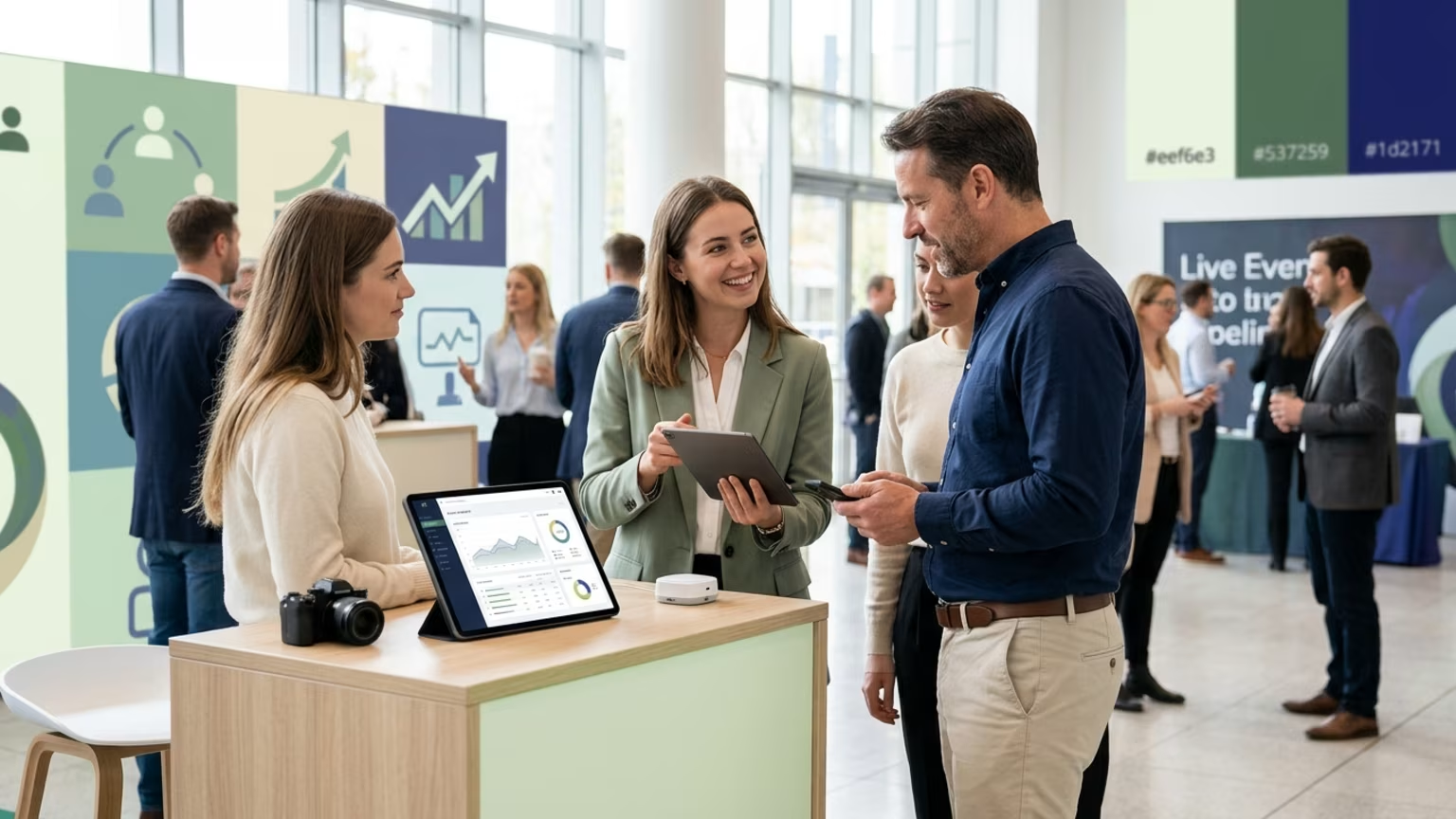
How do marketing operators turn chaotic in-person brand experiences into a measurable Return on Investment? Passionfroot told TechCrunch that its revenue grew 13-fold over the previous year and that it had onboarded several technology companies. This explosive growth proves that brands desperately want to measure interaction data across all touchpoints. Marketing leaders need clear evidence that their campaign investments drive real commercial outcomes.
TechCrunch reports that Passionfroot raised a $15 million Series A led by Insight Partners. Existing investors Creandum, Supernode Global, and s16vc also participated in the round. The company said the round brings its total funding to more than $21 million. This influx of capital highlights a massive shift toward software that connects campaign activity directly with performance data.
In 2024, Passionfroot launched an AI agent called Zest. The company says Zest helps brands create, execute, and monitor creator campaigns. Passionfroot says its proprietary Creator Graph draws on reach and performance data from thousands of campaigns. Experiential operators face the exact same mandate to link physical engagement to digital behavior and revenue.
Preparing permits and site footprints is the foundational step of any live activation. Marketers must build a consistent event data model while they finalize location contracts. A beautiful layout means nothing if the capture technology cannot operate legally within the permitted space. Planners must map out data collection zones and internet access points during the permitting phase.
According to Crawford Group, marketers should align with sales before the event and tag event contacts in the CRM. You must establish these tracking protocols long before the local fire marshal inspects your physical booth. This pre-event alignment dictates how you position staffing zones and route network cables. Every square foot of your footprint must support smooth data capture.
Without this strict preparation, connecting a physical interaction to downstream pipeline becomes completely impossible. Your event staff will struggle to collect usable information if the floor plan creates traffic bottlenecks. Operators must design the physical layout to encourage natural pauses where digital capture can happen smoothly. The site layout must serve the data strategy perfectly.
How do you train field staff to capture data without losing the human connection? At makai, we rely on a human-centric aloha methodology to keep interactions warm and approachable. Technology coordinates the backend routing while our trained people handle the actual physical handshake. Genuine conversations drive much higher opt-in rates than aggressive tablet waving on the floor.
We believe every interaction must feel authentic and deeply personal for the consumer. A VP of Marketing in the CPG beverage category told us: "Robbie, your leadership and vision turned our campaign into something truly special. The Makai team brought our new drink to life with energy, creativity, and flawless execution. Thanks to you, our brand isn't just tasted, it's remembered." Our team's approach transformed their product launch into a memorable brand experience.
While AI handles the heavy data processing, your talent must focus entirely on building trust. The best marketing tools in the world will fail if the field staff seem robotic or scripted. Proper training ensures your team treats consumers like real people instead of data points. A warm interaction builds the exact kind of trust that encourages consumers to share their information willingly.
Passionfroot claims it has paid at least $10 million to creators through its platform over the past 18 months. That figure proves the immense value of specialized human communication in any modern marketing channel. Event staff must possess that same specialized expertise to evangelize products effectively in person. Brands overhaul event staffing to ensure their talent can balance emotional intelligence with rigorous data collection duties.
How does a physical handshake become a qualified CRM record ready for sales follow-up? Integrate reports that event programs should measure lead quality, lifecycle progression, pipeline influence, and revenue alongside attendance. Raw lead counts offer very little value if those contacts lack real buying intent. Marketing operators must capture the exact interaction type and consent status during the live event.
One experiential-measurement framework separates results into reach, engagement, affinity, and pipeline layers. Ulala published this layered approach to help teams understand the true depth of their field performance. You must connect these layers using tagged touchpoints to understand the full customer journey accurately. This structure allows centralized lead capture to match physical event activity directly with downstream digital purchases.
Teams should use targeted landing pages or specific loyalty identifiers for each audience segment. A consumer requesting a product sample should not receive the exact same follow-up path as a retail buyer. AI systems can score these contacts immediately based on the specific product message they experienced. This rapid qualification sends the most valuable records directly to your sales team for immediate action.
Send captured data into the marketing system with a dedicated event campaign field. Each contact should be classified as event-sourced or event-influenced rather than undifferentiated. This strict classification gives marketing leaders an accurate picture of their field performance. Proper tagging prevents digital marketing channels from taking credit for physical interactions.
Crawford Group recommends reporting early indicators at 30-, 60-, and 90-day intervals. Immediate reporting might show early sample redemption rates or total qualified contacts secured. The later intervals will reveal true retail lift and actual closed revenue from the campaign. This phased reporting prevents nervous executives from dismissing an activation before the downstream conversions actually happen.
What happens when the venue internet drops and your real-time tracking fails completely? Every seasoned field operator needs a manual contingency plan for floor execution and data collection. Field teams must have offline capture tools ready to deploy at a moments notice. You can always sync the captured records to your primary CRM when network connectivity finally returns.
Never let a broken badge scanner stop your team from starting valuable conversations. Staff should maintain their focus on the consumer rather than fighting with a frozen tablet screen. Planning for technology failures is absolutely critical when you evaluate AI for events and measurement platforms. The hardware will eventually fail in a crowded convention center environment.
The physical hardware must never become a barrier to entry for the consumer. Staff should hold the backup paper forms ready on clipboards behind the booth counters. A quick transition to paper keeps the line moving during temporary network outages. The consumer will appreciate the efficiency and remember the positive interaction instead of the glitch.
Your team should keep printed QR codes and paper fallback forms hidden but accessible. If the primary digital system crashes, the staff can pivot to these analog methods instantly. The data model remains exactly the same even if the collection method temporarily changes. Avoiding common lead capture pitfalls requires operators to prioritize the human interaction over the fragile hardware.
If all digital technology fails, your team's rigorous training becomes your ultimate safety net. Staff members who understand the core campaign objectives will still gather the most critical information manually. They will ask the right qualifying questions and note the answers on backup materials. A disciplined team ensures that the event still produces usable pipeline data despite the technical chaos.
Before booking your next retail footprint, define your specific commercial objectives clearly. Agree on the exact data points your sales team actually needs to close future deals. Map out your precise attribution windows and establish your baseline metrics well before the event begins. That alignment ensures your field team only collects information that drives measurable and relevant pipeline.
Revisiting that rapid 13-fold revenue growth metric reminds us why strict tracking matters so much. Brands want clear evidence that their physical investments generate real and verifiable commercial returns. Focus entirely on connecting your next physical activation to a solid and scalable data model. That approach turns chaotic event interactions into structured data and undeniable commercial success.

30 Years Experiential & Retail Activation Partner for CPG & Beverage Brands | Multi-Market Demos, Roadshows & Costco/Club Programs That Actually Sell