Robbie Thain
Founder, CEO

Learn how legacy CPG brands execute mobile tours to launch brand restages. We break down the operational tactics and line management needed for physical trial.
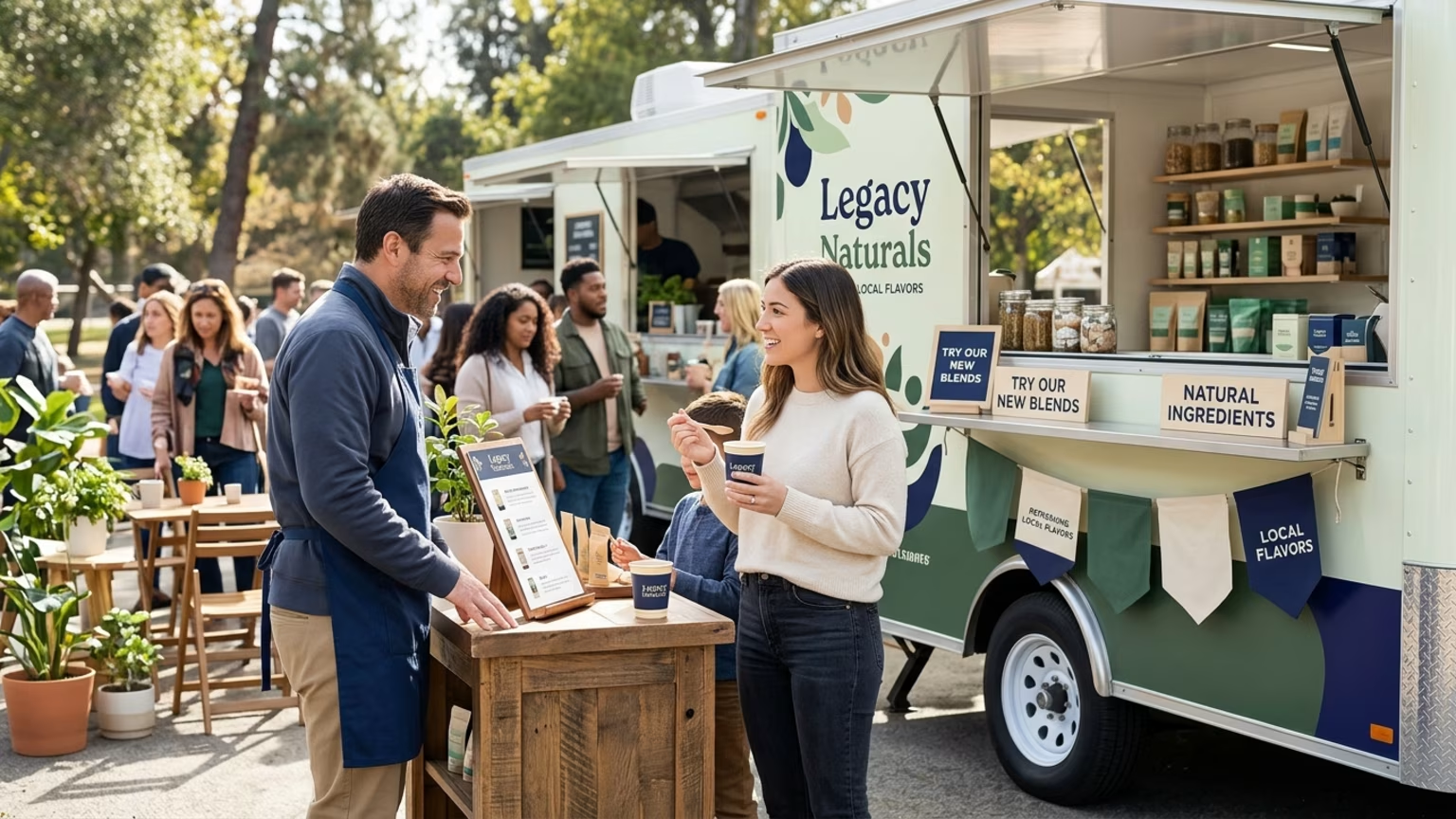
On September 25, 2026, Event Marketer published the operational details behind the Jergens Joy Club Tour. For its 125th anniversary, Jergens launched a national mobile activation to introduce a brand restage directly to creators and consumers. The beauty company executed stops across six major markets to make its new identity physically tangible for a younger demographic.
The mobile route included stops in Orlando and Atlanta before moving to Nashville and Wildwood. Operations then shifted to Chicago and concluded in Santa Monica. Rather than setting up in isolated lots, Jergens anchored its stops near established cultural events. Planners timed these appearances around Lollapalooza, CMA Fest, Barefoot Country Music Fest, and The Cheerleading Worlds.
Inside the physical footprint, the activation relied on structured routing to manage consumer traffic. Attendees received scratch-off tickets that directed them to matching activity stations. These stations included a prize cooler, a Plinko-style game titled "The Joy Drop", and an oversized-letter-J putting green.
To maximize footprint efficiency, event planners must calculate the precise dwell time at every interactive station. The Plinko-style game and the putting activity were strategically designed to keep attendees engaged while preventing bottleneck scenarios. Managing crowd flow effectively ensures that consumers spend more time testing the actual product rather than waiting in disorganized lines. This logistical precision is what separates a chaotic pop-up from a highly functional retail pipeline generator.
Event Marketer reported that this routing strategy successfully moved attendees through the space while managing long lines. Along the way, consumers tested new collections and took home products from the Sample Shoppe. Jergens distributed 2,000 to 3,000 samples per stop during the campaign. At the final California stop, the operations team concealed the new logo on set pieces using stickers before presenting it to attendees.
Updating a logo on a corporate website rarely changes consumer behavior on its own. For consumer packaged goods companies, a repositioning effort becomes real when the target buyer interacts with the product in person. Physical marketing turns an abstract restage into a concrete trial that can generate a retail pipeline.
Across our history, we have delivered more than 1,000 campaigns in all 50 states for more than 200 brands. That range gives us deep operational experience across diverse products, retail settings, and market conditions rather than a single activation format. We know that legacy brands must prove their relevance through structured, face-to-face marketing experiences designed to capture attention.
Many digital marketing campaigns fail to translate into tangible sales because they lack a physical anchor point. When a company restages its brand identity entirely online, it misses the opportunity to forge a direct, memorable connection with the shopper. Experiential marketing bridges this gap by creating physical environments where consumers can interact with the brand on their own terms. These tactile experiences build a foundation of trust that online advertisements simply cannot replicate.
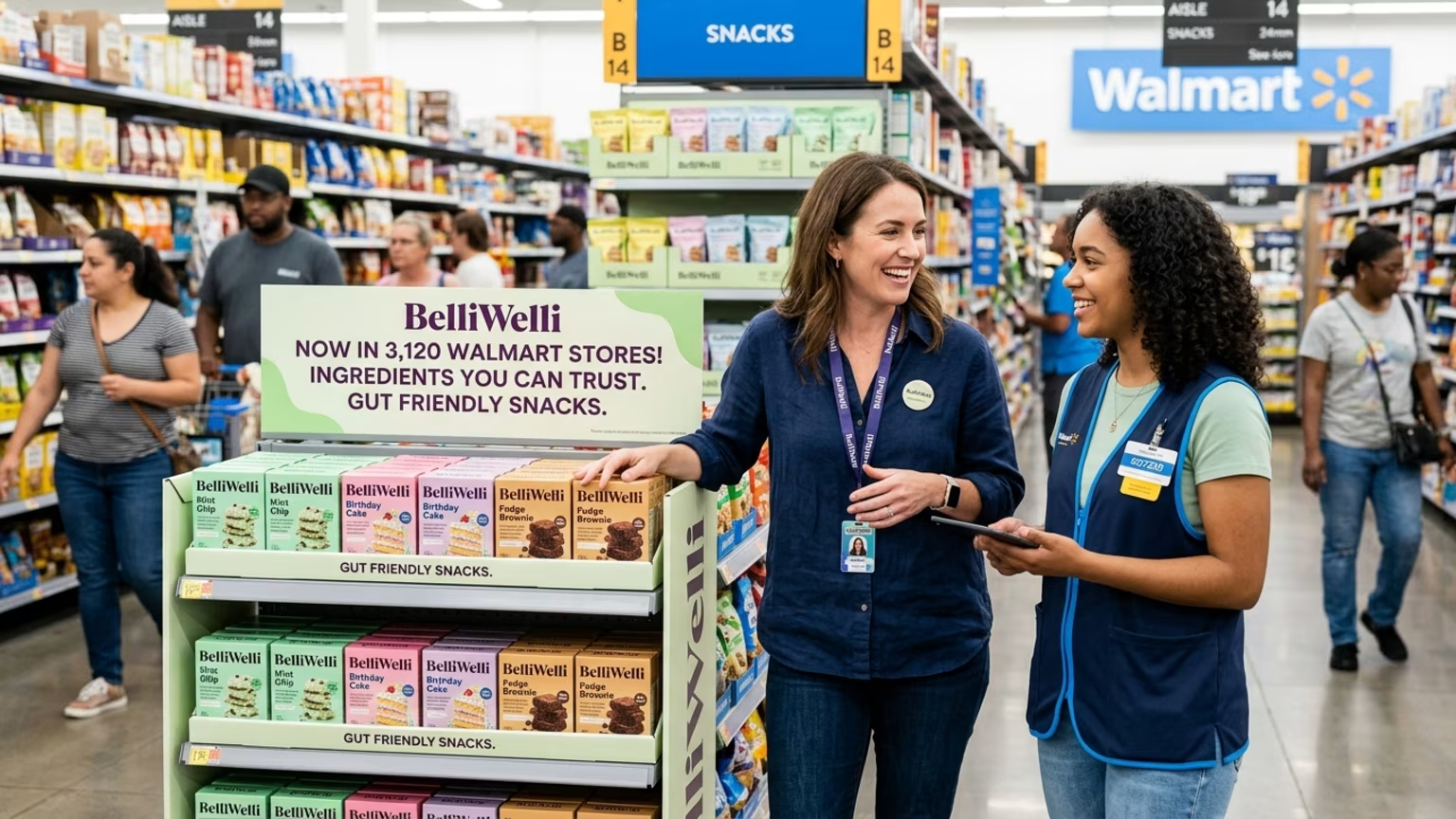
A Director of Brand Strategy in the CPG snack division shared: "The Makai team turned our product launch into a sensory event that shoppers still talk about. From creative storytelling to flawless in-store execution, they made snack time unforgettable. We couldn't have asked for a stronger partner."
Our team created an in-store experience that left a lasting impression on consumers and became a memorable brand moment. When a legacy company targets a younger buyer, experiential footprints provide the ultimate testing ground. The physical environment forces a brand to translate its digital identity into measurable consumer response. Providing brand activations that prioritize physical trial over passive observation is critical for securing retail momentum.
A nationwide tour requires intense operational discipline to connect social media planning with physical line management. Jergens initiated its campaign with a creator trip in Miami to generate early social conversation. Later on, creators Mei Mei Vigliotta and Darcy McQueeny joined selected tour stops and helped reveal the updated branding at the California finale.
This sequence forces field marketing directors to integrate VIP talent logistics with general consumer flow. We faced a similar operational challenge when we converted a vintage Ultra Van into a mobile VIP beauty lounge for Refinery29 and Smashbox at Coachella. The activation generated more than 260,000 vehicle impressions, hosted more than 1,200 VIP guests, and reached a seven-figure social audience. Managing high-profile guests alongside massive venue crowds requires rigorous physical routing to keep the experience highly functional.
Executing a consistent brand message across six different markets requires highly trained field staff. Brand ambassadors must understand the intricate details of the new product lines to answer questions accurately during peak traffic hours. Furthermore, managing the logistical transfer of large set pieces between cities demands tight coordination from the operations team. A single delay in freight shipping can derail the entire timeline for the next activation stop.
For Jergens, sensory execution added another layer of operational complexity to the field rollout. The brand served custom cotton candy in Cherry Softness, Pink Vanilla Cloud, and Tropical Escape flavors at the Santa Monica stop. Furthermore, every tour stop featured a branded beverage or snack. Field teams must secure health permits, manage cold-chain storage, and maintain strict inventory control to execute these sensory elements at scale.
Avoiding execution pitfalls in multi-stop brand roadshows requires separating VIP check-ins from public sampling lines. Launching multi-stop roadshows without a rigid logistical framework often leads to spoiled product and empty sample stations. Maintaining consistency across six cities means coordinating specialized equipment and trained brand ambassadors for every single activation hour.
Stephanie Kimutis, associate director of core consumer care at Kao USA, explained the strategic intent behind the campaign. She noted that Jergens needs younger consumers to "come into the franchise" and that new-product development centers entirely on that goal. Kimutis described the creator-first, consumer-later sequence as highly purposeful for the brand. By letting creators share their experiences first, the company aimed to build trust with a younger audience.
Consumers could then arrive at the physical stops and participate directly in the brand moment. She also noted that the marketing team evaluates the five senses for these experiential events. Taste played a major role in the footprint design and execution. The team researched specific trends to find sensory experiences that consumers would actually wait in line for.
A Brand Manager in the CPG space shared: "Makai transformed our test-drive activation into an emotional brand journey. They connected technology, lifestyle, and experience seamlessly, and turned casual visitors into loyal fans."
We successfully integrated multiple experience layers to convert casual participants into committed brand advocates. However, marketers seeking to evaluate these complex programs must look beyond surface engagement. While the available reporting thoroughly documents product testing and sampling for Jergens, it does not publish tour-wide attendance, sample-to-purchase conversion, or Return on Investment. Establishing robust measurement systems is critical for proving that a campaign produced measurable sales impact.
When executing national activations, counting the total number of handed-out samples is only the first step in measuring success. Brands must connect physical interactions directly to verifiable retail metrics. Without proper tracking mechanisms, a mobile tour risks becoming an expensive branding exercise rather than a true sales driver. Field teams should utilize digital capture tools to record consumer feedback immediately after the product trial.
Collecting first-party data on site allows marketing leaders to track post-event purchasing behavior. When attendees test new collections, brand ambassadors can offer unique promotional codes that track retail conversions accurately. We manage end to end Costco roadshows that bring brands to shoppers through live demos, real conversations, and measurable sales impact. This strict logistical control ensures that every interaction serves a commercial purpose.
Transitioning from festival environments to retail floors requires a unified approach to inventory tracking and consumer follow-up. Brands that align their experiential efforts with their retail distribution strategies see far better conversion rates over time. Instead of relying on isolated product displays, the footprint should integrate product trial directly into the entertainment elements. This integrated approach ensures that every interactive game ultimately drives attention back to the core brand offering.
As legacy brands update their visual identities to attract new demographics, physical execution remains the ultimate proving ground. If your next product launch or brand restage relies entirely on digital impressions, how will you capture the physical retail pipeline needed to prove the campaign actually worked?
After consumer packaged goods companies conclude their national mobile tours, translating those live interactions into sustainable retail velocity is the primary challenge. When inefficient post event follow up and CRM routing limit your sales conversions, Makai stabilizes the operation. Using our Guerilla Marketing capability we launch creative, street level ideas that surprise, delight, and generate authentic word of mouth.

30 Years Experiential & Retail Activation Partner for CPG & Beverage Brands | Multi-Market Demos, Roadshows & Costco/Club Programs That Actually Sell