Robbie Thain
Founder, CEO

Analyze how Sephora and Kohl’s managed logistics for their August 2026 campus pop-up, and why retail brands must track conversion to prove field ROI.
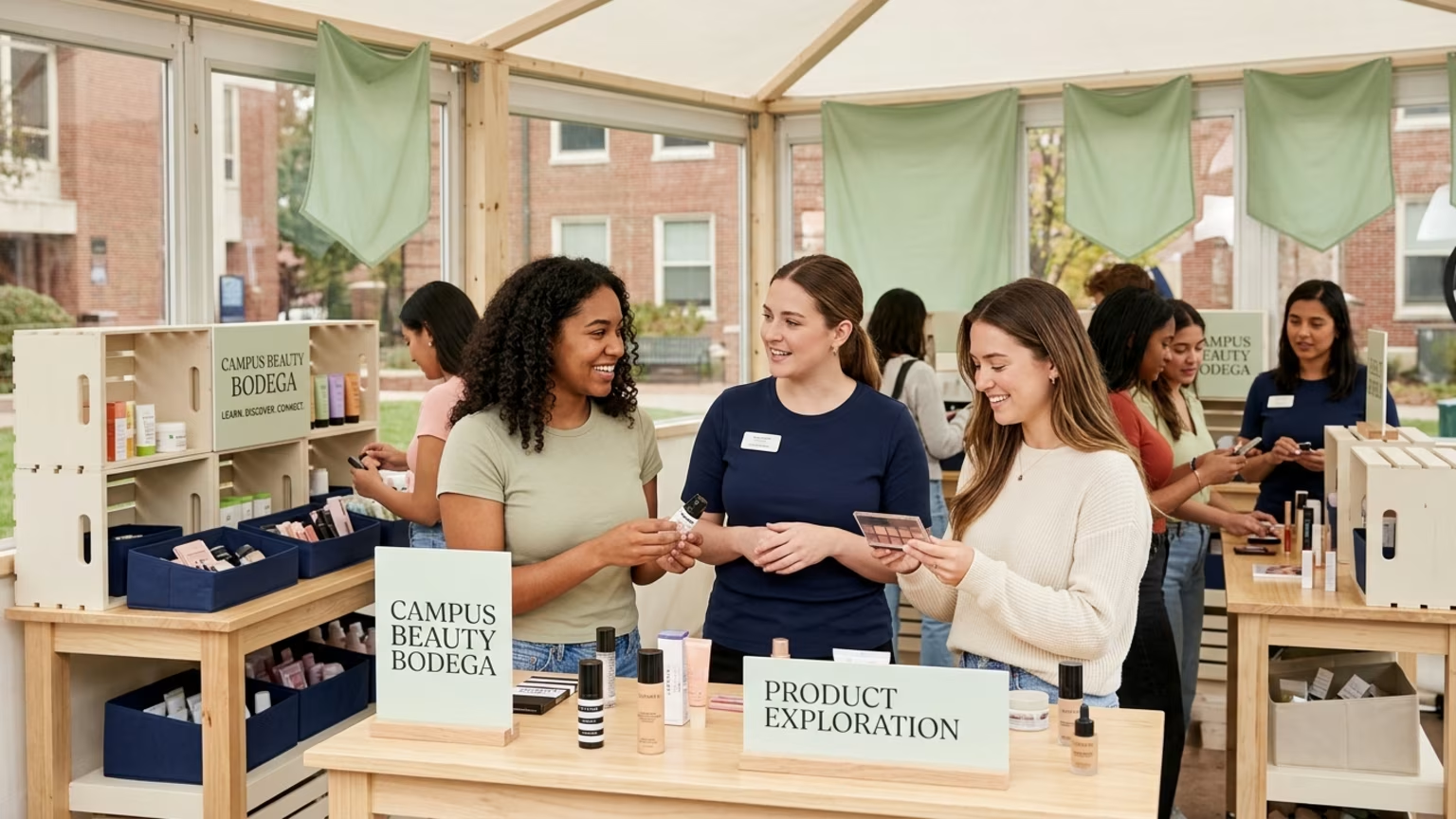
In August 2026, Sephora and Kohl's brought a Beauty Bodega pop-up to Auburn University, the University of Georgia, and the University of Florida. The activation returned to these specific campuses following a prior-year Beauty Corner program. Event Marketer reported that the selected locations were all within five miles of a Sephora at Kohl's store.
The program was carefully designed to help potential sorority members get "Rush Ready" during recruitment. By positioning the event during a high-traffic collegiate window, the brands aimed to intercept students at a very specific moment of need. Targeting the exact week of sorority recruitment requires precise scheduling and advanced site negotiations. The operational window is incredibly narrow, meaning the field teams must execute the build with zero delays.
The execution moved beyond standard product handouts by integrating an appointment-based service model. Sephora deployed its "Beauty Barrage" hair and makeup team to provide face, lip, and hair touch-ups. Celebrity makeup artist Allison Kaye supervised the on-site cosmetic services, establishing a clear hierarchy for the field staff. The physical footprint included a fragrance fridge, sweet treats, stickers, and a themed photo area.
Integrating heavy appliances like a working refrigerator into a temporary campus setup introduces significant logistical variables. Operationally, the field team adapted to the August weather based on their prior experience. They added more shade structures to protect both the staff and the attendees from extreme temperatures. Organizers also adjusted the inventory to feature setting sprays and SPF products for the heat.
Protecting temperature-sensitive cosmetics requires careful supply chain management before the products ever reach the activation site. To connect the field event to retail, a postcard station invited students to send a postcard and a coupon home. Students also received a 15 percent-off coupon for themselves during the engagement. The reporting states this incentive was intended to encourage a visit to Sephora at Kohl's.
These elements show a structured attempt to route campus foot traffic toward nearby brick-and-mortar stores. The combination of expert guidance and tangible retail incentives creates a logistical path from the campus lawn to the cash register. Distributing physical coupons requires strict inventory controls to track exactly how many codes enter the market.
We specialize in creating retail demos, product sampling programs, and roadshows that bring brands face to face with their audiences. Each program is designed to drive trial, build consumer relationships, and accelerate retail velocity across multiple locations. From this operational vantage point, tying an activation to a specific consumer occasion is a smart baseline. Sephora gave students a highly relevant reason to pause and interact with the brand.
Creating a structured interaction around an immediate consumer need prevents the activation from becoming just another ignored display. However, handing out a promotional code on a campus is not the same as generating confirmed retail pipeline. The public reporting gives no attendance, coupon-redemption, sales-conversion, or cost figures for the activation. Without documented conversion data, marketers cannot verify if the field interactions actually drove incremental store visits.
When retail partners face foot-traffic headwinds, field marketing teams must prove their activations generate tangible financial outcomes. Physical activations must eventually prove they generate Return on Investment through measurable store traffic and actual purchases. We have been connecting brands with people through live experiences, retail programs, and national activations since 1995. Over three decades, we have built a track record of creating meaningful brand moments across the country.
That history shows us that a visually appealing footprint only matters if the back-end data capture links directly to sales. Experiential marketing cannot survive on vanity metrics alone. Brands launching similar programs must build rigid measurement protocols into their field operations from the start. Marketers should track appointment uptake, product interactions, and retail outcomes in the activation catchment area. Relying on coupon distribution volume as a primary success metric creates a false sense of security. True field performance requires tracking the consumer from the campus touch-up chair all the way through the final retail checkout.
Operating a high-touch service model on college campuses introduces distinct field logistics and workflow challenges. Managing appointment flows for cosmetic touch-ups requires strict staffing ratios and precise queue management. You need trained brand ambassadors who can keep the line moving while delivering consistent product education to waiting attendees. Adding heavy elements like a fragrance fridge increases power requirements and complicates the campus permitting process.
Securing the necessary approvals for temporary power distribution often requires months of advance coordination with university officials. When brands execute campus activations to bridge retail sales, weather mitigation becomes a primary operational constraint. The decision to increase shade and swap in SPF products shows how environmental realities dictate inventory planning. Without these adjustments, product melting or team fatigue can quickly shut down a live footprint.
Adapting the physical build for local weather conditions is non-negotiable for summer collegiate tours across the South. Proper shade structures also require secure weighting systems, adding transport weight and setup time to the routing schedule. Furthermore, tying a pop-up to stores within a five-mile radius requires precise mapping of local retail capacity. If a campus promotion successfully drives foot traffic, the nearby stores must have the inventory to handle the influx.
Store managers need advance warning to align their staffing and stock levels with the field marketing schedule. This level of coordination represents the core challenge of scaling campus ambassador operations for national brands. A disjointed handoff between the field team and the local retail staff will immediately fracture the customer experience. We design mobile activations and roadshows that accelerate consumer trial, build trust, and boost retail velocity during 90-day product launch windows.
Our structured approach transforms initial product trial into sustained consumer confidence and retail performance. Brands must view the field event and the retail destination as a single integrated supply chain. If the store cannot capture the demand generated by the campus activation, the operational effort is wasted. The physical setup must facilitate a seamless transition from the live event directly to the retail aisle.
Sephora executive Sam Bennett described the decision to return to campus as a combination of the prior year's "success and the joy" and the growth of the opportunity. Bennett also stated she anticipated continuing to engage customers this way. This perspective highlights how qualitative internal feedback often drives repeat investments in field marketing. When multiple brands activate around the same calendar event, the competition for student attention becomes fierce.
While internal enthusiasm is helpful, long-term program survival relies on hard performance data. Operationally disciplined campus ambassador programs require clear conversion benchmarks rather than just positive executive sentiment. A documented increase in store foot traffic provides a much stronger foundation for annual budget renewals. Managing an integrated campaign demands a rigorous reporting structure that separates real retail pull-through from surface-level engagement. As more retail brands crowd the collegiate space, the companies with the tightest reporting frameworks will win the market.
Return to the image of the August campus pop-up. The physical build, the appointment schedules, and the heat mitigation all served to get products into students' hands before they headed to recruitment. If your brand builds a highly coordinated field footprint right next to your retail locations, are you equipped to track exactly how many of those interactions convert into verified sales?
Driving verifiable retail pipeline from collegiate pop-ups requires connecting physical engagements directly to store registers. When scattered attention and poor booth flow derail your consumer interactions, Makai stabilizes the field environment. To secure measurable sales impact, we manage end to end Costco roadshows that bring brands to shoppers through live demos and real conversations.

30 Years Experiential & Retail Activation Partner for CPG & Beverage Brands | Multi-Market Demos, Roadshows & Costco/Club Programs That Actually Sell