Robbie Thain
Founder, CEO

Discover how massive CPG brands scale student brand ambassador programs with operational discipline to drive product trial, retail conversion and true ROI.
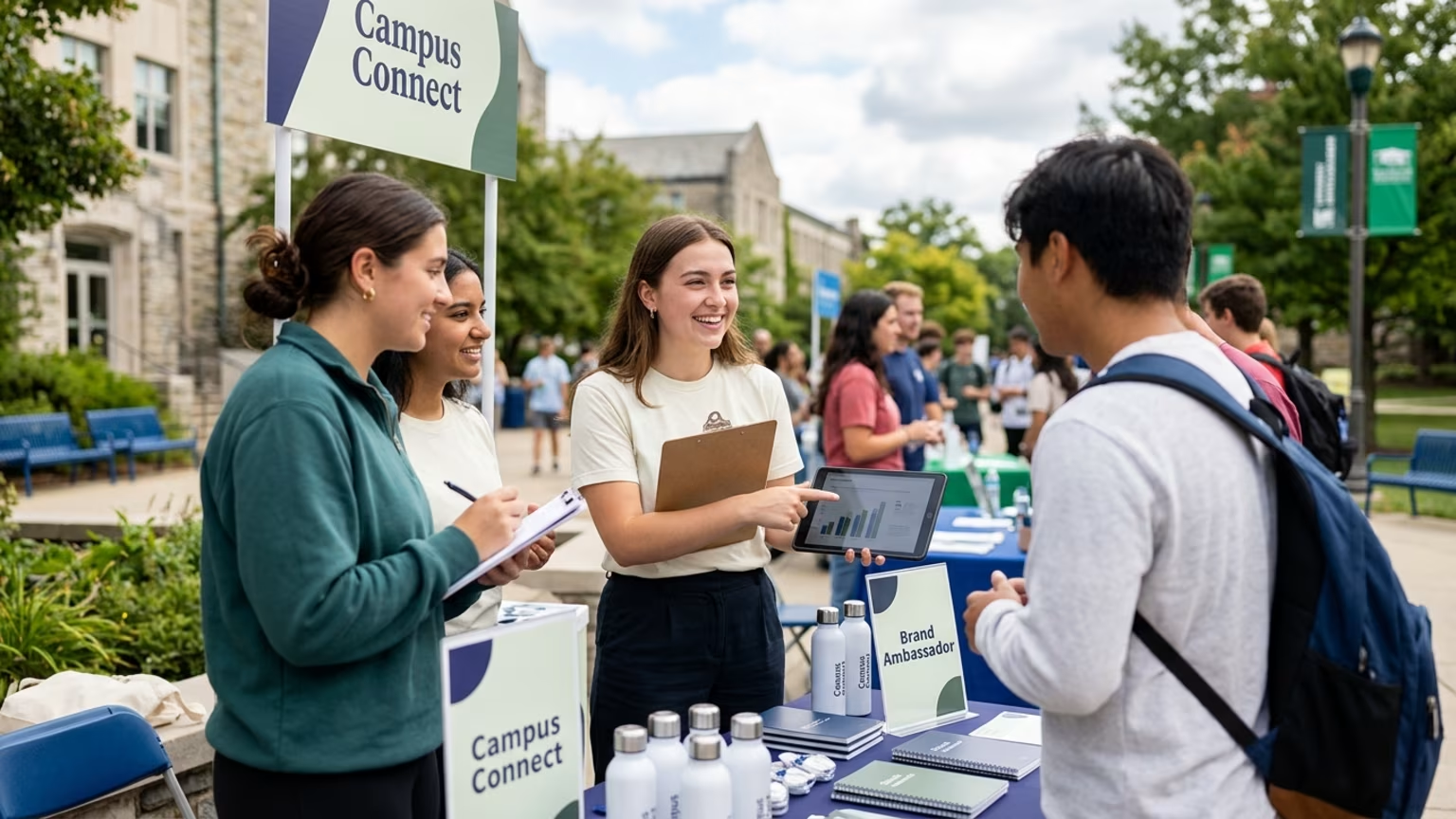
Campus ambassador programs get judged on free swag given away, not on incremental pipeline. That mismatch is why new industry guidance from Campus Commandos, published on July 15, 2026, codified a major operational shift. The transition moves college brand ambassador programs from unstructured giveaways to disciplined field operations. Brand ambassadors are university students who spread brand awareness through either grassroots approaches or social media campaigns.
Relying on casual student efforts is no longer sufficient for serious consumer packaged goods brands. According to official company data, Unilever is a global consumer goods company with over 400 brands and products sold in more than 190 countries across categories including food and refreshment, beauty and personal care, and home care. In 2023, Unilever generated €60.1 billion in turnover across its portfolio. Operating field activations at that massive scale requires abandoning the traditional street team mindset.
The new operational standard strips away the fluff of traditional campus marketing. According to Campus Commandos, effective college ambassador programs set clear goals like awareness, engagement, direct sales and event attendance. Brands must track both quantitative and qualitative outcomes to justify their field marketing spend. This structured approach forces marketing teams to treat student representatives as accountable field staff.
If a program cannot produce hard data, it fails the modern standard of experiential marketing. Recruiting protocols have also undergone a strict revision to ensure better field execution. The guidance recommends recruiting ambassadors who are active in campus organizations, savvy on social media and authentically enthusiastic about the product. Hiring based on popularity alone no longer works for brands that demand measurable sales lift.
The report cautions that micromanagement, unrealistic goals and weak measurement are frequent pitfalls in student ambassador programs. Overcoming these operational hazards requires a rigid playbook designed for flawless field execution. Without clear oversight, student programs quickly devolve into costly brand liabilities. Field directors must build systems that keep students focused on specific performance metrics.
We create experiential marketing programs built to connect emotion with action. Our team blends creativity, strategy and data to ensure every brand interaction drives measurable results. We craft experiences that engage all five senses to help people truly feel brands. This approach turns live moments into meaningful business outcomes.
When consumer brands deploy college ambassadors, they need those representatives to function as a trained extension of the sales force. Handing out free beverage cans is easy, but converting a sample into a repeat purchase takes operational discipline. Marketing leaders need concrete proof that their campus activations generate a positive Return on Investment. If a student team distributes products at a local intramural game, the brand must track the corresponding sales lift at nearby grocery retailers.
This level of tracking separates successful campaigns from costly vanity projects. Learning how to build a student ambassador program that drives trial and sales is the only way to protect the experiential budget. Brands that master this measurement will consistently outperform competitors who only track social media likes. A disciplined field team actively builds pipeline instead of just handing out free merchandise.
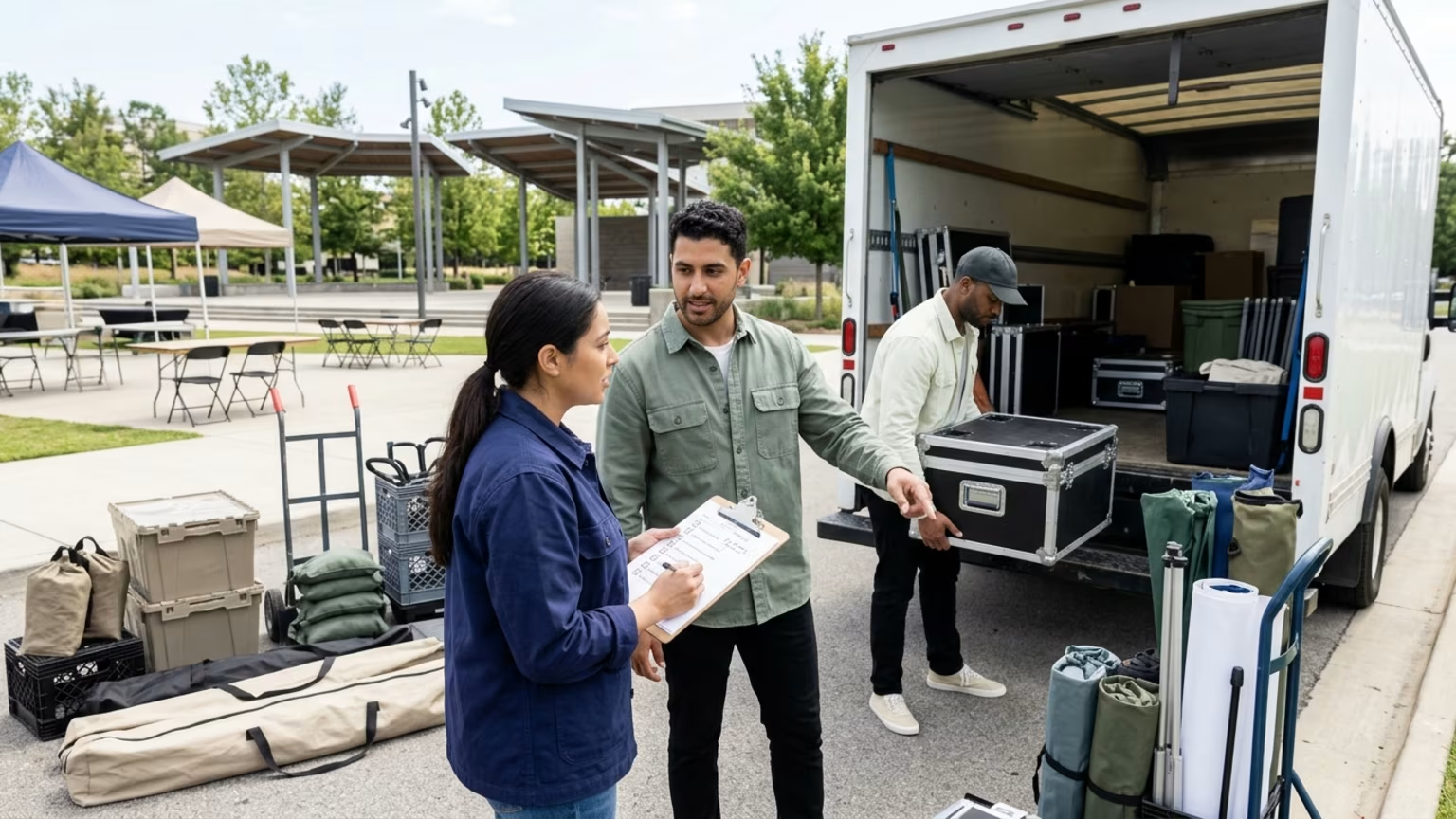
Formalizing student field teams forces a complete overhaul of logistics and training protocols. Brands can no longer ship loose boxes of product to a dorm room and hope for accurate distribution. Field marketing directors must establish strict supply chain pipelines for their brand activation services. Every unit of sampling inventory must be tracked from the regional warehouse to the specific campus event.
This tight inventory control prevents waste and ensures that target consumers actually receive the product. Without centralized tracking, massive amounts of premium product disappear into student housing without generating any consumer trial. Logistics managers must treat every campus footprint like a temporary retail storefront. Reviewing past experiential marketing case studies proves that precise supply chain management is the bedrock of any successful national sampling tour.
Every student ambassador needs structured onboarding that covers brand voice, sampling safety and reporting mechanics. Operating in the food and beverage category brings strict compliance requirements regarding allergens and safe handling. Field managers must verify that students understand these regulations before they ever hand a product to a consumer. A well-trained ambassador protects the brand reputation while driving trial.
Skipping this educational step often leads to disastrous off brand messaging in the field. Consumer packaged goods brands cannot risk untrained students making false claims about product ingredients. Regional supervisors must conduct regular knowledge checks to guarantee absolute compliance. This rigorous training requirement turns casual campus reps into true brand operators.
College environments have rigid rules regarding commercial activity and pop-up events on campus grounds. Securing the right permits requires lead time, localized knowledge and persistent administrative follow up. Field managers must coordinate with university officials to ensure every activation operates legally and safely. A failure to secure proper clearance will shut down an event before the first sample is poured.
Managing these municipal details is often why brands hire an experienced experiential marketing agency for their national rollouts. University bureaucracies are notoriously difficult to manage without established institutional relationships. Event coordinators must submit detailed site plans, insurance certificates and risk assessments weeks in advance. This administrative workload requires dedicated backend support from the core marketing team.
Brands that ignore these administrative hurdles quickly find themselves banned from high traffic university spaces. Every campus has its own unique vendor portal, health department regulations and spatial restrictions. A dedicated permitting coordinator is practically mandatory for a national university tour. This backstage logistical work directly determines the success of the front facing brand activation.
Student teams need mobile reporting tools to log their activities and consumer feedback in real time. This incoming data allows the central marketing team to adjust tactics for the very next activation. Post event recaps must record exact sample counts, weather conditions and competitor presence near the footprint. Analyzing this information helps brands optimize their regional trade marketing efforts.
The campus becomes a live testing ground for broader retail strategies. If a new snack flavor underperforms during a college sampling event, the brand can halt broader production. Data driven decision making replaces the guesswork that usually plagues field marketing campaigns. Real time visibility into footprint operations is a strict requirement for modern experiential budgets.
A strong campus program must operate in tandem with local retail distribution efforts. Distributing premium snack samples is useless if the product is out of stock at the closest convenience store. Field marketing managers must synchronize their ambassador schedules with local retail merchandising calendars. This coordination ensures that when a student decides to buy the product, it is readily available on the shelf.
The synchronization of field activities and retail availability maximizes the conversion rate of any sampling program. Shopper marketing teams must communicate directly with the field managers organizing the college events. When a consumer searches for a newly tasted beverage, the retailer must be fully stocked. This unified approach drives immediate sell through and proves the true value of live activations.
Regional sales managers should use these campus activations to secure prime shelf space from local grocers. A retailer is much more likely to stock a new product when they see guaranteed neighborhood foot traffic. The student ambassador program acts as localized lead generation for the retail buyer. Connecting these two channels creates a closed loop where marketing directly funds localized sales.
Student populations are transient, meaning ambassador programs face constant turnover every single semester. Brands must build highly repeatable onboarding systems that do not depend on tribal knowledge. Standardized operating procedures allow new hires to execute complex pop-up events without a drop in quality. Creating durable training manuals is the only way to scale a program across multiple academic years.
Operations must survive the graduation of top performing ambassadors. The system itself must be stronger than any individual student representative. Field directors should constantly maintain a bench of backup talent to replace students who leave. Continuous recruiting ensures that campus operations never pause due to a staffing shortage.
Ambassadors interact directly with the target demographic, gathering unfiltered opinions on packaging, taste and price. This qualitative feedback is just as valuable as the quantitative data collected during an activation. Field operations must include a structured channel for students to report these insights back to the brand managers. If consumers consistently complain about a specific flavor profile, the brand can pivot production before a national launch.
Activating these feedback loops turns a simple promotional team into a powerful market research asset. Marketing executives can use this real world intelligence to refine their national advertising copy. Field marketing provides authentic consumer reactions that focus groups simply cannot replicate. This insight loop justifies the operational expense of maintaining a national student network.
When scaling operations across fifty different universities, maintaining a uniform brand presentation is incredibly difficult. An activation in California must deliver the exact same brand experience as an event in New York. Achieving this consistency requires rigorous auditing and clear visual merchandising guidelines for every footprint. Regional field managers must conduct spot checks to ensure students adhere to the approved activation design.
Strict quality control separates professional marketing agencies from amateur promotional outfits. Brands must supply standardized event kits that contain identical signage, apparel and sampling equipment. Leaving setup decisions to individual students always results in fragmented brand messaging. Operational uniformity is the hallmark of a mature, profitable experiential marketing program.
Are your current student field teams capturing the operational data needed to prove their value to your retail partners?

30 Years Experiential & Retail Activation Partner for CPG & Beverage Brands | Multi-Market Demos, Roadshows & Costco/Club Programs That Actually Sell