Robbie Thain
Founder, CEO

Groceryshop 2026 coverage shows why connected commerce and retail media require rigorous operational execution to drive measurable incremental sales.
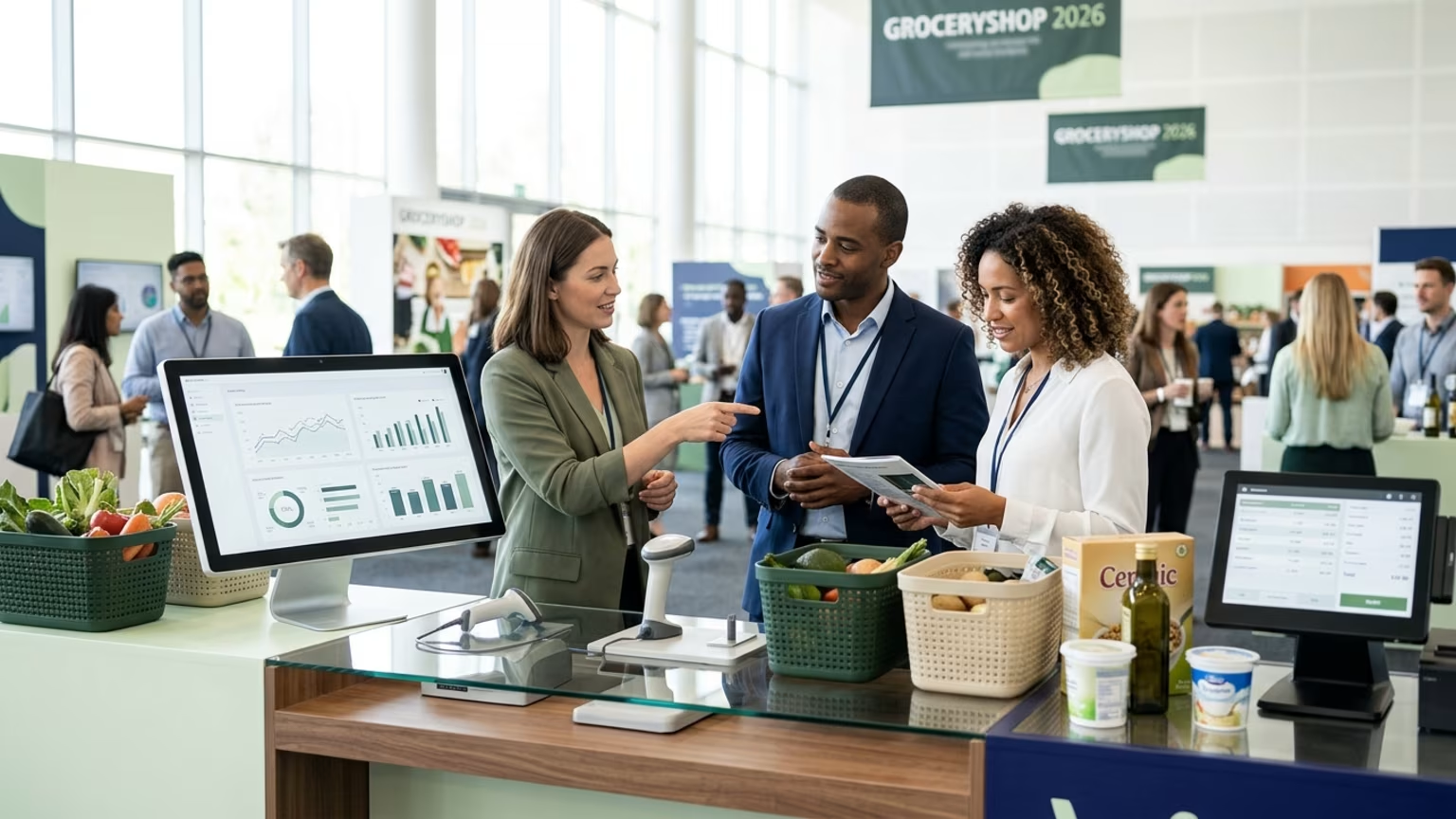
On September 22 through September 24, 2026, Groceryshop brought retailers, consumer packaged goods brands, and technology companies together at Mandalay Bay in Las Vegas. The event focused heavily on retail media, unified commerce, operations and shopper engagement. Coresight Research identified six broad themes during its coverage of the opening day. These included artificial intelligence powered shopping experiences, business operations optimization and changing consumer expectations. Additional themes covered retail media, unified commerce and customer engagement.
Shopping functionality is rapidly moving from individual product searches toward broad shopper intent. Grocery artificial intelligence now focuses on consumer goals like meal planning, dietary needs, budgets, and household preferences. A typical use case involves a consumer asking an assistant for a healthy meal under forty dollars. The system then translates that intent into precise recommendations, promotions, store choices, and a final basket.
Instacart stated at the event that 100% of its volume comes from physical stores. The company cited 1.6 billion orders to date as a distinct data advantage. This massive volume makes their artificial intelligence shopping experiences much more relevant to real world grocery decisions. Similarly, Albert Heijn began its technology journey with an assistant focused on meal inspiration and the dinner dilemma. Their system utilizes a database containing more than 20,000 recipes.
Retail media is moving swiftly toward connected physical and digital commerce. Coresight reported that retail media is evolving beyond basic advertising inventory. The event featured a retail media panel that included Albertsons Media Collective, CVS Media Exchange, and Loblaw Advance. During this discussion, Albertsons noted an opportunity to place sponsored content exactly at the moment of shopping.
CVS Media Exchange pointed to its massive physical footprint as a major structural advantage. They cited 9,000 locations and noted that 67% of customers visit weekly. Coresight reported that CVS had launched point of sale advertising across 50% of its entire store fleet. These numbers prove that in store media is highly relevant to physical activations. Screens, product displays, and point of sale environments can serve as a comprehensive shopper pathway rather than isolated placements.
The Groceryshop panel stressed that retailers and brands must prove true incrementality. Operators need to distinguish purchases caused by media exposure from purchases that would have happened without any exposure. Loblaw specifically focused on measuring what occurred precisely because of media exposure rather than taking credit for natural sales. For marketers running in store programs, this changes the core question entirely. The new standard is determining what additional behavior the exposure actually produced.
This measurement challenge directly mirrors the reality of live activations. Exposure, physical engagement, and foot traffic are highly useful inputs. However, they do not automatically establish incremental sales impact by themselves. Marketers who master this transition can build a strong in-store product sampling execution playbook that converts.
We have been connecting brands with people through live experiences, retail programs, and national activations since 1995. Over three decades, we have built a track record of creating meaningful brand moments across the country. We create experiential marketing programs built to connect emotion with action. Our process blends creativity, strategy, and data to ensure every brand interaction drives measurable results.
We craft experiences that engage all five senses, helping people not just see brands but feel them. This turns fleeting moments into meaningful business outcomes. We blend physical and digital experiences by integrating QR codes, mobile technology, and real world activations into a cohesive layer. This strategic upgrade applies seamlessly across retail, event, and tour experiences to drive connected results. When marketing teams connect digital infrastructure to physical store floors, they generate concrete data about shopper intent. This makes measuring in-store demos against digital media far more accurate.
A Brand Manager in the CPG space shared: "Makai transformed our test-drive activation into an emotional brand journey. They connected technology, lifestyle, and experience seamlessly, and turned casual visitors into loyal fans." We successfully integrated multiple experience layers to convert casual participants into committed brand advocates. Live activations must act as a structured component of the broader connected commerce ecosystem.
Reliability and order accuracy form the absolute bedrock of consumer trust. Coresight framed online grocery economics around basket size, purchase frequency, fulfillment density, and reliability. Rohlik Group reported an impressive 95% perfect order rate. They define a perfect order as one entirely without delays, claims, or substitutions. Rohlik also reported an average order value target of approximately €100 and linked its order reliability to a 90 net promoter score.
Shipt's Preferred Shopper program was presented as another powerful trust building mechanism. This program allows customers to develop relationships with individual shoppers. It is designed to reduce uncertainty about exactly how orders would be selected and handled. The broader lesson for operators is that baseline convenience does not eliminate the basic need for human confidence. Reliable execution and clear accountability remain a mandatory part of the modern customer experience.
The demand for data quality translates directly to field operations. The conference repeatedly linked artificial intelligence performance to the quality and structure of product, pricing, promotion, and nutrition data. Schnuck Markets revealed that seemingly simple shopper questions can require extensive, complex data preparation. According to Coresight, Schnuck chose to answer 70% of questions very well rather than pursue 100% coverage with lower accuracy. Inaccurate product data or poor store execution can easily sabotage a connected retail campaign.
According to the event coverage, PwC's Kelly Pedersen summarized the core data challenge as garbage in, invisible out. Pedersen argued that brands and retailers need deep visibility, connectivity, transactability, and operational readiness for artificial intelligence driven commerce. The practical implication for consumer packaged goods brands is substantial. Product content is no longer only a merchandising or e-commerce concern. It can actively influence whether algorithmic systems discover, interpret, and recommend a specific product correctly to a shopper.
Consumers are scrutinizing value, relevance, and pricing with intense precision. Coresight reported that NielsenIQ characterized "strugglers" as approximately one-third of consumers. Conversely, they classified "thrivers" as around 9%. The session cited approximately 40% of consumers switching to lower priced brands. Around one-third are actively shopping value channels, and another one-third are buying private label items.
This economic pressure forces brands to execute perfectly in the aisle. Accenture research cited at the event found that 83% of consumers had abandoned a cart because they were unsure the items were what they wanted. The same research found that 74% of consumers were willing to delegate a task to an artificial intelligence agent. However, only 9% were willing to let an agent build a basket and complete a purchase without further involvement. Consumers demand convenience, but they refuse to surrender complete control. Brands need flawless operations to secure qualified meetings and achieve true first-party shopper data optimization.
Technology and automation are tools, not total replacements for human strategy. Sjoerd Holleman of Ahold Delhaize noted that persistent memory will be increasingly important because customer preferences frequently change. An effective assistant must account for both prior purchasing behavior and new shopper input simultaneously. Slalom's Jason P. argued that the technology itself is the easy part. He maintained that trust, governance, and clear use cases are far more difficult requirements for successful implementation.
Kroger Chief Digital Officer Yael Cosset described the company's strategy as firmly grounded in loyalty data and demand forecasting. Cosset noted the strategy also relies heavily on proprietary models, governance and security controls. Diageo provided a concrete example of balanced automation. Coresight reported that Diageo demonstrated an Adobe based workflow capable of massive efficiency. In this system, a small number of creative layouts could generate multiple required sizes instantly.
This workflow effectively reduced creative formatting work that previously took hours to seconds. However, the stated objective was not to reduce creative headcount. Instead, it gave teams more time for higher value creative and strategic work while preserving brand safety and strict privacy. Diageo's Andrew Pearson provided strict guidance on this balance, stating that companies should not automate merely because automation is technically possible. Pearson advised that teams should carefully decide what to automate, what to redesign, and what should firmly remain human led.
Connected commerce cannot be managed successfully by an isolated digital team. It depends entirely on product content, inventory and pricing aligning with store operations. Measurement and fulfillment must also work together without friction. Physical activations are only commercially useful when execution is disciplined and measurable. If brands fail to align their live engagements with retail media pathways at the retail point of purchase, they risk losing both sales and actionable shopper data.
How will your marketing team adjust its physical retail activations to prove incremental sales lift in a connected commerce environment?
Proving true incremental sales lift from live brand engagements requires an operating framework that connects directly to the point of purchase. When inefficient post event follow up and CRM routing obscure the commercial impact of physical marketing, Makai turns audiences into participants with live and digital experiences that invite people to try, share, and act.

30 Years Experiential & Retail Activation Partner for CPG & Beverage Brands | Multi-Market Demos, Roadshows & Costco/Club Programs That Actually Sell