Robbie Thain
Founder, CEO

Curated marketplaces merge product sampling with local commerce. See how multi-vendor events turn passive attendees into buyers and generate measurable sales.
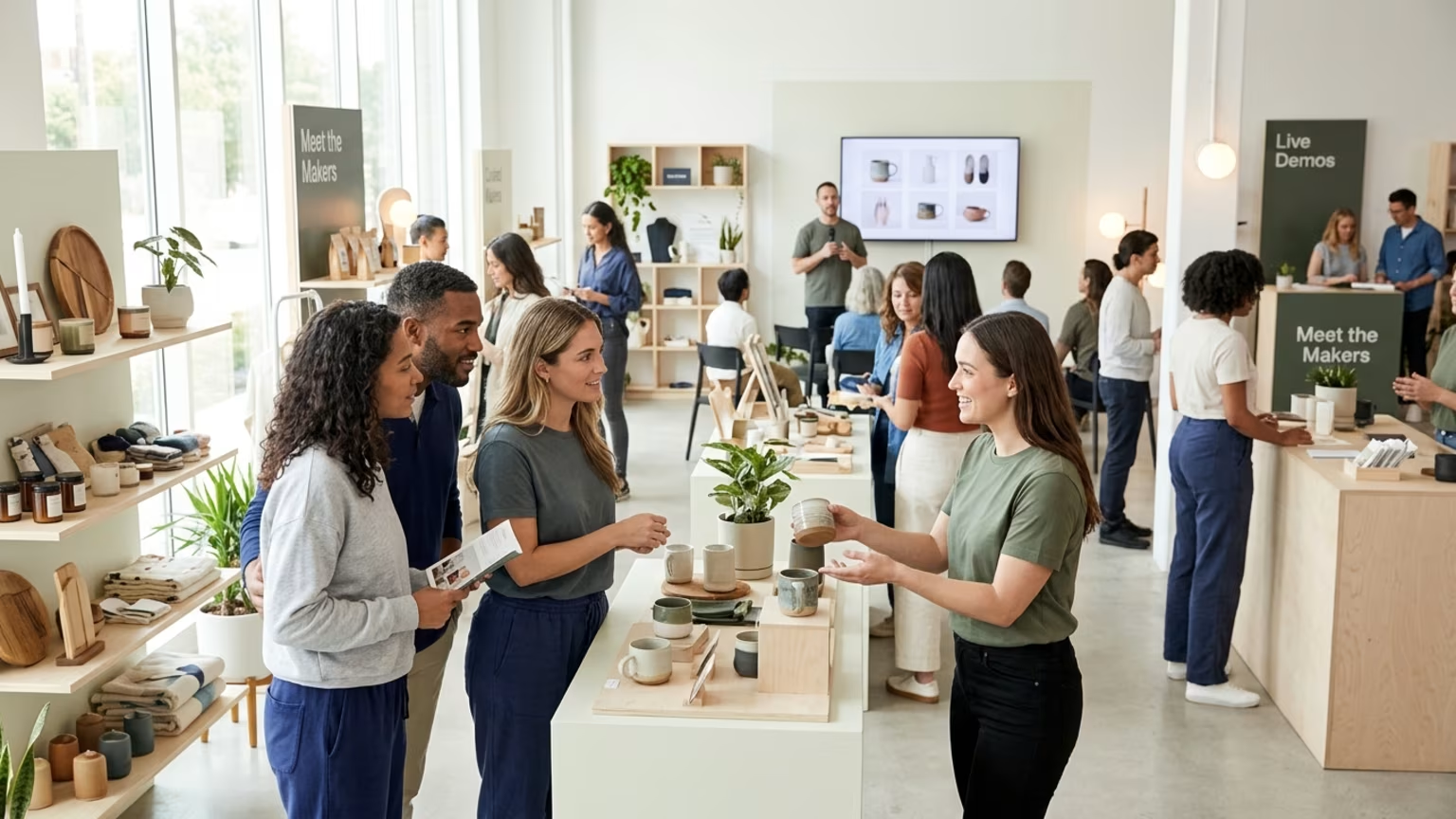
On September 21, 2026, Event Marketer identified curated marketplaces as a growing experiential marketing trend. The publication framed modern events as destinations where learning, connection, and commerce converge. This format moves the industry away from footprints used purely for passive brand exposure. The report highlighted an FX campaign for the drama series The Drop: A Snowfall Saga as its primary example.
The activation took place outside Somerville in South Los Angeles on September 5, 2026. This event fell just ahead of the television series premiere on September 8. FX built a community celebration featuring a marketplace of Black-owned businesses curated by Black on the Block. This setup allowed the entertainment brand to anchor its premiere within a specific neighborhood context.
The curated marketplace approach decentralizes the physical footprint by bringing in external vendors and local creators. For the FX activation, coverage described a daylong community event that included local shopping and food. Interactive elements featured tote-bag customization, games, and an album-cover photo moment. The venue also hosted a pilot screening and live performances curated by radio personality Big Boy.
This format gives attendees physical takeaways and shareable brand interactions beyond the retail booths themselves. Event Marketer noted that FX expects to launch additional collaborations with restaurants and local retailers. These follow-on campaigns will feature limited-edition menu items and exclusive merchandise. This strategy treats local businesses as active participants in the experience architecture.
The marketplace concept is already appearing across both consumer and trade environments. Event Marketer cited a previous WSS and adidas pop-up that celebrated the relaunch of the Superstar shoe. That activation was developed with the nonprofit Midcity Mercado and featured 20 diverse-owned businesses, vendors, and artisans. Shoppers could purchase and customize their shoes through local women-owned vendors directly on site.
In the B2B sector, the ShopTalk trade show used a high-visibility marketplace to distribute items to attendees. This space served as a central hub for curated sponsor products, samples, and show merchandise. Chief Marketer covered related 2026 research indicating that 59 percent of consumers recalled seeing a live marketing event. That same research noted that 40 percent of people who interacted with such an event reported making a purchase.
Our position at Makai is that physical marketing must generate measurable pipeline, not just casual foot traffic. The curated marketplace format solves a persistent problem for consumer packaged goods brands. It naturally combines product browsing with an immediate purchase opportunity. When brands simply hand out free items on a street corner, they lose the ability to measure consumer intent accurately.
A marketplace forces a transaction, whether that transaction is a direct retail sale or a lead capture. Integrating local partners changes the way audiences perceive a new product launch. A premium beverage brand can position its hero product alongside culturally relevant neighborhood businesses. This approach grounds the brand in a local community and creates multiple trackable interaction points.
Structuring product sampling around a real shopping behavior creates much stronger retail conversion. We managed a four-week, multi-market Costco sampling program for Pulmuone's PlantSpired line. The program delivered more than 65,000 samples and recorded an 18 percent sold-to-sale rate. That gives us a concrete example of how structured retail sampling connects trial with purchase.
Survey data heavily supports this shift toward transactional event formats. According to the Chief Marketer coverage of the 2026 OAAA and Harris Poll research, live experiences influence several stages of the consumer journey. The underlying research found that 51 percent of respondents cited product samples or trials as an event draw. Free merchandise was cited by 45 percent of surveyed respondents as a reason to attend.
These statistics confirm that audiences actively seek out trial opportunities at live activations. Marketing teams that design events solely for visual exposure are ignoring clear consumer demand for physical interaction. The right physical setup turns casual product browsing into an emotional connection with the consumer. A Director of Brand Strategy in the CPG snack division shared: "The Makai team turned our product launch into a sensory event that shoppers still talk about. From creative storytelling to flawless in-store execution, they made snack time unforgettable. We couldn't have asked for a stronger partner."
Our team created an in-store experience that left a lasting impression on consumers and became a memorable brand moment. Marketplaces apply this same sensory engagement across multiple vendors simultaneously. This consolidated approach allows event operators to measure exactly which physical interactions generate the most interest.
Adding independent vendors to a brand footprint introduces severe operational complexity for marketing directors. The logistics of a standard solo activation require careful planning, but a curated marketplace multiplies those variables. Field marketing teams must coordinate multiple vendor schedules, secure specialized permits, and manage diverse product inventory. Every participating business requires clear guidelines on booth presentation, staffing expectations, and payment handling.
Traffic flow becomes a critical vulnerability when you combine product sampling with retail points of sale. If a physical sampling footprint blocks the primary walkway to the transaction area, the entire commerce model fails. You must design the physical space so that product exposure naturally pushes attendees toward the conversion zone. Brands that invest in intelligent spatial planning see a dramatic reduction in scattered attention and poor booth flow.
We apply this same logic when we build complex multi-brand environments. We designed and managed a 40 by 20 foot trade show environment for Glanbia at Natural Products Expo West 2025. That footprint brought think!, Isopure, Optimum Nutrition, and Amazing Grass into one highly coordinated space. We handled concept, operations, staffing, and breakdown, distributing more than 14,000 recorded product samples.
Data collection presents another major logistical hurdle in a decentralized event setting. If 20 different local artisans are selling goods alongside your brand, you need a unified system to track engagements. Disconnected payment processors and manual lead sheets will severely corrupt your post-event reporting. Marketers must build their measurement architecture long before the first vendor tent goes up.
Metrics like booth interactions, samples distributed, and products sold need to flow into a central dashboard. Without centralized analytics, identifying your true yield on physical activations becomes nearly impossible. Proving your Return on Investment requires exact sales figures rather than general attendance estimates. The same logic applies to applying a structured debriefing format after the campaign concludes, as teams can only improve their physical footprints when they have accurate numbers to review.
The shift toward curated marketplaces proves that consumers want more than a static visual spectacle. They expect to browse, sample, and purchase items in a structured, culturally relevant physical environment. Brands that adopt this model must be fully prepared to handle the intense logistical demands of multi-vendor coordination. Are your field marketing teams equipped to manage the permitting, traffic flow, and unified data capture required to turn a local marketplace into a measurable sales engine?
When CPG marketing leaders coordinate localized vendor events, Makai aligns the physical logistics to protect the sales pipeline. To prevent inefficient post event follow up and CRM routing from fracturing your data, our Brand Activations capability creates high energy activations that turn awareness into participation and drive measurable consumer response.

30 Years Experiential & Retail Activation Partner for CPG & Beverage Brands | Multi-Market Demos, Roadshows & Costco/Club Programs That Actually Sell