Robbie Thain
Founder, CEO

Pokémon GO launched a retail event with Best Buy, GameStop, and Target. Read how the campaign separates digital engagement from actual store purchases.
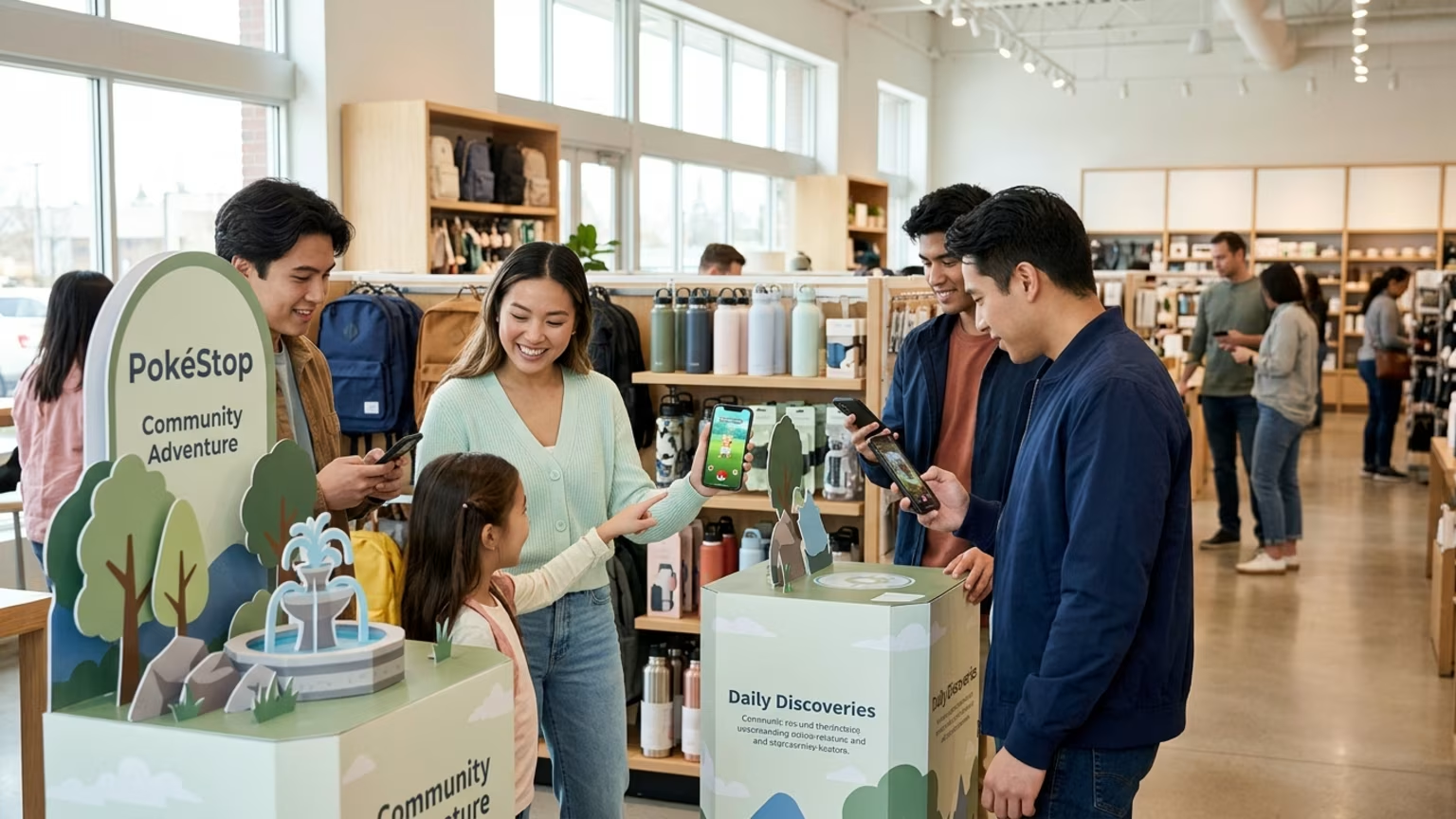
On September 27, 2026, Pokémon GO announced its Pokémon TCG 30th Celebration Event. According to GameRant, this promotion links the game to the Pokémon Trading Card Game's anniversary release involving Best Buy, GameStop, and Target. GameRant reports that the wider celebration runs from September 27 through October 20. This timing establishes a clear window for the retail engagement to play out.
At participating locations, players can encounter increased Mega Gengar raid activity and gain access to location-based Timed Research. The event mechanics establish separate paths for casual participation and direct purchase. Visiting a participating store can release basic gameplay content for the user. Purchasing a Pokémon GO gift card and redeeming its code earns a specific Gengar Knit Cap avatar cosmetic.
The reported Timed Research rewards include Poké Balls, event-themed Pokémon encounters, and other in-game items. GameRant notes a precedent for this structure in a late 2025 Mega Lucario retail activation. That previous collaboration also featured increased raid activity at selected retail locations. However, the current event reporting focuses strictly on the mechanics and digital rewards.
The available coverage does not disclose attendance numbers, store traffic metrics, or sales lift figures. No reviewed source provides return on investment calculations. The reporting identifies the participating retailers rather than stating that every location is automatically included. Raid participation shows digital interaction, but current reporting does not establish that this activity caused incremental retail sales.
The design of this campaign successfully separates passive interaction from documented transactions. A retail visit activates the research tasks, but only a gift card purchase secures the exclusive cosmetic item. This two-tier system builds a clear conversion hurdle that separates mere foot traffic from financial commitment. For consumer packaged goods and beverage brands, separating foot traffic metrics from actual sales data is critical.
We often see marketing teams mistakenly conflate store visits with successful product trials. Marketers must treat the physical retail environment as a primary engagement channel rather than an afterthought. We blend physical and digital experiences by integrating mobile technology and real-world activations into a cohesive layer across retail, event and tour venues. When campaigns require specialized tracking, connecting event leads to retail sell-through becomes a measurable priority.
While digital rewards drive initial visits, physical product interactions require a completely different operational cadence. We managed a four-week, multi-market Costco sampling program for Pulmuone's PlantSpired line. The program delivered more than 65,000 samples and recorded an 18 percent sold-to-sale rate, giving us a concrete example of how structured retail sampling can connect trial with purchase. Physical sampling programs demand precise inventory forecasting and highly trained field personnel.
Brands executing live events often struggle with proper sales attribution. Validating a sales claim requires verified evidence beyond simple campaign participation counts. Proper planning helps teams avoid the common mistakes brands make after getting into retail. Clear data capture mechanisms must exist at the exact point of sale to prove performance.
Without these mechanisms, experiential budgets become difficult to defend during quarterly reviews. Gamification provides the initial hook, but strict operational execution captures the final revenue. Marketing leaders must prioritize this logistical alignment long before the campaign launches.
Executing this type of hybrid campaign requires intense operational discipline at the local store level. When store eligibility varies across a region, consumer confusion often follows if frontline staff lack clear guidance. Operations teams must brief their regional managers on exact campaign dates, reward limits, and code redemption processes. Preparing staff to answer basic program questions prevents minor issues from escalating into poor brand experiences.
Foot traffic generated by mobile gamification can significantly disrupt normal retail footprint flow. Physical crowds appearing for a digital raid take up real space in narrow retail aisles. This sudden influx requires careful management to prevent negative interactions with regular, non-participating shoppers. Our team has seen firsthand how poorly managed surges can frustrate retail managers and damage partnerships.
Evaluating retail demo programs on tangible metrics helps leaders maintain strong relationships with their retail hosts. Downstream effects on field staffing become immediate when activations draw unexpected crowds to specific locations. Brands must deploy trained ambassadors to manage queues, answer questions, and guide the consumer journey. If a digital activation creates a spontaneous physical gathering outside a store, local permit requirements might suddenly apply.
Unplanned outdoor crowds can trigger municipal code violations if the retailer lacks the proper event permits. Field operations teams must anticipate these bottlenecks before they compromise the entire retail execution. Scaling an activation across multiple retail chains introduces massive logistical friction for the executing agency. Display equipment, training materials, and promotional signage must reach the correct stores precisely on schedule.
Missing physical assets can derail an entire regional rollout and ruin the digital integration entirely. Dedicated coordination is required to keep complex shipping and installation schedules completely intact. Field managers must physically verify that all participating locations have their necessary resources well before launch day.
The event structures are quite specific about how players engage with the physical store. Players must physically travel to a Best Buy, GameStop, or Target location to trigger the digital raid functionality. Once on site, the game registers their location to release the Timed Research tasks. This location-based requirement forces the digital audience to enter a physical retail environment.
Beverage and snack brands can learn from this distinct separation of engagement tiers. A consumer sampling a new beverage in an aisle is participating, but they are not yet converting. Setting up a secondary mechanic that requires a receipt scan mirrors the gift card redemption strategy perfectly. This approach forces the consumer to complete a financial transaction to receive the final campaign benefit.
Experiential marketing relies on this exact transition from passive observation to active purchase. If a brand applies these gamified mechanics to a trade show environment, the operational challenges multiply quickly. Driving attendees to a specific booth using a digital lure requires meticulous control over the physical footprint flow. Trade show aisles easily become impassable if a digital reward causes a sudden surge in foot traffic.
Booth staff must be prepared to smoothly transition visitors from the digital game into a meaningful product conversation. Proper field operations frameworks dictate that crowd control measures are established long before the doors open. Without these protocols, the surrounding exhibitors will quickly complain to the event organizers.
When a promotional campaign spans multiple national retail partners, centralized logistics dictate the ultimate success or failure. Dedicated facilities must manage the distribution of physical gift cards and promotional displays. Tracking these shipments ensures that no region launches the digital campaign without the supporting physical materials. Retail managers have zero tolerance for missing collateral when a publicized event begins.
Executing flawlessly at the store level protects the brand's reputation with both consumers and retail buyers. Consumers expect the physical space to perfectly mirror the digital promotion they see on their screens. Any disconnect between the advertised reward and the physical reality creates immediate friction.
Measuring the transition from passive store visits to active purchases remains a central challenge for marketing leaders. Gamified mechanics offer one method to guide consumer behavior across physical thresholds into retail environments. These partnerships require precise coordination to ensure both the brand and the retailer extract measurable value. Are your field marketing programs designed merely to attract crowds, or are they structured to capture actionable purchase data?
Transforming passive store visits into documented retail transactions is the measurable outcome Makai builds for premium brands. When difficulty measuring real ROI from live events limits your campaign effectiveness, Makai stabilizes the physical execution. Our Storage & Logistics capability means we store your sampling product and event gear, then ship, track, and coordinate delivery nationwide so every activation stays on schedule.

30 Years Experiential & Retail Activation Partner for CPG & Beverage Brands | Multi-Market Demos, Roadshows & Costco/Club Programs That Actually Sell