Robbie Thain
Founder, CEO

Analyze how Tesla's structured Milwaukee Meet Semi event separated commercial fleet buyers from consumer trials to drive measurable field marketing operations.
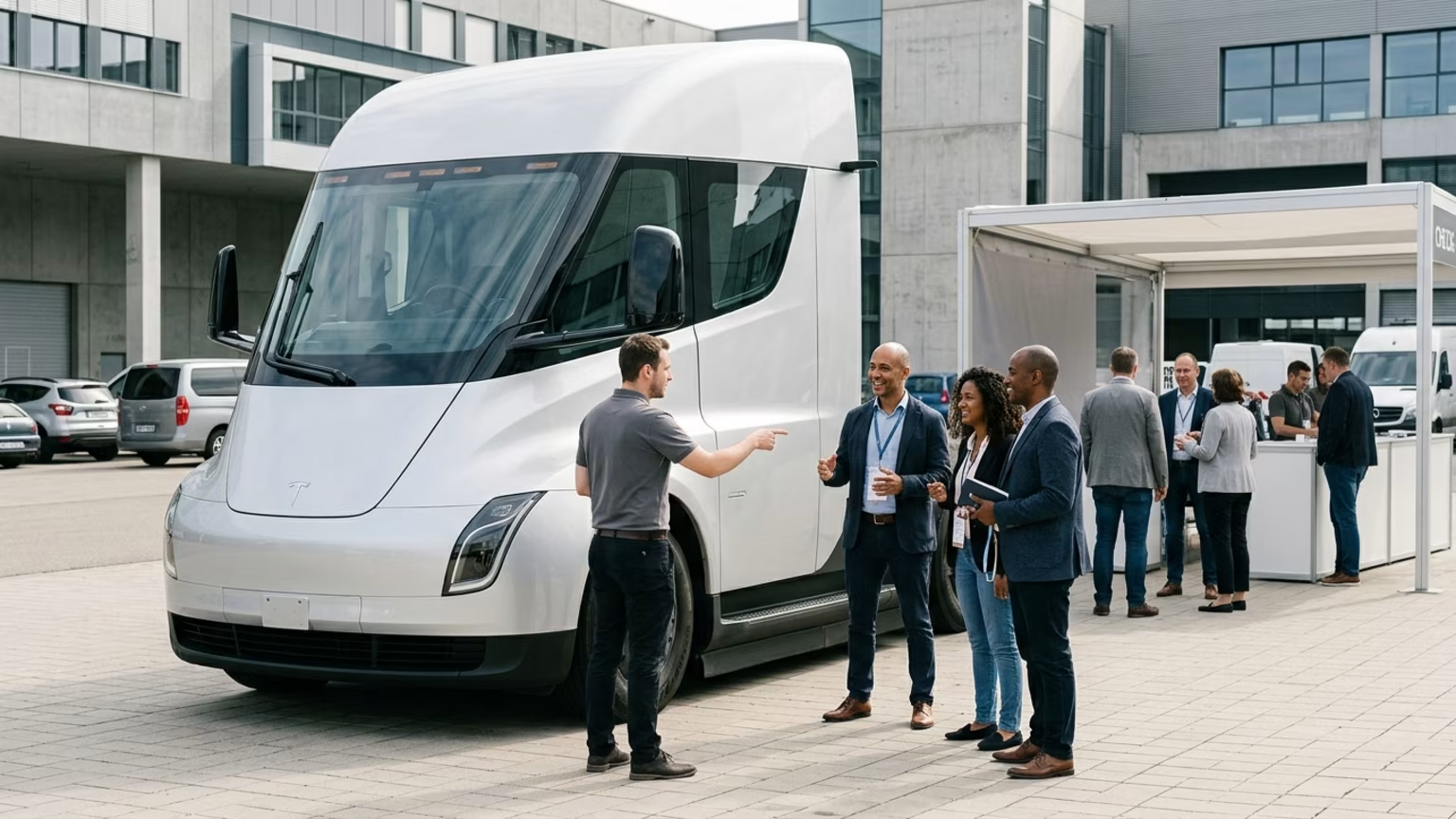
On September 15, 2026, Tesla hosted a highly structured "Meet Semi" event at its Milwaukee location. From 9 a.m. to 4 p.m., the brand activated its West Silver Spring Drive facility to combine static product education with active vehicle demonstrations. Tesla paired an up-close look at its commercial electric Semi with supervised Full Self-Driving demo drives in Cybertruck, Model Y, and Model 3 vehicles. This specific format illustrates how field teams can merge broad product education with tightly controlled physical trials to engage distinct audience segments on a single site.
The Milwaukee activation functioned as a multi-track physical showcase. The core attraction was the Tesla Semi, which anchored the commercial education track. Visitors had the opportunity to see the heavy-duty vehicle in person. They could also speak directly with members of the Tesla Semi team about fleet integration. This setup transformed a standard showroom into a targeted conversation about commercial use cases, fleet operations, and electric transition logistics.
Alongside the commercial display, the event offered an active trial component for passenger and utility vehicles. Visitors could participate in supervised driving demonstrations using the company's current consumer lineup. However, Tesla placed rigid boundaries around these dynamic experiences to align with the technical realities of the product.
Public notices for the event clearly stated that the supervised driving system requires the driver to remain attentive at all times. Tesla explicitly told prospective participants that the vehicles are not autonomous and that the driver must be ready to take over. This operational clarity ensures that field staff scripts and visitor expectations match the actual capabilities of the technology. Tesla did not publish public data regarding total attendance, registration volumes, or lead conversion rates for this specific activation.
We view this kind of deliberate audience segmentation as a critical requirement for any physical marketing program. Whether a company sells advanced commercial logistics vehicles or premium beverage products, handing out unstructured free experiences rarely builds a sustainable sales pipeline. The Milwaukee format matters because it actively separates the commercial fleet buyer from the curious consumer right on the event floor. A fleet operator discussing heavy-duty transport is on a completely different buying journey than a retail consumer testing a passenger car.
In our experience, brands that treat all foot traffic as identical miss the opportunity to generate true Return on Investment. We design mobile activations and roadshows that accelerate consumer trial, build trust, and boost retail velocity during 90-day product launch windows. Our structured approach transforms initial product trial into sustained consumer confidence and retail performance. By clearly defining the target outcome for each type of visitor, field teams can stop chasing vanity metrics and start building measurable commercial value.
Consumer packaged goods marketers face the exact same tension at large trade shows or retail footprints. A beverage brand launching a new formulation has to educate their retail distribution partners differently from the end consumer tasting the product. When you run a national sampling tour, the layout of your physical footprint must facilitate both conversations simultaneously. To prevent this from becoming chaotic, marketing leaders need strong operational planning that dictates how staff should approach, qualify, and route different types of prospects.
Designing an activation that appeals to both fleet buyers and general consumers introduces immediate operational complexity. Field teams must maintain distinct scripts, qualification questions, and follow-up paths for different buyer profiles. The staff members discussing fleet applications require specialized knowledge about total cost of ownership and commercial infrastructure. Meanwhile, the personnel managing passenger vehicle drives must focus on consumer features and user experience.
This separation prevents high-value commercial prospects from getting lost in general consumer traffic. When brands fail to segment their spaces, they create friction for the buyers who actually have purchasing authority. Implementing distinct zones ensures that commercial conversations happen in a focused environment, while consumer trials proceed efficiently without blocking the main footprint.
A live demonstration introduces hard mathematical limits to an activation. A seven-hour event window can only accommodate a fixed number of supervised drives, creating a scarce resource that field teams must manage carefully. Scheduling bottlenecks, vehicle reset times, and staff handoff delays can quickly ruin the attendee experience.
Brands running active demonstrations must decide exactly how to handle walk-up traffic versus scheduled appointments. When wait times increase unexpectedly, the perceived value of the event drops rapidly. Excellent field managers eliminate this risk by mapping out the exact duration of every briefing, trial, and reset before the doors open. If marketers want to optimize retail demo ROI, they must treat time as their most valuable asset.
When scheduling a high demand trial run, operators must account for no shows and weather delays. They must also calculate the exact time needed to clean and reset the space for the next appointment. If a visitor arrives late, the team needs a strict protocol to prevent the delay from cascading through the rest of the schedule. This level of logistical rigor separates amateur setups from professional field marketing programs.
Operational friction on the floor also threatens the data collection process. A field marketing framework published by Moneythor identifies several vital reporting measures. These include lead generation, pipeline contribution, and event ROI. Teams also track influenced revenue, overall conversion, and accurate attribution.
Capturing these specific metrics requires a frictionless digital handoff before the prospect leaves the activation zone. Event measurement should never begin when the first visitor arrives on site. By establishing clear performance baselines before launch, marketing teams can accurately interpret post-event changes in their sales pipeline. This prevents executives from guessing at the commercial impact of the activation.
Regulatory and safety realities demand absolute discipline from field execution teams. Tesla's precise language regarding driver attention limits the liability of the demonstration. It also sets an accurate product expectation. Every piece of collateral must match these approved legal boundaries.
Field staff cannot improvise product claims or technical specifications when handling advanced technologies. These stringent operational formats are also necessary for brands planning to scale their operations internationally. A recent market report detailed the European launch of the Tesla Semi. The report stated the European version was based on the U.S. Standard Range model.
Deliveries in Europe are expected to begin in 2027. While this international expansion represents a separate operational channel, it underscores why companies need reliable event templates. Field teams need standardized formats that can be replicated across different markets and regulatory environments. Operations that rely on improvisation will inevitably fail when asked to scale their programs across regional borders.
Building a physical activation without a structured conversion path turns a valuable sales channel into an expensive exercise in brand theater. Are your live activations built to generate measurable commercial outcomes, or are they just collecting generic traffic?
Scaling a multi-track demonstration event into a nationwide retail program requires absolute operational command over your physical footprint. When inconsistent field reporting causes difficulty measuring real ROI from live events, Makai takes control of the execution. We manage end to end Costco roadshows that bring brands to shoppers through live demos, real conversations, and measurable sales impact.

30 Years Experiential & Retail Activation Partner for CPG & Beverage Brands | Multi-Market Demos, Roadshows & Costco/Club Programs That Actually Sell