Robbie Thain
Founder, CEO

Learn how to connect mobile sampling programs to verified retail purchases using receipt validation, QR codes, and matched-market sales tracking.
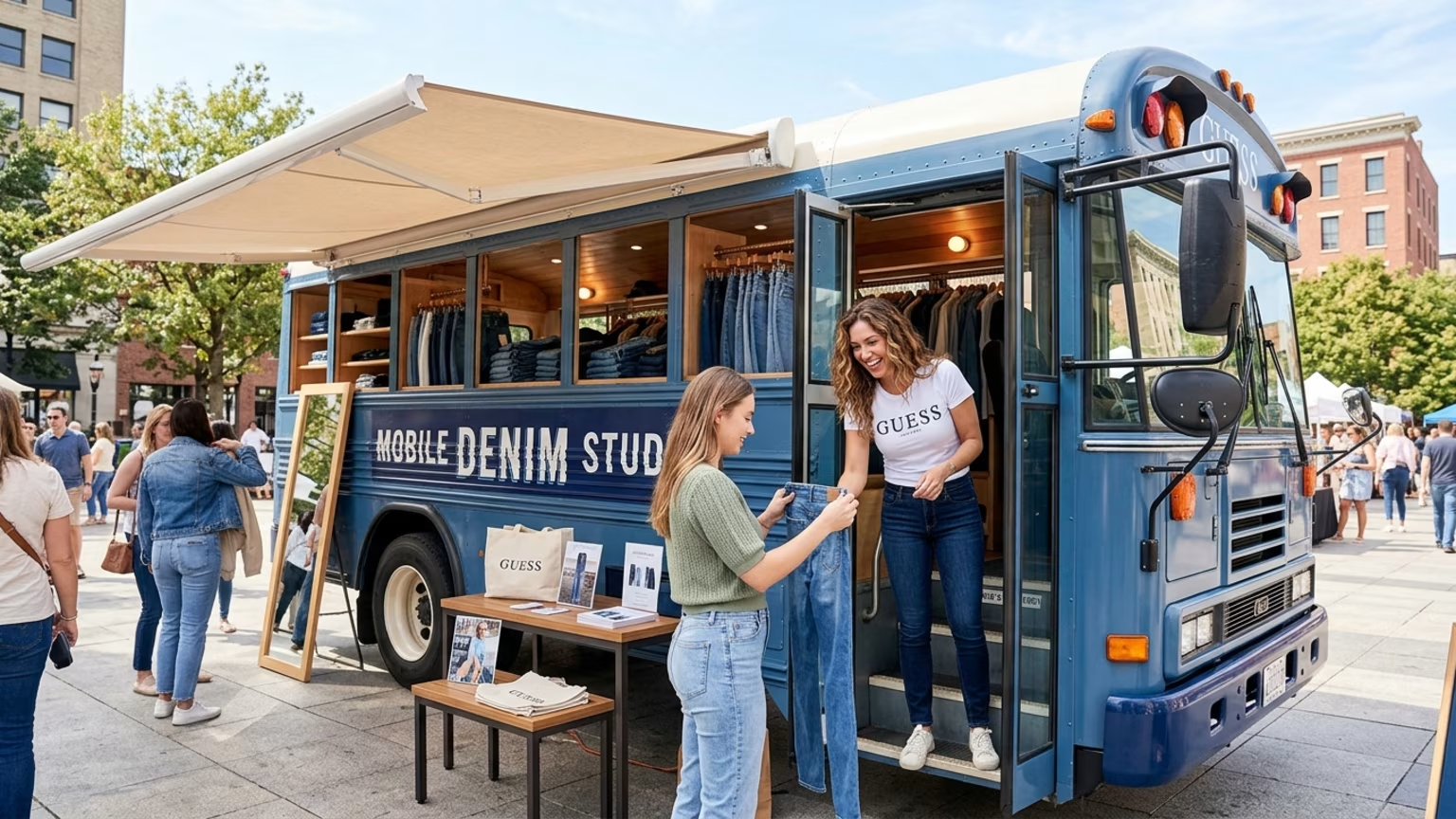
Before a branded truck leaves the lot, field marketing teams must lock down the unglamorous prep work. Securing municipal permits, staging vehicles, and setting up CRM routing represent the baseline of a functional tour. Makai specializes in creating retail demos, product sampling programs, and roadshows that bring brands face to face with their audiences. Each program is designed to drive trial, build consumer relationships, and accelerate retail velocity across multiple locations. We store your sampling product and event gear, then ship, track, and coordinate delivery nationwide so activations stay on schedule.
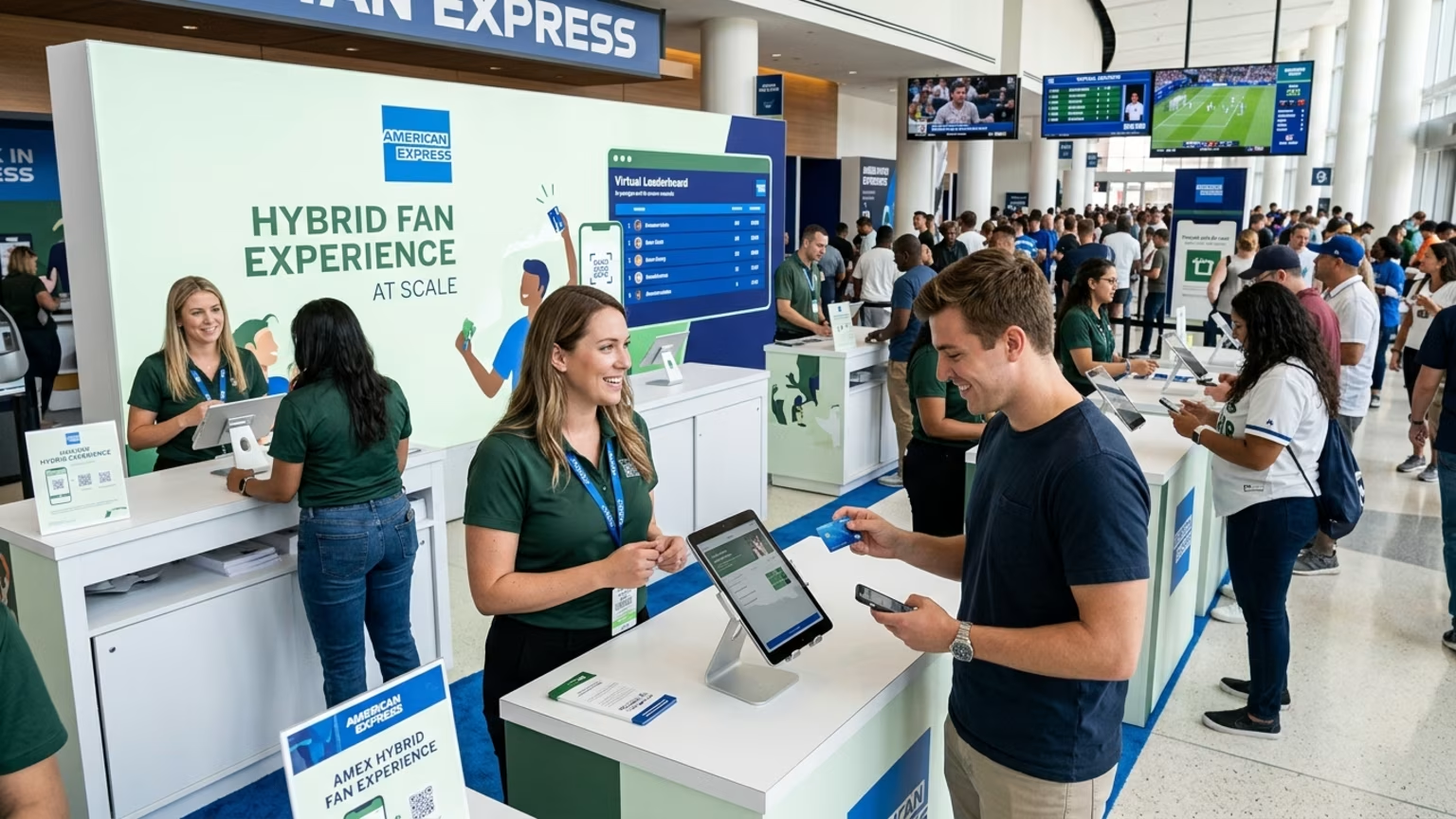
Planning the exact physical flow of an activation footprint directly impacts digital conversion rates. If consumers cannot easily reach the sampling window or locate the QR code station, they will simply walk away without registering. Mobile sampling only drives measurable pipeline when the data capture infrastructure is built in advance. Teams must configure data flows to route scans directly into the brand CRM without manual data entry. Skipping this step results in massive data fragmentation when thousands of consumers interact with the brand at once.
We ran the Little Debbie Share a Smile Tour as a 21-market mobile activation using a branded truck, trailer, and Cupcake Smart Cars. Managing that physical footprint required relentless advance planning so staff could focus entirely on consumer interactions. Across the tour, we distributed 224,534 cupcakes and generated more than 2.4 million brand impressions. We also captured 9,500 photos alongside 340 videos and earned coverage from three local television stations.
Handling that massive volume of product distribution while simultaneously capturing consumer media is impossible without strict pre-brief staging. When field staff scramble for clipboards or struggle with bad cellular service, the opportunity to track a future sale vanishes immediately. Proper logistics protect the measurement strategy by keeping the physical activation running smoothly.
Turning a street-level interaction into a trackable Return on Investment requires specific data capture techniques. Relying on simple headcount numbers will not satisfy finance teams looking for clear conversion metrics. One source that lays out concrete options is AnyRoad’s September 2026 guide to measuring experiential sales impact. AnyRoad’s guide also assigns field capture, brand planning, and analytics responsibilities across teams.
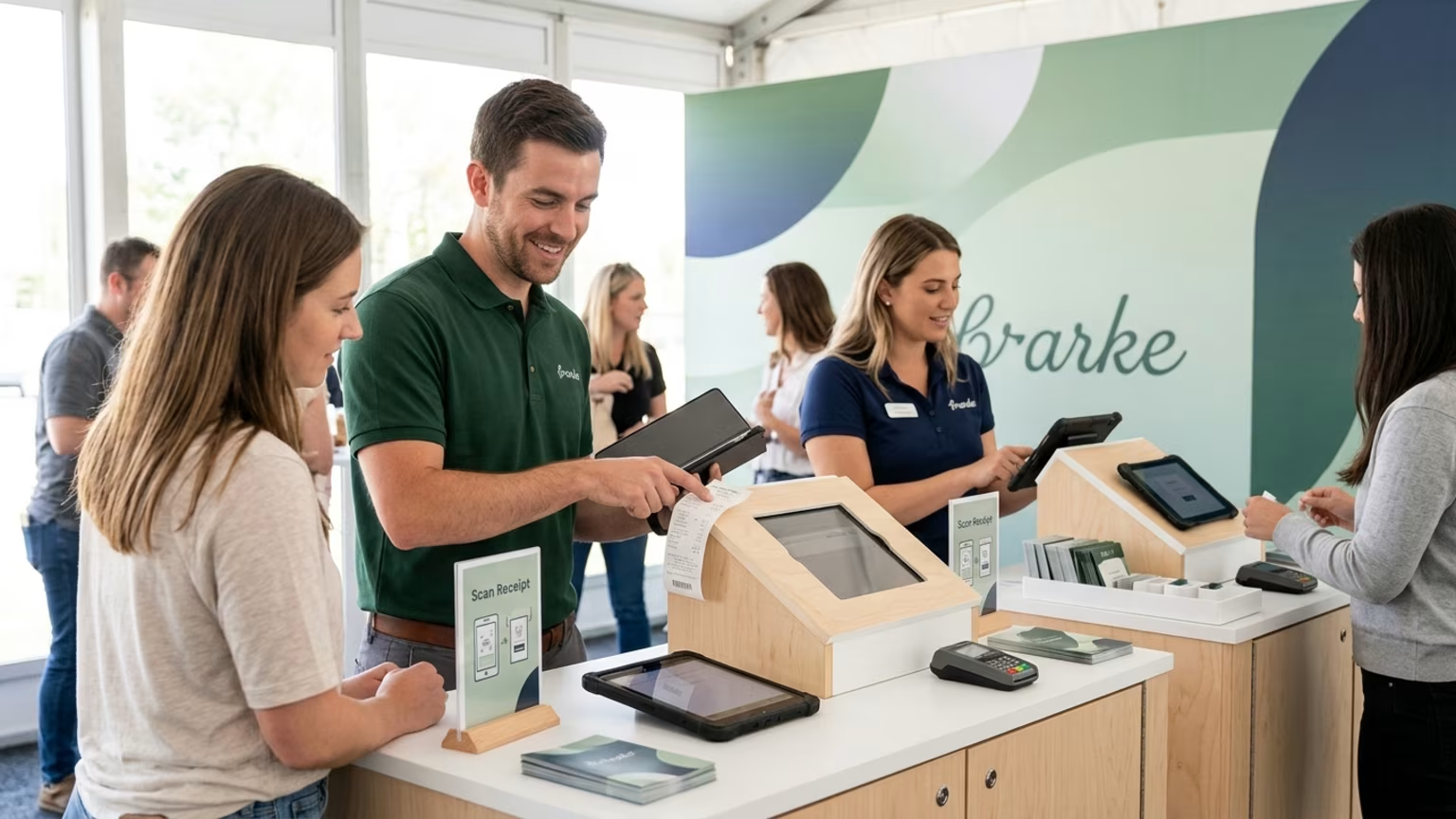
Follow these operational steps to build a trackable path from the initial sample to the final purchase:
Many consumer brands launch ambitious mobile tours but fail at the critical point of data handoff. They lose qualified leads on bad clipboards, underestimate crowd flow, and confuse leading indicators with actual revenue. AnyRoad explicitly distinguishes receipt-based purchase counts from counterfactual lift analysis. A scan or an opt-in shows engagement, but it does not prove that a participant bought the product.
Another common mistake involves assuming access to point-of-sale data after the campaign concludes. American Guerrilla Marketing says sell-through data is a direct measurement option for retail activations, but obtaining it reliably requires retailer cooperation. Brands that wait until a tour finishes to request this data usually find themselves with empty spreadsheets. Without prior agreements, field teams are left guessing about the ultimate retail impact of their mobile sampling programs.
Field marketing teams often mistake an enthusiastic street interaction for guaranteed retail performance. They deploy beautiful activation footprints but fail to instruct ambassadors on how to guide consumers toward the redemption mechanic. If the consumer does not understand how to scan a code or redeem a rebate at the point of trial, the digital bridge completely breaks down. This operational failure makes it impossible to link the initial brand experience to a subsequent retail transaction.
Amateurs also stumble when managing regulated products, particularly in the alcohol and premium beverage categories. AnyRoad’s guide identifies consent and age-verification considerations for alcohol activations and discusses legal requirements specific to alcohol promotions. Launching an SMS-based receipt rebate without age gating invites significant regulatory risk. Establishing clear legal parameters before launching a program keeps the campaign compliant and operational.
When configured correctly, a closed-loop tracking system provides powerful visibility into consumer conversion rates. Brands testing new data capture methods should start with focused pilots before rolling the technology out to national tours. A smaller test environment allows field managers to troubleshoot the user experience and refine the redemption messaging. AnyRoad reports a 56% bottle-purchase conversion rate in one small, one-month pilot for an unnamed craft brand, and cautions against treating it as a platform benchmark.
However, teams must treat early results with extreme caution and proper analytical context. A receipt-verified count simply proves that tracked participants made a purchase. AnyRoad cautions that receipt-verified purchase counts do not, by themselves, replace a control-based analysis of incremental lift. Using pilot data to estimate a massive national rollout without accounting for market variations will generate highly inaccurate sales forecasts.
Once the branded vehicles return and the final samples are poured, operators must shift their focus to analytics. Field marketing teams must continuously audit their CRM routing to verify that SMS flows and receipt uploads process correctly. If error rates spike on receipt submissions, the follow-up instructions provided by ambassadors likely need immediate revision. AnyRoad recommends aligning in advance on the methodology, formula, attribution window, and control market to avoid analytical disputes later.
Marketing leaders should closely monitor the matched-market sales data as the predefined attribution window closes. Comparing the activated markets against historical baselines will reveal if the sampling strategy generated true incremental demand. Tracking experiential sales attribution requires discipline beyond just counting the initial headcount. Maintaining this analytical rigor separates brands that simply entertain crowds from those that actively build retail pipeline.
Failing to connect street-level trial to a verified retail purchase leads to scattered attention and poor booth flow. Makai prevents this disconnect by aligning clear field tracking with strict data collection. Through our Costco Roadshows, we manage end to end Costco roadshows that bring brands to shoppers through live demos, real conversations, and measurable sales impact. Request a proposal

30 Years Experiential & Retail Activation Partner for CPG & Beverage Brands | Multi-Market Demos, Roadshows & Costco/Club Programs That Actually Sell