Robbie Thain
Founder, CEO

Learn how to design experiential marketing launches that move beyond mere awareness. Discover the operational steps to drive retail conversion and product trial.
Before the first tent goes up or the first sample is poured, the true outcome of a launch is decided in the logistics phase. A launch team must establish exactly where the consumer will buy the product before finalizing the event location. This means mapping the nearest purchase destination, securing retailer agreements, and confirming local inventory levels. Proper pre-launch activity communicates a simple product proposition to prepare audiences for a physical action.
The unglamorous work of permitting, vehicle staging, and CRM routing dictates whether field interactions actually convert. Securing a premium footprint is useless if local teams cannot capture structured data or guide consumers to a shoppable QR code. We create experiential marketing programs built to connect emotion with action. Our process blends creativity, strategy, and data to ensure every brand interaction drives measurable results.
We craft experiences that engage all five senses. This helps people feel the brand rather than just see it, turning live moments into meaningful business outcomes. Proper logistical planning ensures these sensory moments translate into verified leads rather than fleeting memories. Field teams must solve these operational hurdles early so that brand ambassadors can focus entirely on customer engagement.
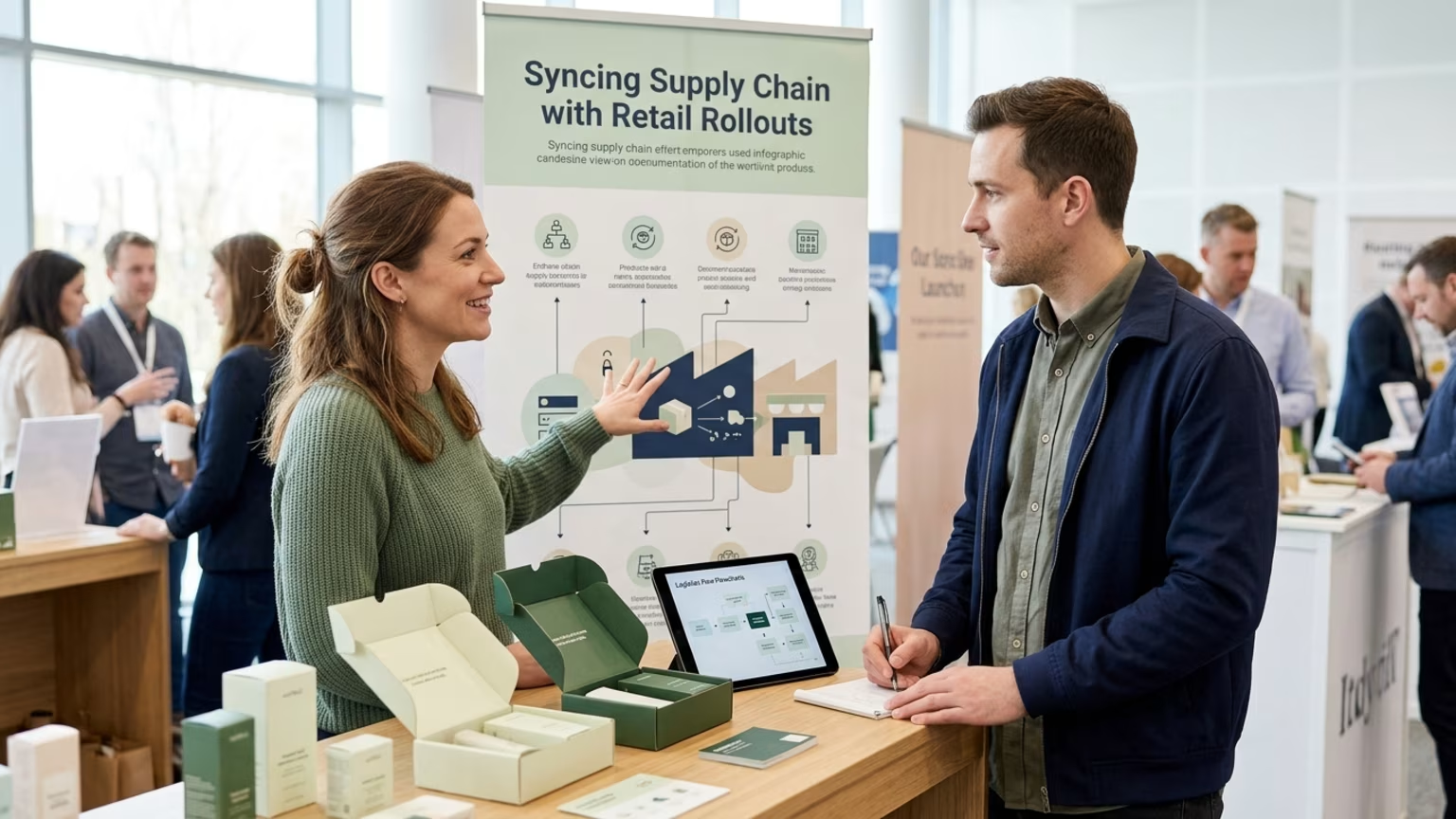
A successful launch requires total alignment between trade marketing, supply chain, and local retail partners. When these teams operate in silos, the resulting event often fails to stock enough inventory to meet sudden consumer demand. You must integrate these functions into a single planning timeline to guarantee a seamless retail handoff.
To build a live trial that turns attention into product understanding, operators must structure the experience around a behavioral demonstration. Rather than relying on passive observation, you should design the physical footprint as a guided customer journey. The goal is to prove exactly why the product is useful, desirable, or worth the premium price. The design should include four deliberate components to drive trial completion.
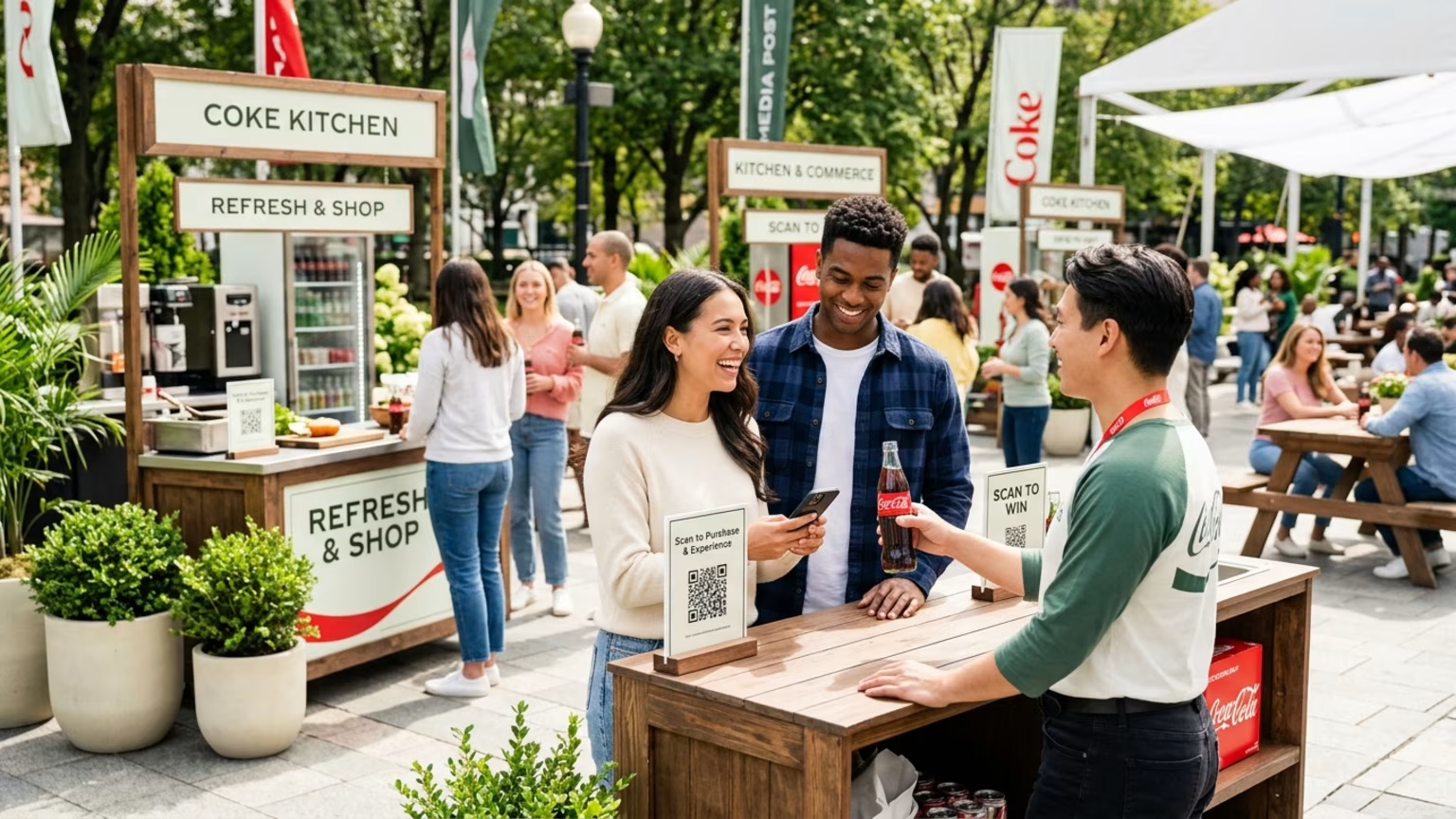
This structured approach gives consumers a compelling reason to interact with the product. For example, PepsiCo announced a five-year partnership with Silverstone where it operates a platform offering customizable beverages. This setup allows fans to experience different flavor profiles directly during the event. Customization provides a physical reason for the audience to participate while generating direct learning about preferred flavors and consumer language.
A 2026 study of brand experience among Generation Z consumers in a coffee and eatery setting supports this active engagement model. The research reported positive and significant relationships among brand experience, store atmosphere, customer satisfaction, and repurchase intention. Understanding the sensory drivers of product acceptance is critical when designing a physical trial. You must construct a controlled environment that reduces consumer uncertainty and builds immediate product trust.
The most common mistake brands make is treating a live footprint as a decorative environment rather than a conversion engine. Teams often capture fragmented data on unreliable systems, resulting in lost leads and scattered post-event follow-up. A high volume of visitors paired with a low demonstration completion rate indicates a severe design flaw or weak field staffing. If visitors cannot understand the product benefit quickly, they will abandon the interaction entirely.
Amateurs assume that a busy booth automatically equals commercial success. However, crowd congestion in trade show spaces often prevents qualified buyers from engaging with the product. Brands must utilize experiential marketing strategies to route excited consumers directly to the nearest cash register.
Another frequent failure point is launching a sampling program without an easy purchase path. A consumer might show strong purchase intent during the event, but that interest disappears if they have to search for the product days later. Retail integration must happen before the doors open. If the event creates demand that the local retail environment cannot capture, the activation is commercially useless.
After the event closes, your focus must shift immediately to the post-launch learning loop. You must identify which audience segments engaged, which locations converted best, and which staff behaviors correlated with stronger retail outcomes. Track incremental units, evaluate average order value, and compare sales in activation markets against matched control markets. Do not accept a post-launch report that only features photographs and impression estimates.
The captured field data should dictate your next strategic move. Identify the most frequent objections, update your training script, refine the physical layout, and re-test those improvements in the next market. When you build an experiential marketing strategy around ongoing optimization, you can transition from collecting raw foot traffic to generating verifiable retail pipeline.
Designing an experiential launch around a behavioral demonstration determines whether an event generates real pipeline or just foot traffic, which is exactly where Makai takes ownership of your live campaigns. We eliminate the risk of scattered attention and poor booth flow by deploying our Engagement Marketing capability. We turn audiences into participants with live and digital experiences that invite people to try, share, and act. Request a proposal

30 Years Experiential & Retail Activation Partner for CPG & Beverage Brands | Multi-Market Demos, Roadshows & Costco/Club Programs That Actually Sell