Robbie Thain
Founder, CEO

Build a trade show staffing plan around booth roles, peak coverage, ambassador training, CRM handoffs and practical responses to floor problems.

A headcount is not a staffing plan.
Build the plan around the interactions your booth needs to deliver, then assign ownership for each function.
Match coverage to expected busy periods and conversation demands rather than putting the same number of people on every shift.
The practical sequence is to define the visitor experience, identify the expertise it requires and assign each handoff. Then build in break coverage and prepare the team to capture useful conversation details. A person delivering a demonstration should not also be counted as available for a simultaneous buyer meeting.
At Makai, our experiential programs connect emotional engagement with measurable business outcomes. Our work spans retail demonstrations and product sampling programs as well as roadshows. For us, the staffing question starts with what the visitor should experience and what business action should follow.
Preparation should connect people with the physical work of the activation. That includes booth logistics and station coverage as well as responsibility for permitting. Makai’s integrated scope runs from permitting to CRM reporting. Our logistics services also cover storage and nationwide shipment coordination for sampling products and event gear.
Treat vendor headcounts and schedules as planning examples rather than verified standards. This framework does not prescribe permit requirements, CRM integration settings or technical recovery procedures. Those details belong in the event-specific operating plan.
A practical booth-staffing guide recommends identifying the positions needed during the busiest periods. That includes demonstration and meeting coverage plus coverage for breaks.
Translate that advice into a working assignment list:
A published scheduling example includes planned breaks and a shift overlap along with time after close to reconcile leads. The useful planning principle is continuity between assignments.
At Natural Products Expo West 2025, we designed and managed a 40 by 20 foot trade show environment for Glanbia. Our scope covered concept, operations, staffing and breakdown across a coordinated multi-brand space. More than 14,000 recorded product samples were distributed across the activation stations.
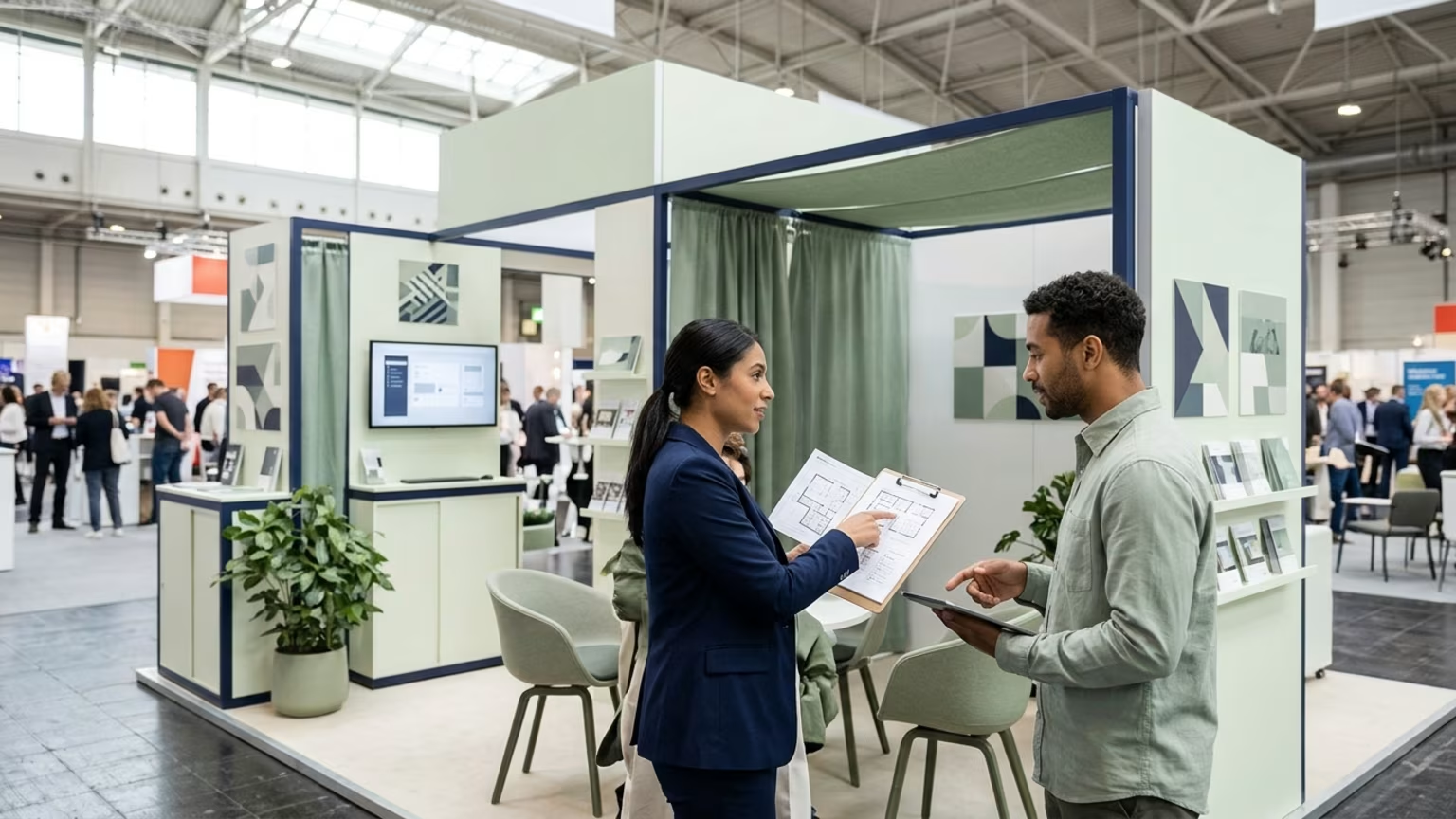
The planning lesson is to account for each station’s demands rather than treating booth area as a headcount calculator. Consider how demonstrations and buyer conversations share the space alongside the schedule.
Standardize what must remain accurate. Leave room for people to respond naturally.
For us, aloha means approaching the person before pushing the pitch. It is a useful standard for human connection: listen carefully and make the conversation welcoming. That outlook fits Makai’s hands-on brand experiences, which are designed to connect emotionally and turn customers into ambassadors.
The operational side needs equal clarity. Encore Nationwide’s staffing guidance recommends a short product explanation and approved talking points. It also recommends answers to common questions and clear escalation instructions for questions requiring a specialist or salesperson.
Build the shared brief around these subjects:
Practitioner guidance also supports role-play for openers and demonstrations. Rehearse the transitions that need to work reliably: opening a conversation and explaining the product, then involving a specialist or recording the next step.
Keep the practice responsive. Shared messages do not require identical wording. A useful rehearsal lets an ambassador listen to the visitor’s question before choosing the appropriate explanation or handoff.
Makai’s creative process combines strategy and data with experiences that engage all five senses. In that context, the human interaction should support the experience rather than sound detached from it. Consistent product information and natural conversation can serve the same objective.
The relationship between peak coverage and sales handoffs also deserves attention before the team reaches the floor.
The bridge is conversation context plus clear ownership. A captured contact needs to tell the next person why the conversation mattered.
Eventdex’s exhibitor onboarding guidance recommends identifying booth staff and providing access to the lead-retrieval app where applicable. It also recommends configuring qualification questions before the show. Its broader trade show planning guide places training and lead-retrieval testing before the event, followed by qualification and lead review during show days.
Use those recommendations to define the handoff from the floor to the CRM:
The staffing guides recommend recording needs and next steps rather than relying on a badge scan alone. That distinction matters when planning the record that sales will receive.
For Return on Investment (ROI) reporting, keep activity and commercial outcomes separate. Our Glanbia activation’s recorded sample distribution describes product trial activity. It should not be relabeled as qualified leads or sales pipeline.
Makai’s positioning connects face-to-face experiences with measurable pipeline. The planning implication is to assign responsibility for the evidence as clearly as responsibility for the experience. A staffing plan establishes ownership; financial return still needs its own measurement.
Carry those questions into the post-show review and follow-up plan.
Give the booth lead a coverage map that can be adjusted. The practical foundation is clear role ownership plus a floater or combined functions where appropriate, as described in the staffing guides.
Start with the uncovered function rather than redistributing people without reference to their roles. Determine whether the gap affects greeting or demonstrations, lead capture or sales conversations.
The booth lead can then review which functions can be combined and where coverage is available. Keep deeper product questions with people prepared to answer them. Preserve the specialist handoff rather than asking an ambassador to improvise an unsupported answer.
This is where a schedule needs more than names and hours. It should show who owns each function and who can cover it during a break or absence.
The preparation supported by the guidance is testing the tool and confirming staff access before the show. During a failure, the booth lead’s logistics role provides a clear point of ownership for coordinating the response.
Keep visitor-facing responsibilities assigned while that issue is addressed. The operating plan should identify who handles the tool problem and who remains responsible for the eventual lead reconciliation. Avoid leaving those decisions to whoever happens to notice the failure first.
Use the end-of-day review to identify uncovered roles and recurring visitor questions. Also examine missing lead notes and failed handoffs. The guides recommend reviewing leads and adjusting operations during the event, so the review should inform the next day’s assignments rather than become paperwork after everyone leaves.
The next planning step is a walkthrough from arrival to follow-up. Trace a quick product interaction and a deeper buyer conversation through the proposed roles.
Check who starts each interaction and who provides expertise. Then check who captures the context and who receives the next step. Compare those assignments with busy periods and break coverage.
Bring unresolved questions about event requirements and systems to the relevant planning owners. The goal is a staffing document that explains how the work continues when demand changes, not just who is scheduled to attend.
Qualified leads are the goal of trade show conversations; Makai builds activations for premium CPG brands around that objective. For teams facing weak leads from crowded halls, its retail demonstration capability also brings trained brand ambassadors into real product trials and shopper conversations designed to drive in-store sales.

30 Years Experiential & Retail Activation Partner for CPG & Beverage Brands | Multi-Market Demos, Roadshows & Costco/Club Programs That Actually Sell