Robbie Thain
Founder, CEO

Discover how experiential marketing strengthens retailer relationships by aligning consumer trial, operational execution, and verifiable sales data.
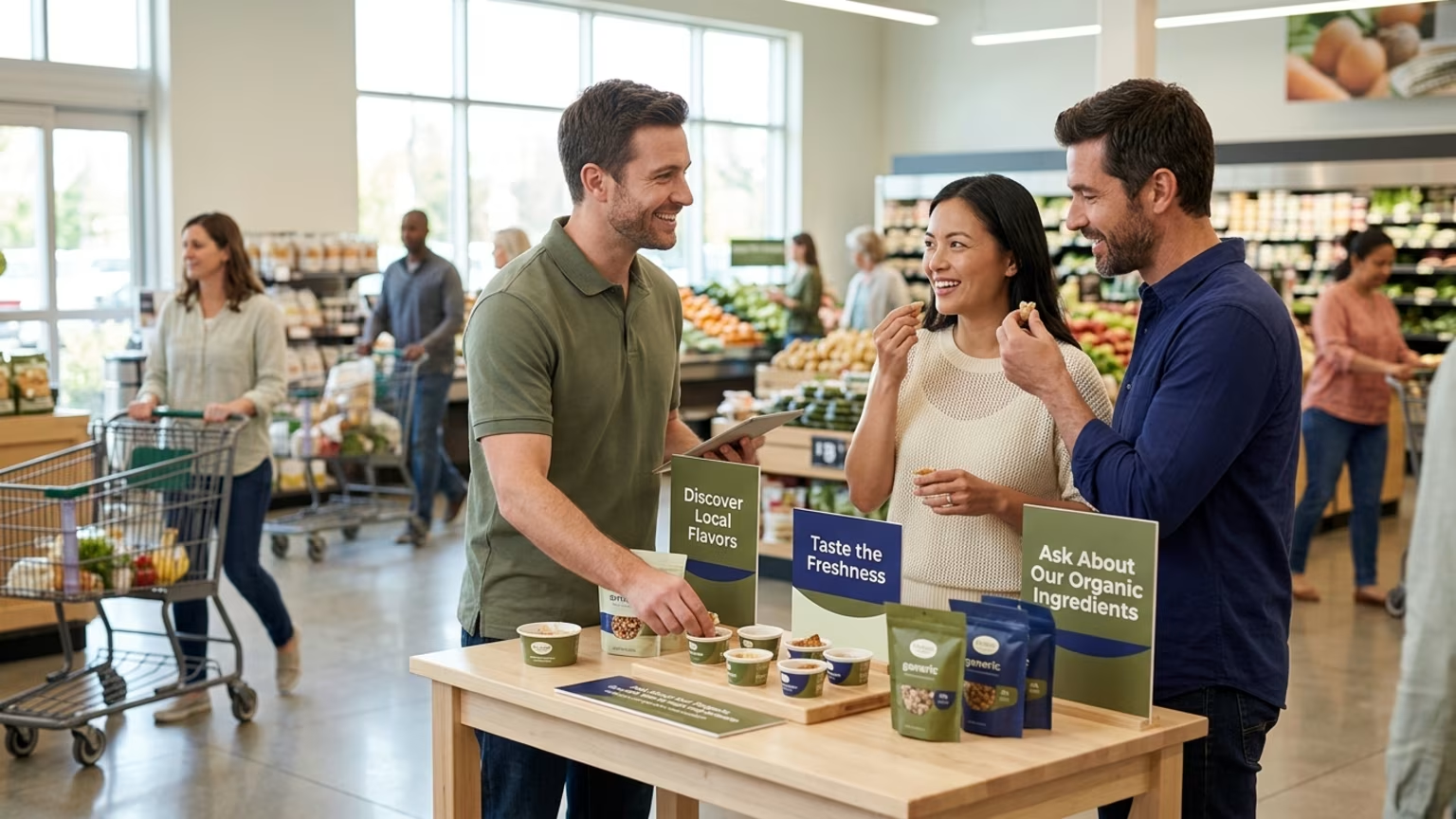
Retail activation programs get judged on cups poured rather than incremental pipeline. This mismatch creates friction between marketing teams and their retail partners. A crowded aisle does not independently establish profitable growth or secure future shelf space. Experiential marketing creates far more leverage when it operates as a measured retail growth program.
Brands strengthen these critical relationships by connecting consumer trial directly to store traffic and measurable product movement. Retailers prioritize shopper relevance, store operations, inventory management, and measurable sales outcomes. Target partnership leadership has said that collaborations should begin with guest needs, cultural context, and a clear view of what both partners can achieve together. A successful collaboration begins by defining the retailer business objective before brainstorming the creative concept.
According to industry estimates cited by a major report, global experiential marketing spending reached $138.94 billion in 2025 and forecasted a 10.3% growth rate for 2026. Marketers must direct that massive investment toward activities that prove physical product interaction drives retail sales. Shopper marketing provides the broader path to purchase strategy for physical locations. Retail activation translates that strategy into tangible experiences at or near the point of purchase.
Your pitch deck should clearly outline the participating items, the desired shopper behavior, and the measurement design. Retail buyers need to see the exact inventory replenishment plan and the proposed store set. A program that cannot answer these basic operational questions risks being perceived as a vanity project rather than a retailer support tool. Integrating physical execution with shopper strategy ensures your presence actually supports the retailer business objective.
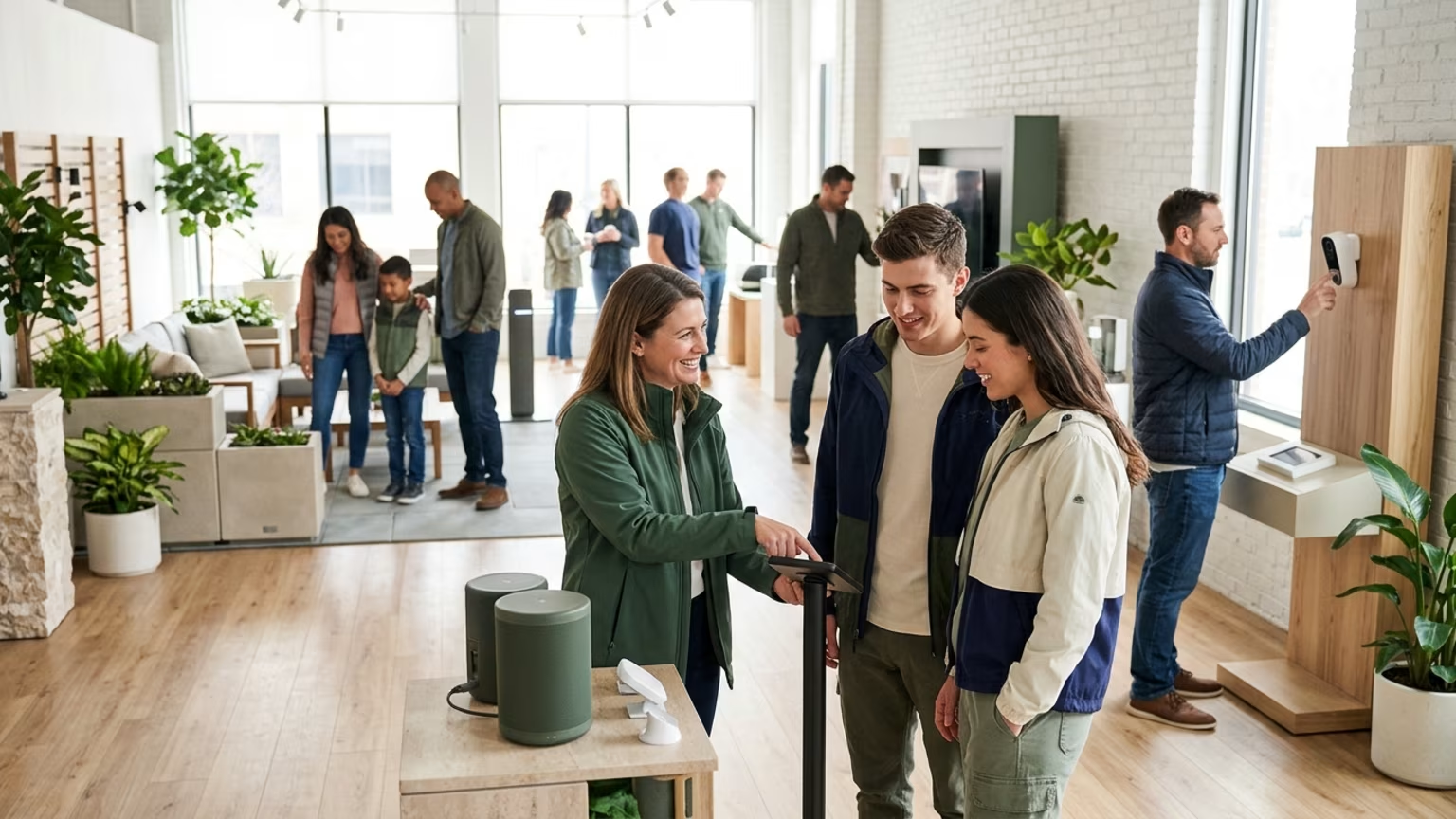
In-store activation programs depend entirely on operational details that remain invisible in the creative concept. Industry guidance says brands should expect retailer-specific registration, insurance, compliance, and operating requirements before launching. Brands should never assume that a process approved at one chain will automatically transfer to another. Your activation plan must secure retailer approval well before launch to ensure smooth field execution.
Operational readiness requires a clear strategy for approved locations and store traffic patterns. Field teams need confirmed setup and teardown windows to avoid disrupting normal retail operations. Fixture dimensions must align perfectly with available floor space and daily replenishment procedures. Inventory allocations and daily sell-through monitoring ensure that the demand generated by the program does not result in stockouts.
Brands must present a merchandising plan that includes display renderings and specific shelf adjacency requests. Defining offer mechanics and replenishment procedures prevents friction with local store managers. A successful execution plan lists the required approvals, staff training mandates, and expected store associate responsibilities. Retailers view an activation as a repeatable asset when the brand proves it can handle store-level compliance flawlessly.
Resolving these logistical hurdles early demonstrates that your brand respects the retailer physical environment. It shows buyers that your program acts as a seamless extension of their operations. This level of preparation turns a complex logistics challenge into a competitive advantage. Operational discipline is the foundation of any successful physical campaign.
A carefully planned retail footprint means nothing without the right people managing the live interactions. Achieving verifiable product trial requires flawless physical execution and trained professionals who understand human connection. We rely on a human-centric aloha methodology to ensure every engagement feels authentic and approachable. Ambassadors must do more than hand out physical items to passing shoppers.
Our team equips field talent with a concise product story and exactly one qualifying shopper question. This focused approach prevents rambling pitches and helps identify consumers who actually fit the target profile. Freeman research cited in industry coverage found that 95% of attendees reported greater brand trust after an in-person event. That same research indicated 96% of people with hands-on product exposure said it made advocacy easier.
Consistent staffing execution requires rigorous training on both product benefits and store-specific operational standards. Field representatives must clearly understand their role in the broader path to purchase. A well-trained ambassador turns a passive aisle into an active conversation that drives measurable retail sell-through. For brands scaling their nationwide event operations, talent quality acts as a critical commercial variable.
This human connection is especially crucial for products that require explanation or physical demonstration. Shoppers need knowledgeable guides to help them compare features and understand unique value propositions. When field staff execute their roles perfectly, they elevate the entire shopper experience. Quality interactions build the trust necessary to move a customer from curious to converted.
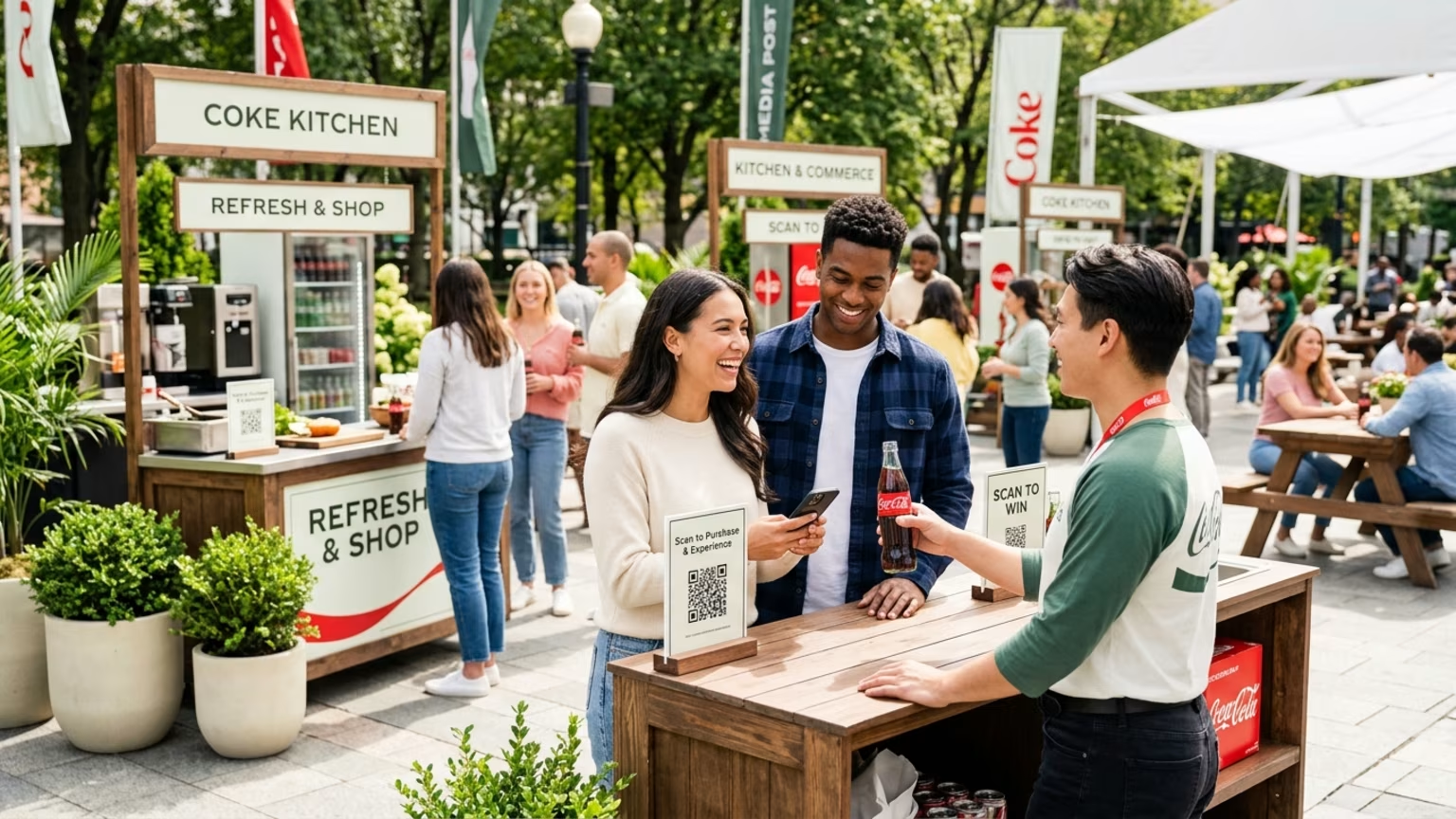
Lead capture and first-party data collection are expected outputs of modern physical campaigns. However, simply collecting an email address does not prove commercial impact for the retailer. A strong shopper capture design links the physical experience to a clear and measurable next step. We blend physical and digital channels by integrating QR codes, mobile technology, and real-world brand activations into a cohesive layer across retail and event experiences.
This connected strategy is a technical upgrade we apply to many campaigns. Measurement guidance recommends tagging connected digital touchpoints with campaign-specific URLs and targeted post-event email flows. Capturing first-party data at the exact moment of engagement helps transition a raw foot traffic count into a validated framework of qualified interactions. Brands must clearly define privacy rules, establish consent language, and clarify who owns the collected shopper data.
When physical engagement routes directly into a CRM system, marketers can evaluate events against actual business impact. AEVEA Pulse reporting placed attendee experience and business impact among the leading event-success indicators, at 71.1% and 68.4%, respectively. Props reports that its Yerba Madre campaign produced a 33.6% year-over-year retail-sales lift and approximately 29% attributed velocity lift in its analysis. Similarly, a Field Agent Canada article reported an average 41.6% sales lift for sampling and localized surges of up to 2,000%.
A measurable next step might involve a retailer-specific digital coupon, a product registration flow, or a loyalty account offer. This digital bridge ensures that the physical handshake translates into a tracked customer journey. It allows brands to prove Return on Investment through verifiable sales data rather than vague engagement metrics. Structuring your data collection properly validates the entire physical marketing effort.
Field marketing directors face intense pressure to keep campaigns running smoothly despite inevitable logistical disruptions. Staffing shortages, broken technology, or missing inventory can quickly derail an expensive retail activation. A seasoned field general anticipates these worst-case scenarios and builds a rigid escalation procedure. Teams must communicate out-of-stock situations and placement issues to store managers immediately.
When a key display component fails to arrive, field staff must have a clear fallback protocol to maintain product visibility. If an ambassador calls out sick, regional managers need a rapid deployment roster to fill the gap without losing activation hours. Monitoring daily inventory availability prevents a successful demonstration from causing a complete shelf stockout. The ability to pivot quietly on the floor is what separates professional execution from a fragmented disaster.
A practical reporting structure must translate floor contingencies into clear actionable insights. We organize post-event documentation into delivery, engagement, conversion, and retailer value layers. Delivery metrics show exactly how many hours were completed and which execution exceptions occurred. Engagement data reveals what shoppers actually did, while conversion links that activity to verifiable purchase behavior.
The final reporting section provides a direct bridge from campaign metrics to a future sell-in recommendation. It highlights which regional stores performed best and whether the activation improved overall product velocity. You must document what operational issues need fixing before scaling the program to additional locations. Proving you can handle adversity builds immense trust with retail partners and supports your experiential marketing and brand activations.
Transforming an experiential program into a strategic retail asset requires deliberate upfront planning. Before designing the creative elements of your next activation, clearly name the specific retailer business problem you intend to solve. Select a small number of SKUs with reliable inventory and establish baseline sales data for your target locations. Agreeing on your attribution window before launch is a critical step for defining success.
Retail measurement guidance recommends comparing exposed stores with a control group to accurately estimate incremental sales. This analytical approach separates genuine promotional lift from normal daily purchasing behavior. By structuring your next campaign around verifiable measurement, you give retail buyers the exact evidence they need to expand your distribution and improve retailer sell-through. The smartest move you can make is returning to the retailer with an expansion plan rather than a simple campaign recap.
Treating an in-store activation as an isolated spectacle guarantees scattered attention and poor booth flow. Makai prevents this operational failure by deploying our Storage & Logistics capability to store your sampling product and event gear, then ship, track, and coordinate delivery nationwide so every activation stays on schedule. We ensure your physical campaigns capture focused consumer interest and secure measurable retail distribution. Request a proposal

30 Years Experiential & Retail Activation Partner for CPG & Beverage Brands | Multi-Market Demos, Roadshows & Costco/Club Programs That Actually Sell