Robbie Thain
Founder, CEO

Learn how centralizing field operations, staffing, and logistics turns chaotic stadium activations into measurable revenue for premium CPG brands.
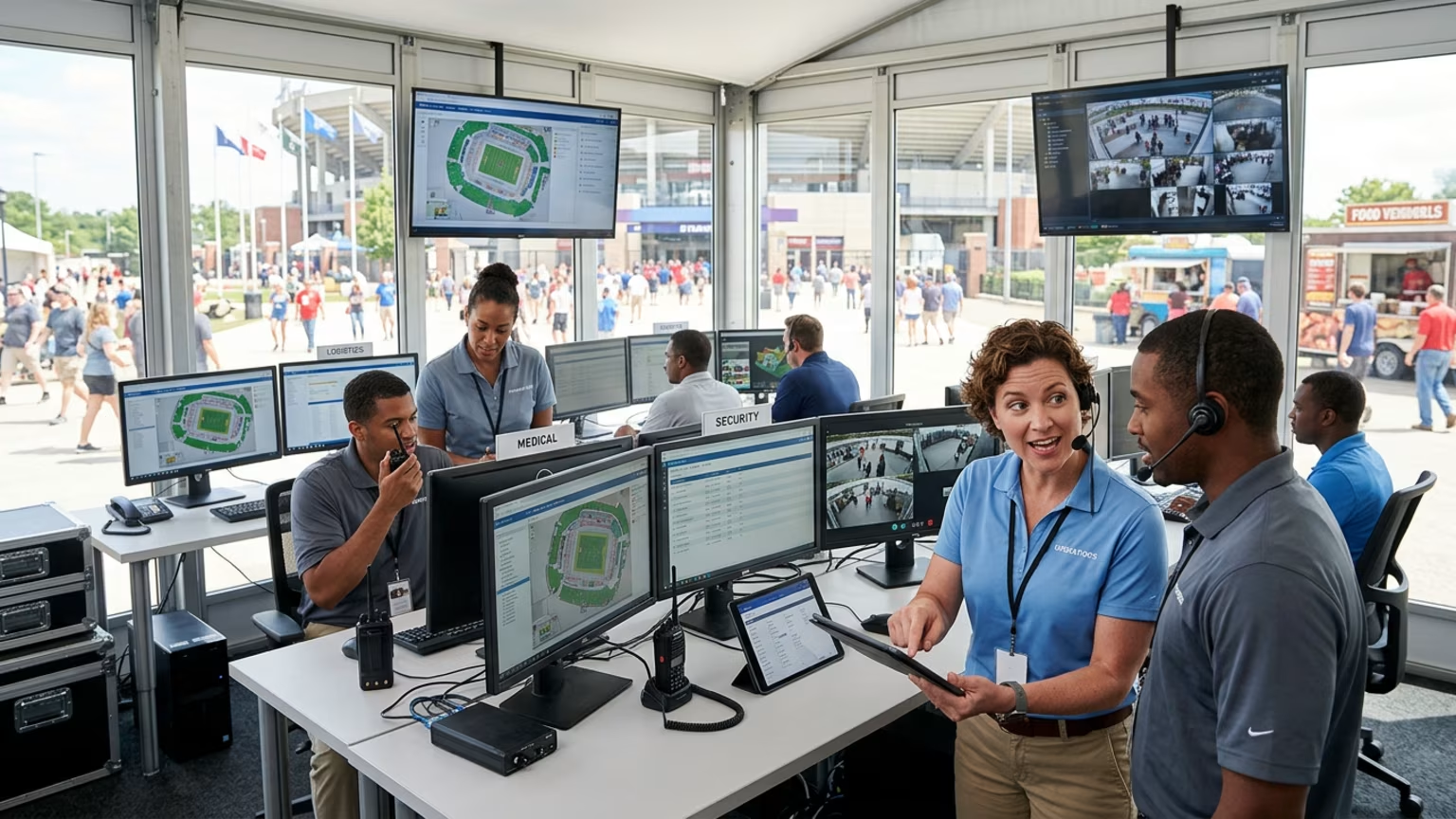
Most brands treat stadium activations like a massive block party when they should treat them like a military deployment. When thousands of fans flood an arena, positive vibes will not save a disorganized brand ambassador team. The difference between a high converting event and a public relations disaster comes down to pure operational discipline.
Imagine walking onto the concourse of a major sports arena two hours before tipoff. You have pallets of premium beverage samples stuck at the loading dock, and security will not release them without the exact proper credential. Three of your contracted brand ambassadors are lost in the wrong parking lot. Meanwhile, your regional manager is frantically texting five different vendors to figure out why the interactive display lacks power.
This chaotic environment represents the common reality of large scale brand activations in high traffic consumer environments. When teams rely on scattered spreadsheets and disconnected text threads, the activation inevitably falls apart under pressure. You end up with a poor fan experience and zero measurable Return on Investment (ROI) to show your leadership team. The sheer volume of moving parts in a stadium makes informal communication completely inadequate.
The union labor rules conflict with your setup timeline, and the lack of a clear manifest leaves your field staff standing around without direction. To fix this structural failure, recent updates from sports and entertainment field platforms stress the absolute need for a single operational system. A unified platform manages scheduling, credentialing, and on site logistics from one central dashboard. When you consolidate your operational tools, you stop putting out fires and start collecting valuable consumer data.
Industry leaders now recognize that fragmented execution destroys brand value and wastes physical marketing budgets. Preventing these nightmare scenarios demands rigid contingency frameworks that keep your physical assets moving smoothly regardless of the venue challenges.
Moving from chaos to clarity requires a fundamental shift in how you manage physical campaigns. You must adopt a centralized command model for all field operations. This means stripping away the dozen different apps your team currently uses and implementing one single source of truth. Every team member from the field marketer to the logistics coordinator must work from the exact same operational playbook.
A unified approach forces standardization across your entire event program. You create rigid protocols for everything from vendor load in to brand ambassador training modules. When everyone uses the same system to clock in, report issues, and check inventory, management gains total visibility into the live environment.
We handle every step of activation execution with precision and purpose, from initial concept through final logistics. Our comprehensive approach guarantees that each program is designed to spark curiosity, drive action, and leave a lasting impression on consumers. This strategic framework directly attacks the main vulnerabilities of stadium and arena events. Tight quality assurance on temporary staff becomes automatic when all training materials live securely in the core system.
Real time issue escalation replaces frantic phone calls with tracked digital tickets that site managers can resolve instantly. Developing a unified center of excellence standardizes these core processes across every single city your promotional tour visits. You transition from hoping things go well to knowing exactly how the activation will perform.
Using one system also simplifies the complex web of stadium compliance. Venue managers require exact documentation for every person and product entering their facility. Centralized platforms automatically track these credentials to prevent costly delays at the security gate.
Translating a centralized strategy into live event success requires strict adherence to a standard operating procedure. High volume stadiums do not forgive sloppy logistics or confused field staff. You need a sequential plan that hardwires accountability into your pre event planning and live operations.
Executing these specific steps requires immense discipline from your entire operational team. Every single action must map back to the core system to maintain clear executive visibility. If an ambassador spots a power failure, they log it instantly so the project manager can dispatch technical support.
The operation does not end when the final whistle blows and the crowd exits the stadium. The breakdown process carries just as much risk as the initial setup. Your playbook must dictate exactly how the remaining product is secured, how the branded assets are dismantled, and where the shipping crates must go next. Centralized tracking prevents expensive display pieces from getting lost in the chaotic post event rush.
Building this infrastructure takes time, but it drastically reduces the stress of event management. If your team struggles to implement these complex workflows, it is time to Book a strategy call with our operations specialists. Our team builds these exact playbooks for national consumer goods campaigns every single day. We know exactly what it takes to turn complex venue rules into smooth consumer interactions that produce real data.
You cannot evaluate the success of a stadium activation based on crowd size or vague positive feedback. You must measure the operational health and the final business impact using hard, undeniable numbers. Tracking specific lead and lag metrics separates highly effective events from expensive, unmeasured mistakes.
Leading indicators tell you if the activation is functioning correctly while the event is still happening. These metrics include the percentage of staff arriving on time, the rate of samples distributed per hour, and the number of CRM data entries logged before halftime. Monitoring these exact data points allows your event manager to pivot tactics immediately if interactions fall behind schedule. Adjusting your field staffing ratios based on hourly traffic flow is a perfect example of acting on leading metrics to save an event.
Lagging indicators evaluate the overall financial and brand impact long after the crowd goes home. You should track total qualified leads generated, the final cost per acquisition, and the actual retail sales lift in the surrounding geographical area. You must also calculate the final conversion rate of distributed samples to email sign ups or digital coupon redemptions. When you present these concrete financial numbers to your leadership team, you prove that experiential campaigns drive actual pipeline revenue.
Connecting your on site data capture to your broader marketing technology stack is the final core step. The centralized platform must push the captured emails and phone numbers directly into your corporate CRM system without manual data entry. This automated transfer prevents transcription errors and allows the digital marketing team to begin their follow up sequence immediately.
A strong reporting culture stops the endless debate over the value of field marketing. When you tie physical interactions to clear digital metrics, the marketing department stops viewing events as a cost center. They begin to see your well managed activations as a predictable channel for customer acquisition.
Consider a national beverage brand launching a new premium energy drink at a major regional music festival. In the past, this brand relied on local staffing agencies that used paper sign in sheets and verbal on site training. The result was massive execution inconsistencies, missing product pallets, and brand ambassadors who could not accurately describe the product benefits. The brand quickly recognized they needed to completely overhaul their physical marketing approach.
They implemented a centralized field operations platform to manage the entire activation weekend from top to bottom. All seventy brand ambassadors downloaded a single app to access their schedules, complete their training quizzes, and receive their stadium credentials digitally. The logistics team used the exact same platform to track the delivery trucks bringing cold storage units to the massive festival grounds. Every single operational element became visible to the national marketing director sitting in an office two thousand miles away.
The live event ran with absolute military precision because there was no ambiguity about team responsibilities. When one sampling station experienced a massive crowd surge, the site manager used the system to instantly reassign field staff from a slower zone. This specific approach mirrors the recent updates from specialized platforms that highlight a fundamental shift in field operations across the marketing industry. The brand captured four times the expected consumer data and completely eliminated the costly product waste of previous years.
By demanding strict control over their physical assets, the brand transformed a logistical headache into a highly profitable weekend. The executives finally had clear visibility into exactly how their budget was spent and what it produced.
The physical manifestation of a brand requires far more than just a clever creative vision. When thousands of people interact with a product in real time, the hidden logistical systems dictate the final consumer experience. The most memorable brand moments happen only because an invisible framework of pure operational control allowed them to exist.

30 Years Experiential & Retail Activation Partner for CPG & Beverage Brands | Multi-Market Demos, Roadshows & Costco/Club Programs That Actually Sell