Robbie Thain
Founder, CEO

Samsung's 2026 Gamescom activation shows how zoned spaces, hands-on trials, and digital missions turn physical foot traffic into measurable sales pipeline.
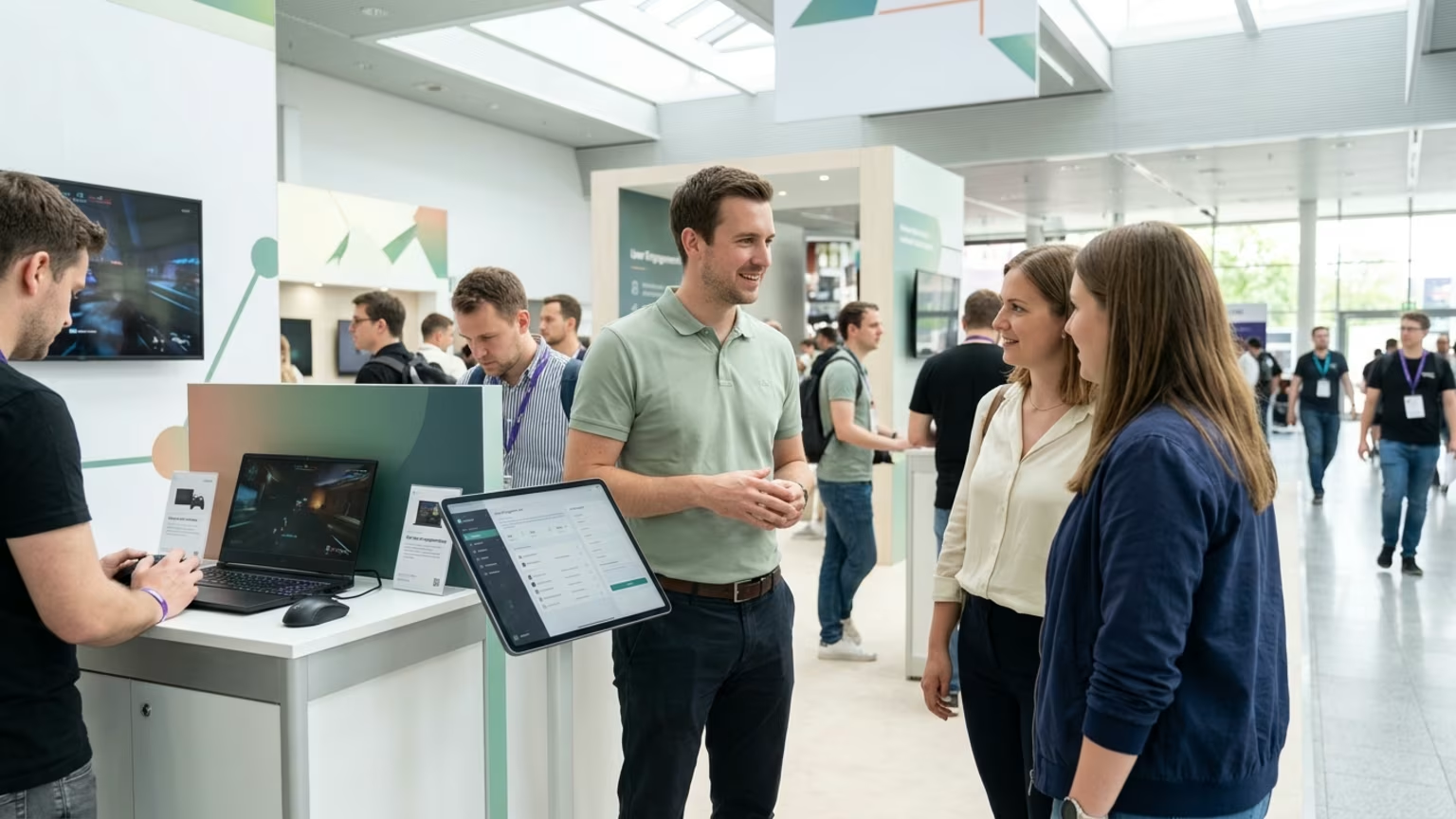
On August 26 through August 30, 2026, Samsung Electronics presented a 1,090-square-meter gaming exhibition at Gamescom in Cologne, Germany. The massive activation operated under the theme "#PlaySamsung" and featured a highly structured floor plan. During the event, Samsung scheduled the reveal of its 2027 Odyssey gaming-monitor lineup and new portable SSD products. The footprint replaced traditional static displays with a carefully organized visitor journey that connected physical interaction to digital measurement.
From a logistical perspective, the physical space was segmented into four specific environments. The brand divided the layout into the Odyssey, Galaxy, Gaming Hub, and T1 zones. Each area required attendees to participate in hands-on gameplay rather than simply looking at hardware. The exhibition demonstrated how products such as the Odyssey 3D monitor and Galaxy S26 Ultra work together. The footprint also highlighted the 9100 PRO SSD, JBL Quantum headsets, and OLED TVs.
The Odyssey Zone focused on high-performance desktop hardware. Visitors could play Activision's Call of Duty: Modern Warfare 4, Pearl Abyss' Crimson Desert, and CD PROJEKT RED's Cyberpunk 2077 using the newest Odyssey monitors. Samsung paired the displays with its 9100 PRO SSD and JBL Quantum 950 headset to demonstrate how the gaming devices work together. By linking audio, display, and storage hardware, the setup forced visitors to experience the full ecosystem simultaneously.
The hardware specifications required physical demonstration to prove their value. Demonstrated products included the Odyssey G8, which Samsung described as the world's first 6K gaming monitor. The setup also highlighted the Odyssey OLED G8. This specific display features 4K resolution and a refresh rate of up to 240Hz. By showing these monitors in action, the brand moved away from listing specifications on a printed card.
The Galaxy Zone shifted the focus entirely to mobile utility. This area showcased devices like the Galaxy Z Fold8 Ultra and the Galaxy S26 Ultra. Attendees played mobile titles such as Genshin Impact, Asphalt Legends, and Honor of Kings. According to the company, these mobile devices utilize a customized Snapdragon 8 Elite Gen 5 Mobile Platform for Galaxy.
The Gaming Hub Zone demonstrated cloud accessibility through compatible monitors and the Samsung OLED TV S95H. Visitors accessed titles directly without connecting a separate console or downloading files. Finally, the T1 Zone added a cultural layer by letting attendees test equipment used by Sang-hyeok Lee. The zone highlighted the brand's partnership with the global esports organization T1.
To control crowd flow across these four areas, the operation utilized a custom web application. Visitors registered digitally, completed assigned booth missions, and earned points redeemable for Korean snacks. The brand also hosted the #PlayGalaxy Cup World Finals in PUBG Mobile on August 27 and August 28. Ten teams competed on a central stage inside the exhibition footprint.
Ultimately, the physical experience connected to regional ecommerce channels. Samsung linked the Gamescom activation to Samsung.com sites across 22 key corporate entities with special promotions.
When brands ask us how to structure large-scale consumer events, we point to this type of intentional footprint. For premium consumer packaged goods, food, and beverage brands, handing out random samples no longer generates measurable pipeline. You have to engineer the physical space to guide the consumer from initial curiosity to a verified data capture moment. The central lesson here is that a physical activation must function as an operational funnel.
We have been connecting brands with people through live experiences, retail programs, and national activations since 1995. Over three decades, we have built a track record of creating meaningful brand moments across the country. In our experience, breaking a massive event into distinct use cases prevents consumer paralysis. When a shopper knows exactly what to do in a space, they are far more likely to take the final purchase step. We consistently find that prioritizing the architecture of conversion relies on precise visitor routing.
Joe Federbush, president and chief strategist at Evolio Marketing, recommends evaluating events using three distinct metrics. He advises teams to measure return on experience, return on emotion, and Return on Investment. The event layout must serve these metrics by giving the audience a clear path to conversion. Every square foot of an activation needs a specific operational job.
For a beverage or wellness marketer, the equivalent approach means separating trial from education. You might build one zone for initial flavor sampling and a separate zone for ingredient education. A third zone could handle digital coupon redemption or direct home shipping. Brands that study high-performing lead generation models understand that a flat display is a missed revenue opportunity.
In our experience, consumer participation guarantees much higher recall than passive observation. By using a digital progression system, marketers can track exactly which zones hold attention. If a consumer completes the trial zone but abandons the digital coupon station, the operations team can identify the specific point of friction. This structured feedback loop is critical for optimizing future field programs.
Consider how a national food brand could apply this framework to a major consumer expo. The first zone might feature a live cooking demonstration to attract initial foot traffic. The second zone could offer a direct tasting experience paired with targeted ingredient education. The third zone could facilitate email registration in exchange for immediate digital savings.
This specific sequence mirrors the hardware company's progression from initial spectacle to verified data capture. The underlying principle remains identical across different product categories.
When planning these environments, marketing operators must assign a clear conversion metric to every space. A trial zone should be judged strictly on the volume of samples accurately distributed to the target demographic. An education zone must be measured by the length of active engagement or correct responses to brief exit surveys.
Finally, the digital handoff zone is graded entirely on CRM opt-ins and downstream redemption rates. By fragmenting the measurement, the brand can isolate exactly where the experiential marketing campaign succeeds or fails.
Transitioning to a zoned exhibition model completely changes how field teams operate. You cannot staff a multi-layered footprint with a single group of generic brand ambassadors. Each zone requires specific product knowledge, strict queue management, and clear digital handoff protocols. If one zone falls behind, the entire progression system breaks down immediately.
Event Marketer reporting highlights the value of connecting in-experience responses with lead-generation and CRM data. This means your field team must prioritize data capture over simple interactions. When attendees complete missions or redeem points, the staff must ensure the digital registration records properly.
Tracking zone progression provides the hard data needed to evaluate your actual Return on Investment. Without flawless technical execution on the floor, the CRM data will remain empty.
Freeman research cited by Event Marketer found that attendees ideally want 54% of their learning time to happen outside traditional session rooms. At trade shows, that figure rises to 64%. This requires field operations to treat the physical booth as the primary education vehicle. Staff must be trained to explain complex value propositions through active demonstrations. If the logistics of the hands-on trial fail, the educational opportunity disappears completely.
This operational shift also impacts post-event execution heavily. Connecting an offline footprint to 22 corporate entities requires advance coordination with digital marketing teams. If the field team captures a lead on the floor, the regional promotion must be live and ready for fulfillment. This level of synchronization demands rigorous advance planning and clear communication between physical and digital stakeholders.
Managing a 1,090-square-meter space safely is another major logistical hurdle. Foot traffic must flow logically from the entry point to the final exit. If the web application fails to load, the mission progression halts and crowds will cluster. Much like the standards seen in modern turnkey trade show solutions, the physical environment must dictate safe consumer behavior.
Furthermore, integrating gamified mechanics demands robust technical infrastructure at the venue. Scanning systems, lead capture devices, and wireless networks must operate flawlessly under peak load. If the digital tracking breaks, the brand loses the ability to measure consumer intent and downstream conversion. These invisible operational layers ultimately determine the commercial success of the activation.
The requirement for specialized brand ambassadors cannot be overstated. When a consumer asks a complex question about a cloud gaming interface, the staff member must provide an accurate answer instantly. In the CPG sector, this means ambassadors must understand deep nutritional profiles, sourcing facts, and retailer availability. Handing out a product is easy, but defending a premium value proposition requires rigorous upfront training. The field team effectively becomes an extension of the internal sales force.
Hosting the #PlayGalaxy Cup World Finals introduced another layer of operational friction. Coordinating ten competing teams on a central stage requires precise scheduling and dedicated staging areas. The spectacle draws immense crowds, which can easily block access to the surrounding product zones.
Field directors must map out physical buffer zones to ensure the tournament audience does not disrupt the core product trials. Balancing high-energy entertainment with structured shopper marketing is the ultimate test of field operations.
Teams must test the entire layout before the doors open. Field managers should verify that attendees can understand the first required action within seconds. Queues for hands-on trials must be visible and fairly managed by trained operators.
The handoff from one zone to the next must feel completely natural to the participant. Finally, the post-event follow-up sequence must be assigned to a real owner within the marketing department.
The strategic intent behind this operational model requires a fundamental shift in marketing thought. Stephanie Choi, executive vice president and head of the Global Brand Center at Samsung Electronics, explained the brand's approach to the massive activation.
"In this day and age, gaming goes far beyond the games themselves to encompass high-quality, personalized gaming experiences," she stated. "Through our integrated ecosystem we’re presenting at Gamescom 2026, Samsung is providing users with a way to take their gaming to the next level."
Are your current field operations structured to capture verified post-event behavior, or are you still just counting the total bodies that walk past your footprint?
Large trade show footprints often fail when a lack of structural flow prevents visitors from engaging with specific product use cases. When brands need to eliminate inefficient post event follow up and CRM routing, we step in with our Brand Activations capability. We create high energy activations that turn awareness into participation and drive measurable consumer response. Request a proposal

30 Years Experiential & Retail Activation Partner for CPG & Beverage Brands | Multi-Market Demos, Roadshows & Costco/Club Programs That Actually Sell


