Robbie Thain
Founder, CEO

IMEX America's meeting record puts staffing, booth flow and buyer handoffs in focus for CPG marketers planning their next trade show.

On October 15, 2026, IMEX reported 96,000 scheduled meetings at IMEX America 2026 in Las Vegas. The organizer described the meetings-and-events industry show at Mandalay Bay as its biggest-ever edition.
IMEX reported more than 17,800 participants, including more than 6,000 buyers and 4,800 hosted buyers. Its scheduled meeting total comprised:
The organizer said those appointments represented 48,000 hours of meetings. From an operating perspective, that is a substantial calendar of conversations requiring people and space.
Read the count precisely: it measures scheduled appointments rather than completed meetings or verified Return on Investment. The sources do not establish that preparation caused the record or that appointments outperformed walk-up conversations. IMEX serves the meetings-and-events industry, so its figures do not measure CPG trial or retail sell-through. Its selected business examples are organization-reported outcomes rather than a typical exhibitor return.
Preparation was also visible in the organizer's pre-show program. IMEX's exhibitor masterclass announcement covered its buyer-led meeting model and preparation. It also addressed outreach and sales conversations alongside lead conversion and experience design.
For marketing leaders, the practical signal is the connection between a meeting calendar and the operating plan behind it. Booking belongs in the same discussion as who will receive the buyer and what happens after the conversation.
Makai's position is straightforward: a booked meeting is a promise of attention. For us, aloha means making people feel welcome and giving them a meaningful conversation. Discipline means planning the work so that hospitality does not compete with the commercial purpose of the activation.
That matters for food and beverage brands because product trial and buyer conversations serve different jobs. A visitor may need a clear product introduction. A retail buyer may need a discussion about commercial fit. Both deserve attention without forcing the same person to abandon one interaction for another.
At Natural Products Expo West 2025, we designed and managed a 40 by 20 foot trade show environment for Glanbia. The space brought think!, Isopure, Optimum Nutrition and Amazing Grass into one coordinated environment. Our team handled concept and operations alongside staffing and breakdown. More than 14,000 recorded product samples were distributed across the activation stations.
The lesson we draw from that experience is about supporting several kinds of work within one footprint. A shared environment carries several responsibilities at once. An appointment calendar adds another layer of commitments that the staffing plan must account for.
Our view is that the calendar should be treated as an operating commitment rather than a separate marketing deliverable. The useful question inside the planning process is whether the people and space can support the conversations being promised. A beautiful booth and a full schedule still need a workable connection between them.
Skift reported that meeting professionals were balancing continued demand to gather against higher costs and greater scrutiny of meeting decisions. That context makes the operating choices worth examining. In Makai's view, staffing and footprint decisions should be tied to the interactions the brand intends to deliver rather than treated as separate budget lines.
A useful staffing brief distinguishes product engagement from commercial discussion. The person introducing a beverage should understand the product and the purpose of the trial. The person handling a buyer appointment should understand the meeting's objective and be ready to carry the discussion forward.
This does not mean every role needs a separate person. It means the plan should make responsibility visible. A clear split between demonstration and sales responsibilities gives the team a way to assess coverage before arriving on site.
The briefing should also connect preparation to the live conversation. IMEX's masterclass topics included outreach and relationship building. The operational implication is to carry that preparation into the booth: the meeting owner needs the context behind the appointment rather than only a name and a time.
Walk-up interest belongs in this discussion too. A calendar should help organize attention without making unscheduled visitors feel like interruptions. The planning task is to identify how the team will welcome new interest while protecting the conversations already arranged.
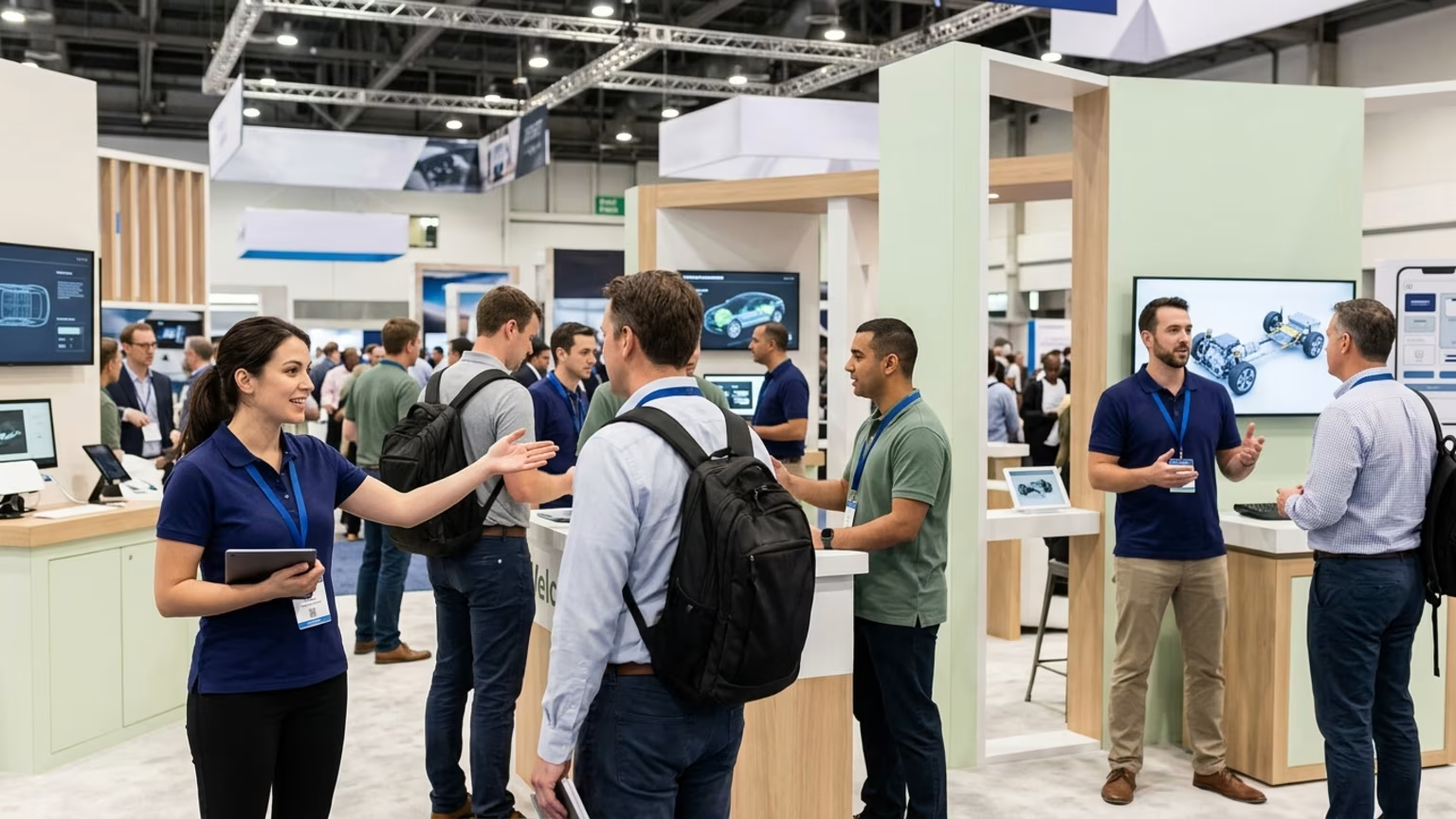
A product trial and a buyer discussion do not ask the same thing of a booth. Trial needs an approachable setting for interaction. A commercial conversation needs space where the participants can stay focused. The floor plan should make both purposes legible to visitors and staff.
For CPG teams, that means evaluating the relationship between sampling space and buyer conversations before approving the footprint. The point is not to make every booth larger. It is to make the existing space answer the brief rather than asking staff to compensate for conflicting uses.
Our Glanbia engagement provides a concrete reference point for this planning discussion. It combined several brands and activation stations within a coordinated environment. The relevant lesson here is not the sample count alone. It is the responsibility to think about the environment and staffing together when different interactions share a space.
A practical review can follow the visitor's intended experience from arrival to product engagement and then to a commercial discussion where relevant. Any point where responsibility becomes unclear deserves attention in the brief. That is an execution review rather than a design critique.
Makai provides reporting on reach and trials alongside leads and sales. Our measurement approach tracks awareness and engagement through conversion. For this story, the operational value of that approach is continuity: the record after the show should help explain what happened during the interaction.
The research supports distinguishing scheduled appointments from held meetings and qualified opportunities. As an editorial recommendation, a useful event record would separate:
Those distinctions give different jobs to different measures. A scheduled appointment describes demand for time. A held meeting describes an interaction that occurred. A qualified opportunity and an agreed next action describe where the commercial work can continue.
The live team therefore needs a shared understanding of what information matters to the next person handling the relationship. Otherwise, even a well-run conversation can become difficult to continue. The handoff deserves a place in the operating brief before the doors open.
IMEX reported that Tourisme Montréal received two association RFPs at the show for congresses planned for 2030. That example gives the commercial discussion a useful shape: a conversation can lead to a specific future requirement with work still ahead of it.
For a CPG team, the practical parallel is the quality of the next action. A buyer's request for further discussion deserves an owner and enough context to continue the relationship. Treating every contact as an identical lead would lose the distinction between general interest and a concrete commercial request.
IMEX CEO Carina Bauer also said clients valued the show's personal feel. She described buyers as well organized and exhibitors as informed and prepared. She also pointed to the potential value of walk-up meetings because of attendees' quality and seniority.
Makai's reading is that structure should protect personal attention rather than replace it. Preparation gives a scheduled conversation purpose. An operating plan also needs room for the relevant person who arrives without an appointment. The objective is a useful human exchange with a clear path forward.
Before approving your next show plan, will you ask your field and sales leads today to map scheduled meetings against staffing coverage, conversation space and a named owner for the next action?
A meeting calendar is a weak finish line when crowded booths still produce low-quality leads. Makai plans and manages trade show spaces that attract attention and start conversations, with activations designed to convert visitors into customers and generate qualified leads for premium CPG brands.

30 Years Experiential & Retail Activation Partner for CPG & Beverage Brands | Multi-Market Demos, Roadshows & Costco/Club Programs That Actually Sell