Robbie Thain
Founder, CEO

Learn how to design modular roadshows that transition from trade shows to retail demos. Maximize your asset utility, capture leads, and prove field ROI.
A field marketing director stands in a quiet storage warehouse holding a heavy invoice. A massive trade show booth sits in crates collecting dust after a three-day event. Millions of dollars are spent on static assets that see daylight twice a year. The pressure to justify this massive capital expense demands a smarter operational strategy.
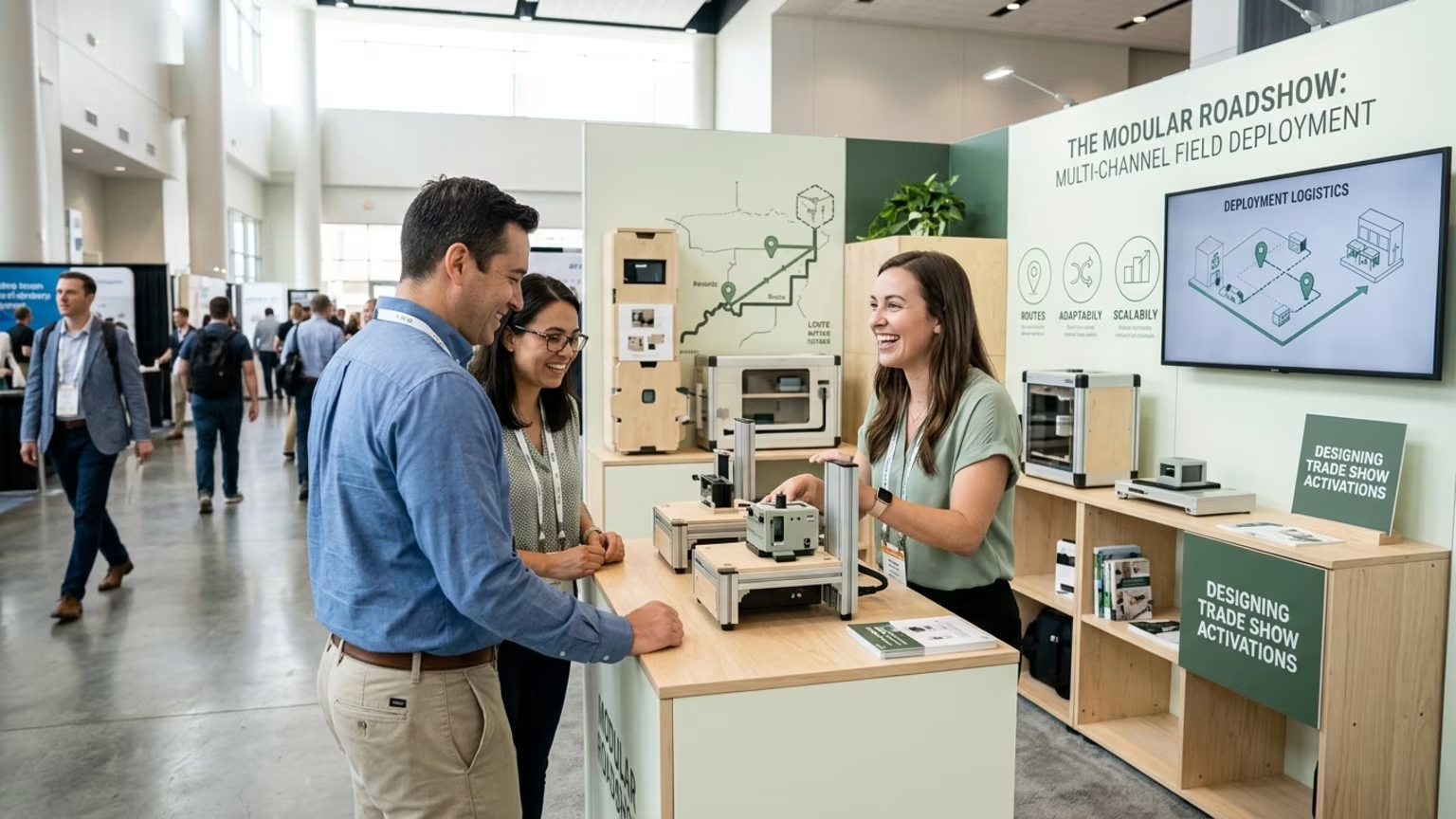
A modular roadshow is a flexible experiential marketing asset built to scale across trade shows, street-level festivals, and retail parking lots to generate measurable pipeline. It rejects the idea of a fixed trade show presence in favor of continuous asset deployment. Brands can design components that are highly shippable and easily rebuildable. This allows teams to transition directly from an expo floor to a consumer pop-up without a total physical redesign.
This framework turns a single isolated activation into a synchronized engine. This engine connects high-volume roadshows with targeted retail demos to build a predictable conversion cycle. The fundamental goal is converting basic foot traffic into qualified leads and verifiable sales lift. The focus shifts entirely from passive booth attendance to active consumer conversion. Operators build these modern systems to maximize their Return on Investment across every physical marketing channel.
Mobile assets eliminate the expensive downtime associated with traditional expo marketing. By moving assets into the streets, marketers squeeze every dollar of value out of their initial production build. Operators validate this constant movement by tracking data-driven metrics to prove roadshow success.
True modular design solves physical logistics by maximizing asset utility across multiple retail environments. Brands in the Consumer Packaged Goods, beverage, and tech sectors heavily rely on these assets. A mobile roadshow model allows brands to transport and reassemble modular production assets across multiple markets, reducing the need to rebuild from scratch at every stop. According to iDEKO, this flexibility allows teams to execute campaigns across different cities while maintaining strict brand consistency.
Reef Agency reports that brands adopting modular experiential trends can see cost efficiencies of 15% to 25% compared to traditional methods. Our team understands this operational reality firsthand at makai. We specialize in creating retail demos, product sampling programs, and roadshows that bring brands face to face with their audiences. Each program is designed to drive trial, build consumer relationships, and accelerate retail velocity across multiple locations.
Operators must carefully match their interaction speed to the physical field environment. In high-traffic transit hubs, sampling interactions should be limited to 10 to 15 seconds. This brief window prevents field teams from disrupting natural commuter flow while still securing a brand impression. Festival environments provide significantly more time for deep, multi-sensory sampling. Modern roadshows for beverage and snack brands often utilize the first 5 minutes for a wow factor. They then use the final 15 minutes for clear conversion tactics like coupons or direct retail trial.
Modular activations must offer immediate utility to succeed in a crowded market. Visitors need to understand the exact consumer benefit within three seconds of seeing the physical footprint. Charging stations, water distribution, or targeted mini-demonstrations provide that required instant value. Integrating Augmented Reality into these physical roadshows has been shown to increase dwell times by up to 40%.
The physical design must serve the consumer while capturing digital data securely. With tightening privacy regulations in 2026, brands face new challenges regarding audience tracking. Marketers are using immersive experiences to capture first-party data through white-labeled registration flows. This approach builds a secure consumer database without relying on restricted third-party platforms.
Staffing decisions often rely heavily on general location popularity or overall event size. A significantly better approach is the precise Conversion Gap Method. The Rework Distribution Library suggests that brands should staff activations at outlets where the gap between high foot traffic and low category sales is largest. This ensures your multi-use field team is deployed exactly where they can generate the highest sales impact.
Targeting these specific retail gaps turns a standard promotional event into a precise growth tool. It shifts the focus from simply handing out samples to actively fixing retail blind spots. This disciplined strategy prevents brands from wasting expensive field hours in locations that already perform exceptionally well.
A roadshow is truly only as strong as its logistical foundation. Mobile roadshows require significant upfront planning for freight routing, secure storage, and local permits. Failing to price the full program realistically often leads to massive budget overruns. Planners must calculate staffing and logistics costs rather than just the initial physical build.
Field execution requires strict operational discipline from every single team member on the ground. Management teams must use geo-tagged photo verification and GPS-verified check-ins to confirm proper deployment. Lead management is equally critical to the overall roadshow process. You must implement a day 0 to 14 follow-up calendar where hot leads from the activation are contacted within four hours.
Foot traffic is a common vanity metric that frequently produces fog rather than hard evidence. Smart operators prioritize retail lift and sample-to-sale tracking to justify their field budgets. Marketing teams can prove the ROI of in-store activations by linking the specific hours of a retail demonstration to actual register receipts. You can also measure the activated retail location against a matched control store that did not receive the activation. This specific analytical method removes guesswork from seasonality and isolates the true sales lift.
The verified industry data clearly supports this rigorous measurement approach. According to data from AnyRoad, experiential marketing can drive up to 306% higher customer lifetime value than traditional ads by building stronger emotional bonds. It also generates 71% more recommendations compared to traditional advertising formats. Immersive events actively foster consumer trust in crowded retail categories. Roughly 91% of consumers are more likely to purchase a product after participating in a brand experience.
Financial metrics tell a similarly compelling story for physical activation programs. High-performing activations in the FMCG sector report a Return on Ad Spend of 4:1 to 7:1. Experiential engagement typically achieves a 74% brand recall rate, compared to just 12% for traditional ads. This level of rigorous measurement proves the value of designing trade show experiences that drive trial onsite. It fundamentally shows how a temporary physical interaction becomes permanent, measurable revenue.
Start auditing your trade show inventory today to identify which bulky exhibit pieces can be replaced with flexible, shippable units that convert static booth visitors into measurable retail buyers year-round.

30 Years Experiential & Retail Activation Partner for CPG & Beverage Brands | Multi-Market Demos, Roadshows & Costco/Club Programs That Actually Sell


