Robbie Thain
Founder, CEO

Learn how to scale roadshows by standardizing physical logistics and localizing the human experience. Turn one-off events into repeatable market-entry systems.
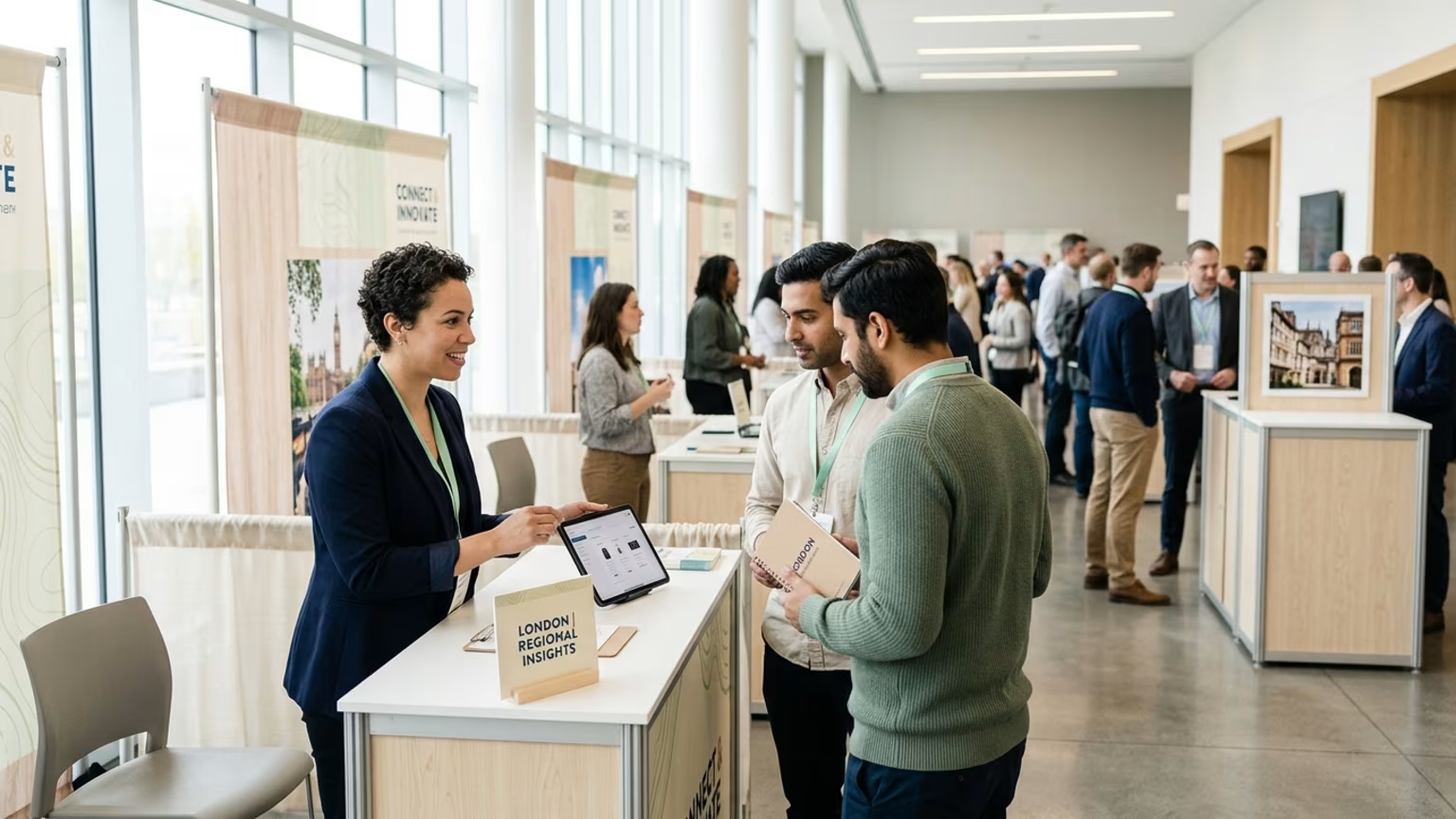
Samsung’s recent exhibit program supported 16 separate events while maintaining consistent execution and brand presentation across markets. That volume highlights a critical truth about modern marketing operations. Executing one successful activation is merely a test, but converting that single win into a repeatable engine is the real challenge.
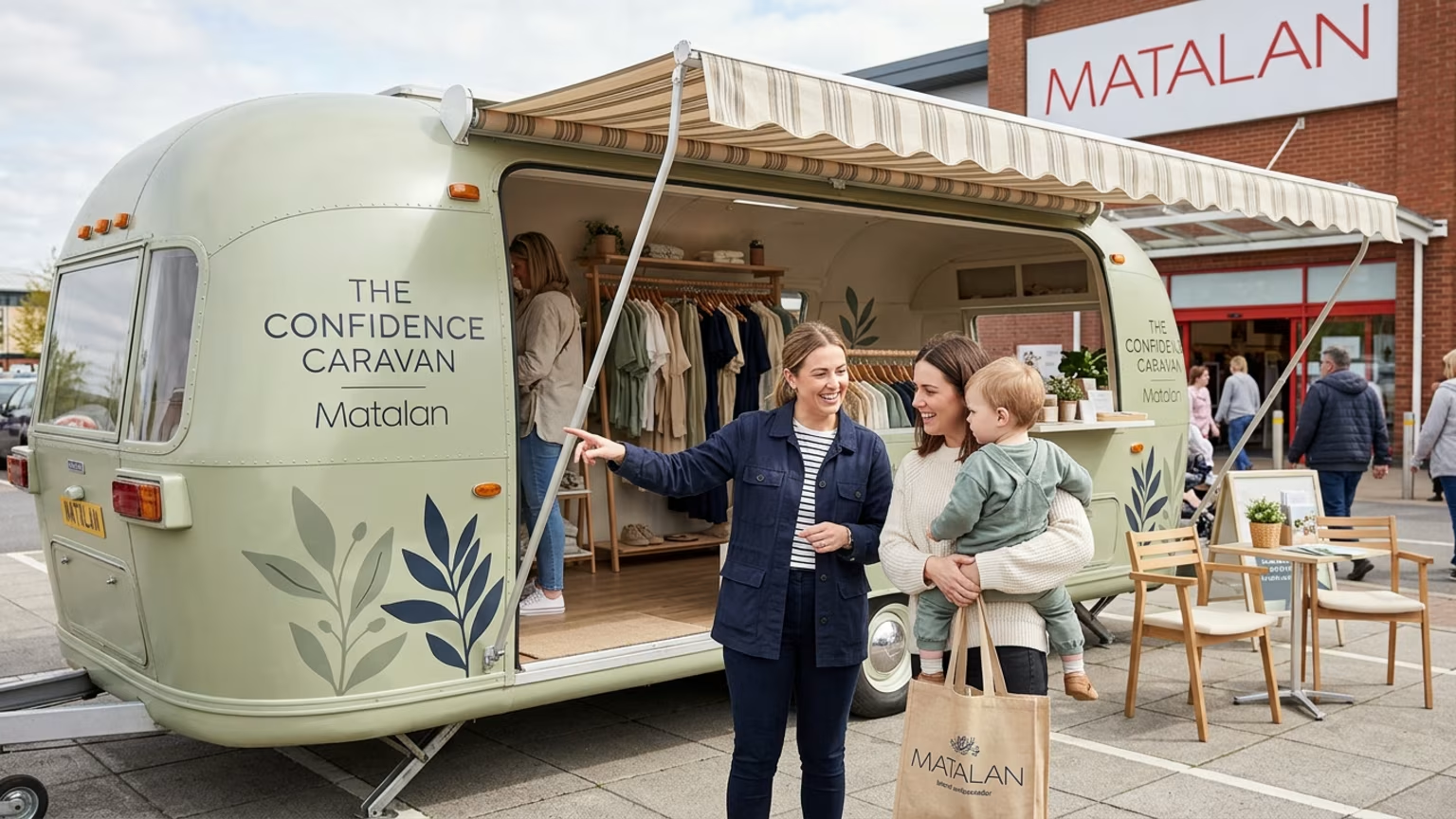
The primary question marketing operators ask is how to multiply their event footprint without fracturing their core message. The answer lies in standardizing the functional operating system while localizing the consumer experience layer. A mobile marketing tour is typically a multi-location campaign utilizing branded vehicles, trailers, or temporary structures. These setups bring a physical experience directly to consumers.
Industry guidance shows these tours are commonly used for national campaigns, new-market entry, and product expansion. These mobile formats allow brands to reach audiences across multiple cities rather than relying on a single flagship event. We have been connecting brands with people through live experiences, retail programs, and national activations since 1995. Over three decades, we have built a track record of creating meaningful brand moments across the country.
In our experience, standardizing the physical platform, consumer journey, and measurement templates protects the brand identity. The scalable operating system for roadshows dictates that you control the core infrastructure fiercely. You must build a repeatable layer that includes procurement standards, production specifications, and quality-control checklists. This discipline guarantees that a consumer in Texas gets the exact same premium impression as a consumer in California.
Efficient logistics separate profitable market entries from expensive misadventures. Roadshow planning guidance recommends beginning with comprehensive market research to identify where target customers are concentrated and how best to reach them. Industry guidance recommends clustering cities geographically to reduce long-distance travel, backtracking, and inefficient routing. Planning a concentrated regional push like a Midwest week or a Northeast week keeps transportation costs manageable. Proper route sequencing turns a scattered campaign into a logical progression of market takeovers.
Selecting the right locations requires moving beyond simple population metrics. The same guidance recommends selecting markets based on audience density, retail traffic, and income. Planners should also evaluate public transport, customer data, and other geographic indicators. You must build localized retail demo programs around actual distribution readiness rather than just choosing the largest cities.
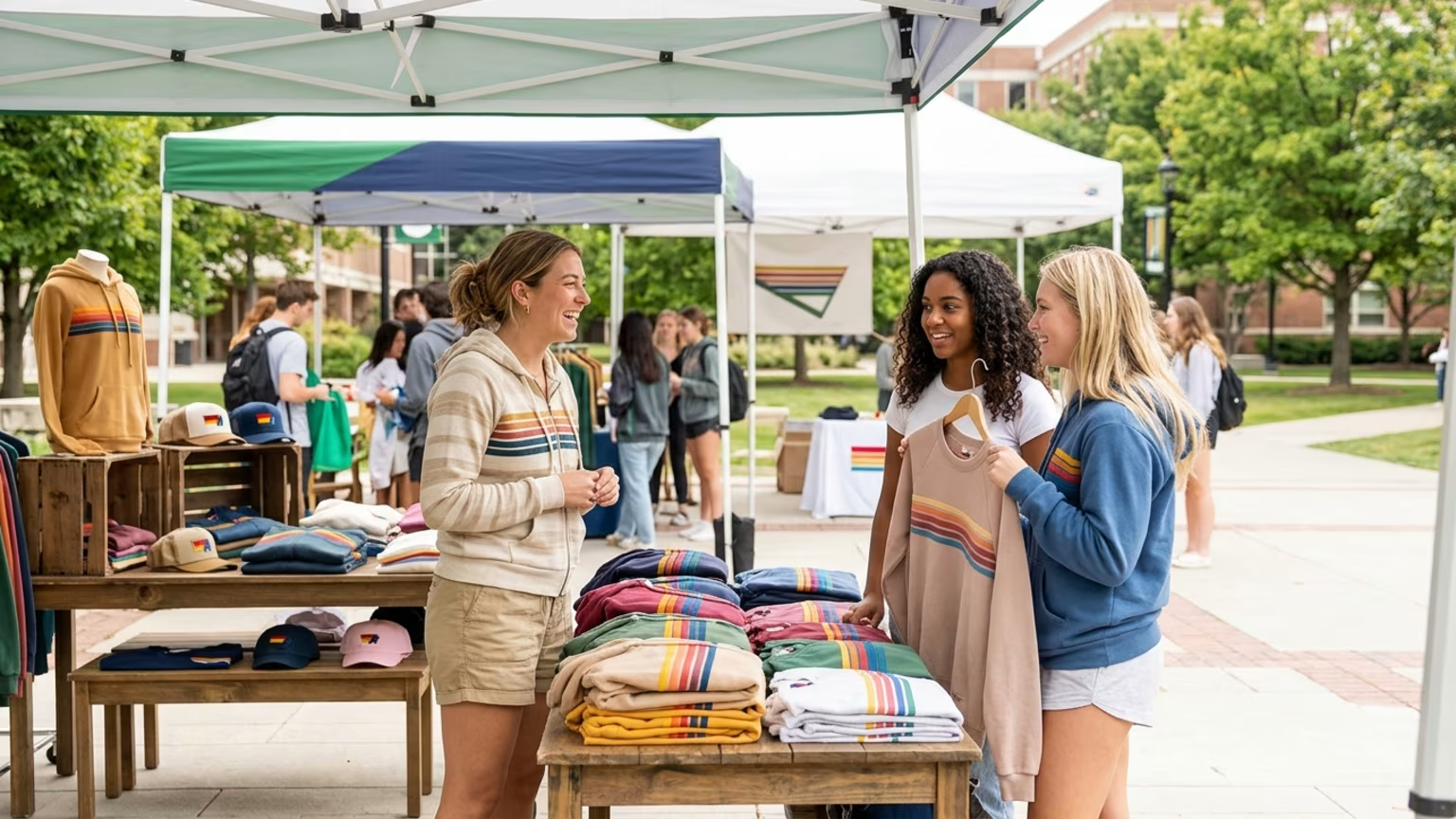
Launch pre-tour promotion approximately one month to six weeks before the first stop. Following that timeline gives local media and retail partners enough runway to build anticipation. Local relevance can be built through regional creators, local brands, and local media. You should also secure market-specific partnerships before each stop. This division of labor keeps the corporate brand intact while giving local managers ownership of the cultural context.
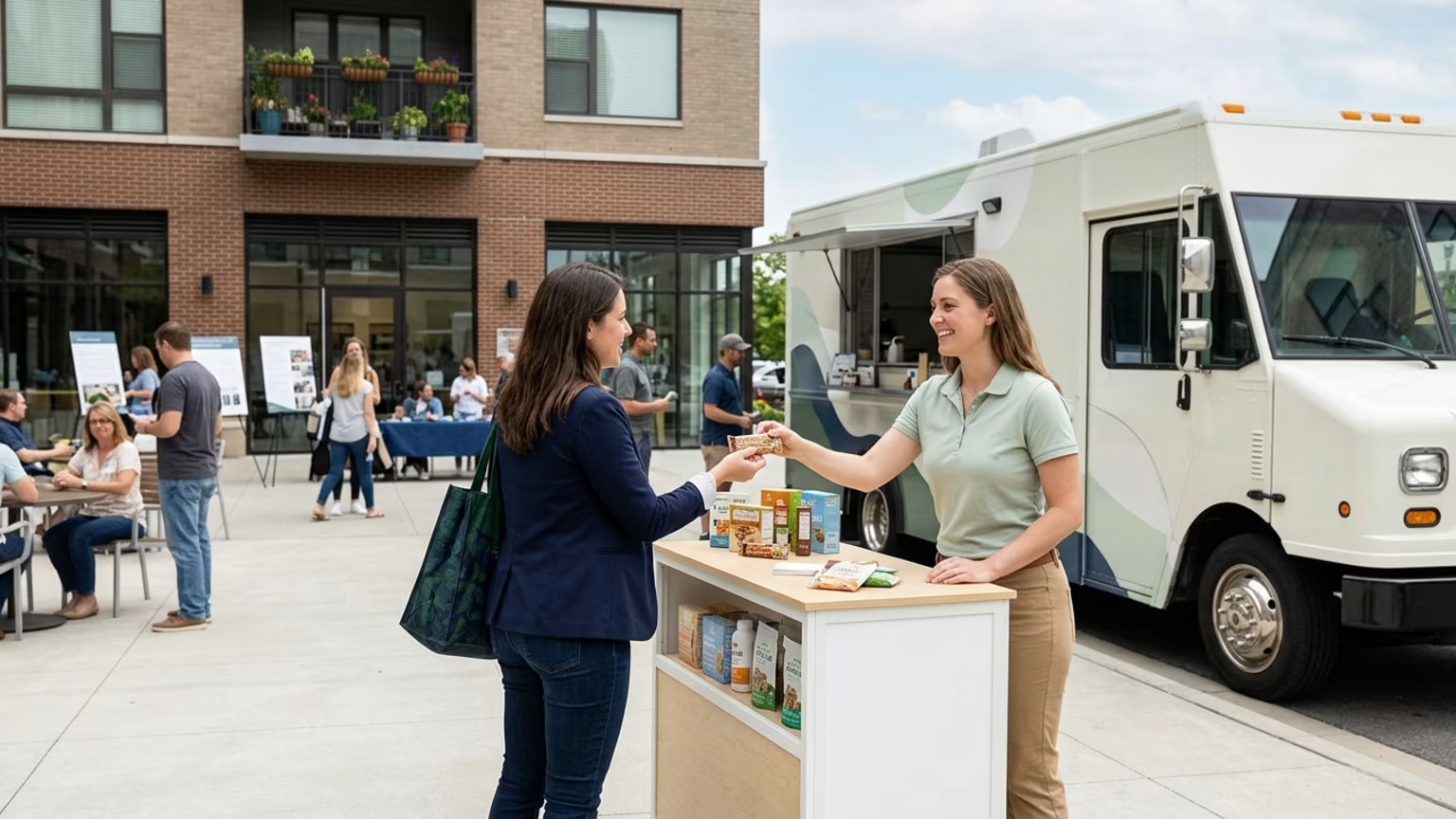
Standardized infrastructure means nothing without genuine human connection on the ground. Makai applies a human-centric aloha methodology to turn audiences into participants with live experiences that invite people to try, share, and act. Trained brand ambassadors drive in-store sales through real conversations and product trials. Scaling an activation requires deploying teams that can adapt standard talking points to local nuances.
A strong human element overcomes natural consumer hesitation during product trials. Fleury Michon used a three-month nationwide roadshow in France to promote its plant-based Tranches Végé range. The brand used sampling in train stations, city centers, and shopping districts. They also activated at festivals, concerts, leisure venues, and Paris Plages. Its activation relied on brand ambassadors, product sampling, and everyday consumption contexts.
This thoughtful human strategy addressed barriers to trial among flexitarians, young professionals, and families. The scope of human engagement dictates the physical footprint required. Fleury Michon’s stated ambition was to reach nearly 2 million people across France. Achieving that kind of volume requires high-energy activations that turn awareness into participation.
The ambassadors become the critical bridge between a national brand strategy and the local community context. Proper staffing protocols include rigorous training, safety standards, and escalation procedures. Clear role definitions prevent miscommunication when temporary staff scale up for large weekend events.
Live events must generate clear commercial signals rather than just vanity metrics. You need a data architecture that moves consumers seamlessly from a physical interaction into a central CRM record. Measurement begins with centralizing the definitions for leads, trials, conversions, and retail actions across the entire tour. Teams must know exactly how to track every engagement phase to accurately calculate Return on Investment.
Proper data routing requires a structural framework that aligns field technology with sales operations. Establishing data-driven metrics to prove roadshow success provides a uniform reporting standard across all regions. Each stop must produce a standardized report covering planned versus actual attendance, qualified interactions, and product trials. Evaluating these numbers post-event allows operators to distinguish between busy markets and profitable ones.
Digital touchpoints must integrate naturally into the physical environment. Scanning QR codes, capturing email addresses, and processing digital waivers should take seconds to prevent queue friction. Every captured data point must flow instantly into a secure marketing database for immediate post-event follow-up. Timely follow-up turns fleeting consumer interactions into qualified leads for premium brands. A seamless technical handover prevents high-intent prospects from disappearing into the void.
Even the most disciplined logistics encounter friction on the actual event floor. Field generals need a contingency plan for missing staff, broken technology, or severe weather conditions. The solution is treating each city as a learning unit with predefined guardrails for on-the-fly adjustments. Local adaptation is justified when consumer preferences, cultural expectations, or market conditions dictate a rapid pivot.
Unpredictable environments require a highly flexible physical presence. Tilara’s Mumbai roadshow converted a specially designed truck into a functioning outdoor-living environment. This setup let homeowners, architects, and contractors see its roofing products in a real-world setting. Business owners also interacted with the functional display. A self-contained platform isolates the brand from external venue failures. If a location lacks power or infrastructure, the mobile unit functions independently.
A robust feedback loop prevents repeated operational failures across future tour dates. Teams should compare markets using the same definitions and reporting window to isolate execution errors. Every post-stop debrief must document consumer objections, local partner performance, and recommended changes for the next stop.
Continuous optimization turns early tour friction into operational precision. We store your sampling product and event gear, then ship, track, and coordinate delivery nationwide so every activation stays on schedule. Effective troubleshooting relies on having reliable logistics partners monitoring the back end.
A repeatable operational model gives brands the confidence to target multiple regions aggressively. You should pause an expansion if awareness is strong but local retail distribution remains weak. A physical activation should create demand only when the supply chain is prepared to absorb it. Wait for the market infrastructure to catch up before spending further on local media.
Return to the idea of executing a seamless multi-market presence. Samsung’s exhibit program supported 16 events while keeping its brand presentation uniform across diverse settings. This proves that high-volume roadshows can maximize pipeline without losing their emotional resonance. Scale is about deploying a controlled system that learns from each stop and converts interactions into measurable growth.

30 Years Experiential & Retail Activation Partner for CPG & Beverage Brands | Multi-Market Demos, Roadshows & Costco/Club Programs That Actually Sell