Robbie Thain
Founder, CEO

Retail media networks must prove in-store campaigns drive incremental sales. Learn why field marketing teams need to link physical product trials to revenue.
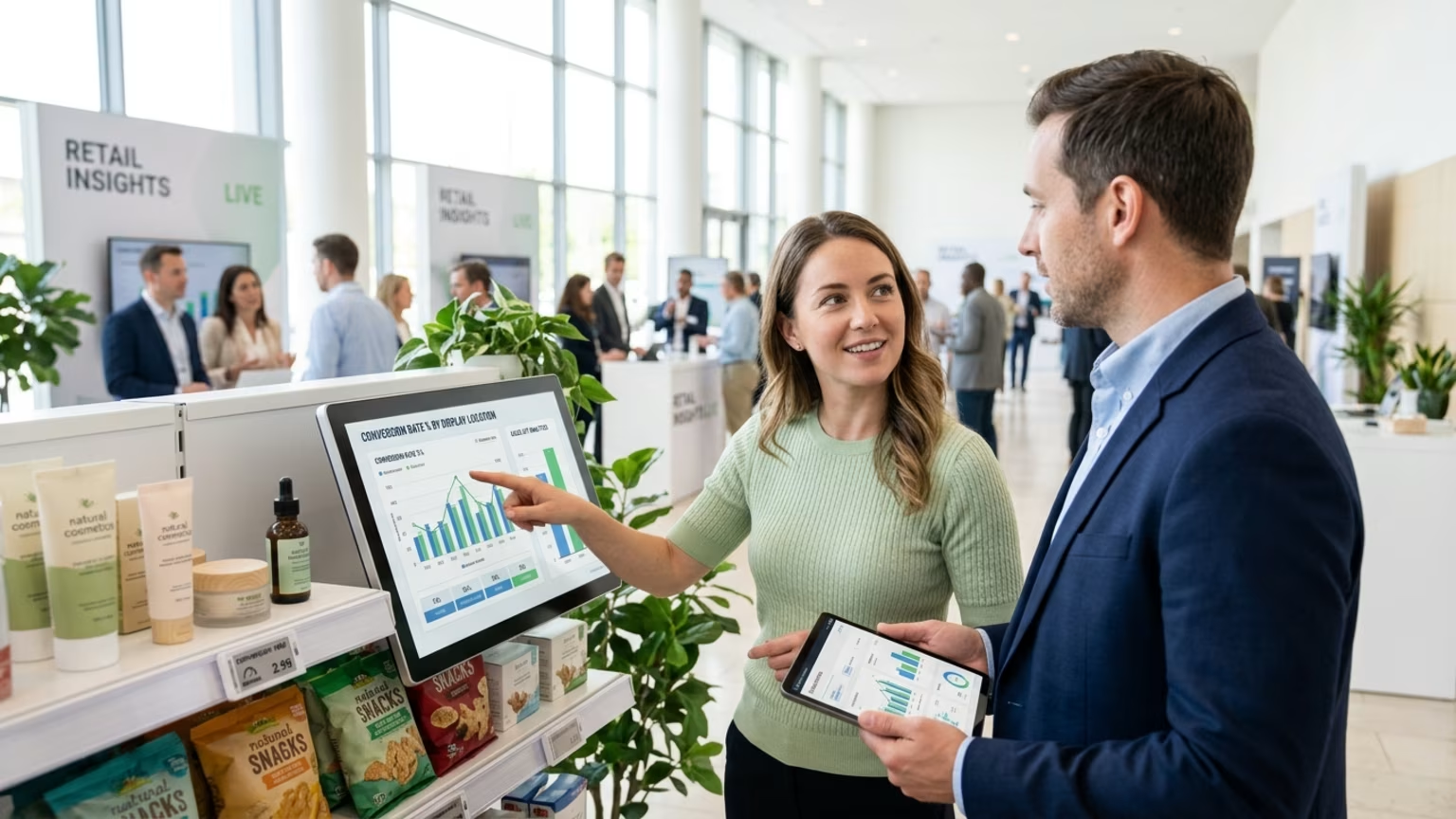
On September 25, 2026, an Inside Retail analysis argued that in-store retail media must demonstrate commercial outcomes rather than relying on impression counts alone. Written by Simon Porter, head of retail at Hatched and founder of RX Worldwide, the piece challenges the idea that exposure equals impact. Porter highlights an IAB Europe proposal opened for industry comment shortly before publication. The proposal divides a store into five distinct zones to help standardize measurement across different retail environments.
Porter's account of the IAB Europe proposal describes five store zones and six inputs for estimating opportunity to see. These six specific inputs include footfall, store count, campaign duration, number of placements, aisle penetration and share of voice. This framework attempts to create a shared vocabulary for buyers and retailers trying to quantify in-store attention. However, it still largely focuses on estimating who walked past an advertisement on a given day. Establishing a standard for visibility is a necessary step for the industry, but it leaves the most critical question entirely unanswered. Brands ultimately need to know if that visibility actually moved inventory off the shelf.
The push for better measurement targets a massive spending gap between physical retail and digital marketing channels. Inside Retail cited figures that put 95% of European food and beverage spending in-store, while more than 99% of retail media advertising spending remained online. Brands clearly hesitate to allocate media budgets to physical environments where they cannot easily verify outcomes. The IAB Australia report cited by Inside Retail found that 73% of respondents identified measurement as the channel's top challenge. Without clear data linking in-store displays to retail transactions, marketing budgets naturally migrate toward digital formats.
Despite measurement hurdles, retail media networks continue to project aggressive expansion plans for the coming year. Supermarket News, reporting research presented by eMarketer's Sarah Marzano, said retail media networks expected average revenue growth of about 23% in 2026. However, the data reveals a sharp contrast between general growth expectations and specific performance confidence. Fewer than one in five expected to exceed their plans, and nearly one-third anticipated falling short. This gap suggests that while the category is growing, individual network performance remains highly variable.
The internal confidence among network executives reflects this broader industry uncertainty. In the research reported by Supermarket News, only 31% of retail media leaders said they were confident their networks' revenue was incremental to existing supplier funding. Furthermore, 31% were confident their network was competitive with peers, which was down 14 percentage points from a year earlier. Only 28% were confident in their organization's ability to determine its total addressable market. These statistics illustrate a sector grappling with how to prove its true commercial value to brand partners.
To combat these growth and confidence issues, networks are actively testing new capabilities to attract brand investment. The Supermarket News article reports that 77% of retail media networks were pursuing new agentic advertising formats through testing, pilots or investment. Meanwhile, 34% of networks without a native AI agent said they were building one with monetization in mind. Despite this push toward new technology, Marzano's commentary, as reported by Supermarket News, noted that onsite ads remain the backbone of retail media ad spending.
The demand for strict commercial accountability in retail media perfectly mirrors what we see every day in experiential marketing. An opportunity to see is just an estimate of who walked past a placement, not evidence that a shopper actually bought the product. At Makai, we believe that live in-store engagement must tie directly to shelf compliance and measurable sales. We deliver carefully executed, face-to-face marketing experiences designed to capture attention and generate measurable sales pipeline. Measuring impressions without tracking inventory is a flawed operational approach for any physical campaign.
This operational discipline is exactly why brands cannot judge retail demos solely by how many cups they pour. If a brand cannot prove that physical trials improve retail sell-through, the program becomes an expensive distraction. Return on Investment requires a direct, verifiable line between the brand activation and the cash register. We design memorable live experiences that bring brands and people together through interaction, emotion, and engagement. However, that emotional connection must ultimately translate into a verified retail transaction to be considered successful.
The measurement distinction made in Porter's article is highly relevant for field marketing teams managing complex physical footprints. An entrance screen and a shelf-edge placement have entirely different roles, so they should not necessarily be judged by the same KPI. Similarly, an outdoor mobile sampling tour serves a different function than a highly targeted retail demonstration inside a grocery store. We deliver your brand directly to audiences through on the go experiences that drive trial and awareness. Yet, when we move inside the store, the expectation shifts immediately toward driving verifiable purchase volume. Brands must prove retail demo ROI by tracking sell-through rather than just counting general foot traffic.
This shift requires brands to completely rethink how they evaluate in-store support and retail media placements. Porter argues that retailers should report incrementality and shelf availability alongside media exposure, and publish their measurement methodology. Evaluating these outcomes requires complex statistical modeling to isolate the true impact of a campaign from normal baseline sales. According to Porter's Inside Retail analysis, Albertsons' framework used close to 60 variables to match test and control stores. This level of rigor shows that retailers are feeling the pressure to prove their media networks actually drive incremental growth.
For brands running physical sampling campaigns, this means treating product availability and execution as mandatory context for performance reviews. P&G's Jacques Hagopian told Supermarket News that advertising cannot sell a product that is not there. He stressed that investments must generate growth to be a sustainable proposition for the industry. Field teams must now connect every live shopper interaction to whether the product was actually stocked, properly merchandised, and ultimately purchased. If the product is sitting on a pallet in the back room, the best activation team in the country will still register zero sales.
Brands are also investigating how to use in-store platforms for deeper narrative engagement rather than just immediate conversion. Hagopian described P&G's work with Albertsons on Rico's Tacos, a 20-part short-form series, as an example of using retail media for storytelling. Hagopian said two of the three P&G brands featured in the Albertsons series recorded significant sales lift, though the article did not quantify the lift. When brands layer narrative storytelling over physical engagement, linking in-store sampling to retail media data becomes a critical operational requirement.
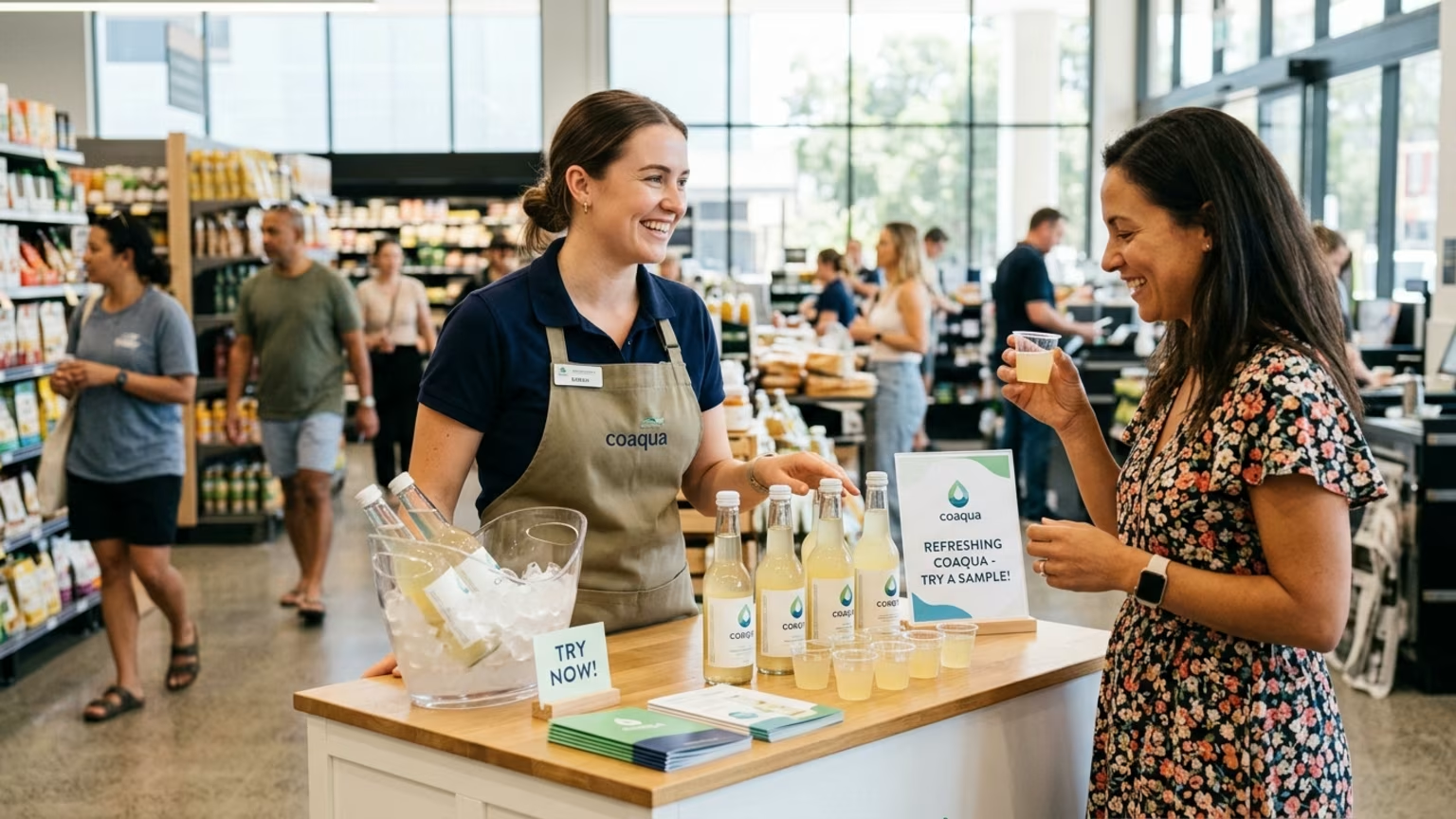
The necessity of linking engagement to inventory and final purchase is a daily operational reality for our team. We specialize in creating retail demos, product sampling programs, and roadshows that bring brands face to face with their audiences. Each program is designed to drive trial, build consumer relationships, and accelerate retail velocity across multiple locations. We managed a four-week, multi-market Costco sampling program for Pulmuone's PlantSpired line to test these exact operational connections.
Because we focus intensely on the logistics of execution, we worked to keep the product heavily stocked throughout the activation. The program delivered more than 65,000 samples and recorded an 18 percent sold-to-sale rate. This gives us a concrete example of how structured retail sampling can connect trial directly with purchase. Without strict oversight of the shelf conditions during those four weeks, the high sampling volume would not have generated those verified outcomes. A successful roadshow requires flawless coordination between the sampling station, the inventory managers, and the store registers.
When a brand relies on in-store demonstrations, managing the physical inventory becomes just as important as training the brand ambassadors. Our Storage & Logistics team stores sampling product and event gear, then ships, tracks, and coordinates delivery nationwide. This operational control ensures that every activation stays on schedule and aligns with the retailer's current stock levels. By synchronizing the physical supply chain with the live event, we eliminate the risk of driving trial for an out-of-stock item.
As retail networks and field activations face increasing pressure to prove incrementality, does your current reporting connect shopper engagement directly to product availability and verifiable retail transactions?
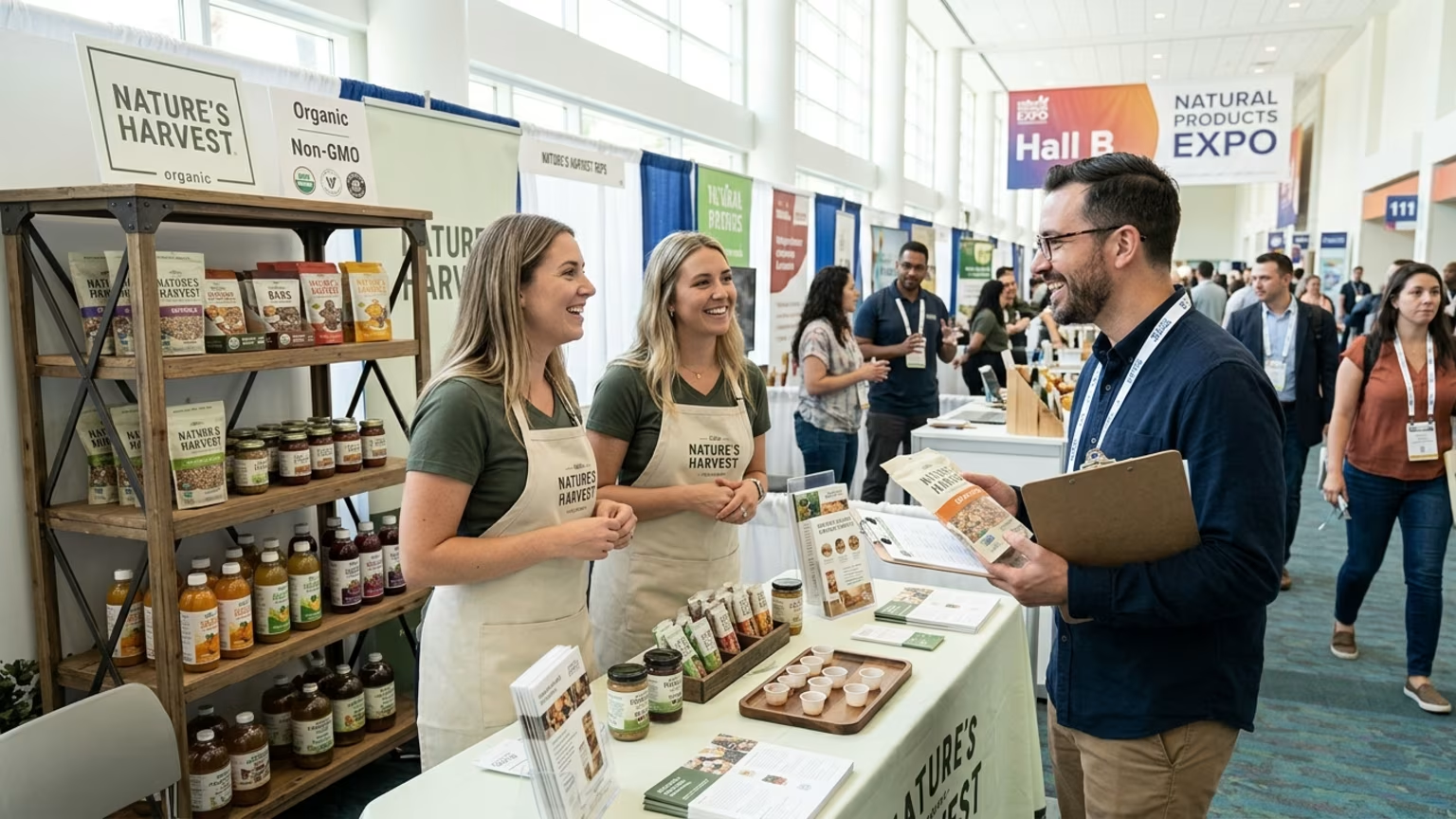
Linking physical shopper engagement to verified inventory sell-through is the exact operational standard Makai builds for premium brands. When navigating complex event logistics and staffing limits your commercial impact, our Expo / Trade Shows service manages physical spaces that attract attention and convert visitors into customers.

30 Years Experiential & Retail Activation Partner for CPG & Beverage Brands | Multi-Market Demos, Roadshows & Costco/Club Programs That Actually Sell