Robbie Thain
Founder, CEO

Coaqua brought its retail sampling in house to lower session costs and double its demo volume. Learn why CPG brands must also measure the internal logistics.
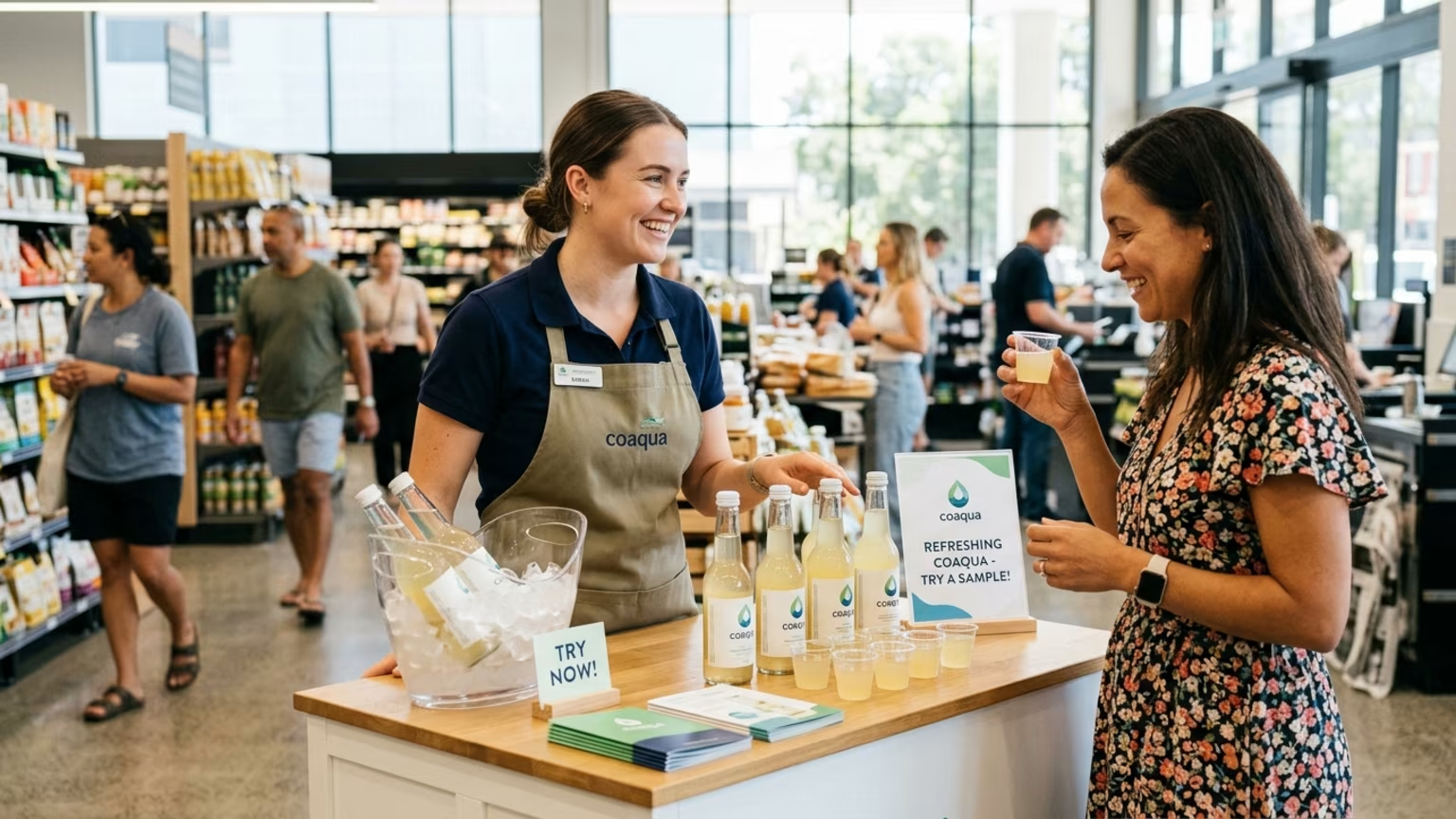
On September 27, 2026, Inc. reported that premium coconut water brand Coaqua overhauled its grocery store sampling model. The brand eliminated external sampling agencies to recruit, equip, and schedule its own brand ambassadors across the country. Co-founder and co-CEO Anthony Cadieux II initiated this change to modify the company's staffing economics. The shift highlights a fundamental operational test for consumer packaged goods companies. Brands must constantly evaluate how execution costs impact their capacity for in-store trials.
The structural shift targeted the hard costs of retail execution. Cadieux told Inc. that typical sampling agencies charge upwards of $300 for a session lasting three to four hours. Of that total bill, the working brand ambassador receives about $140 to $160. The remaining margin covers the operational reality of regional staffing.
The publication identifies the work behind the agency's share as specific logistical tasks. These include finding the ambassador and shipping the required product to the store location. Cadieux argued that these tasks do not strictly require an external agency to execute. By handling the recruitment and shipping processes directly, Coaqua brought its reported cost per session down to about $140.
This reduction in external billing immediately changed the brand's field marketing cadence. The lower base cost let Coaqua run roughly twice as many demos as it did through agencies. However, this relies on the founder's approximate operational savings. It does not represent a published, audited cost breakdown of the brand's fully loaded internal expenses.
While the per-session cost decreased, the true economic picture remains incomplete. The Inc. article clearly notes recruitment and shipping as the operational tasks moved internally. Yet, the report does not itemize Coaqua's internal management labor, ongoing training programs, or equipment storage costs.
Moving these responsibilities internally shifts expenses from an external invoice to internal payroll. Marketing directors must account for the hours spent interviewing regional talent and tracking missing demonstration kits. When a brand ignores these hidden administrative burdens, the perceived savings can quickly evaporate.
Evaluating this shift requires looking beyond the raw number of sessions a brand can afford. We specialize in creating retail demos, product sampling programs, and roadshows that bring brands face to face with their audiences. Each program is designed to drive trial, build consumer relationships, and accelerate retail velocity across multiple locations. We know that frequency only matters if the execution drives measurable business results.
According to the Inc. report, Coaqua successfully doubled its demonstration volume. Yet, the publication does not report the resulting shopper engagement, trial to purchase conversion, or overall return on investment. A lower base cost per session is a purely operational metric. It does not automatically guarantee a stronger retail pipeline or higher sales.
To properly gauge effectiveness, teams need structured reporting protocols from the field. We provide clear reporting on reach, trials, leads, and sales to guide next steps in campaign optimization. Our measurement approach tracks awareness, engagement, and conversion, turning brand moments into actionable data that demonstrates business impact. Without this level of verifiable tracking, a brand might double its demo schedule while failing to increase total store revenue.
Brands measuring how in-store sampling impacts trial conversion should distinguish between field activity and verifiable outcomes. Running more events gives a brand a larger physical footprint. If internal teams cannot train those ambassadors to close sales, the lower session cost simply funds passive visibility.
This story serves as a specific make versus buy example for retail marketers. Coaqua chose to absorb the labor of ambassador recruitment and equipment distribution. The Inc. article details this shift in external billing. However, it does not quantify the internal resources required to manage that workload.
A lower quoted cost per session does not establish a lower total program cost. The brand's internal labor, management hours, and equipment overhead remain completely undisclosed. Marketing leaders must measure these hidden expenses before altering their own established programs. Treating this single case as a universal instruction to eliminate sampling agencies ignores the complexity of national execution.
Different brands require vastly different operational structures to succeed. A staffing strategy that works for one premium beverage company might cause logistical failures for another. Teams must carefully evaluate their specific geographic coverage, strict retailer requirements, and internal operational capabilities. Attempting to match a competitor's session volume without matching their internal headcount often leads to rapid field burnout.
Bringing a sampling program internally immediately shifts the operational weight onto a brand's internal staff. While the agency invoice disappears, the fundamental logistical workload persists. Someone on the internal marketing team must handle the ongoing realities of regional staffing. They must source reliable ambassadors, manage payroll, and coordinate nationwide shipping schedules for every activation.
This transition introduces significant friction into weekly marketing operations. When brands direct their own in-store product sampling execution, they absorb the risk of missed shipments directly. If a local ambassador cancels their shift on a Saturday morning, the internal team must resolve the crisis. That constant troubleshooting drains strategic bandwidth from senior marketing leaders.
Scaling this direct approach across dozens of markets tests a brand's administrative endurance. For a limited regional push, internal coordination might run smoothly. For a national retail rollout, the sheer volume of scheduling conflicts can quickly overwhelm a lean consumer goods team.
The downstream effects of direct management extend to the physical store floor. Consistent demonstration execution builds necessary trust with individual retail managers. When internal teams struggle to maintain steady scheduling, that valuable retailer confidence drops rapidly. Poorly equipped ambassadors disrupt the store environment and fail to engage shoppers effectively.
External partners typically maintain established networks of reliable regional talent. Rebuilding those networks from scratch requires time, funding, and extensive trial and error. Brands must decide if building a dedicated staffing infrastructure aligns with their core competencies. Teams reading about strategies for high-intent grocery and club channel demos know that managing vast ambassador rosters often distracts from actual product development.
The central tension in Coaqua's strategy centers on the actual value of logistical management. Cadieux told Inc. that he questioned whether paying roughly $150 in agency profit for work he viewed as administrative was worthwhile. He determined that his internal team could execute those shipping and recruitment tasks without paying an external markup.
That specific judgment highlights a calculation every marketing leader must eventually face. If an external partner simply moves paperwork without improving the ambassador's retail performance, the management fee feels like dead weight. A true operational partner must deliver flawless execution and verifiable sales data. When field execution is managed correctly, the relationship shifts from administrative oversight to strategic growth.
A VP of Marketing in the CPG beverage category told us: "Robbie, your leadership and vision turned our campaign into something truly special. The Makai team brought our new drink to life with energy, creativity, and flawless execution. Thanks to you, our brand isn't just tasted, it's remembered." Our team's approach transformed their product launch into a memorable brand experience.
This level of impact requires more than just shipping a box of samples to a store. It demands continuous training, strict reporting standards, and precise inventory control. When an agency provides comprehensive logistical stability and measurable sales lift, their margin becomes a direct investment in revenue growth.
Any consumer brand assessing its retail staffing model should run a controlled operational pilot. Compare the fully loaded internal costs of managing a demo against your current external agency invoices. Track the actual management hours, shipping costs, and equipment losses your internal team absorbs during the test period.
The final assessment should prioritize measurable retail velocity over the raw volume of demonstrations. A cheaper session means nothing if the ambassador fails to secure sales at the register.
To start analyzing your own staffing model today, calculate the exact number of internal hours your marketing team spends coordinating weekend demonstrations. Then ask yourself: if you brought your sampling logistics completely internally tomorrow, do you have the dedicated operational bandwidth to measure and optimize the resulting sales pipeline?
When consumer packaged goods teams underestimate the administrative burden of running their own retail demonstrations, internal resources quickly collapse under the weight of regional scheduling. To prevent teams from navigating complex event logistics, permits, and staffing alone, Makai builds sustainable field programs. Through our Experiential Marketing capability, we create hands on brand moments that connect emotionally and turn customers into ambassadors.

30 Years Experiential & Retail Activation Partner for CPG & Beverage Brands | Multi-Market Demos, Roadshows & Costco/Club Programs That Actually Sell