Robbie Thain
Founder, CEO

Discover how to bridge the gap between event aesthetics and measurable return on investment by treating every live trade show activation as a revenue engine.
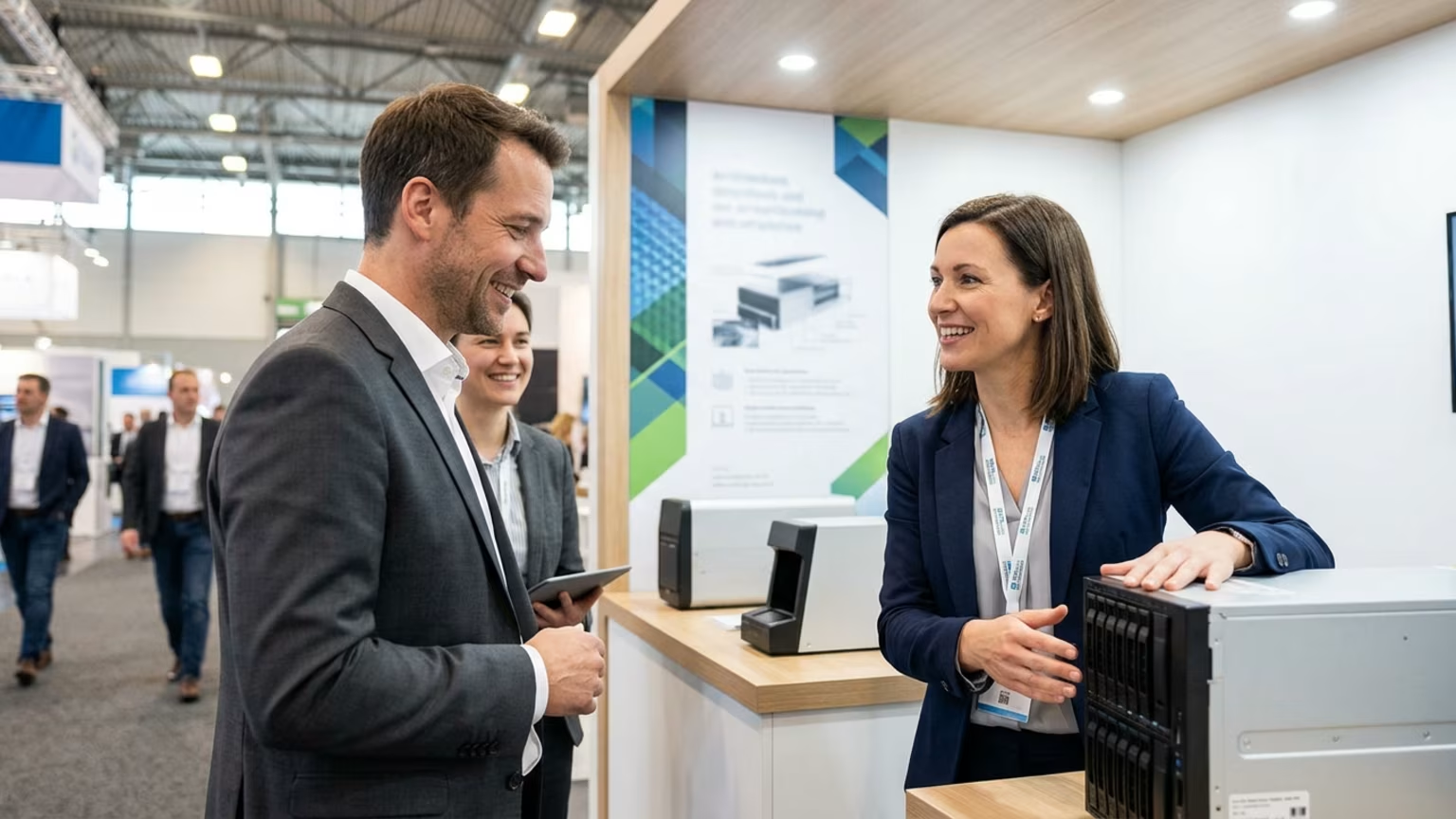
Most consumer brands fund beautiful event architecture completely blind to the strict mathematics required to justify it. Public coverage of major industry expos focuses entirely on flashy booth designs and crowded sampling zones. Behind the scenes, the seasoned operators actually driving serious pipeline know that the real work has nothing to do with aesthetics.
Major industry events heavily promote experiential trial spaces, yet they obscure the rigorous lead capture strategies required to justify the massive spend. This guide outlines how to bridge the gap between event aesthetics and measurable Return on Investment by treating every live activation as a precise revenue engine.
Walk into any major food or technology expo today. You will see sprawling interactive bodegas, packed demo zones, and startup pavilions buzzing with eager attendees. The public narrative surrounding these massive events is entirely focused on physical presence and positive brand perception. Social media feeds fill with highly polished videos of crowded booths and smiling brand ambassadors.
The actual trade show floor tells a completely different operational story. The physical aesthetic is often flawless. Yet, the back end operations are frequently a total disaster. Field teams scramble frantically to manually enter collected business cards into confusing spreadsheets. Basic lead capture mechanisms break down completely under high traffic pressure.
This operational disconnect creates a massive financial problem for brand leaders across the entire country. Your executive team sees the shiny photos from the event floor and assumes the activation was a massive financial success. Then, weeks later, the seasoned sales team asks where the qualified pipeline went. The beautiful booth generated plenty of casual foot traffic, but it failed completely to capture the hard data needed to secure serious retail buyer meetings.
Consumer brands that rely solely on aesthetics are leaving immense revenue on the table. The smart brands that tie their exhibitor booth activations to pipeline see much higher financial returns. The industry is slowly waking up to this painful financial reality. Experiential marketing must be held accountable to the exact same rigorous standards as digital advertising campaigns.
This dynamic is especially prevalent in the fast moving consumer goods sector. Competitors try to outshine each other with massive architectural displays and celebrity appearances. Yet, these expensive tactics rarely move the needle on actual retail distribution. The true battle is won through precise data capture.
To fix this execution gap, we must decouple the event experience from the strict data capture strategy. The physical experience is expertly designed to stop foot traffic, command immediate attention, and build an emotional connection. The data strategy is designed to qualify buyer intent and route critical information seamlessly into your CRM system. You cannot prioritize one over the other without compromising the entire marketing campaign.
This level of integration requires months of advanced planning. You must involve your sales operations team during the initial booth design phase. They can provide exact parameters for what data fields are mandatory for a lead to be actionable. This early collaboration prevents the common disaster of collecting thousands of useless, incomplete contact records.
First, align the field team on the true financial objective of the live activation. Sampling a new beverage is only useful if it directly helps identify a potential retail buyer. We train our brand ambassadors to use the product trial as a natural gateway into a deep qualification conversation. This tactical shift moves the focus from sheer volume to highly meaningful human interactions.
Second, integrate both passive and active data collection points throughout the entire physical footprint. Simple QR codes printed on sampling cups can route casual consumers to highly engaging digital experiences. Staff mobile devices should be configured perfectly to capture high value retail buyers instantly. Every single square foot of the activation space must serve a clear, functional, and measurable purpose.
We run experiential and engagement programs coast to coast with local crews, smart logistics, and permit expertise that let us launch fast and maintain quality consistency in every region, from major metros to smaller markets. Our nationwide infrastructure lets us activate brands wherever their audiences are located. This deep operational reach means our strict capture strategies work just as perfectly at a regional pop up as they do at the largest national expos.
Transforming an attractive event booth into a functioning pipeline engine requires strict operational discipline. You must build robust digital systems that operate flawlessly in high stress physical environments. There is absolutely no room for technical errors when a major retail buyer is standing at your service counter. Here is how to execute this critical shift on the live event floor.
A perfectly designed digital strategy will fail if the physical hardware malfunctions. Always bring backup tablets, portable battery chargers, and offline data collection forms. The expo floor is notorious for dead zones and overwhelmed wireless networks.
The total success of these tactical steps relies entirely on basic staff compliance. If the chosen digital technology is too complicated, your team will simply abandon it during peak rush hours. Keep the digital interface incredibly simple, and make certain the qualification questions are extremely brief. The goal is friction free data collection.
The era of judging event success by the sheer number of product samples distributed is officially over. Today, executives demand rigid, undeniable proof of performance from every single marketing channel. You must track precise numbers that directly correlate to long term business growth. Without this hard data, your marketing budget is completely unprotected.
Agencies are facing an increasing demand for precise tracking from executives who manage marketing budgets. Lead metrics provide real time operational insight into the physical health of your live activation. Track the cost per engagement to understand the financial efficiency of your physical footprint. Monitor the sample to scan ratio to see if your field staff is actually capturing the dense traffic they attract. Keep a close eye on the average consumer dwell time, which strongly indicates the true quality of the interaction.
Lag metrics tell the final financial story of Return on Investment. Measure the total number of marketing qualified leads generated directly by the event footprint. Track the pipeline velocity of these critical contacts as they move slowly through your internal sales cycle. Calculate the exact percentage of event leads that successfully convert into closed top line revenue.
You must demand complete transparency from your field marketing agency. They should provide a detailed post event report within forty eight hours of the show closing. This rapid turnaround is non negotiable for maintaining momentum with hot retail prospects. Delaying the follow up process by even a few days can kill a massive potential deal.
If your current agency cannot provide this granular level of detail, it is time to Book a strategy call. Brands that commit fully to this rigorous measurement structure consistently outperform their less disciplined industry competitors. They know exactly which events drive real revenue, and they know which ones are just incredibly expensive parties.
Consider a premium snack brand launching a highly anticipated product line at a major national food expo. In previous years, they built massive physical sampling stations that generated huge crowds but virtually zero measurable sales pipeline. The executive team was completely frustrated with the total lack of financial visibility. They were seriously ready to pull the plug on trade show investments entirely.
They shifted their entire strategic approach to focus strictly on integrated data collection. The massive sampling stations were carefully redesigned to include discrete scanning podiums. Brand ambassadors were completely retrained to qualify booth visitors based on their actual retail purchasing power. Casual fans received a simple digital coupon via QR code. Actual institutional buyers were routed seamlessly to a private tasting lounge.
The brand implemented a strict follow up timeline for their sales representatives. Every captured contact received a personalized email within two hours of leaving the booth. This immediate outreach separated them from competitors who waited weeks to send generic newsletters. The buyers felt valued, understood, and ready to negotiate.
This strict operational pivot completely changed the financial outcome of the entire live event. Total foot traffic remained exactly the same, but the brand captured four times as many highly qualified retail buyer contacts. The sales team finally had the high quality data they needed to initiate highly meaningful follow up conversations. The field marketing team could finally prove their absolute financial value to the executive board.
Within three short months, those captured retail contacts translated directly into two major regional distribution deals. The beautiful booth finally paid for itself, and the brand established a strictly measured new internal standard for event performance. This high level of execution is entirely possible when you stop treating trade shows like simple branding exercises. Every square inch of the footprint must pull its own financial weight.
The loudest and most crowded booth on the physical floor rarely belongs to the most financially successful company. True event mastery happens quietly in the background, far away from the flashing lights and social media cameras. It is found in the strict discipline of the follow up, the total accuracy of the collected data, and the quiet confidence of a strategy that actually works. When the massive crowds finally go home, only the hard numbers remain.

30 Years Experiential & Retail Activation Partner for CPG & Beverage Brands | Multi-Market Demos, Roadshows & Costco/Club Programs That Actually Sell