Robbie Thain
Founder, CEO

Learn how Bizzabo's new AI-powered Event Experience OS improves lead capture, scores attendee intent, and connects trade show chaos to measurable pipeline.
Your regional sales manager holds a stack of business cards collected over three grueling days. Half lack titles, some lack phone numbers, and nobody remembers what was discussed. Meanwhile, the executive team expects a pipeline report by Monday morning. The gap between booth traffic and measurable pipeline has never looked wider.
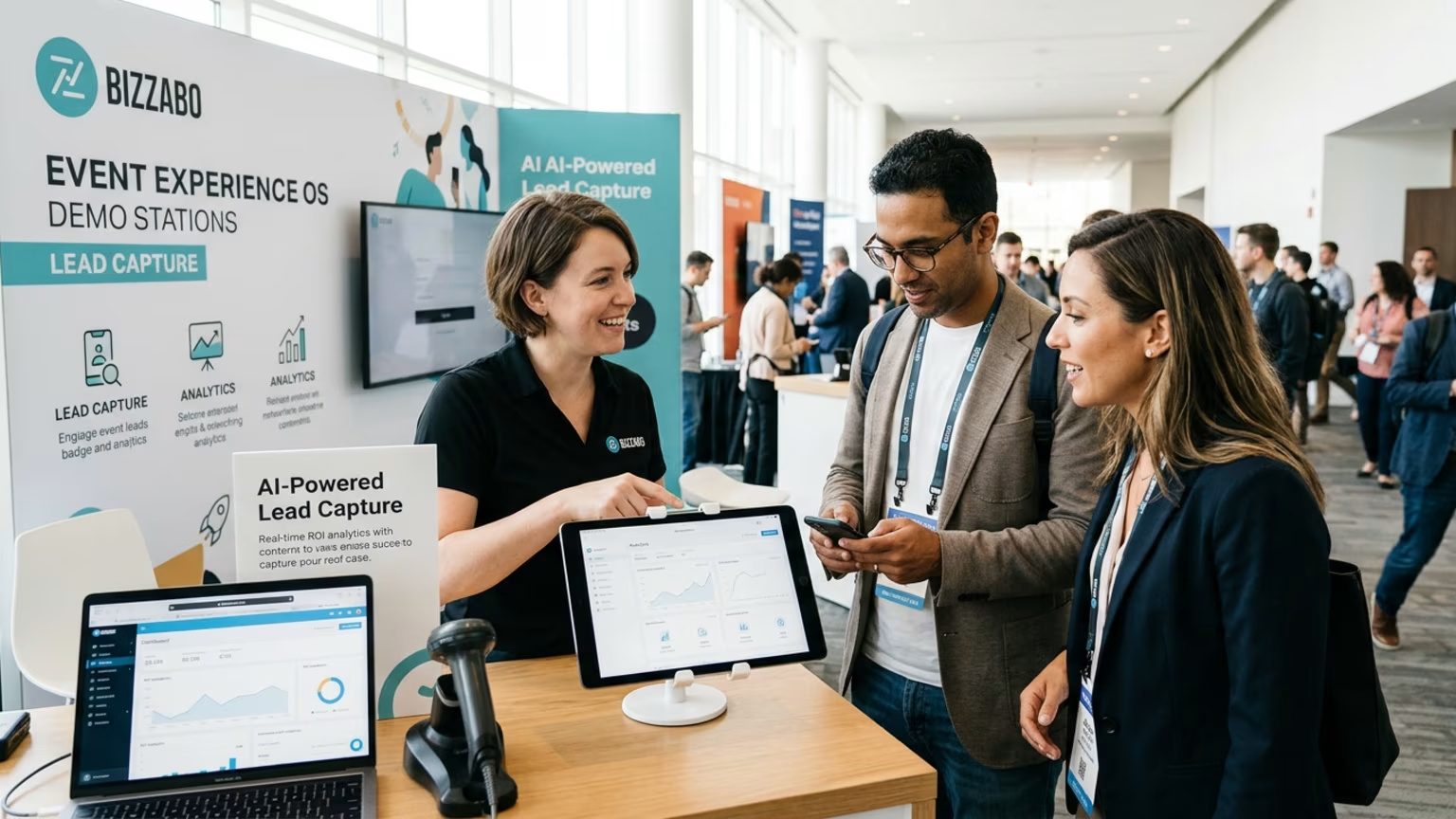
Event technology provider Bizzabo just released an artificial intelligence update to their Event Experience OS to fix broken lead tracking. This system connects live interactions directly to revenue pipelines through smart intent scoring and seamless CRM integrations.
Trade show floors often devolve into a beautiful mess of free pens and wasted potential. Marketing teams spend thousands building massive footprint activations. Product managers demo new items until their voices fail. Attendees scan badges without any real intention to buy.
This produces a mountain of raw data that completely lacks context. Field marketing directors know the sinking feeling of downloading a spreadsheet filled with generic attendee information. The sales team inherits these lists and makes blind follow-up calls. These cold calls frustrate buyers and burn through valuable sales hours.
In our experience, brands lose their strongest prospects in this exact gap. A qualified buyer who spent twenty minutes asking detailed questions gets treated the same as someone who grabbed a complimentary tote bag. Without a system to score and rank these interactions, operational efficiency plummets.
The inability to categorize booth visitors creates massive friction between departments. Event managers feel underappreciated when sales complains about bad leads. Sales leaders lose faith in experiential marketing as a viable growth channel. Recent industry reports confirm that upgrading digital lead capture directly improves overall event performance by ending this exact scenario.
Trade show fatigue only compounds this massive organizational problem. By the third day of a national expo, even your best sales representatives lose their sharp edge. They stop writing detailed notes on the back of business cards. They forget to tag specific product interests in the mobile app.
When human error scales across a massive consumer event, the financial waste becomes staggering. Thousands of dollars bleed out through missed follow-ups and forgotten commitments. You cannot run a modern marketing department on memory alone. A reliable digital safety net protects your initial investment.
The newest update to the Bizzabo Event Experience OS addresses this massive data gap head-on. The platform introduces intelligent tools designed to separate serious buyers from casual tourists. Marketers can now track specific session attendance and booth dwell times automatically. The system then applies artificial intelligence to assign intent scores to every individual interaction.
This approach strips the guesswork away from post-event reporting. Instead of handing sales a generic list of names, marketers can pass along prioritized lists. High-intent prospects receive immediate attention. Low-intent interactions drop into nurturing sequences for later engagement.
Brands that establish a clear digital approach to data collection see higher conversion rates. A reliable tracking framework transforms an expensive booth into a focused revenue machine. Marketing leadership gains visibility into which product demos trigger the most buying signals. This data empowers them to adjust their messaging strategies mid-event.
We see this integration capability as a critical step toward true Return on Investment reporting. Field teams can connect these on-site platforms directly to their primary CRM. Data flows automatically from the trade show scanner straight into the sales database. Marketing leadership can finally point to specific pipeline dollars generated by individual event strategies.
This exact technological shift forces field marketing managers to reevaluate their vendor partnerships. You need software that integrates natively with Salesforce or Hubspot without requiring custom coding. Disconnected systems create data silos that kill momentum after the show closes. The Bizzabo update addresses this by prioritizing seamless integration from day one.
The ability to segment audiences instantly gives marketing teams a massive competitive advantage. You can trigger personalized follow-up campaigns before the attendee even boards their flight home. Speed and relevance dictate who wins the business in a crowded market. A well-timed email referencing a specific booth conversation often secures the next meeting.
Field operations demand absolute clarity to function properly. You cannot expect tired event staff to learn new software during a live rush. A proactive deployment strategy guarantees high adoption rates across your entire team. The success of any digital tracking tool relies entirely on human execution.
Rolling out advanced lead tracking requires discipline from both marketing and operations. The technology only works when the on-site staff understands the strategy. You must build a systematic approach before the doors ever open. Use this precise sequence to launch a smarter lead tracking system at your next expo.
This structured deployment turns your booth from a generic meeting space into an active data collection hub. Your staff becomes an extension of the intelligence system. Brands that pair these tools with unified data attribution models consistently outperform their competitors. The goal is to make every conversation measurable.
Neglecting this preparation usually results in software that sits unused on a tablet. Technology cannot replace a poorly trained brand ambassador. You need active participation from the people standing on the carpet. When staff and software align, the resulting data clarity changes the entire business trajectory.
Accountability requires both lead and lag metrics to tell the full story. Lead metrics give your team real-time visibility into daily event performance. You should track total qualified conversations per hour and average intent scores per session. Monitoring booth dwell time helps you adjust your messaging on the fly.
Lag metrics reveal the true financial impact weeks after the event concludes. Measure the percentage of leads that convert to formal sales meetings. Track the total pipeline value generated directly from the activation. You must assess the final customer acquisition cost against the total event spend.
When you capture these numbers accurately, marketing stops looking like an expense. The executive board wants to see a mathematical connection between the booth cost and new revenue. Platforms that automate this reporting take the friction out of the process. Implementing universal data tracking tools guarantees that your team gets credit for the revenue they generate.
The most successful consumer brands look beyond simple product sampling numbers. They analyze the specific characteristics of the buyers who engaged the longest. This analysis informs future product development and shapes retail expansion strategies. Better data collection today funds bigger activation budgets tomorrow.
Executive leadership constantly scrutinizes field marketing budgets during quarterly reviews. You must present undeniable proof that your live activations generate actual sales velocity. This requires moving past simple vanity metrics like total badge scans or social media impressions. Rigorous data hygiene protects your department from sudden budget cuts.
Translating digital tracking concepts into physical brand moments is where the real work happens. Our team recently partnered with a major consumer goods company to revamp their physical activation strategy. We knew that capturing attention meant nothing without capturing usable data. We designed an immersive footprint that naturally filtered serious retail buyers from general attendees.
A Director of Brand Strategy in the CPG snack division shared: "The Makai team turned our product launch into a sensory event that shoppers still talk about. From creative storytelling to flawless in-store execution, they made snack time unforgettable. We couldn't have asked for a stronger partner." Our team created an in-store experience that left a lasting impression on consumers and became a memorable brand moment.
Every sample distributed and every conversation held fed back into a centralized reporting structure. The client could see exactly which product presentations generated the most follow-up requests. This level of clarity transformed their entire approach to experiential marketing. The focus shifted entirely from raw headcount to qualified interactions.
By treating the live event as a data acquisition channel, the brand justified a nationwide retail expansion. They moved away from vanity metrics and adopted a highly targeted field marketing approach. This shift proved that exceptional creative execution and rigorous analytics can coexist.
Consumer packaged goods companies face intense pressure to prove retail velocity. We built their roadshow strategy around physical engagement and strict digital tracking. Every brand ambassador understood their role in the broader data collection process. This operational alignment turned a simple product launch into a predictable revenue stream.
Event success no longer relies on subjective feelings or rough estimates of foot traffic. Marketers possess the technology to track, score, and convert live interactions with surgical precision. The introduction of smarter operating systems demands a better approach to field execution.
We know that upgrading your legacy systems feels intimidating when you already manage a million logistical details. A methodical transition guarantees that you stop wasting budget on untrackable interactions. You can stop guessing about the value of your experiential programs today. Review your upcoming event calendar, audit your current lead tracking tools, and book a strategy call to build an activation that actually drives revenue.

30 Years Experiential & Retail Activation Partner for CPG & Beverage Brands | Multi-Market Demos, Roadshows & Costco/Club Programs That Actually Sell