Robbie Thain
Founder, CEO

Bizzabo's new lead capture update syncs event data directly to your CRM. Learn how to track pipeline attribution and prove ROI for your next activation.

Sarah stood behind the sampling counter with a clipboard of eighty email addresses and a sinking feeling. Her team just burned through a massive quarterly budget in three days. She knew the conversations were great. She had absolutely no way to prove it to the sales team on Monday morning.
Bizzabo recently announced a major update to its on-site Lead Capture application that syncs first-party event data directly into CRM and marketing platforms. This release gives brands the exact pipeline attribution they need to connect trade show interactions with actual revenue.
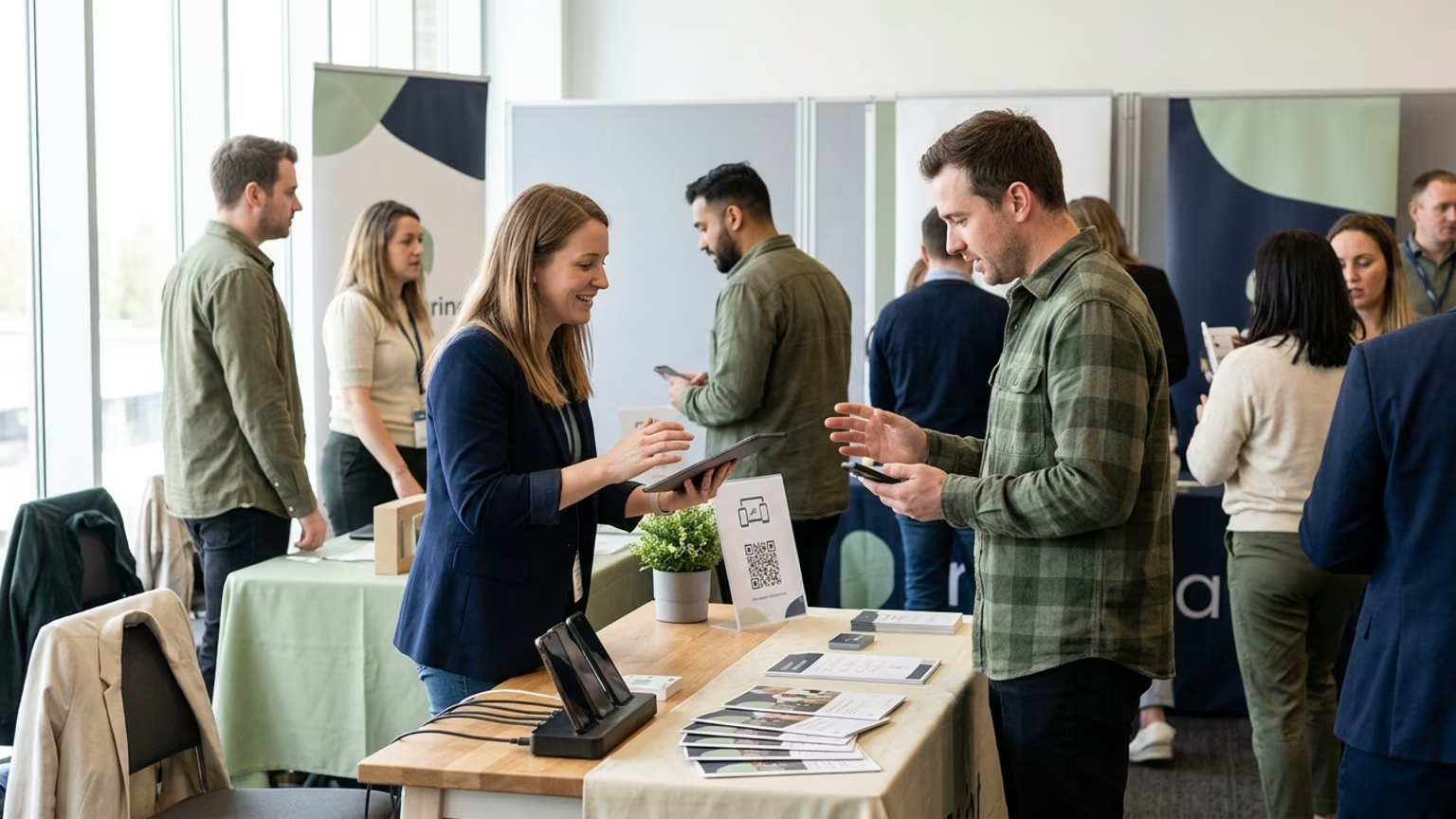
Experiential marketing teams operate in high pressure environments where speed is everything. You spend months designing the perfect trade show booth or mobile tasting tour. Thousands of people walk through the footprint. Brand ambassadors hand out samples, answer questions, and scan badges for hours.
Then the event ends and the real problem begins. The data you collected usually sits in a spreadsheet for a week. Your team eventually uploads that tired list of names into Salesforce. By the time a sales rep reaches out to a prospect, the moment has passed and the lead is completely cold.
Industry experts call this the leak between the room and the CRM. According to Event Tech Live, this gap creates a massive blind spot for measuring pipeline and revenue impact from events. Sponsors and exhibitors end up with fragmented views of attendee interactions. You cannot prove Return on Investment (ROI) when your primary data source is a delayed export of disconnected badge scans.
Leaders expect modern marketing teams to connect live interactions to actual revenue numbers. A stack of business cards no longer justifies a six figure booth investment. The executive suite wants clear attribution for every dollar spent on field activations.
The solution requires treating physical trade shows with the same analytical rigor as a digital marketing campaign. Bizzabo designed its updated Lead Capture app to bridge the gap between field marketing and revenue operations. The platform captures rich first-party data on site and immediately routes it to your systems of record.
This approach centers on unified pipeline attribution. When a brand ambassador scans a badge or inputs a survey response, the system tags that person with a unique event campaign and booth team identifier. The data flows into your CRM in real time. Sales teams receive immediate notifications to follow up with hot prospects.
Recent data highlights exactly why this shift matters for modern brands. Over 70 percent of enterprise marketers now tie event performance directly to pipeline attribution models. This metric signals a permanent shift from viewing events as a brand expense to seeing them as a revenue generating engine. You must track conversion attribution across multiple touchpoints to survive in this environment.
Event Tech Live notes that digital teams improve performance rapidly by seeing immediate real time results. Your field activations need that exact same visibility. A unified attribution model connects early stage consumer interactions with late stage sales figures. This alignment helps you make intelligent choices about where to allocate your marketing budget next quarter.
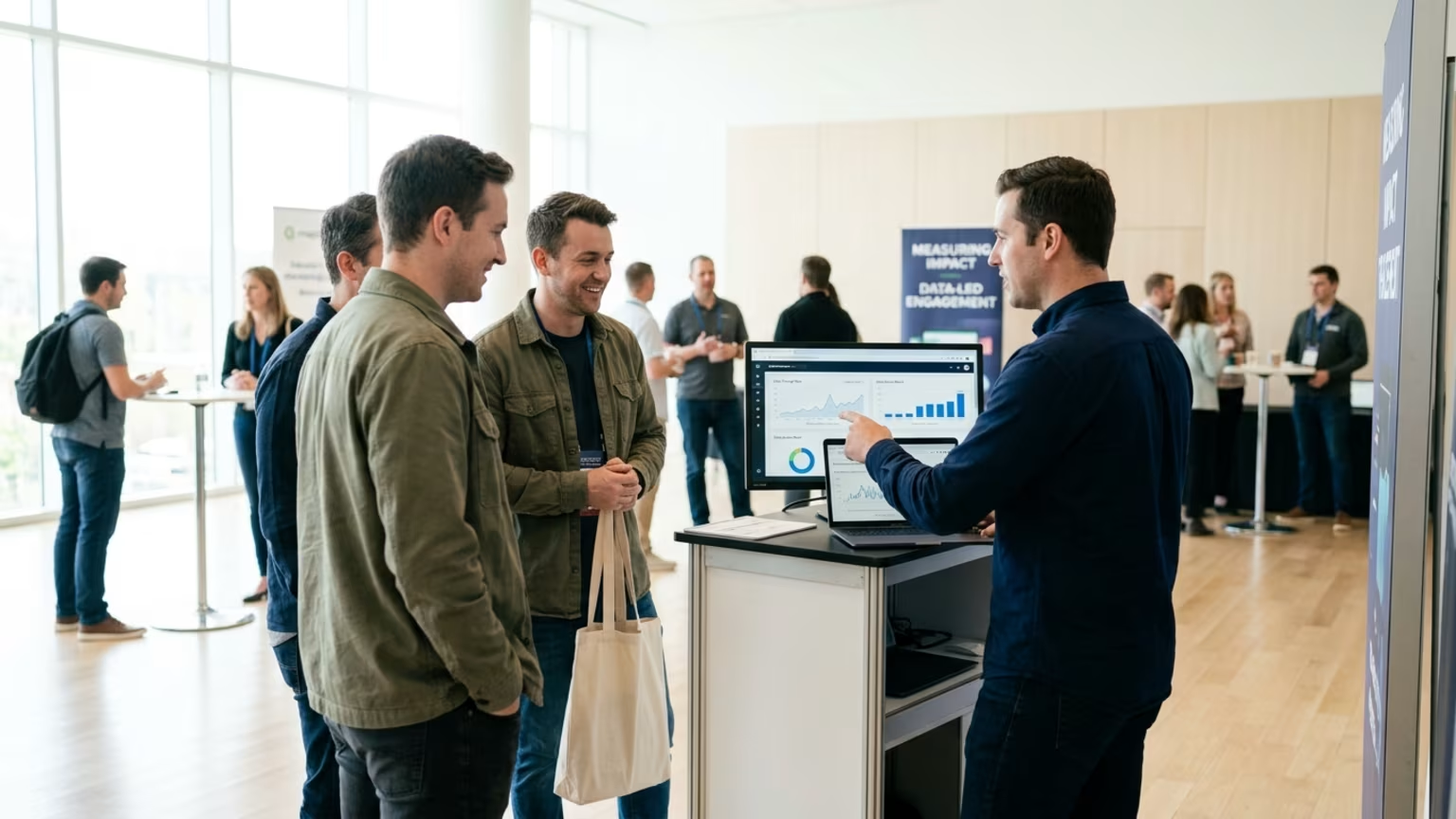
This unified approach scales across every major physical marketing channel. Trade shows represent the most obvious use case for advanced lead capture. Exhibitors often struggle to separate high intent buyers from casual booth visitors grabbing free merchandise. By syncing real time data, your sales team can ignore the casual visitors and focus entirely on the serious prospects.
Mobile roadshows offer another powerful environment for tight attribution. When you send a brand vehicle across the country, you need to know which specific stops generate the most pipeline. Bizzabo helps you isolate the data from a single afternoon in Austin versus a weekend activation in Chicago. You can then adjust your future routing based on actual geographic conversion rates.
Sponsorships demand the exact same level of financial scrutiny. Brands spend massive amounts of money to place their logo at festivals and conferences. Measuring the value of a sponsorship used to rely entirely on vague brand awareness estimates. Now you can track exactly how many qualified prospects entered your sponsored lounge and eventually became paying customers.
The value of first-party event data continues to rise as digital privacy laws become stricter. Trade shows offer a rare opportunity to collect explicit consent and rich preference data directly from buyers. When a prospect answers a question on a tablet at your booth, they give you highly accurate context about their intent.
This level of detail outperforms almost any third-party data list you could buy. Forward thinking brands no longer just want a generic list of emails. They want enriched records tied to exact conversations, physical activations, and content consumed on the show floor. Piping this rich information into your marketing platform without manual entry gives you a massive operational advantage.
A perfectly synchronized tech stack eliminates the friction between marketing and sales. Your marketing team gets credit for sourcing the lead. Your sales team gets a warm prospect with a documented history of physical brand interaction. This seamless handoff defines a modern, high performing organization.
Upgrading your technology only works if you upgrade your field operations alongside it. You need a systematic playbook to turn software capabilities into real world results. The following steps outline how to build a unified event attribution machine.
Following these steps helps you capture value early. Avoiding common lead capture pitfalls requires immense discipline on the show floor. Your operations team must train field staff to prioritize data quality over sheer volume.
Counting foot traffic and gross badge scans will not impress your chief financial officer. You need to measure exact lead and lag indicators that tell a complete revenue story. Your lead metrics should track immediate on-site performance. Monitor the number of qualified conversations per brand ambassador and the scan-to-opportunity conversion rate.
These leading indicators tell you if your staffing model and booth layout are actually working. High foot traffic means nothing if your team fails to convert those visitors into qualified prospects. You can adjust your floor strategy immediately if these early numbers look weak.
Lag metrics require more patience but prove your business case. Track the total pipeline value touched by a single event and monitor the final closed won revenue. You should compare the average deal size of event generated leads against your baseline sales data. Events often produce larger contracts and faster sales cycles than cold digital outreach.
You should compute your cost per opportunity for every field marketing initiative. Divide your total event spend by the number of qualified sales opportunities generated. This metric allows you to compare the efficiency of a massive industry expo against a targeted VIP dinner. This approach proves that event buzz can transition to pipeline when you enforce qualification tiers.
Improvado reports that organizations must capture every marketing interaction as structured data and sync it into Salesforce in near real time. This structured approach allows you to identify exactly which gamification tactics truly drive pipeline. Bizzabo makes this visible by breaking down attribution by event, booth team, and individual activation.
We see the power of structured attribution every day in the field. A premium beverage client recently launched a nationwide tour and needed to track exact retailer sell-through. Our team set up tablet based lead capture tied directly to their central database. Every sample tasted logged an immediate preference profile for the consumer.
The data routed directly to regional sales teams who targeted local grocery buyers with proof of consumer demand. We integrated physical sampling with digital workflows to build a flawless feedback loop. A VP of Marketing in the CPG beverage category told us: 'Robbie, your leadership and vision turned our campaign into something truly special. The Makai team brought our new drink to life with energy, creativity, and flawless execution. Thanks to you, our brand isn't just tasted, it's remembered.'
Our team's approach transformed their product launch into a memorable brand experience. The key was treating every single sip as a measurable data point. The client used this hard evidence to secure premium shelf space at major national retailers.
This level of execution requires the right tools and the right operational partner. Implementing a system like Bizzabo takes work up front. The effort pays off when you can clearly prove how a mobile showroom directly influenced a major quarterly revenue target.
You can no longer accept a disconnect between field operations and revenue operations. The technology exists to map physical interactions to your company bottom line. Tomorrow morning, open your CRM and map your next event's lead capture fields directly to your highest priority sales campaigns. Book a strategy call with our team to turn your next live activation into a measurable revenue engine.

30 Years Experiential & Retail Activation Partner for CPG & Beverage Brands | Multi-Market Demos, Roadshows & Costco/Club Programs That Actually Sell