Robbie Thain
Founder, CEO

Learn how CPG brands use live scanner data and retailer activation calendars to track retail sampling performance instead of waiting for delayed news reports.
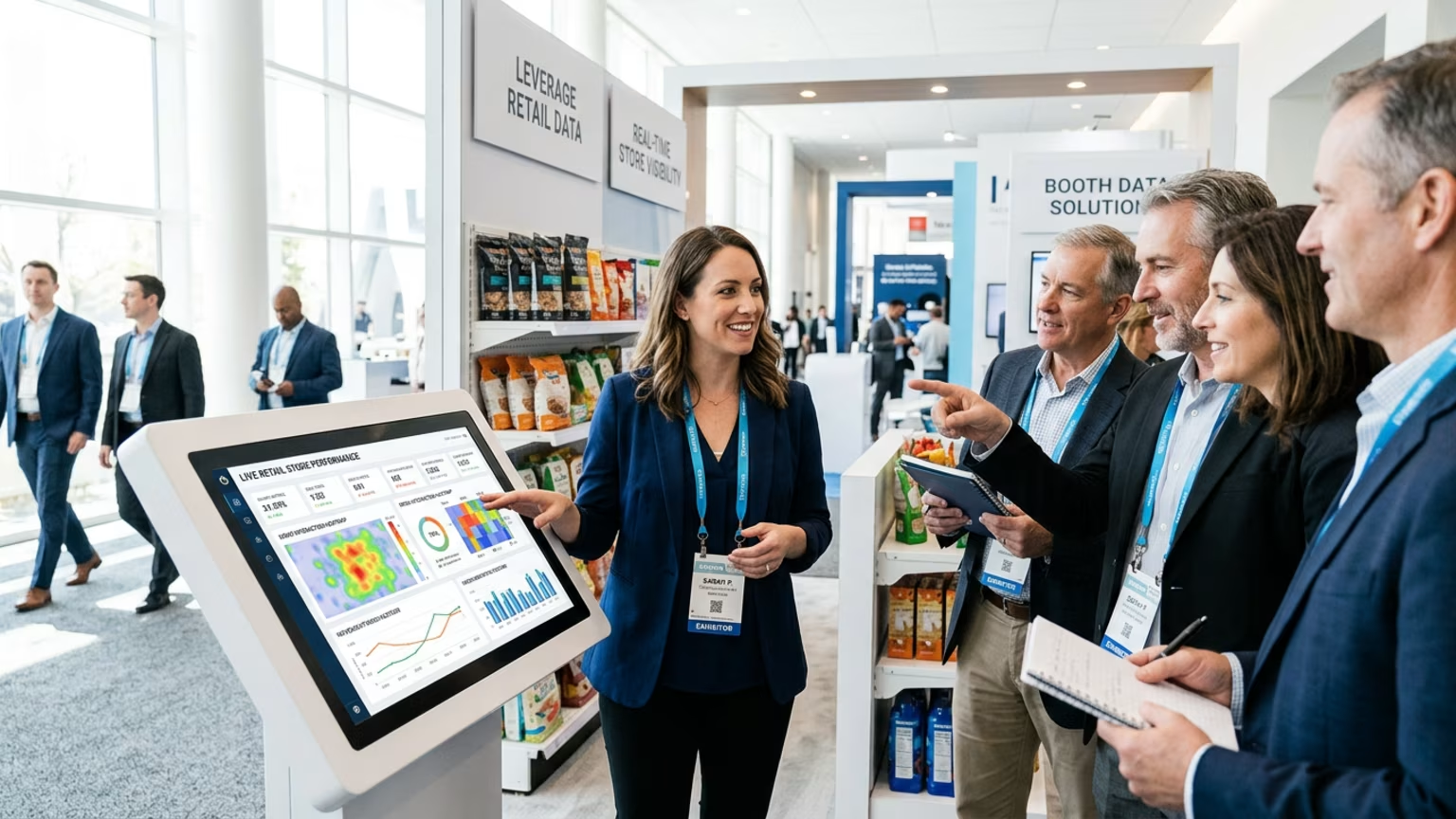
Nearly eight out of ten brand operators base their retail sampling decisions on field data that is at least thirty days old. When performance metrics arrive weeks after a live event concludes, marketing leaders lose the ability to correct course and maximize their Return on Investment (ROI). This information lag turns expensive physical activations into blind wagers rather than predictable sales channels.
Real time visibility into retail sampling requires direct integration with retailer activation calendars and field agency metrics over delayed public reports. By tapping into live scanner data and direct partner updates, marketing operators can instantly measure the direct sales impact of their physical brand activations. The modern field marketer does not wait for a press release to tell them what happened last month. They look at the scanner data today.
Aisle four is packed with retail buyers eager to try a new premium snack formulation. Brand ambassadors are talking over loud background noise. They are handing out hundreds of product samples every single hour. Cardboard transport boxes are breaking down in the chaotic back room.
The carefully planned product pallets are shrinking at a rapid pace. Back at corporate headquarters, the central marketing team stares at a blank reporting screen. They have absolutely no idea if these massive crowds consist of actual qualified buyers. The foot traffic might just be hungry passersby looking for a free afternoon snack.
The operational team waits patiently for a post event wrap report that might arrive next month. This delayed report often contains only basic vanity metrics. It might highlight total foot traffic and raw sample distribution numbers. The pure chaos of a live exhibition floor makes real time data capture incredibly difficult.
Operators often resort to scanning generic industry news wires to guess broader category trends. They hope to piece together a vague idea of how their product performed against regional competitors. This guessing game leaves millions of dollars in potential sales revenue on the table. It forces brand managers to make future allocation decisions using stale information.
CPG marketers must abandon generic public information feeds and build private data networks. The best field operators establish a direct line of sight into exact store level activity. They integrate their reporting closely with retailer activation calendars long before the first sample is poured. This early connection provides a solid baseline of expected foot traffic.
It gives the brand a clear view of historic category performance during similar promotional windows. Next, the brand plugs into daily shift updates from their dedicated field marketing agency. This raw field intelligence is then cross matched against localized scanner insights. Firms like NIQ and Circana track this live movement directly at the retail register.
When you combine daily point of sale data with specific sampling hours, a clear picture emerges. The brand can finally see the immediate correlation between a physical product trial and an actual purchase. This closed loop intelligence system replaces vague assumptions with hard mathematical evidence. It allows marketing operators to spot hyper local regional trends instantly.
Brands no longer need to wait for a generalized quarterly industry report to understand buyer sentiment. The live data stream highlights which retail locations are actually converting product trials into register receipts. We cover these advanced data strategies often when discussing how brands connect retail media data with physical shopper engagement. The shift from public news to private data changes everything.
Execution requires rigid discipline and clear communication channels across all retail partners. The following steps outline how to build a responsive data pipeline during a live consumer event.
Lead metrics indicate the immediate traction of your activation on the retail floor. First, track the daily sample distribution rate to understand the sheer volume of product entering consumer hands. Next, monitor the exact cost per quality interaction to measure the financial efficiency of your staffing model. You must track the immediate on site conversion rate if the specific retailer allows direct booth sales.
Another critical lead metric is the total number of scheduled buyer meetings generated during a live trade show. These early indicators tell you if the basic mechanics of your booth are functioning correctly. If your cost per interaction spikes, you might have placed the booth in a dead zone. Fixing these issues on day one saves the entire weekend budget.
Lag metrics reveal the final financial outcome of your entire field marketing investment. Track the thirty day post event sales lift at all activated retail locations. This sustained measurement proves that consumer interest lasted long after the sampling table was dismantled. Calculate the overall category share shift within that specific retail chain.
This metric shows if you actually stole market share from direct competitors. You should strictly monitor the direct retail reorder volume over the following quarter. This shows if store managers are increasing their stock based on genuine shopper demand. For a deeper operational understanding of these financial outcomes, review our guide on tracking the right retail sampling metrics.
We recently partnered with a premium national beverage brand to launch a new product line. The campaign spanned fifty targeted retail locations across three distinct geographic regions. The client wanted real time visibility into local buyer preferences to justify a massive national expansion. We bypassed the traditional delayed wrap report and built a daily data sync with the retail partner.
Our field team uploaded shift data that we immediately cross referenced with weekly register scanner data. This daily visibility showed us that afternoon activations in suburban markets were vastly outperforming morning urban slots. We quickly shifted our staffing schedules and product allocations to match this localized demand. The direct integration between our field agency data and the retailer point of sale system proved invaluable.
It provided undeniable proof of sales velocity that public news feeds simply cannot offer. A VP of Marketing reflected on our partnership: 'Robbie, it was a pleasure working with you and your team. You turned our launch into an experience that connected with shoppers and built lasting excitement for our brand. We're already looking forward to the next project together.'
Our team created a launch experience that resonated with retail shoppers and generated momentum for future collaborations. The approach transformed a standard physical activation into a highly measurable retail growth engine. Understanding how to align physical tastes with actual register data is a core part of a strong beverage sampling strategy.
The true value of a physical brand activation lives in the immediate data it generates. Brands that treat their sampling tables as live intelligence nodes rarely have to guess about consumer preference. They build private networks of truth that outpace any public industry report. The fastest path to retail velocity is simply listening to the register in real time.

30 Years Experiential & Retail Activation Partner for CPG & Beverage Brands | Multi-Market Demos, Roadshows & Costco/Club Programs That Actually Sell