Robbie Thain
Founder, CEO

While exhibitors often prioritize badge scan totals, true event success requires real qualification at the booth to build verified sales pipeline.
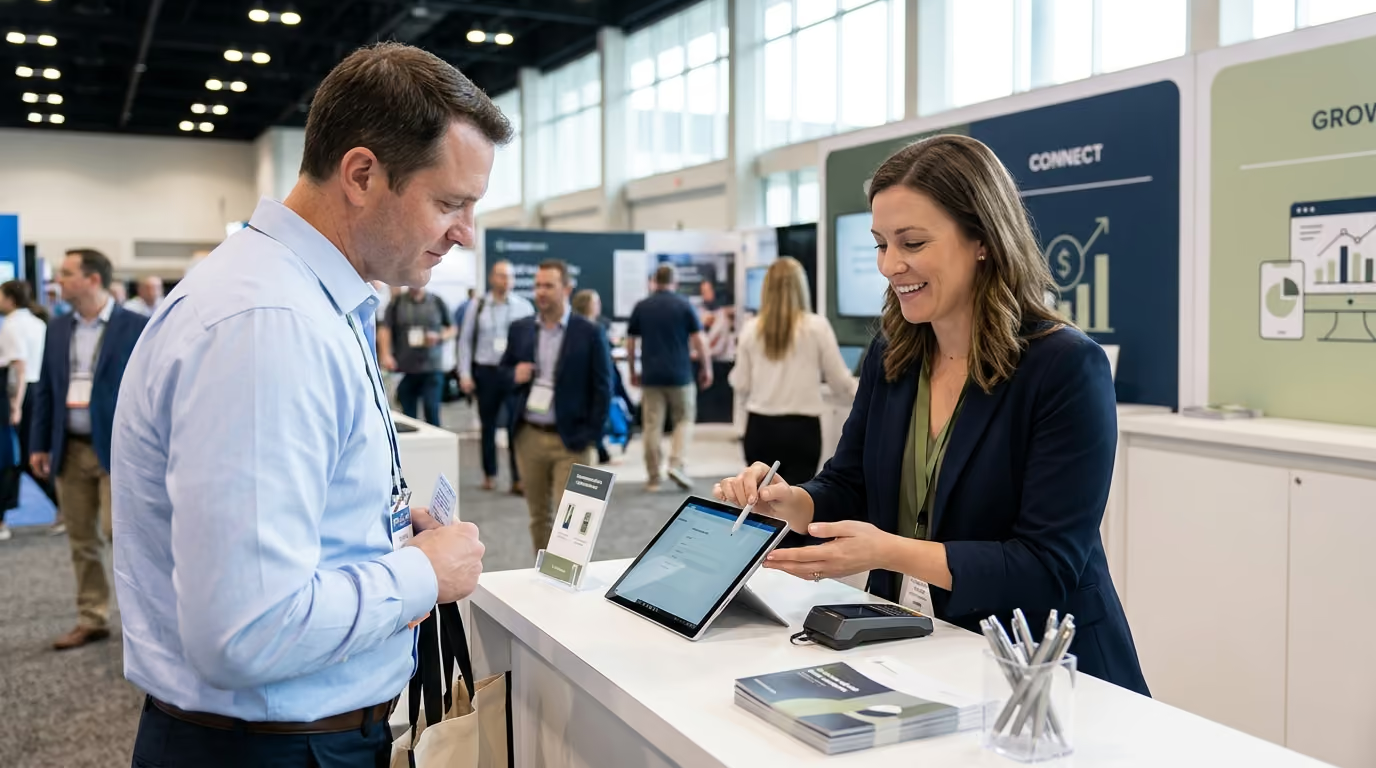
Capturing thousands of badge scans at a trade show is often the fastest way to disguise a complete lack of commercial traction. High-performing brand teams treat lead capture as an end-to-end information journey that qualifies intent, protects data integrity, and drives immediate post-event sales action.
The exhibition floor is chaotic, noisy, and distracting. Booth staff stand with handheld scanners, frantically tapping attendee badges as crowds move through the aisles. A visitor steps into the footprint, grabs a branded tote bag or a food sample, gets their badge scanned in two seconds, and walks away. At the end of the three-day show, marketing presents a spreadsheet with three thousand contacts to the executive team. Everyone celebrates the gross volume, but two weeks later, the sales team rejects ninety percent of the records.
This breakdown happens because most organizations confuse physical foot traffic with commercial pipeline. An attendee badge contains basic registration information, but it tells your sales team nothing about why that person stopped. It does not record their immediate operational pain points, their timeline, or their purchasing authority. When you hand raw registration exports to sales representatives, they must cold-call people who only wanted a free snack. That disconnect wastes valuable sales labor and destroys the credibility of your field activations.
Industry research shows that more than half of exhibitors, roughly 51 percent, do not qualify leads directly at the booth. At the same time, data from the Center for Exhibition Industry Research (CEIR) indicates that 81 percent of trade show attendees possess buying authority. When booth teams fail to qualify visitors on the spot, they squander interactions with genuine commercial decision-makers. The result is a bloated CRM database filled with low-intent contacts and zero context.
Raw lead volume is a vanity metric that creates operational drag. A modern capture strategy treats the trade show floor as a live qualification engine. Success requires collecting structured data, verifying identity, recording intent, and securing explicit consent at the exact moment of engagement. When you implement a disciplined capture framework, you turn chaotic floor traffic into clean, actionable pipeline.
Trade show lead capture is not a single scan. It is a systematic process of recording interactions, qualifying intent, enriching records, and synchronizing data with your operational systems. A comprehensive capture system must answer five fundamental questions for every interaction:
To answer these questions without slowing down booth operations, align your data capture with the visitor journey. Capture the minimum information necessary at each stage, then append structured context while the conversation is fresh.
Commercial engagement begins weeks before the exhibit hall doors open. Pre-event touchpoints include targeted meeting booking links, VIP hosted-buyer programs, dynamic landing pages, and session registrations. These interactions signal strong pre-existing intent and allow your team to prepare account-specific activation strategies.
Record these early touchpoints as distinct pre-event engagements in your CRM. Capture the campaign source, target account tier, requested product categories, assigned meeting owner, and agreed discussion topics. When an attendee books a dedicated briefing before the show, mark that record with higher priority than a general walk-up scan. This distinction prevents pre-qualified buyers from getting lost in general post-event marketing lists.
Many attendees walk through your booth, observe product demonstrations, watch media screens, or pick up literature without speaking to a representative. These passive behaviors are useful engagement signals, but they are not sales-qualified leads. An attendee scanning a QR code on an educational display has shown curiosity, not an intent to buy.
Preserve the specific signal type in your data capture architecture. Tag self-service interactions as passive brand touchpoints rather than collapsing them into a generic lead pool. If a visitor downloads an ingredient specification sheet or an automotive spec guide, log that specific content asset. This granular tagging allows marketing automation to deliver relevant follow-up without triggering an uninvited sales phone call.
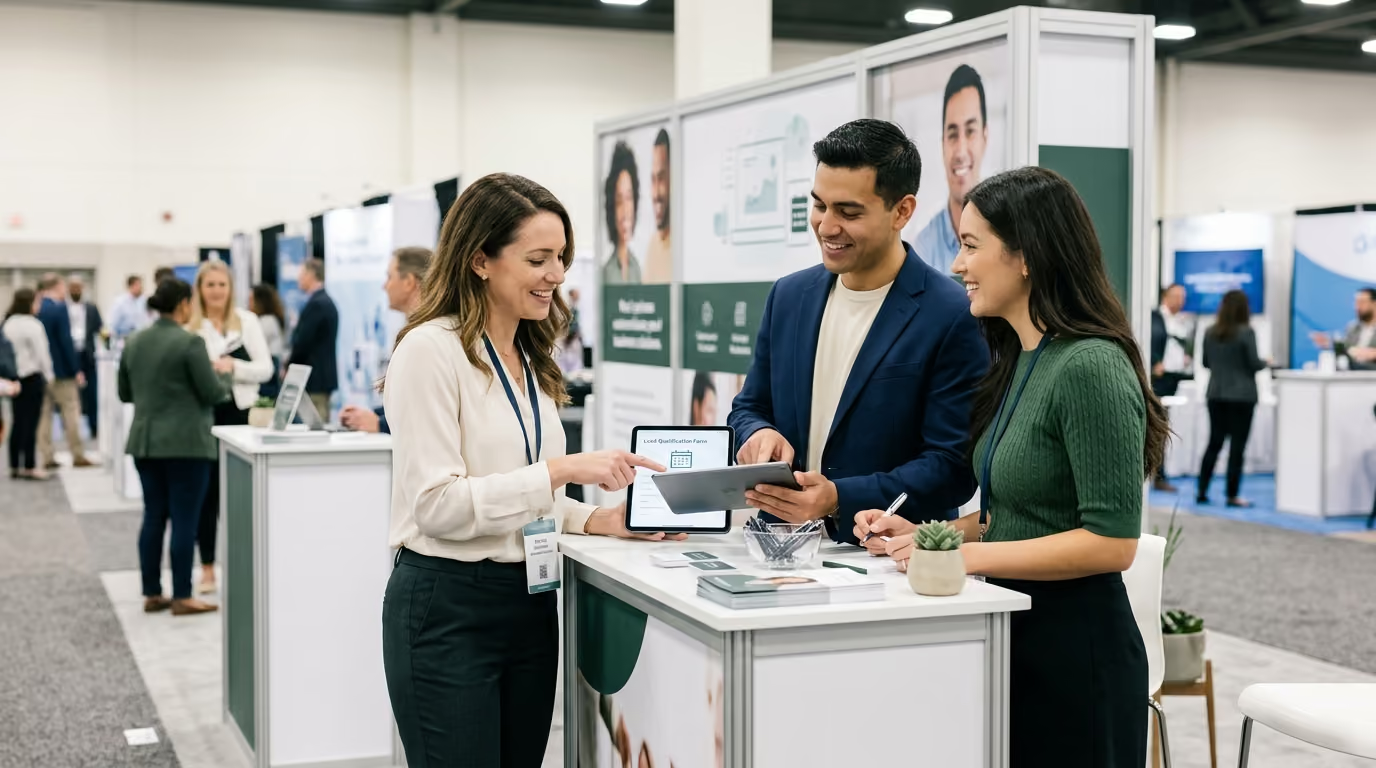
The face-to-face conversation between a booth representative and an attendee is the core of trade show qualification. During this dialogue, raw contact details transform into commercially valuable intelligence. Booth staff must steer conversations toward core qualification parameters without making the interaction feel like an interrogation.
A robust field qualification framework evaluates four core criteria: account fit, problem urgency, buying authority, and agreed next steps. Staff should capture the visitor's current supplier, stated operational bottlenecks, desired implementation timeline, and exact role in the procurement process. Collecting these data points gives your sales team the exact context needed to conduct a meaningful post-show follow-up. For deeper insight into booth design that supports these interactions, review our complete guide to planning a high-performance trade show activation.
Physical interaction with a product produces rich behavioral data. When an attendee participates in a structured software demonstration, tastes a food sample, or tests equipment, their reactions provide clear buying signals. The data record must capture the specific product variant, technical questions asked, and immediate feedback.
Connecting experiential trial to identity requires structured capture forms on booth tablets. Staff should record whether the visitor completed the demonstration, requested a commercial trial kit, or asked for wholesale pricing sheets. However, participating in a product sample should never be assumed as blanket consent for promotional marketing. Always keep behavioral trial tracking separate from legal communication permissions.
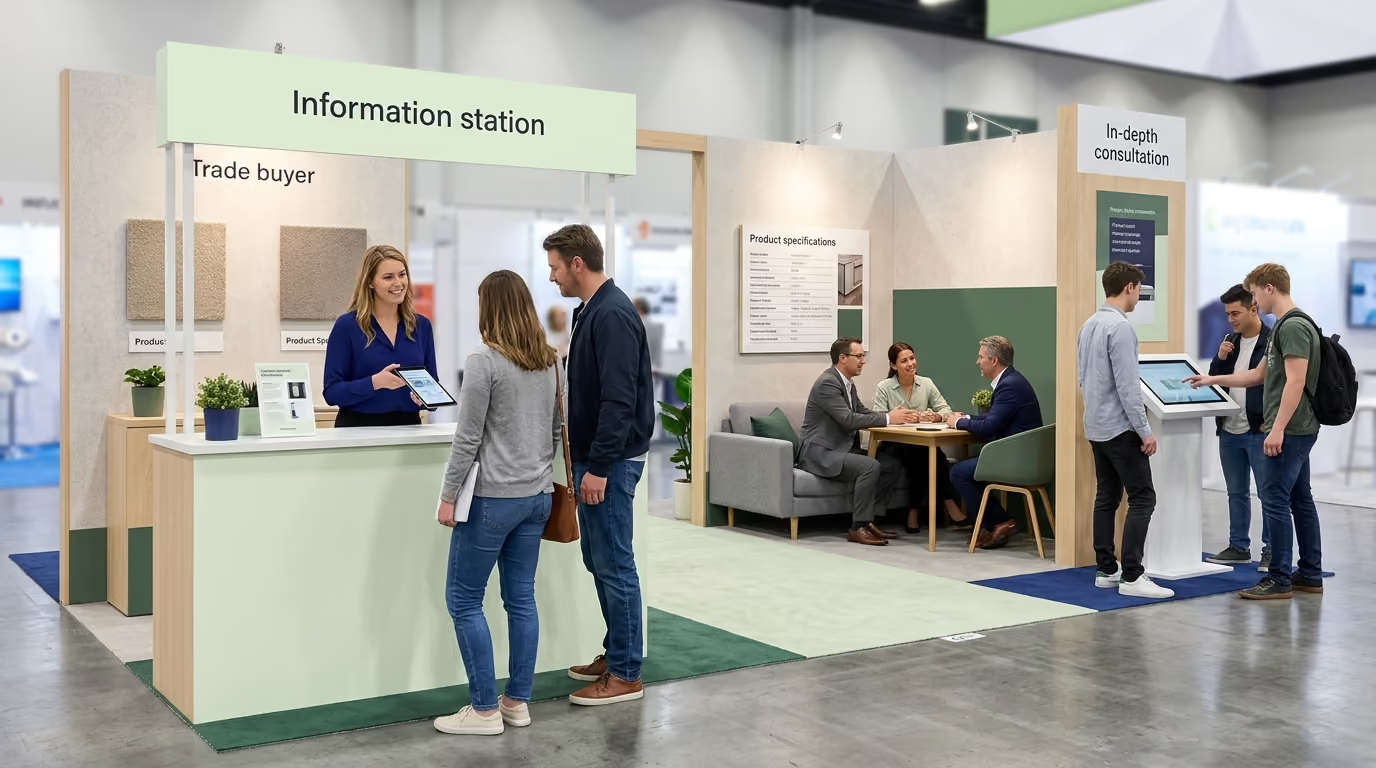
The final stage of the onsite journey occurs when a visitor requests a concrete commercial outcome. This includes scheduling a formal follow-up meeting, requesting a formal price quotation, ordering a wholesale sample kit, or requesting technical consultation. These interactions represent high-intent commercial opportunities that require immediate routing.
Treat these actions as distinct next-step objects within your lead management workflow. A next-step record must define the promised deliverable, the internal account owner, the agreed deadline, and the visitor's preferred contact method. Logging explicit commitments ensures that your field team fulfills promises made on the floor within established service-level agreements.
No single technology fits every booth interaction. High-performing exhibition teams deploy a hybrid capture toolkit designed around traffic volume, conversation depth, and connectivity constraints.
Organizer-provided badge scanners or mobile retrieval apps offer the fastest way to capture contact information in high-traffic environments. These tools read barcode or RFID data from attendee badges, pulling registration details into an exhibitor dashboard.
While badge scanners minimize manual typing, they carry inherent operational risks. Badge data is frequently outdated, containing generic department titles or personal email addresses entered during registration months earlier. Furthermore, a badge scan only proves physical presence. Booth staff must append structured qualification tags immediately after each scan, or the record will lack commercial value.
Custom mobile forms deployed on dedicated booth tablets allow staff to collect specialized information that badge scans omit. Digital forms are ideal for recording detailed equipment specifications, distribution territory requirements, retail store counts, or custom formulation inquiries.
Design digital forms for rapid completion under live floor conditions. Use large tap targets, drop-down menus, and standardized radio buttons rather than long open-text fields. Limit required inputs to critical qualification criteria, including target timeframe, current supplier, and requested next steps. A well-designed form allows a representative to log full conversational context in less than twenty seconds.
Dynamic QR codes placed on product displays, printed brochures, and sample packaging provide a self-service capture channel. Visitors who prefer to browse without speaking to staff can scan the code to access technical data sheets, wholesale catalogs, or meeting booking calendars.
Ensure every QR code links to a dedicated, mobile-optimized landing page configured with clear campaign tracking parameters. The landing page must state what the visitor receives upon submitting their details, such as a product formulation guide or a retail distribution map. Never use a single generic QR code across an entire booth footprint. Deploy distinct codes for separate product zones to capture precise visitor interests.
Business cards remain common in executive meetings, international pavilions, and informal networking environments. Mobile scanning applications equipped with optical character recognition (OCR) convert physical cards into digital contact records.
Treat OCR records as draft files that require human verification before CRM synchronization. Optical character recognition frequently misreads punctuation, transposes digits in international phone numbers, or confuses job titles with company names. Require booth staff or lead administrators to review OCR outputs daily to correct errors before records enter sales outreach queues.
Executive briefings and scheduled partner meetings require dedicated lead capture protocols. Walk-up scanning workflows are insufficient for structured, thirty-minute consultative discussions involving multiple decision-makers.
Capture detailed briefing records that log all meeting attendees, discussed commercial terms, competitive roadblocks, and assigned account executives. Link these briefing notes directly to existing CRM account records on the day of the meeting. This practice ensures your enterprise sales team retains full visibility into executive conversations conducted during the show.
Consumer packaged goods (CPG) and beverage brands rely on high-volume sampling to drive brand awareness and retail velocity. In these activations, thousands of consumers may trial a product over a weekend expo. Capturing data in sampling environments requires balancing rapid throughput with meaningful consumer engagement.
Deploy lightweight self-service kiosks or quick scan-to-win mechanics that reward consumers for providing basic contact details and product feedback. Separate retail consumer trial data from commercial retail buyer inquiries. If a regional supermarket category manager visits a food sampling booth, route that interaction to a commercial B2B qualification workflow immediately. To explore how to balance high-volume sampling with lead quality, read our analysis on better lead quality over sheer scan volume.
Capturing contact information is pointless if the resulting data is inaccurate, duplicated, or non-compliant. High-performing organizations implement strict data governance frameworks that maintain information utility, integrity, and objectivity across all capture channels.
Data quality on the trade show floor spans two independent dimensions: identity quality and intent quality. Identity quality measures whether you have accurate contact details, including verified business email addresses, correct job titles, valid phone numbers, and clean company names. Intent quality measures whether you understand the buyer's commercial motivation, including budget, active project timelines, and operational pain points.
A record with perfect identity quality but zero intent quality is simply an expensive cold contact. Conversely, a record with high commercial intent but an inaccurate email address cannot be activated. Booth workflows must validate identity while systematically capturing intent during every interaction.
To maintain database hygiene, establish a strict minimum viable record standard. Any record entering the post-event processing pipeline must contain specific core fields:
Records lacking these core fields must be routed to a data remediation queue for manual review before entering automated sales sequences.
Before deploying lead retrieval technology, map every event capture field to your CRM and marketing automation platforms. Standardize field values to match your existing database schema, ensuring dropdown choices align perfectly with CRM picklists.
Map interaction metadata to ensure clean attribution. Event names should populate primary campaign source fields, while specific capture methods should map to lead source sub-types. Conversation notes must write directly to CRM activity timelines rather than being dumped into unformatted text boxes. Validate all field mappings in a staging environment prior to the show to prevent integration failures during live operations. Organizations seeking seamless pipeline alignment can examine how CRM-integrated trade show lead capture eliminates manual data entry bottlenecks.
Trade show environments generate substantial data duplicates. A visitor might book an advance meeting, scan their badge at the reception desk, and later submit a form at a demo station. Without robust deduplication rules, a single prospect can spawn three disconnected CRM records assigned to different representatives.
Configure your integration engine to use hierarchical deduplication matching based on corporate email addresses, phone numbers, and account domains. When a duplicate interaction occurs, append the new activity to the existing contact record while preserving the historical engagement timeline. Once contacts are deduplicated, apply automated data enrichment tools to append firmographic details such as annual revenue, total employee headcount, and corporate headquarters locations.
Data privacy regulations, including GDPR, CCPA, and global anti-spam laws, require strict management of consumer and business consent. A badge scan or a business card exchange does not grant unlimited permission to enroll a contact in automated marketing newsletters.
Separate operational follow-up permissions from general marketing subscriptions. If an attendee requests a technical product specification, you have a legitimate interest or implied consent to deliver that specific asset. However, adding that person to a weekly promotional newsletter requires explicit, unambiguous consent. Use explicit checkboxes on digital forms and train staff to use clear verbal consent scripts before scanning attendee badges.
A common operational error is attempting to eliminate all friction from the lead capture process. While reducing friction increases the gross volume of contacts, it often destroys data quality. High-performing teams apply intentional friction to filter out low-intent visitors while streamlining pathways for qualified buyers.
Match the depth of your capture process to the visitor's commercial intent level. Applying high friction to low-intent interactions frustrates visitors and wastes staff labor. Conversely, applying low friction to high-value opportunities results in missed qualification context.
Use this operational matrix to calibrate capture friction:
Progressive capture gathers information incrementally across multiple touchpoints rather than demanding exhaustive details in a single form. On the exhibition floor, this means capturing basic identity and primary interest during the initial scan, then prompting staff to log deeper discovery notes after the visitor leaves the booth.
Train your booth team to follow a progressive capture sequence: scan the badge, tap the primary product category, select the intent score, and dictate a 15-second voice note summarizing the conversation. This workflow captures critical intelligence while it is fresh without interrupting the natural flow of the dialogue. Proper execution relies heavily on training booth staff on qualification conversations before the event begins.
Trade show convention centers are notorious for unstable cellular networks, failing Wi-Fi, and drained device batteries. A data capture strategy that relies entirely on an active internet connection will inevitably fail during peak floor traffic.
Build operational redundancy into every activation by enforcing these standards:
Transforming strategy into field execution requires a clear, chronological playbook. Booth teams must follow standardized operating procedures across pre-show preparation, live floor execution, and post-show operational triage.
To understand how modern capture architectures prevent revenue leakage, examine our breakdown on how real-time lead capture architecture secures event performance.
Proving event Return on Investment (ROI) requires moving beyond gross attendance and scan volume. Marketing decision-makers must track a balanced scorecard combining data quality metrics, funnel conversion velocity, and final revenue attribution.
Industry data reveals a significant drop-off in post-event engagement: an estimated 80 percent of event leads never receive disciplined follow-up from sales teams. Tracking operational speed and data hygiene metrics ensures that your organization captures the full commercial value of every qualified interaction.
Calculate total event Return on Investment using the standard financial formula:
$$\text{ROI} = \left(\frac{\text{Revenue Generated} - \text{Total Activation Costs}}{\text{Total Activation Costs}}\right) \times 100$$
Ensure your total cost accounting incorporates all booth space fees, custom fabrication, travel expenses, staff labor, lead retrieval technology licensing, and post-event fulfillment costs. Evaluating performance across this complete financial framework provides marketing leadership with undeniable evidence of activation impact.
Examining practical operational patterns illustrates how disciplined lead capture functions across diverse commercial environments.
A premium beverage brand launched a major trade sampling activation at a national industry expo, targeting both retail consumers and commercial grocery buyers. The floor footprint featured high-traffic sampling bars alongside a dedicated commercial retail lounge.
The team deployed a two-tier capture model. General attendees tasting samples scanned dynamic QR codes on beverage cups to vote for their favorite flavor and receive a digital retail coupon. This consumer flow captured four thousand verified consumer profiles while maintaining rapid throughput. Meanwhile, retail buyers and distributors were guided to the lounge, where staff used custom tablet forms to capture store counts, current distributor networks, and requested wholesale tasting kits.
We provide clear reporting on reach, trials, leads, and sales to guide next steps in campaign optimization. Our measurement approach tracks awareness, engagement, and conversion, turning brand moments into actionable data that demonstrates business impact. In our experience managing high-volume field campaigns, separating consumer sampling data from commercial retail buyer inquiries is the single most important factor in securing retail distribution post-show.
An enterprise supply chain software provider exhibited at an annual manufacturing conference. Rather than aiming for maximum badge scans, the marketing director focused exclusively on capturing high-intent commercial opportunities across a target account list.
The booth was designed around interactive demonstration pods. When a visitor engaged with a pod, staff initiated a structured discovery conversation and logged responses directly into an offline-capable mobile application. Staff recorded specific warehouse management challenges, current enterprise software vendors, and implementation timeframes.
Instead of scanning passing aisle traffic, the team conducted 180 in-depth discovery sessions over three days. Because every record contained verified buying authority, stated operational pain points, and a scheduled follow-up demonstration date, the sales team achieved a 92 percent follow-up completion rate within 48 hours. Within six months, the activation generated over four million dollars in qualified enterprise pipeline.
A consumer hardware manufacturer conducted a regional roadshow across fifteen commercial retail markets. The activation combined outdoor consumer demonstration zones with commercial dealer recruitment meetings.
The brand deployed unified lead capture software across all roadshow stops. Field ambassadors captured consumer product trial feedback on mobile tablets, while commercial partnership managers logged dealership applications. Every record captured the exact tour stop, device ID, and ambassador name. Daily automated data syncing allowed regional sales managers to contact prospective retail dealers within 24 hours of each local event, maximizing commercial momentum.
Trade show lead capture succeeds when rigorous data discipline replaces chaotic floor habits, turning fleeting face-to-face interactions into predictable, revenue-generating pipeline.

30 Years Experiential & Retail Activation Partner for CPG & Beverage Brands | Multi-Market Demos, Roadshows & Costco/Club Programs That Actually Sell