Robbie Thain
Founder, CEO

Stop wasting budget on unqualified trade show traffic. Learn how real-time lead capture transforms chaotic event interactions into measurable sales pipeline.

A field marketing director stands in the middle of a loud expo hall. Hundreds of people walk by the expensive booth to grab free snacks. She holds a clipboard filled with illegible names. She realizes none of this foot traffic will translate to actual revenue.
Securing a high volume of booth traffic means nothing if your team lacks a clear system to capture and qualify those contacts instantly. Implementing a real time lead capture strategy transforms chaotic event interactions into measurable and actionable sales pipeline.
Live events are loud and fast environments. Brand teams spend months designing beautiful structures and ordering premium promotional items. They ship pallets of product across the country to attract attendees. The doors open and a wave of people floods the aisles to look for free giveaways.
Many marketing leaders mistake this raw volume for actual business success. People stop by the booth to grab a sample and leave immediately. The staff scrambles to scan badges without asking a single qualifying question. The resulting data lacks any meaningful context about buyer intent or exact product interest.
The real pain hits on the Monday morning after the show. Sales teams receive a spreadsheet containing hundreds of generic names and basic email addresses. They have no idea who is a serious retail buyer and who simply wanted a free shirt. This lack of context creates severe friction between marketing and sales departments.
Marketing directors face intense scrutiny from chief financial officers regarding live event budgets. A single national expo can consume a massive portion of the annual marketing spend. Executives demand to see exactly how those dollars impact the bottom line. Handing over a list of unqualified names simply will not satisfy leadership teams who expect measurable pipeline growth.
Without an immediate way to score these interactions, the money spent on the event yields poor results. Competitors who capture precise intent data will reach the best prospects first. The brand loses momentum and struggles to justify future trade show budgets. Avoiding common lead capture pitfalls in experiential campaigns requires a completely different approach to the floor strategy.
The core solution involves shifting from passive data collection to active qualification. You need a structured framework that connects human conversation with immediate digital entry. This means abandoning the generic badge scanner in favor of intelligent and customized capture forms. Your field staff must transition from simple order takers to strategic conversation guides.
Every point of friction in the capture process reduces your total conversion rate. You must deploy targeted QR pathways that visitors can access directly from their own smartphones. These pathways should route different types of buyers to targeted data collection flows. A major distributor sees a different set of questions than a casual consumer.
This approach allows you to implement lead scoring at the exact moment of interaction. High value targets trigger instant alerts to your senior sales staff on the floor. Low tier contacts drop straight into an automated email nurture sequence. This immediate categorization is the only way to fix experiential revenue leaks before the event ends.
Your technology stack must speak directly to your marketing automation platforms without manual exporting. Staff members should focus entirely on making eye contact and building rapport. The software running in the background should handle the heavy lifting of routing the data. This creates a smooth experience for the attendee and satisfies the strict requirements of your revenue operations team.
We provide clear reporting on reach, trials, leads, and sales to guide next steps in campaign optimization. Our measurement approach tracks awareness, engagement, and conversion, turning brand moments into actionable data that demonstrates business impact. This systemic method removes the guesswork from post show follow up. Your team leaves the event with prioritized lists instead of raw data dumps.
Success requires rigid preparation before the venue doors ever open. You must build your floor strategy around the exact information your sales team needs to close deals. The physical layout and digital tools must work together smoothly. Follow these precise steps to execute a flawless data strategy.
Building a proper activation requires treating the physical space like a high performance machine. Every square foot should serve a precise purpose in your data collection plan. You cannot leave the visitor path to chance or hope they figure out what to do. A deliberate plan protects your investment and drives the results you need.
Your field staff must understand that their primary job is data capture rather than product distribution. A beautiful booth design fails completely if the ambassadors do not actively guide attendees toward the digital entry points. You must provide clear scripts that transition a casual product question into a formal lead capture moment. Rehearse these transitions daily before the event floor opens to the public.
Measuring Return on Investment requires tracking numbers that correlate directly with generated revenue. Stop reporting on booth attendance or total samples distributed as signs of success. These vanity numbers look impressive on paper but do not pay for the activation. You must divide your tracking into clear lead indicators and solid lag metrics.
Lead indicators help you understand floor performance in real time. Cost per qualified lead tells you if your staffing and booth design are efficient. Dwell time reveals whether your brand messaging holds visitor attention. Tracking the scan rate of dedicated QR codes indicates which product lines generate the most organic curiosity.
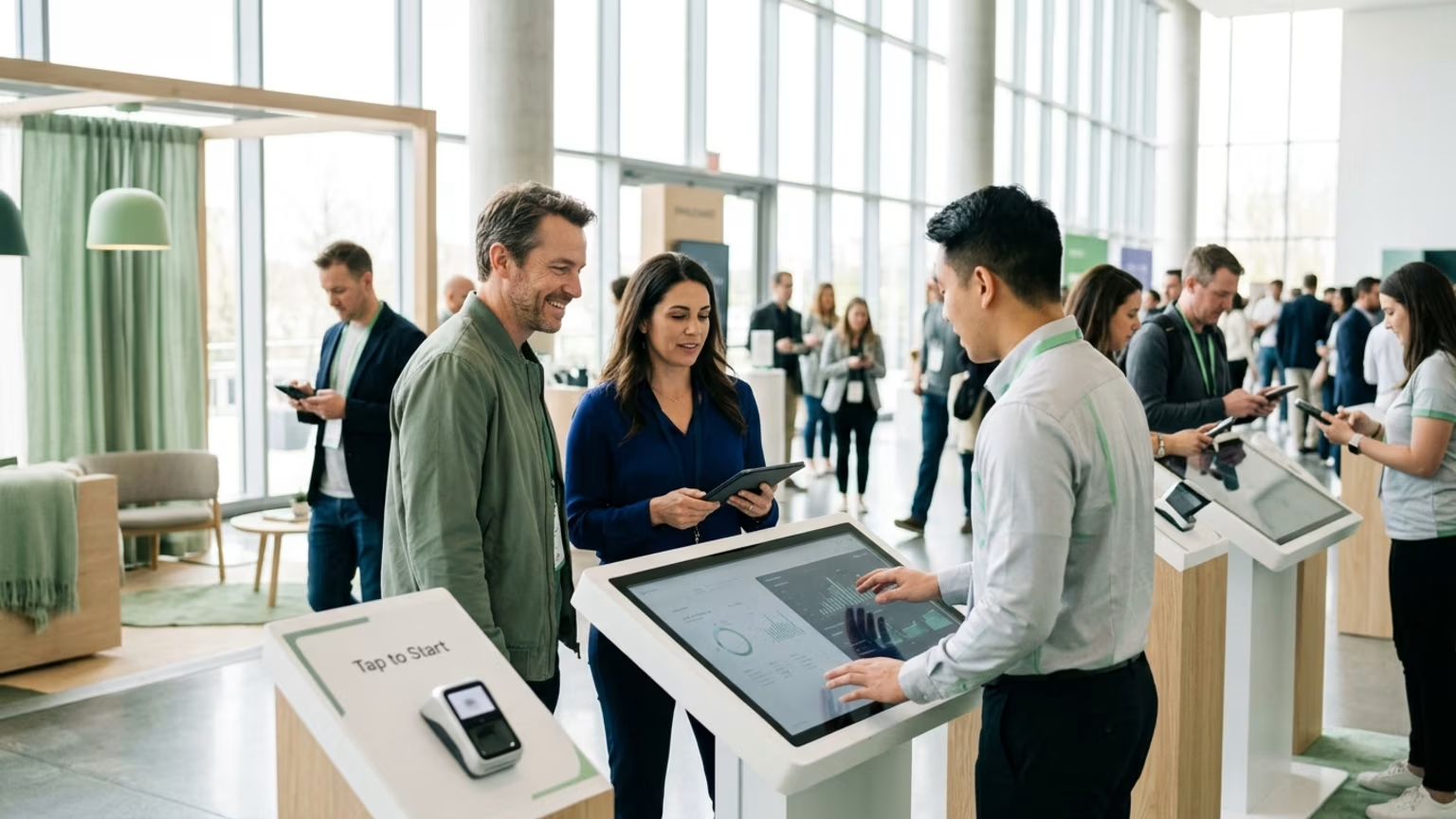
Clear reporting structures separate amateur field teams from professional revenue organizations. You should not wait until the final day of the expo to review your capture metrics. A proper setup routes all floor data into a live dashboard that marketing leaders can monitor from a central office. This live feed allows you to adjust floor tactics immediately if conversion rates drop below acceptable thresholds.
Lag indicators prove the financial success of the activation weeks or months later. You must measure the total pipeline generated directly from event contacts. Track the sales cycle length to see if in person interactions accelerate closing timelines. Retail sell through rates offer hard proof that consumer interactions translated into shelf movement.
Closed won revenue is the ultimate indicator of a successful field campaign. Tracking this requires strict discipline within your customer relationship management platform. Marketing teams must tag every contact with the exact event campaign code instantly. This discipline allows you to prove your precise contribution to the overall company revenue goals.
When you build a system focused on universal lead capture these metrics become highly visible. You can trace a signed contract straight back to a documented conversation at an exact event. This creates a solid feedback loop for future budget planning. Marketing teams can finally defend their event spend with undeniable financial evidence.
A rapidly growing kombucha company recently attended a major national grocery expo. Historically the brand handed out thousands of open sample cups to anyone walking past their aisle. They collected hundreds of generic badge scans that resulted in very few actual retail orders. They decided to overhaul their strategy by focusing entirely on qualified buyer conversations.
They replaced the open sampling table with an interactive tasting bar that required a brief check in. Visitors scanned a prominent code that asked them to identify as a consumer or a buyer. Consumers received a localized coupon sent instantly to their phone via text message. Retail buyers received a premium sample flight and an immediate introduction to a regional sales manager.
This digital separation allowed the team to ignore unqualified traffic and focus on high value targets. The sales managers used mobile tablets to log exact product feedback and immediate order volumes. Post show follow up happened automatically based on the exact flavor profile the buyer sampled. The brand abandoned manual data entry entirely.
Within thirty days the company tracked a massive lift in regional distribution orders tied directly to the expo. They secured prime placement in three new grocery chains. The total volume of leads decreased but the quality drove the highest return the brand had ever seen. The strategy proved that disciplined data collection beats chaotic crowd pleasing every time.
The executive team finally saw the exact value of their expo investment in plain numbers. They realized that fewer conversations with the right buyers yielded a much healthier sales pipeline. The marketing director used this hard data to secure an even larger activation budget for the following year. They transformed a chaotic physical event into a precise and predictable revenue engine.
Chaotic trade show floors will drain your budget if you let the crowd dictate the interaction. You need a disciplined approach that forces meaningful data collection at every major touchpoint. Review your plans for the next upcoming expo and map out the exact path a visitor takes from eye contact to CRM entry. To stop guessing about the value of your field marketing efforts, book a strategy call with our team today.

30 Years Experiential & Retail Activation Partner for CPG & Beverage Brands | Multi-Market Demos, Roadshows & Costco/Club Programs That Actually Sell