Robbie Thain
Founder, CEO

As grocery shoppers polarize between value and premium, CPG brands must adapt field operations and in-store sampling to defend mainstream products.
On October 1, 2026, Food Trade News reported on NIQ findings that grocery shoppers are increasingly choosing between products that offer meaningful savings and those that clearly justify a higher price. This polarization puts intense pressure on mainstream priced products without an obvious advantage. NIQ and World Data Lab describe the United States FMCG market as exceeding $1.1 trillion. Growth within this massive market is concentrating heavily in value and premium tiers.
NIQ estimates that more than $23 billion in global CPG value sales share has shifted away from mainstream priced products across 26 measured markets. According to NIQ figures reported by Food Trade News, discount products gained 0.6 percentage points of value share over the latest measured year. Premium products gained 0.8 points during the same period. Meanwhile, mainstream products lost 1.5 points of value share.
Consumer survey data explains this movement away from the middle. Food Trade News reports that NIQ global survey findings indicate 67% of respondents would rather save money if a product is not clearly better. Furthermore, 56% prefer a clearly premium product when they spend more. Exactly 55% say mid range products need a clear reason to be chosen over cheaper or premium alternatives.
Food Trade News also reports that quality and performance outrank affordability as determinants of whether a purchase feels worthwhile, specifically 34% versus 31%. Shoppers are simply becoming more intentional with their purchasing decisions. NIQ notes that shoppers may combine premium and value choices within the same basket, depending on the category and occasion. This means a single shopper might buy private label staples while paying a premium for specific items.
Despite these share losses, mainstream products are not disappearing from the shelves entirely. Food Trade News says mainstream still represents 43% of global CPG value share in NIQ analysis. The middle tier is just being forced to prove its worth to skeptical buyers. NIQ identifies wellness, beauty, and identity driven categories as areas where premiumization is especially strong.
We view this barbell market as a direct challenge to physical marketing strategies. Mainstream grocery products now carry a heavy burden of proof at the shelf. If shoppers cannot immediately understand your product benefits, they will trade down to save money. Brands must make their value proposition undeniably legible where consumers actually make choices.
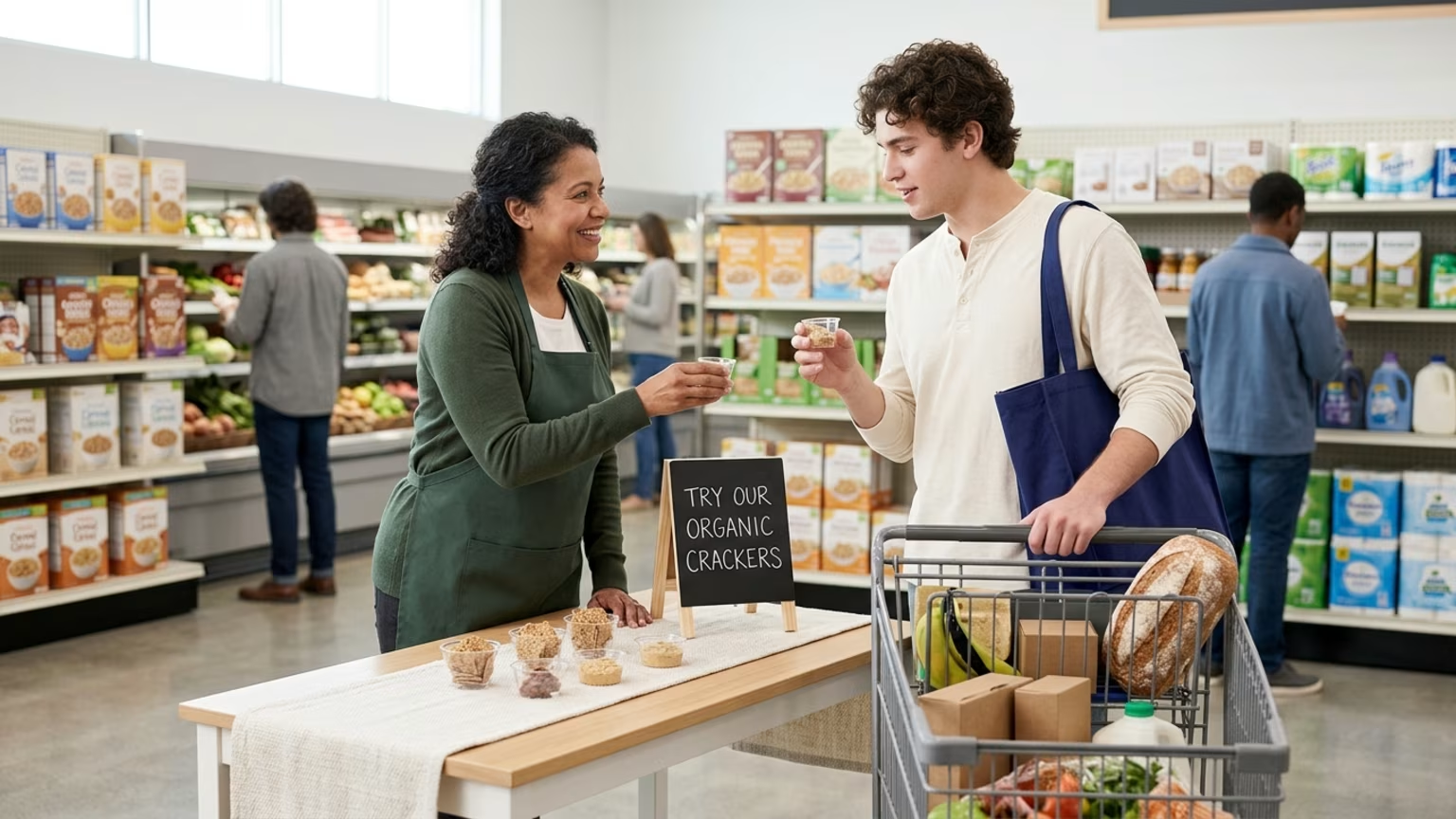
Experiential marketing must defend your retail footprint by proving quality and performance in real time. When consumers combine premium and value items in the same cart, your brand must fight for its specific occasion. This requires structured execution that clearly answers why your product earns its price tag. Trial must be used to demonstrate a real product difference, rather than masking a weak proposition.
Our focus remains on turning these fleeting interactions into measurable business outcomes. If your product relies on superior taste or premium ingredients, those benefits must be experienced physically. A well executed activation removes the friction of choice for a hesitant consumer. By putting the physical product directly in their hands, we give them a clear reason to choose your brand.
The grocery middle must stop relying heavily on discounts to solve poor differentiation. Continually dropping prices simply trains the shopper to wait for the next promotion. Instead, your physical footprint must communicate the precise quality of the product directly. When a trained ambassador provides a sample and explains the sourcing, the price tag becomes justified.
This consumer shift creates massive downstream effects for field operations and event logistics. Retailers are aggressively scrutinizing assortment productivity to see which products deserve their shelf space. As major retailers expand in store sampling programs, brands must completely rethink their staffing models. You need highly trained brand ambassadors who can clearly articulate the exact product difference to shoppers.
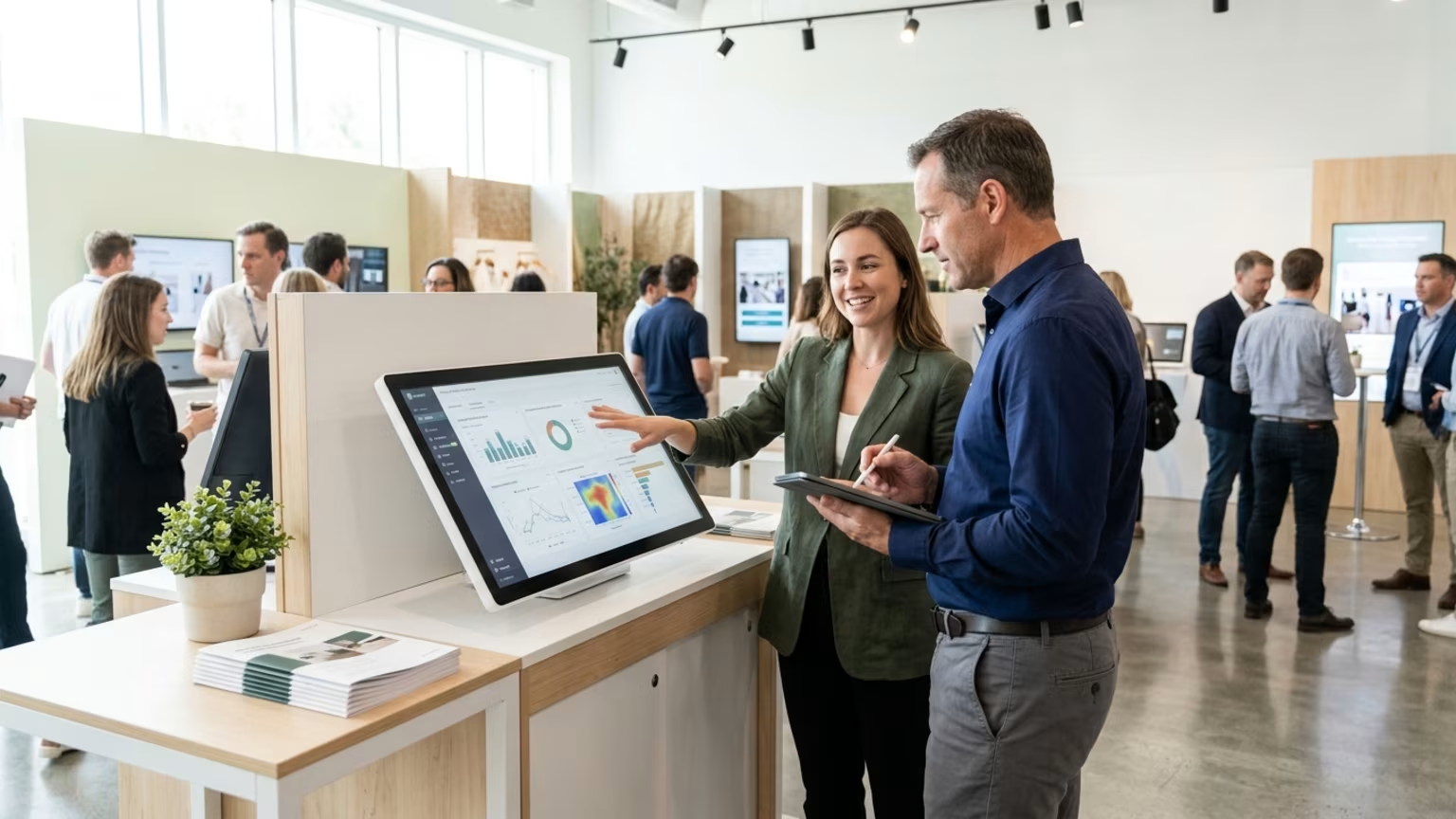
Handing out free samples without a strategy is no longer enough to maintain mainstream retail velocity. Brands must bring retailers concrete evidence of their value, requiring a structured field measurement framework that tracks actual outcomes. You must document stores activated, trial volume, and sales over a stated comparison period. Without this strict commercial measurement, retailers will struggle to justify keeping mid tier products in their planograms.
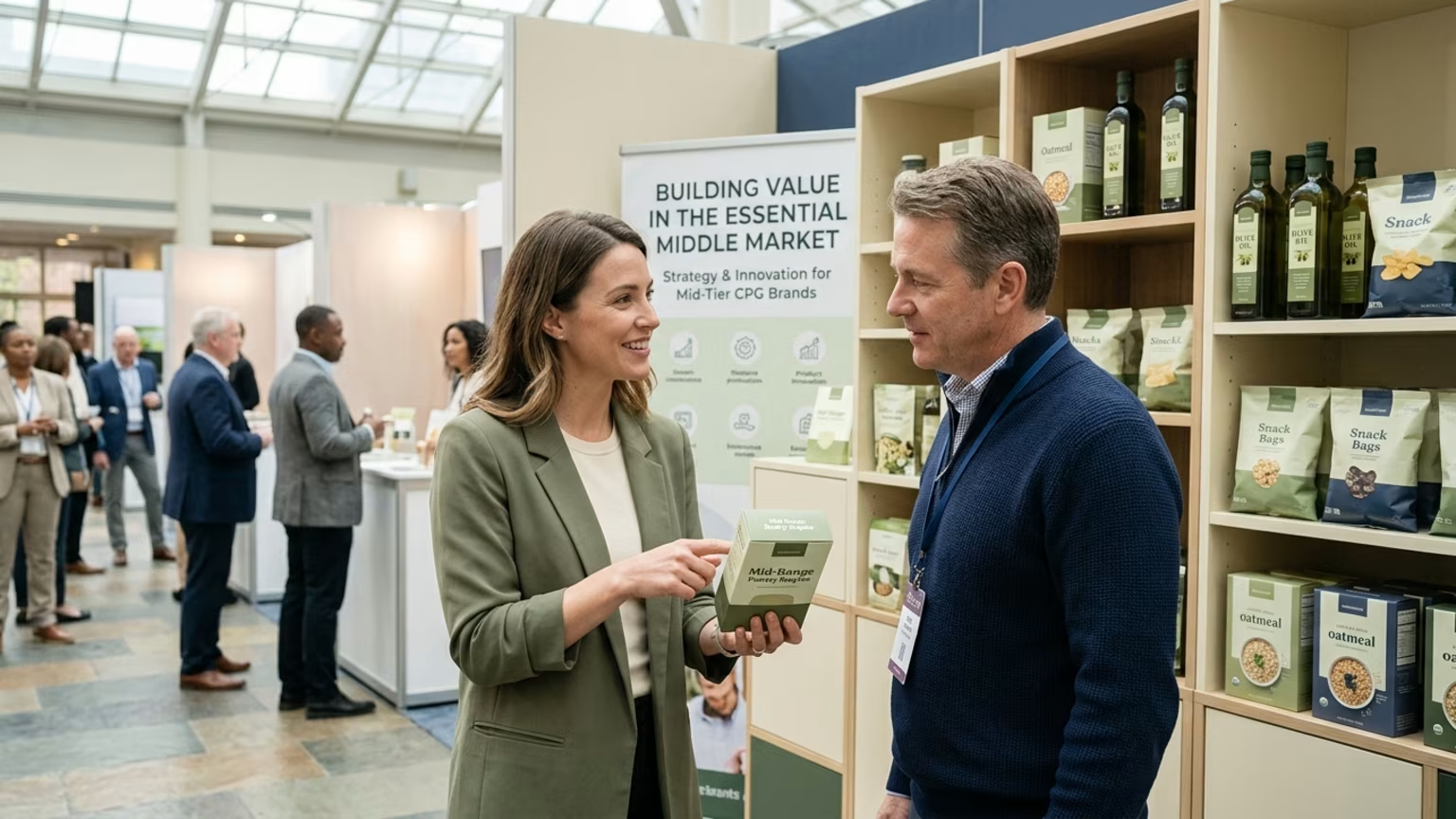
Logistics and supply chain management become much less forgiving in this environment. If an activation successfully proves a product is worthwhile, the physical inventory must be available immediately. Managing permits, trade show booth flow, and localized product availability requires exact coordination across every retail location. To maintain your shelf presence, connecting the grocery aisle with flawless physical execution is an absolute requirement.
Brands must also align their field marketing schedules directly with retail inventory cycles. An activation will fail if the promoted product is out of stock when the consumer decides to buy. Field managers must coordinate closely with store directors to guarantee sufficient product supply ahead of any event. This strict operational alignment ensures that successful product trials immediately convert into recorded register sales.
Furthermore, the mechanics of post event follow up must be refined. If a consumer engages with your brand at a crowded expo, their attention is already fragmented. Your event operations must include clear methods for capturing data and driving immediate retail purchases. This requires meticulous planning that connects the live event directly to the store shelf.
A Director of Brand Strategy in the CPG snack division shared: "The Makai team turned our product launch into a sensory event that shoppers still talk about. From creative storytelling to flawless in-store execution, they made snack time unforgettable. We couldn't have asked for a stronger partner." Our team created an in store experience that left a lasting impression on consumers and became a memorable brand moment.
By clearly demonstrating the taste and quality of the product, we helped the brand justify its positioning. We designed this program to prove the product difference to shoppers who might have otherwise selected a cheaper private label option. We also design mobile activations and roadshows that accelerate consumer trial, build trust, and boost retail velocity during 90-day product launch windows. Our structured approach transforms initial product trial into sustained consumer confidence and retail performance.
We provide clear reporting on reach, trials, leads, and sales to guide next steps in campaign optimization. Our measurement approach tracks awareness, engagement, and conversion, turning brand moments into actionable data that demonstrates business impact. This is precisely the kind of evidence that retail buyers demand when evaluating mid tier products. Structured execution combined with hard data creates a powerful defense for your shelf space.
How will your field teams provide the concrete evidence retailers demand to keep your mainstream products on the shelf this year?
When marketing leaders must prove their mainstream products deserve shelf space, converting hesitant shoppers into documented buyers becomes the primary operational requirement. Makai solves the difficulty of navigating complex event logistics, permits, and staffing. Using our flagship Experiential Marketing service, we create hands on brand moments that connect emotionally and turn customers into ambassadors. We handle the flawless execution required to defend your physical retail footprint and drive measurable sales pipeline. Request a proposal

30 Years Experiential & Retail Activation Partner for CPG & Beverage Brands | Multi-Market Demos, Roadshows & Costco/Club Programs That Actually Sell