Robbie Thain
Founder, CEO

Discover how General Mills used a targeted sampling blitz and data-capture technology across 1,200 stores to drive trial and measure retail ROI.
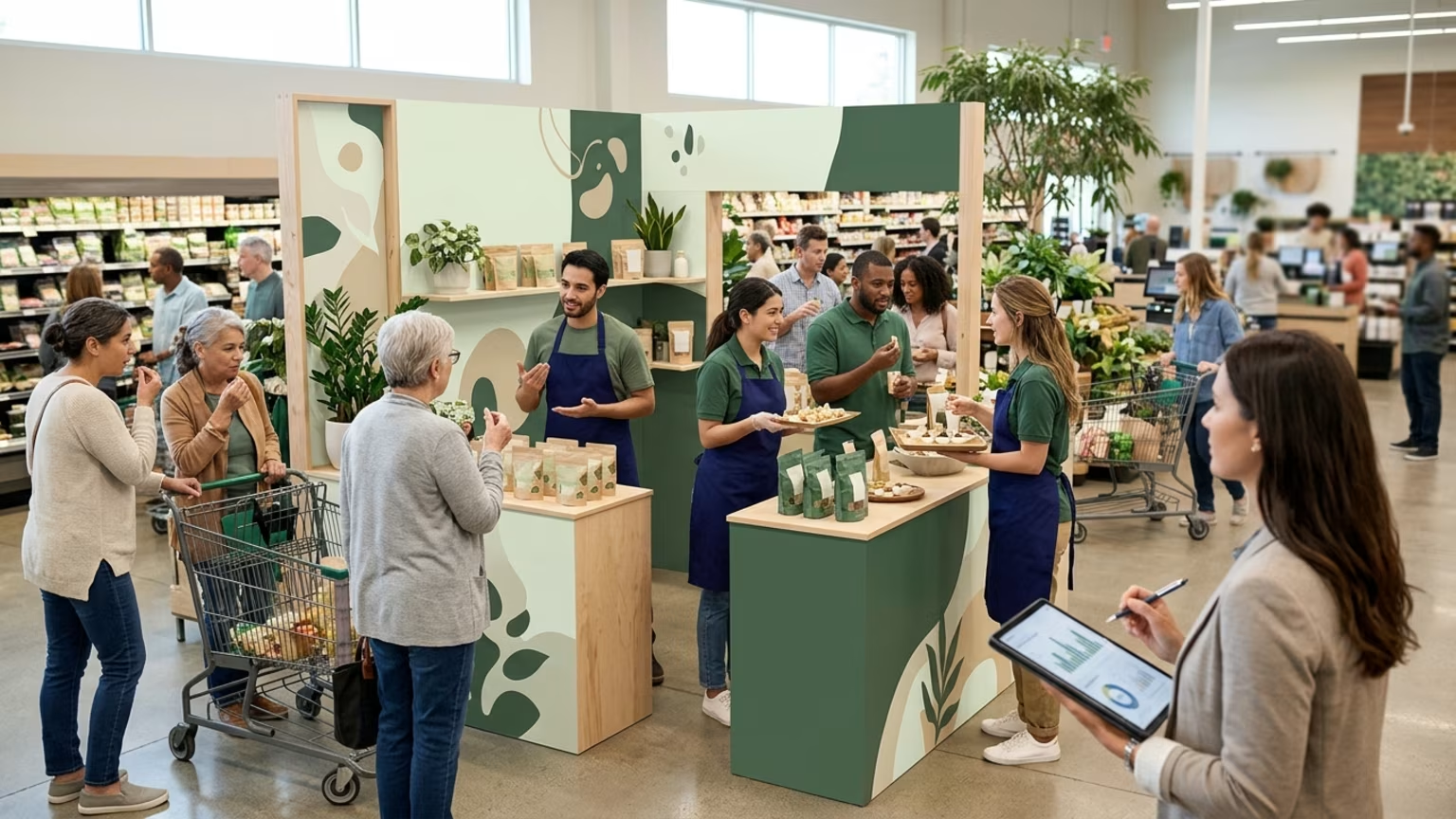
U.S. organic food sales reached 67 billion dollars in 2024, yet a staggering 25 percent of consumer packaged goods sampling pilots fail to scale beyond their first run. Winning shelf space requires more than a great tasting product; it demands precise retail execution backed by hard data. Coordinated sampling blitzes turn passive shoppers into loyal buyers when field teams capture the right metrics.
Launching a new organic snack line across a thousand stores often looks perfect in a slide deck. You secure retailer buy in for the end caps, ship product to multiple regions, and wait for the sales data. Then the weekend arrives and the feedback loop goes completely silent. Field teams are understaffed, demo stations lack consistency, and shoppers walk past unengaging displays.
A 2025 Field Marketing Association study found a 12 percent inconsistency in execution across multi retailer campaigns. This creates what many marketing operators know well: a beautiful disaster that burns budget without generating measurable sales lift. Shoppers are distracted, and standard sampling stations often fail to capture their attention long enough to communicate value. When brands lack centralized technology to monitor the floor, they lose control of the narrative.
The stakes are higher when launching premium products with organic certifications. The Food and Drug Administration flagged 15 percent of certified organic labels for mislabeling in 2025 audits. This scrutiny means consumers require more trust before placing a new item in their cart. Tasting a product builds that trust, but poor floor execution ruins the opportunity entirely.
If you cannot prove that your physical activation moved product off the shelf, securing future floor space becomes nearly impossible. High costs for staffing and logistics demand a strict Return on Investment threshold. A station costing 50 to 100 dollars per day must clear a baseline of interactions to justify the spend. Retail buyers will pull support quickly if the pilot program does not deliver immediate results.
The fix requires shifting from random acts of sampling to highly targeted retail activations. Experiential marketing in the consumer goods sector surged 28 percent recently. This growth is driven by brands prioritizing trial first strategies over saturated digital advertisements. NielsenIQ reports that in store activations convert 15 to 25 percent of triers to buyers on site.
This conversion rate is especially strong for premium organic items where trust is built through taste. This strategy only works if you deploy data capture technology at the point of interaction. A systematic approach treats every demo station as a live, quantifiable feedback loop. You must integrate real time demographic analytics to verify exactly who is tasting the product.
Brands that adopt this framework stop treating field marketing as an untrackable expense. Instead, they view it as a precision instrument to generate pipeline and optimize retail demo performance. Industry expert Joe Johnson notes that targeted blitzes deliver three times higher recall than social media campaigns. This massive advantage is only realized when data capture guarantees retailer buy in and repeat scalability.
Forty percent of top fast moving consumer goods firms now use artificial intelligence powered demo stations. These tools provide real time demographic analytics to keep the campaign on track. By partnering closely with regional natural foods channels, brands can see a 15 percent higher sell through rate. This approach bridges the gap between digital precision and physical human connection.
Executing a massive regional rollout requires a rigid, step by step playbook to maintain control.
Measuring campaign success means looking beyond simple cup counts and estimated foot traffic. You need clear lead and lag metrics to prove campaign impact and justify future budgets. Lead metrics tell you if the station design and brand ambassadors are actually stopping traffic. Lag metrics show the true financial outcome of those interactions over time.
Track engagement rate and cost per interaction as your primary lead metrics. These numbers reveal how efficiently your field team is converting foot traffic into active conversations. If your cost per interaction creeps too high, you must adjust your floor strategy immediately. Monitoring these daily prevents budget drain before the activation weekend ends.
Immediate purchase conversion is the most critical lag metric for any sampling program. A successful activation should aim for an 18 to 25 percent sales lift during the event hours. Tracking demographic targeting effectiveness refines your next big retail push. When you capture the right data, you can measure Return on Investment with clean data and present undeniable proof to stakeholders.
Measuring repeatability tells you if the initial purchase becomes a permanent habit. You can track this by monitoring velocity in the specific stores post activation. A temporary spike during the weekend means nothing if sales drop to zero on Monday. True financial impact requires a sustained lift in the weeks following the event.
Physical sampling stands strong on its own, but pairing it with digital triggers multiplies the pipeline value. Shoppers carrying mobile devices on the retail floor present a massive opportunity for immediate engagement. Brand ambassadors can guide satisfied samplers to scan a quick response code for an immediate digital coupon. This direct interaction captures the customer data securely before they even reach the checkout lane.
Activations without this kind of digital integration often generate a meager 8 percent cross channel lift. Fully integrated digital efforts can push that cross channel lift up to an impressive 35 percent. Tying your physical sampling to a broader digital strategy maximizes the total financial return. It turns a single taste test into an ongoing marketing conversation with a qualified buyer.
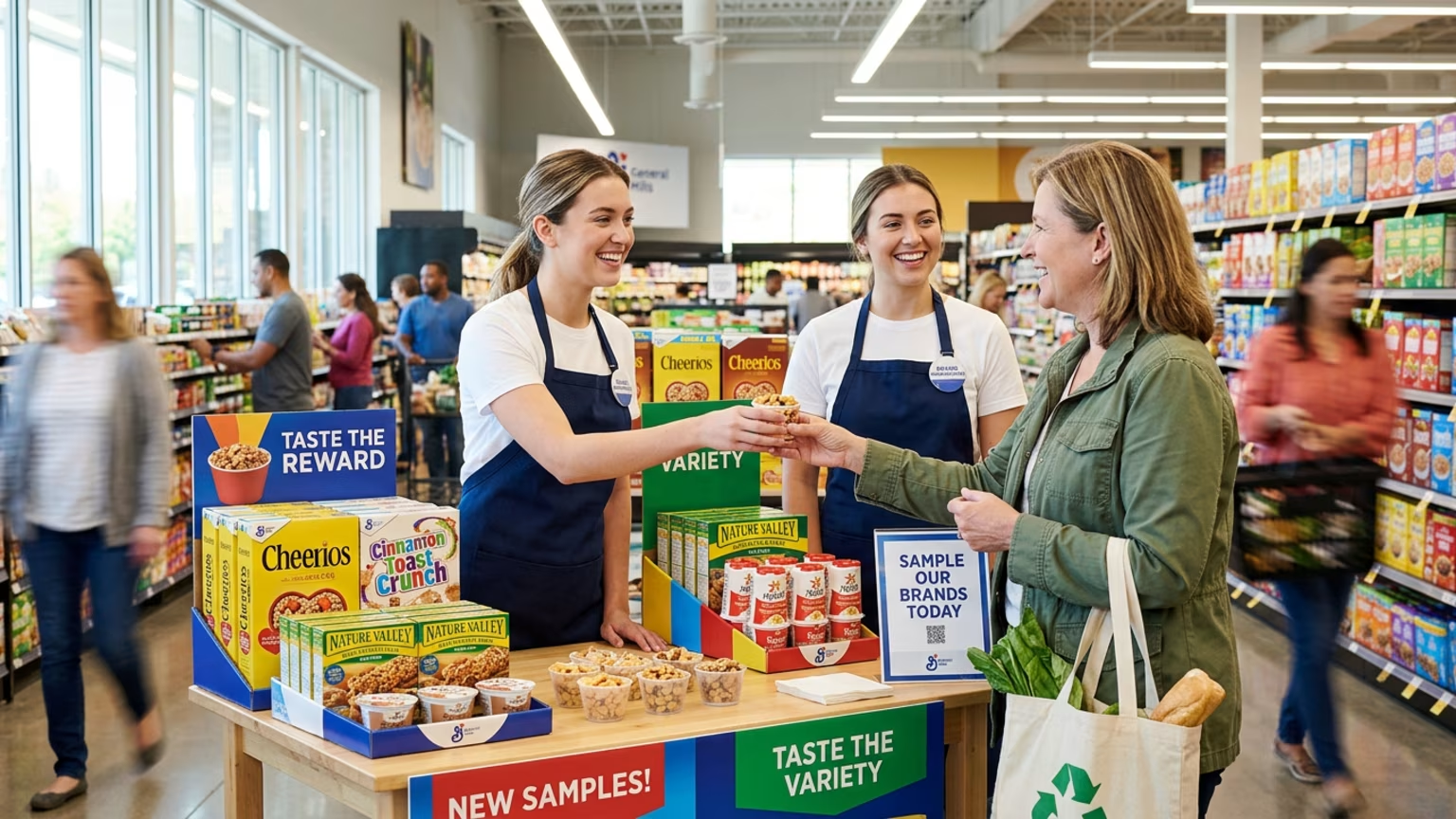
General Mills recently demonstrated how to execute this exact playbook with total precision. The company launched its certified organic snack portfolio with a massive blitz across 1,200 supermarkets. Field teams deployed data capture technology at demo stations to track engagement rates and immediate purchase conversion. This activation prioritized real world consumer trial in physical retail environments.
General Mills VP of Marketing Alex Gelman noted the power of this strategy in a recent interview. He stated that their regional retailer partnerships turn launches into measurable wins. The 1,200 store footprint meant precise demographic hits and an 18 percent conversion rate in key markets. He added that this proves field execution scales far beyond digital fluff.
This regional activation model works smoothly across different sub brands and product categories. General Mills mirrored this approach with its La Tiara taco shell rollout in April 2026. The brand targeted Walmart exclusively via regional activation after a ten million dollar acquisition. This strategy proves that choosing the right CPG sampling strategy dictates the success of the rollout.
Health and wellness brands like Clif Bar have followed similar 1,000 store sampling models. They reported a 22 percent sales lift directly tied to highlighting their organic certifications. Point of Purchase Advertising International benchmarks show that in store sampling drives a 20 to 30 percent immediate purchase uplift. Brands proving three to five times their initial investment win repeat retailer slots and scale nationally.
A VP of Marketing reflected on our partnership: 'Robbie, it was a pleasure working with you and your team. You turned our launch into an experience that connected with shoppers and built lasting excitement for our brand. We're already looking forward to the next project together.' Our team created a launch experience that resonated with retail shoppers and generated momentum for future collaborations.
Shopper marketing leads must replicate this model to secure retailer confidence for future expansions. Launching in food, snacks, or beverage categories requires undeniable proof of sales lift. When you partner with regional chains for large store blitzes, you mitigate staffing risks via centralized platforms. Demand clean reporting dashboards before you ever ship a single box of product.
For crossovers in automotive, tech, or entertainment, operators can adapt this model for experiential pop ups. Blending physical sampling with targeted sponsorships yields substantial sell through gains. Always audit your claims rigorously to avoid consumer backlash on the floor. Bottom line: invest in operational tech to produce evidence based field execution.
Let us return to the 67 billion dollar organic food market and the pilots that fail. The difference between a beautiful disaster and a national success story is operational precision. You do not need more fluffy brand theater to win shelf space; you need live experiences that convert. If you are ready to stop leaving retail sales to chance, book a strategy call with our team to build measurable pipeline.

30 Years Experiential & Retail Activation Partner for CPG & Beverage Brands | Multi-Market Demos, Roadshows & Costco/Club Programs That Actually Sell