Robbie Thain
Founder, CEO

Kroger is rapidly expanding weekend sampling to drive private-label sales. Learn how CPG brands can counter this push with measurable retail demos and hard data.

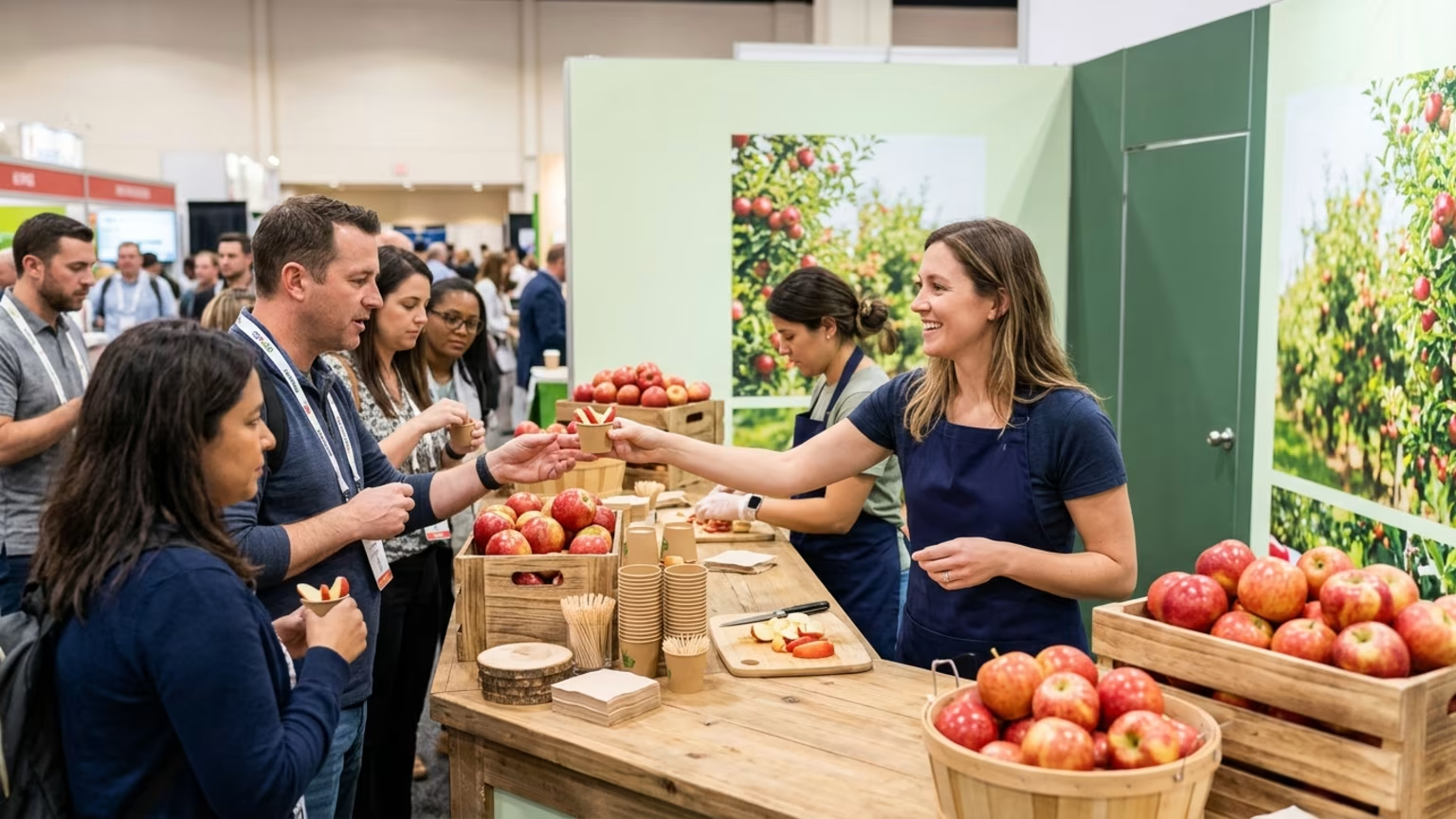
A Friday afternoon grocery rush hits the aisles hard. Carts bottleneck near the dairy coolers as tired shoppers hunt for quick dinner solutions. Off to the side stands a folding table with lukewarm liquid in tiny paper cups. Shoppers grab a cup without breaking stride, leaving the brand with zero data and zero new loyalty.
Kroger is rapidly expanding weekend sampling programs to shift value-conscious shoppers toward its private-label snacks and beverages. National consumer packaged goods brands must counter this push by treating live retail demos as a strictly measured performance channel rather than a casual marketing expense.
Most retail sampling programs operate in a state of expensive blindness. Field teams arrive late to crowded stores with missing inventory and wrinkled signage. They hand out product to anyone walking by without starting a real conversation. At the end of the shift, the brand manager receives a text message with a blurry photo of an empty tray.
This lack of precision drains budgets rapidly. It creates a false sense of security for marketing teams back at headquarters. Grocery giants are professionalizing the in-store experience at a rapid pace to eliminate this exact waste. Supermarket News reports that Kroger is expanding weekend in-store sampling heavily for its private-label brands.
They treat the retail floor as a controlled performance laboratory. Store teams track exact sales lift against non-sampled control stores. They know exactly how many units moved. They understand exactly which flavor profiles convert casual foot traffic into paying customers.
During periods of inflation, up to 40 percent of shoppers trade down to store brands. Once a consumer accepts a private-label item in a high-frequency category like snacks or ready-to-drink beverages, they rarely switch back. Retailers frame these lines as premium products that stretch household budgets. Kroger heavily promotes its Simple Truth and Private Selection lines to attack both budget and quality perceptions.
If national brands cannot prove their own Return on Investment (ROI) with equal clarity, they risk losing premium placement. Store managers will always prioritize the products that demonstrably drive the highest basket size. Over-sampling turns live demos into background noise for the consumer. Focused and high-quality activations in priority stores will always beat blanket coverage.
The solution requires treating physical touchpoints with the exact same rigor as a digital media buy. The Food Industry Association notes that retailer brands act as strategic growth engines today. Private labels are central to long term retailer profitability. To compete against this home-field advantage, experiential marketers must build campaigns that measure baseline sales against incremental lift.
The strategy must shift from brand theater to operator-grade performance marketing. The most effective programs tie onsite tactics to offsite media with unified measurement. Industry analysts at Tinuiti note that orchestrating physical touchpoints with retail media creates a complete performance system. A shopper might see a sponsored product ad online on Thursday.
On Saturday morning, they taste that exact product in the store. This connected system drives immediate trial and subsequent loyalty. We specialize in creating retail demos, product sampling programs, and roadshows that bring brands face to face with their audiences. Our team approaches every activation as a controlled conversion event.
We align physical sampling with retail media networks to capture the shopper at multiple touchpoints. Choosing which live sampling method fits your product dictates the success of this connected strategy. You must replace the fog of live events with hard evidence. This disciplined approach turns fleeting consumer interactions into qualified leads for premium brands.
To beat the private label push, your brand must execute flawlessly at the store level. This requires a strict playbook for every single weekend shift. Do not let your field marketing become a beautiful disaster.
Brands cannot fight private label dominance with vague impressions or smile counts. You need hard numbers that command respect in the boardroom. Focus on tracking specific lead and lag metrics that validate your experiential spend. Knowing how to quantify the true financial impact of live events gives your marketing team immense power.
Lead metrics include the total cost per trial and the raw trial-to-purchase conversion rate during the shift. A highly trained staff member should achieve a trial conversion rate in the 20 to 40 percent range for food and beverage items. Lag metrics define your sustained success over time. Look for a short-term sales lift between 20 and 100 percent in demo stores versus non-demo stores.
You must track the sustained lift over the four to eight weeks following the activation. High quality programs hold a 10 to 30 percent sustained lift when supported by retail media. Tracking these exact numbers helps brand leaders prove that live activations build a lasting retail pipeline. Choosing the right tactics that turn an initial taste into a recurring purchase separates a wasted budget from true market share growth.
A common critique of retail demos involves cannibalization. Analysts often ask if sampling simply pulls forward purchases from existing customers. In mature categories, some share of the sales lift comes from shoppers who planned to buy anyway. This masks the true effectiveness of your field marketing spend.
This is exactly why control store testing is mandatory for modern brands. Control stores allow your team to model incremental units against a clean baseline. Linking this data with loyalty card information reveals the exact ratio of new buyers to repeaters. You must demand this level of granular reporting from every retail partner.
In our experience, matching a retailer push requires high volume roadshows built for scale and speed. A national beverage client recently faced intense pressure from a new premium store brand. The retailer had dedicated prime endcap space to their own private label ready-to-drink tea. The client needed a rapid response to protect their category dominance.
We deployed a targeted mobile sampling tour across fifty high volume locations during peak weekend hours. The field team intercepted shoppers before they reached the beverage aisle. We gave them a cold sample and a digital coupon code. The ambassadors focused entirely on the premium ingredient story.
Managing fifty simultaneous locations requires intense logistical discipline. Our storage and logistics network shipped all activation materials directly to the field representatives. We tracked every delivery to verify that no store missed their peak traffic window. The brand ambassadors uploaded photos and inventory counts at the end of every shift.
This constant flow of data allowed our management team to optimize the tour in real time. We routed additional product to the highest performing stores instantly. The client received a consolidated dashboard showing cost per trial and total sales lift. We replace the fog of live events with hard evidence.
This direct intervention created a massive spike in baseline sales for the national brand. The control store tracking proved a 45 percent sustained lift over six weeks. The campaign successfully blocked the private label trade down and protected the client's premium pricing tier. If your team is struggling to defend retail shelf space against aggressive store brands, book a strategy call with our operations team today.
Live retail floors belong to the brands that execute with total precision and demand measurable proof of every interaction. Stop guessing, start measuring, and take back your share of the shelf.

30 Years Experiential & Retail Activation Partner for CPG & Beverage Brands | Multi-Market Demos, Roadshows & Costco/Club Programs That Actually Sell