Robbie Thain
Founder, CEO

Learn how leading CPG brands and experiential marketers use retail A/B testing on promotions, signage, and displays to optimize in-store conversion and ROI.
Leading retailers are aggressively treating physical stores like digital properties by running structured experiments on signage, promotions, and displays. Consumer packaged goods brands and experiential marketers must adopt this exact methodology for their field activations to drive measurable trial and conversion.
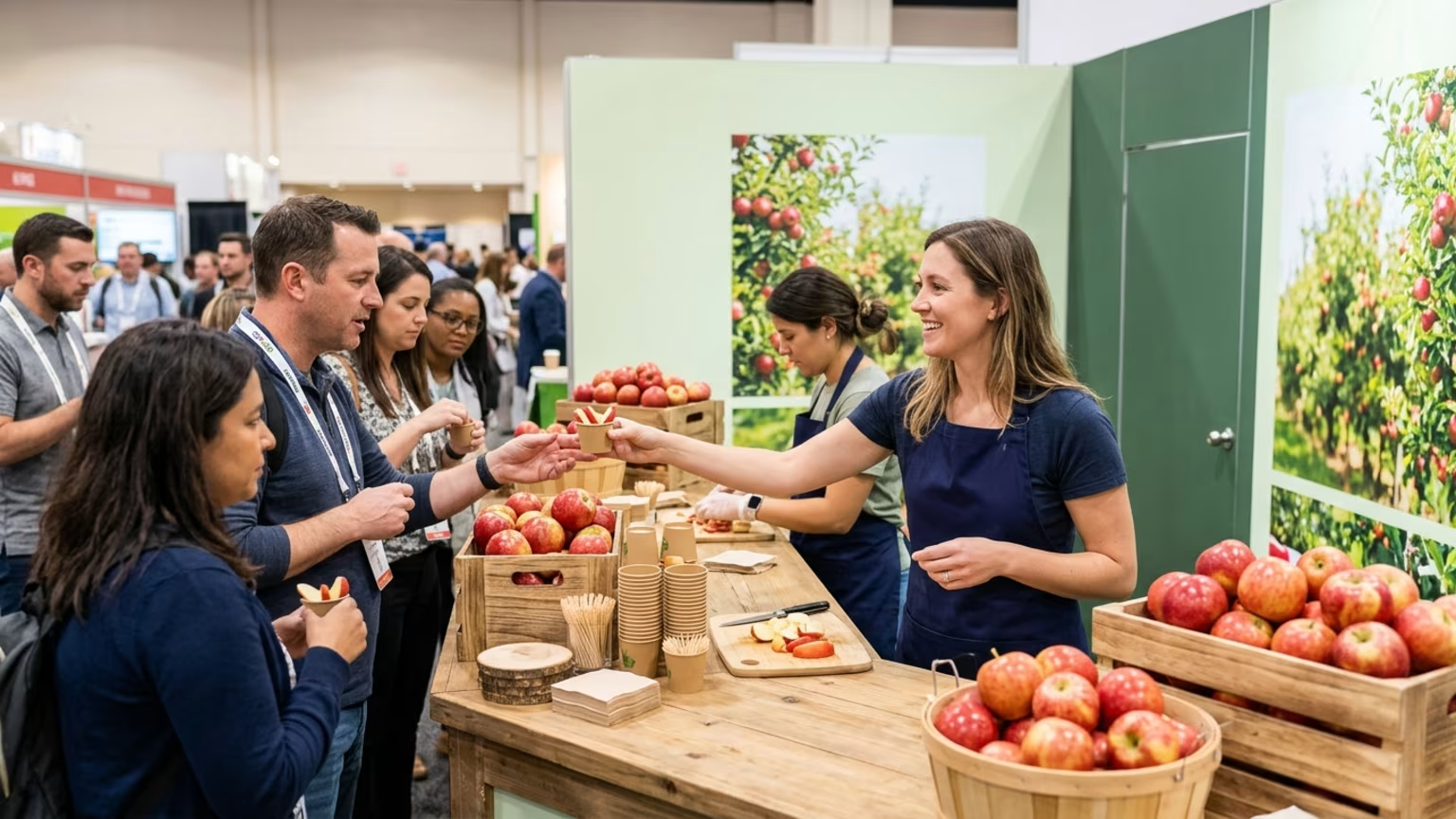
A high-traffic grocery aisle on a Saturday afternoon is a war zone for consumer attention. Your field team sets up a beautifully branded tasting table. The product is perfect, the ice is cold, and the signage looks exactly like the latest social media campaign. Yet hundreds of shoppers walk past without making eye contact, and the regional manager is already asking why the product movement is so slow.
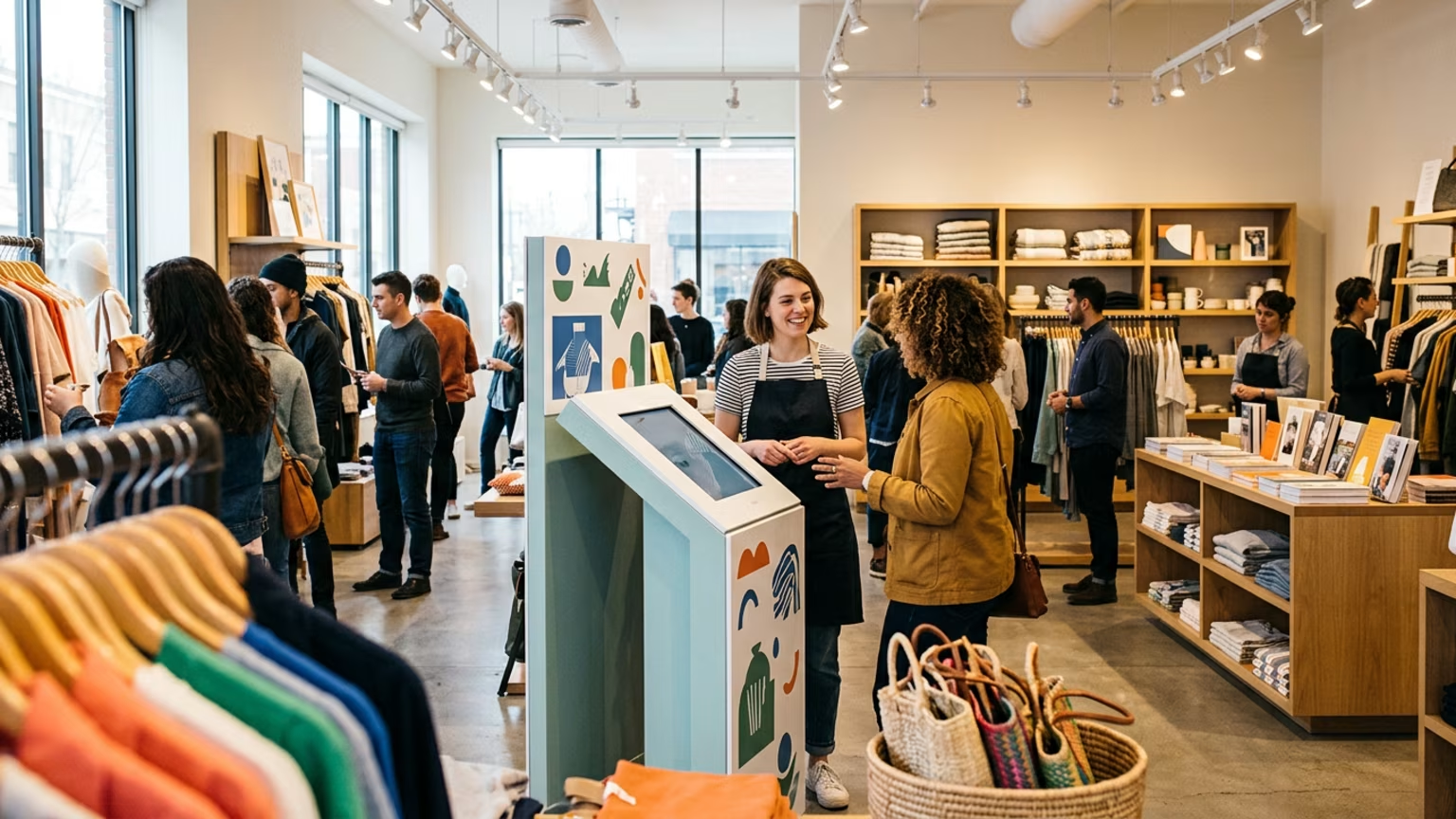
Shoppers make 70 to 80 percent of their purchase decisions inside the store. Retailers understand this behavior deeply, and they are moving away from visual preference alone. Shopify advises merchants to run ongoing A/B tests on promotions, pages, and signage to optimize conversions with confidence. The most effective retail operators treat every physical activation as a testable environment.
Computer-vision firm AiFi defines the modern marketing path as a sequential physical funnel. This progression moves from exposure to attention, then to interaction, and finally to the basket. Small changes to display design, placement, or pricing measurably affect how many shoppers move through each stage. Experiential teams can apply this exact logic to tasting bars, pop-ups, and trade show booths.
Brands often fall behind in productivity per square foot when they ignore physical testing. If retailers optimize their endcaps every quarter, brands must apply the same rigor to their field events. The concept of an analog landing page is a powerful framework for physical marketing. Every table, sign, and promotional offer is an asset with testable inputs.
Many digital conversion optimization practices are bleeding directly into physical retail spaces. Clear navigation, strong calls to action, and personalized offers are now standard expectations in the aisles. Marketers facing pressure to prove field Return on Investment have a clear playbook to follow. They must run physical A/B tests with the same rigor as email subject lines or digital landing pages.
Marketers often worry that constant testing will train shoppers to wait for deep discounts. To avoid this trap, experimentation should test both performance variables and brand messaging. You can test a benefit-led headline against a lifestyle-led headline to see what sparks curiosity. Our new playbook for real-world conversion demands structured learning over random execution.
Translating retail experimentation into actionable field plays requires deep operational discipline. If you cannot run a clean test on your demo program, you cannot run a scalable program at all. You must standardize field execution and staffing quality before running any meaningful tests. Once your baseline is stable, you can build a robust testing backlog for your live events.
Here is a framework to build your experimentation backlog:
Brands often make the mistake of overloading their event graphics with complex product stories. The most effective retail tests prove that consumers respond better to simplified visual communication. A cluttered display requires too much cognitive effort from a passing shopper. Keep your design simple, punchy, and focused on a singular consumer benefit.
Storefront analytics providers like V-Count use this methodology to help brands compare window concepts with real data. You can measure storefront entry rate, display engagement, and conversion to purchase for featured products. Treating your field activations as structured tests requires intense effort, but it yields invaluable data for future scale. Our agency relies on these methodologies to optimize retail demo Return on Investment with location analytics across national campaigns.
You should align these structured tests to major events in your marketing calendar. A new product launch, a retail expansion, or a massive expo provides both attention and pressure. Use these high-stakes moments as laboratories to validate your messaging and optimize your offers. Testing during a new launch reduces financial risk and provides learnings for national playbooks.
Brands face intense pressure to prove that field marketing justifies the financial spend. Analytics guidance from Improvado stresses that marketers must track conversion rates and use insights to optimize live campaigns. Optimization is where real Return on Investment gains materialize. You need exact lead and lag metrics to validate your physical experiments.
Your primary lead metrics should track early engagement within the physical funnel. Measure exposure by counting the total foot traffic passing your activation zone. Track attention by recording the number of people who stop to read your signage or look at your display. Calculate the interaction rate by dividing the number of physical samples distributed by the total passersby.
Lag metrics tell the final story of commercial impact and sales velocity. You should track the trial-to-purchase conversion rate for the exact hours your activation is live. Monitor the average basket size for shoppers who interacted with your brand ambassador versus the baseline store average. Measure the unit movement lift over the baseline sales for that certain day and location.
Large retailers are already building retail media networks and sophisticated in-store analytics suites. These platforms give brands access to granular data tied directly to specific physical placements. This technological shift pushes experimentation from a luxury to an absolute necessity for serious field teams. Marketers who fail to adapt will struggle to secure prime floor space in the future.
Tracking these numbers prevents false precision and noisy data from ruining your analysis. You must set minimum sample sizes and define your success metrics well before the event begins. Clear data allows you to show retail buyers that your isolated endcap or demo increases category sales. If you need help structuring these measurement frameworks, book a strategy call with our planning team.
Experimentation creates powerful assets that you can share with internal stakeholders and retail partners. You can show retail buyers exactly how your optimized demo increased sales across the entire category. Internally, you can use these structured experiments to justify future budget requests to the finance team. Presenting a roadmap of tested, proven activations moves experiential marketing from a cost center to a documented growth function.
High-volume environments like club stores demand extreme precision and flawless operational execution. A national beverage brand recently launched a major retail push and needed to validate their core messaging. They used a large store rotation as a live laboratory to test two completely different value propositions. One setup focused on bulk value and immediate savings, and the other highlighted premium ingredients and lifestyle benefits.
We build festival zones, premieres, and pop-ups that turn viewers into fans and fans into advocates. We design moments people want to share, using music tie-ins, screenings, and live stunts to bring stories to life. At the same time, our crews manage execution and track reach and response metrics. This exact philosophy drives our approach to retail sampling and large scale roadshows.
During the roadshow, the team tracked units sold per hour under both messaging variants. The premium ingredient signage drove a higher interaction rate at the sampling table. The bulk value script closed more immediate sales at the register. The brand combined the premium signage with the value-focused closing script for the national rollout.
Real-world experiments can suffer from operational noise if you ignore local context. Store layout, neighborhood demographics, and competing promotions can heavily influence your physical A/B tests. You must run tests long enough to normalize for time of day or day of week variations. A structured approach secures your findings so they are statistically significant and commercially valid.
This data-driven approach is the secret to bridging trade shows with high-conversion roadshows. The resulting playbook armed their sales team with hard proof for retail buyers across the country. They could confidently say which setup generated the highest sales velocity for the category. Applying retail experimentation to field marketing transforms an unpredictable expense into a reliable growth engine.
The store floor will always be chaotic and unpredictable. You can control the chaos by replacing guesswork with disciplined, measured experimentation.

30 Years Experiential & Retail Activation Partner for CPG & Beverage Brands | Multi-Market Demos, Roadshows & Costco/Club Programs That Actually Sell