Robbie Thain
Founder, CEO

Learn why understaffed crews and training gaps are the biggest threats to live events in 2026, and see how to build a resilient field marketing workforce.

Understaffed crews, inconsistent training, and fragmented communication are now the biggest operational threats to live brand activations. Marketers must treat workforce planning as a core risk management strategy to protect their Return on Investment and prevent costly execution failures.
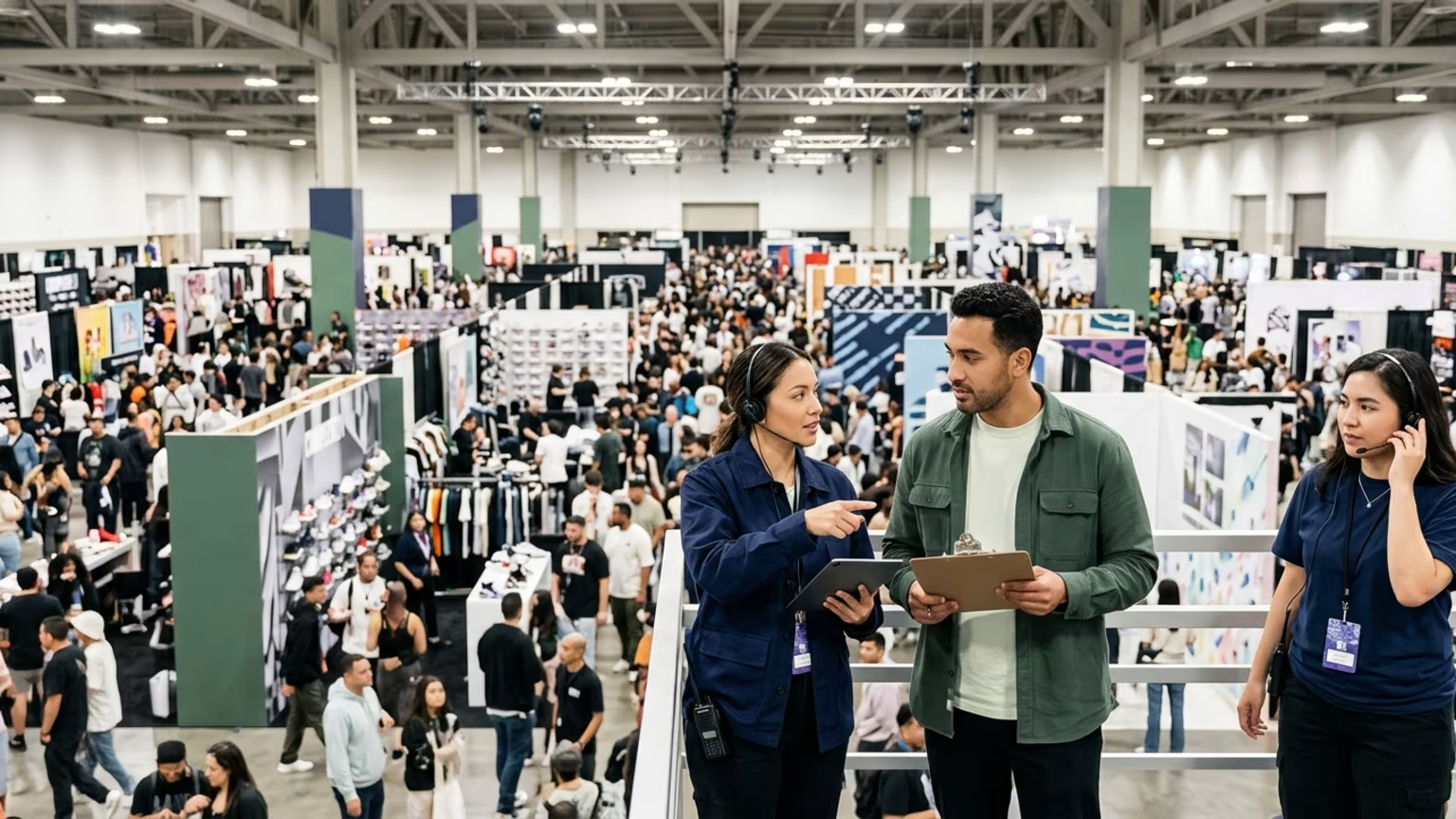
The pallet of premium beverages sits unattended at the loading dock. A frantic field manager holds a clipboard with three crossed out names. The massive venue doors open to the public in exactly twenty minutes. This is the exact moment a six figure marketing idea falls apart.
We have been connecting brands with people through live experiences, retail programs, and national activations since 1995. Over three decades, we have built a track record of creating meaningful brand moments across the country. In our experience, marketing ideas rarely fail from a lack of creativity. They fail when you lack trained humans on the floor.
Staffing shortages and uneven training are becoming top operational risk factors for live events. These gaps often cause more damage than budget constraints or creative misfires. Brands rely on product demonstrations and field marketing to drive retail sell through. If the workforce is stretched or poorly coordinated, the entire activation is at risk.
Industry data highlights a massive problem across service sectors. Many frontline workers report they do not receive enough training to perform well. This lack of preparation directly lowers productivity and drives high turnover. You cannot just throw random gig workers at an understaffed event and expect consistency [1].
Real time scheduling only works with proper upstream planning and training. Logistics operations commentary notes that fragmented communication between brands and agencies is a massive threat. The probability of a disaster is rising across the industry. This happens simply from a poorly coordinated workforce.
The old model of hiring last minute brand ambassadors is completely broken. Marketing operators must shift from ad hoc hiring to building dedicated talent pipelines. This strategic approach treats field talent as a long term asset. Brands must cultivate a roster of individuals who understand their category and messaging.
You need to codify standard operating procedures for every repeatable activity. An activation should run on a clear playbook rather than pure assumption. These playbooks must cover setup protocols, safety rules, and core brand messaging. This level of preparation is the foundation of building repeatable teams for roadshows and activations.
Training must shift from a rushed morning huddle to a structured system. Structured onboarding can yield substantially higher sales performance compared to minimal preparation. Workers who understand what success looks like will stay longer and perform better. Your strategy must prioritize skills visibility and matching across all roles [2].
Creative planning without operational reality creates massive liability for your brand. Logistics partners and field teams must participate in early campaign discussions. This collaboration guarantees that staffing models align with site constraints and budget realities. Your creative deck means nothing if you lack the personnel to execute it properly.
There is a delicate balance between standardizing operations and allowing local nuance. Over standardizing every single interaction can make consumer experiences feel robotic and inauthentic. The operational challenge is to define firm non negotiables for safety and data capture. You must then give staff controlled freedom to adapt their tone to the local environment.
In sectors with regulated or complex products, undertrained frontline staff create massive reputational risks. Financial services and health brands cannot afford a single misstep in consumer communication. This reality prompts many companies to tighten their documentation standards for in person engagements. You must treat compliance as a core component of your field marketing strategy.
Executing a seamless event requires operator grade discipline and rigorous preparation. Follow this guide to build a reliable field workforce.
Brands can no longer justify activations based on simple foot traffic. Marketing leaders face immense pressure to prove that events drive actual pipeline. A trained workforce is the only way to capture reliable data. You must track specific numbers to separate real success from costly noise.
Lead metrics tell you if your execution is on track before the event ends. Track your staff to visitor ratio to maintain quality interactions. Measure training completion rates for every single brand ambassador on your roster. Monitor setup punctuality to prevent rushed and chaotic morning launches. These early indicators predict the quality of your customer conversations.
Lag metrics prove the financial impact of your field marketing investment. Track qualified leads, meetings booked, and samples to sales conversion. Calculate your true cost per acquisition by factoring in staffing and logistics expenses. This rigorous approach helps you identify the key metrics to prove retail sampling ROI.
Use this data to refine your training and staffing models continuously. Compare conversion rates between fully trained teams and standard crews. Ask your field teams for structured feedback regarding operational friction. This continuous feedback loop turns a basic trade show into a measurable growth engine.
Presenting this data properly builds a strong business case for future investments. Show leadership exactly where proper staffing protected your baseline outcomes. Quantify how understaffed events underperformed compared to your fully resourced activations. This evidence will protect your training budgets during the next financial planning cycle.
Some CFOs and procurement teams view staffing as a prime area to cut costs. Shorting your training budget creates massive hidden expenses down the line. You will suffer from lost sales, wasted inventory, and severe reputational damage. Retailer frustration can permanently derail your product expansion efforts.
A national snack brand recently faced aggressive retail expansion targets. They previously relied on fragmented local agencies to staff weekend store demonstrations. This approach resulted in high no show rates, inconsistent product messaging, and frustrated store managers. They needed a reliable system to support their critical product launch.
They overhauled their field strategy by establishing a dedicated talent roster. The brand created mobile friendly playbooks covering food safety, allergy information, and sales tactics. Every brand ambassador completed a short digital certification before stepping onto the retail floor. They mandated a strict pre activation briefing with their primary logistics partners.
The operational shift delivered immediate and measurable outcomes. The brand saw a massive drop in missed shifts and late arrivals. Better trained representatives doubled the number of daily samples distributed. Most importantly, the structured conversations led to a noticeable lift in retail sell through.
Retailers began requesting this specific brand for prime weekend slots. The company proved they could execute complex programs without creating headaches for store management. They turned operational reliability into a highly marketable edge for future retail negotiations. Their live experiences finally became a reliable driver of revenue.
Stop treating event execution as an afterthought. Review your upcoming schedule and identify any gaps in your workforce planning. Book a strategy call today to build a field team that actually converts.

30 Years Experiential & Retail Activation Partner for CPG & Beverage Brands | Multi-Market Demos, Roadshows & Costco/Club Programs That Actually Sell