Robbie Thain
Founder, CEO

Learn how the Dove Whole Body Deo sampling truck turns mobile trial into retail sales. See the metrics that prove experiential ROI for consumer brands.

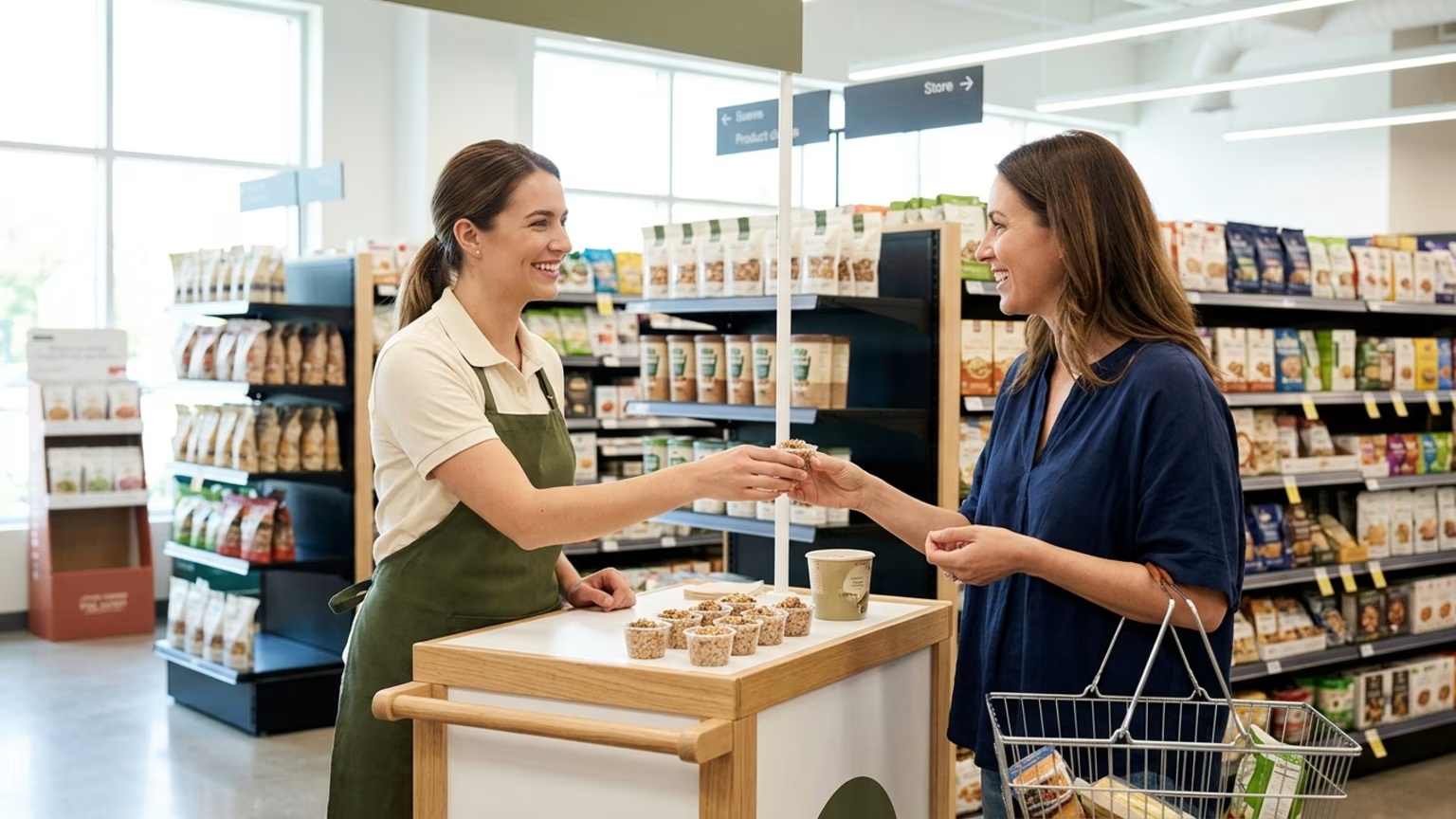
A branded truck idles near a crowded concert venue in the sweltering Toronto heat. Brand ambassadors hand out free deodorant samples and physical coupons to eventgoers. The line moves quickly. Shoppers pocket their discounts and immediately understand the value of the new product.
The recent Dove Whole Body Deodorant mobile tour proves that physical trial paired with smart promotional hooks is the fastest way to turn a new category launch into retail sales. This guide breaks down the exact method for engineering a high converting experiential funnel that drives verifiable product movement.
Most field marketing activations look busy but produce fog instead of measurable evidence. Teams launch expensive trucks and park them in high traffic areas with zero strategic alignment. Brand ambassadors hand out thousands of free products to random passersby. The floor reality is a mess of untrained staff, wasted inventory, and completely disjointed reporting.
Marketing leaders often feel overwhelmed by this chaotic event logistics nightmare. You send a team out into the field to generate excitement for a new launch. They return with a few social media photos and zero proof that the activation moved the needle. You have no idea if those street interactions ever led to a scanned barcode at the cash register.
Without clear Return on Investment (ROI) data, retail buyers start to lose confidence in your field support. This disconnect happens far too often. Most brands treat mobile sampling as a localized stunt rather than a measurable acquisition channel. They fail to link the street level interaction to a direct retail action.
A truck without a performance funnel is just a very expensive moving billboard. Retail partners increasingly demand activation plans before granting valuable shelf space. Buyers want proof that you will actively drive foot traffic to their stores. If your mobile sampling tour fails to send shoppers directly to those local aisles, you risk losing your retail placement. An uncoordinated street stunt does nothing to build long term buyer confidence.
Mobile experiential marketing must act as a connective tissue between the street and the retail shelf. Your strategy should revolve around coupling a physical sample with a time bound coupon and a localized venue hook. When consumers try a product in a relevant setting, they build immediate trust.
New categories require face to face education to overcome consumer hesitation. Whole body deodorant is a perfect example of a product that demands explanation. Shoppers have questions about sensitive skin safety and proper usage routines. A trained ambassador can answer those questions instantly. This human interaction shortens the learning curve and eliminates purchase anxiety.
Industry data consistently shows that trial is the single most reliable predictor of purchase. Consumers need sensory proof to make a buying decision. Combining physical trial with a digital incentive bridges the gap between awareness and conversion. Brands that understand how to blend physical sampling with QR codes for a digital pipeline see much higher redemption rates.
Digital ads alone cannot replace the sensory proof required for personal care items. Shoppers scroll past online advertisements without absorbing the core product message. A live physical activation forces the consumer to stop, listen, and interact. This tangible engagement creates a much deeper memory structure than a fleeting digital impression.
Executing a successful mobile roadshow requires operator grade discipline and rigorous planning. Every stop on the tour must be treated as a strategic retail intervention. You cannot leave event logistics to chance when your retail relationships are on the line. Follow this framework to turn your next mobile tour into a measurable sales engine.
Step one requires you to map the route to match retail inventory. Confirm that local stores have the product stocked before the truck ever arrives in a zip code. Coordinate with your trade marketing team to set up endcaps and clear facings. A successful sample creates immediate demand that your retailers must be ready to fulfill.
Step two involves designing a compelling and urgent value exchange. A sample alone is not enough to force a store visit. Hand the consumer a physical or digital coupon with a clear expiration date to drive immediate urgency. This localized offer connects the street experience directly to the checkout counter.
Step three demands that you train your brand ambassadors rigorously. Staffing is a non negotiable performance lever for any consumer brand. Teach your field team to deliver a sharp thirty second pitch that covers functional benefits and safety. Ambassadors are the ultimate face of your brand during these critical consumer interactions.
Step four requires you to integrate seamless data capture mechanisms into the footprint. Use QR codes to offer ticket giveaways or loyalty signups. This approach allows you to collect first party data for targeted post event follow up. You can then retarget these highly qualified leads with personalized digital offers.
A VP of Marketing in the CPG beverage category told us: 'Robbie, your leadership and vision turned our campaign into something truly special. The Makai team brought our new drink to life with energy, creativity, and flawless execution. Thanks to you, our brand isn't just tasted, it's remembered.' Our team's approach transformed their product launch into a memorable brand experience.
We bring this exact methodology to every campaign we run. We handle the permitting, the logistics, and the rigorous ambassador training. This level of execution is what makes a strategic beverage sampling campaign actually translate into measurable pipeline.
Executives demand proof that a sampling truck is actually moving product. You must define your measurement architecture before the activation begins. The days of relying on estimated impressions and foot traffic are over.
Lead metrics track the immediate health of the live activation. You should measure total engagements, the number of samples distributed, and total digital opt ins. These numbers tell you if your truck is parked in the right location. They indicate whether your ambassadors are effectively pulling people into the brand footprint.
Lag metrics provide the financial justification for the entire campaign. Track coupon redemption rates tied to the specific event promo codes. Compare retail sales lift in the targeted zip codes against control markets. These are the metrics that prove your mobile roadshows drive sales lift and validate your experiential spend.
Event Marketer studies consistently show that roughly 65 to 75 percent of consumers are more inclined to buy a product after a live brand experience. Shopper data often reveals trial to purchase conversion rates hovering in the 20 to 40 percent range. When you track the right numbers, you can easily defend your budget in the next quarterly review.
A well executed mobile tour generates vast amounts of actionable shopper data. You must capture these insights to justify your total experiential investment. Every coupon redeemed provides a concrete data point for your finance department. This hard evidence separates professional field marketing from amateur brand theater.
Shopper marketing experts point out that trial remains the fastest path to a loyal customer. Consumers who receive a coupon alongside a physical sample demonstrate significantly higher purchase intent. A time bound discount creates the exact friction needed to disrupt routine buying habits. These strategic layers transform a simple freebie into a verifiable retail transaction.
Consistent measurement builds enormous credibility with your internal leadership. Your finance department wants to see clear mathematical proof that these physical activations work. Presenting a clear funnel view from total street impressions to checkout counter conversions solves this problem. This transparent reporting transforms your field team from an unpredictable expense into a reliable revenue driver.
A brilliant strategy means nothing without flawless on the ground execution. Many brands underestimate the sheer logistical weight of a national sampling tour. Securing local health permits and parking approvals often takes weeks of tedious negotiation. A single missing permit can shut down your entire activation and ruin your retail timeline.
Vehicle maintenance and daily routing add another layer of operational friction. Your branded truck must arrive on time, stay fully stocked, and look completely pristine. Weather delays and unexpected traffic can instantly disrupt a tightly packed event schedule. Only an experienced field team can manage these constant daily hurdles without missing a beat.
Storage and inventory management require constant daily supervision. You must coordinate regional warehousing to keep your sampling trucks fully supplied. A stockout in the middle of a high traffic afternoon is a catastrophic missed opportunity. Meticulous supply chain tracking keeps your consumer interactions flowing smoothly from start to finish.
The recent Dove Whole Body Deo campaign provides a perfect blueprint for this approach. The brand deployed a branded sampling truck around Toronto. They tied the activation directly to a ticket giveaway at a popular outdoor concert venue. This partnership provided immediate scale and massive local relevance.
This localized hook targeted a captive audience in the middle of summer. Sweat and heat were already top of mind for these concertgoers. The context made the product pitch incredibly relevant and timely. The ambassadors educated the public on a completely new multi zone deodorant routine.
They paired the education with a free sample and a coupon for local retailers. The entire interaction functioned as a precision engineered acquisition funnel. It was not just a flashy truck driving around a city. It was a calculated move to drive short term sales lift and build buyer confidence.
Major retailers pay close attention to these comprehensive field marketing programs. They want to see consumer packaged goods companies investing heavily in consumer education. A successful truck tour proves that you are actively building demand for your shelf space. This operational excellence secures your retail distribution for years to come.
You can replicate this exact framework for your next major launch. Stop guessing whether your field marketing is working. Book a strategy call with our team to start planning your next high impact experiential campaign.

30 Years Experiential & Retail Activation Partner for CPG & Beverage Brands | Multi-Market Demos, Roadshows & Costco/Club Programs That Actually Sell